
Thyroid Surgery Thailand Guide: Nodules, Cancer & Voice Risks
You’ve just learned you have a thyroid nodule. Now you’re facing a surgery decision that involves three major fears — cancer, voice loss, and a visible scar — and you need to know how to evaluate your options in Thailand. Without the right guidance, you could end up with unnecessary anxiety, a surgeon who doesn’t specialize in high-volume thyroid work, or a procedure that doesn’t align with your priorities.
By the end of this guide, you’ll understand the trade-offs between cancer treatment, voice preservation, and cosmetic outcome — and have a clear framework for choosing the best surgeon and technique in Thailand. We’ll start by explaining thyroid nodules and cancer risk, then cover voice risks, scarless surgery options, recovery, and finally how to pick the right hospital and surgeon.
Key Takeaways
Choosing the right thyroid surgery in Thailand requires balancing three core concerns: cancer treatment, voice preservation, and cosmetic result — the Thyroid Surgery Risk Triangle.
- Nodules are common — 90–95% are benign, and early-stage thyroid cancer has a 5-year survival rate over 98%.
- Voice risks are low — permanent vocal cord injury occurs in only 0.5–2% of surgeries when performed by high-volume surgeons.
- Scarless options exist — TOETVA eliminates the neck scar while matching traditional safety outcomes.
- Recovery is typically swift — most patients return to work within 1–2 weeks after modern techniques.
Understanding Thyroid Nodules and Cancer: Diagnosis and Treatment
Thyroid nodules are growths in the thyroid gland, and more than 95% are benign (Mayo Clinic, 2024). The primary goal of diagnosis is to rule out the small percentage that are cancerous using advanced imaging and biopsy. Understanding this risk hierarchy empowers you to make informed decisions about monitoring versus surgery without unnecessary fear.
What Are Thyroid Nodules and How Common Are They?
A thyroid nodule is a growth or lump that forms within the thyroid gland, a butterfly-shaped organ at the base of your neck. These nodules are remarkably common — up to 50% of people over 60 have detectable nodules when examined by ultrasound (Mayo Clinic, 2024). Women are more likely than men to develop them, and most nodules cause no symptoms whatsoever. They’re often discovered incidentally during routine checkups or imaging for unrelated conditions.
If you’ve been told you have a nodule, you’re far from alone. The vast majority require no treatment at all. Only when a nodule grows large enough to cause swallowing difficulty, breathing issues, or voice changes — or when it appears suspicious on imaging — does surgery enter the conversation.
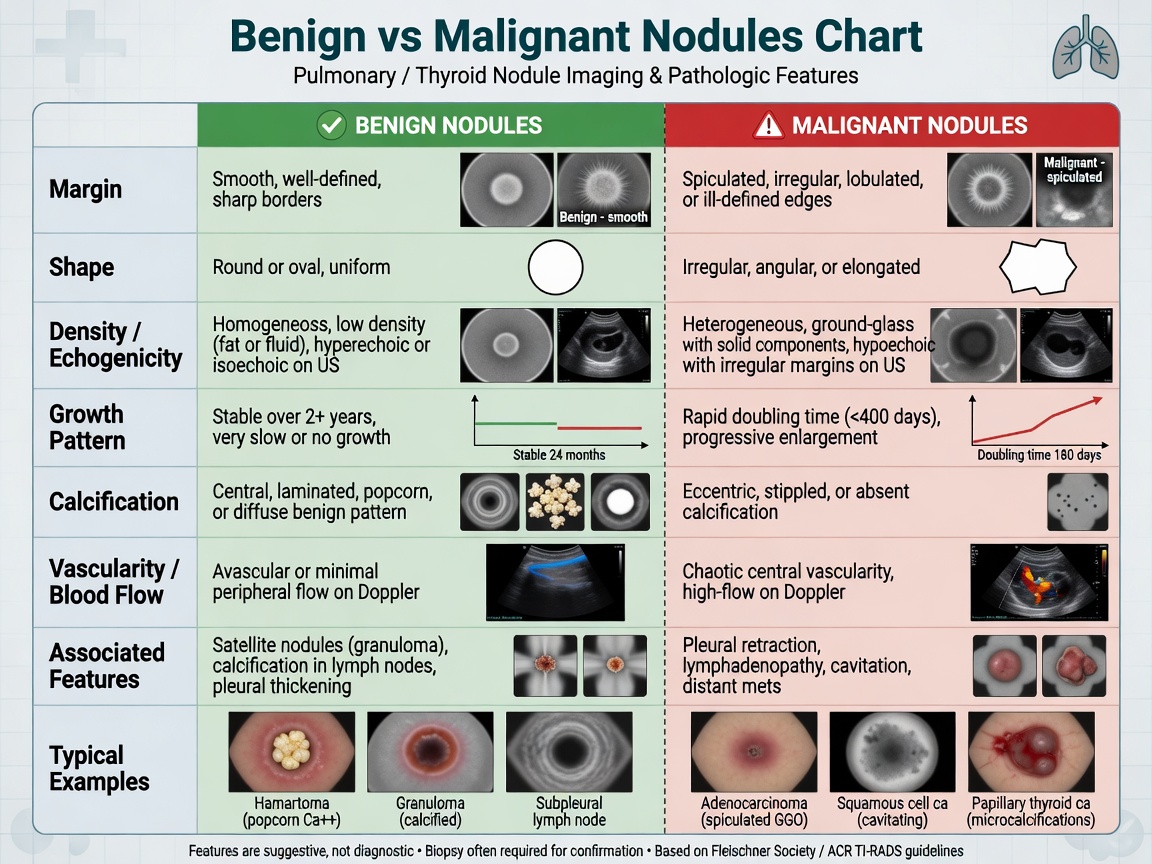
Caption: Understanding the visual differences between benign and malignant thyroid nodules helps patients interpret their ultrasound results with greater confidence.
Benign vs. Malignant: What Are the Odds?
When a nodule is found, the next step is determining whether it’s cancerous. Ultrasound imaging with TI-RADS scoring (Thyroid Imaging Reporting and Data System) categorizes nodules by their risk level based on shape, margins, and internal composition. A nodule classified as TR3, for example, carries roughly a 5% malignancy risk — meaning 95% of such nodules are benign.
For nodules that appear suspicious, the gold standard diagnostic test is fine-needle aspiration (FNA) biopsy. A thin needle extracts cells from the nodule for microscopic examination. Even when a nodule proves malignant, the most common type — papillary thyroid cancer — is highly treatable. A 2019 review in PubMed emphasized that risk stratification using ultrasound and FNA has significantly reduced unnecessary surgeries while catching dangerous cancers early (Thyroid nodule risk stratification guidelines from PubMed).
Can Thyroid Cancer Come Back After Treatment?
Can thyroid cancer come back? Yes, but the risk is low — less than 5% for early-stage papillary cancer at 10 years — and most recurrences are successfully treated with further surgery or radioactive iodine (NCI, 2024).
Recurrence depends on several factors: the initial cancer stage, the specific cell type, and how completely the tumor was removed during surgery. Most recurrences happen within the first five years after treatment, which is why regular follow-up is essential. Surveillance typically includes ultrasound imaging, blood tests for thyroglobulin (a protein produced by thyroid cells), and occasionally radioactive iodine scans.
For low-risk patients, the outlook is excellent. The National Cancer Institute reports a 5-year survival rate of over 98% for early-stage thyroid cancer (NCI thyroid cancer survival statistics, 2024). This means that for the vast majority of patients, thyroid cancer is not a life-threatening diagnosis — it’s a manageable condition with highly effective treatment options.
With a clear understanding of cancer risk, the next major concern for most patients is voice preservation — let’s explore that.
Voice and Vocal Cord Risks After Thyroid Surgery
The risk of voice change after thyroid surgery is real but low — temporary vocal cord palsy occurs in 1-5% of cases, and permanent injury in just 0.5-2% (PubMed, 2022). Your surgeon’s experience is the single most important factor in minimizing this risk. Understanding the anatomy and probability helps you ask the right questions and choose the best surgeon.
Will My Voice Change? Understanding the Risk
Voice changes after thyroid surgery can range from mild hoarseness to significant vocal weakness. The good news is that most changes are temporary. Temporary vocal cord palsy — where the nerve is irritated but not permanently damaged — affects 1-5% of patients and typically resolves within 6-12 months. Permanent injury, where the nerve is cut or severely damaged, occurs in only 0.5-2% of surgeries.
The National Institute on Deafness and Other Communication Disorders notes that vocal cord paralysis can result from thyroid surgery, and most cases improve within a year (NIDCD on vocal cord paralysis, 2024). If you sing, teach, or rely on your voice professionally, you may want to discuss intraoperative nerve monitoring with your surgeon — a technology that helps identify and protect the nerve during surgery.
The Recurrent Laryngeal Nerve: Anatomy and Function
The recurrent laryngeal nerve, or RLN, is the nerve that controls your vocal cords. It runs in a narrow groove behind the thyroid gland, making it vulnerable during thyroidectomy. Think of it as a thin electrical wire that, if nicked or stretched, can disrupt the signal to your vocal cord.
Modern surgical techniques include intraoperative nerve monitoring (IONM), which uses electrodes to track the nerve’s function in real time. A 2022 meta-analysis found that temporary RLN palsy occurs in 1-5% of surgeries and permanent palsy in 0.5-2% (RLN injury incidence statistics from PubMed, 2022). Surgeons who routinely use nerve monitoring tend to have lower injury rates, though the technology is a tool — not a replacement for surgical skill and anatomical knowledge.
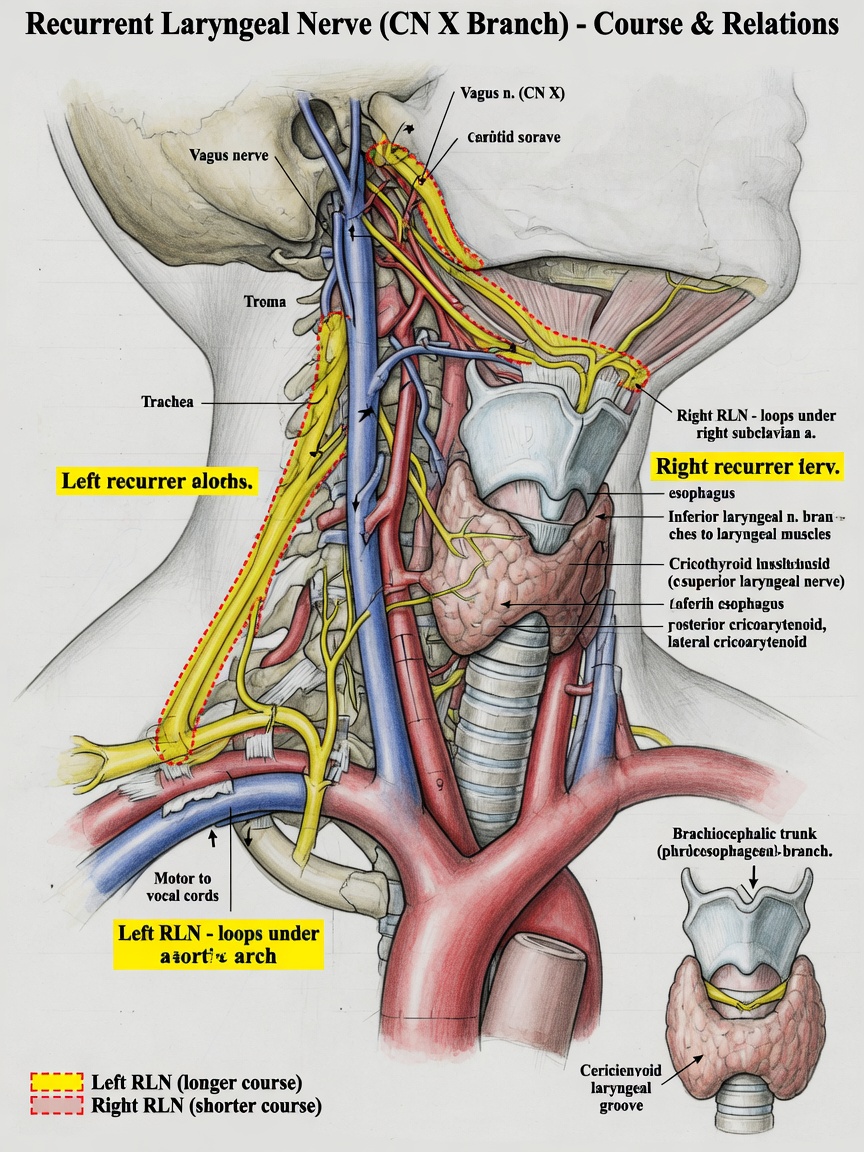
Caption: The recurrent laryngeal nerve’s close proximity to the thyroid gland explains why voice preservation is a central concern in thyroid surgery.
How Often Do Vocal Cord Injuries Happen? (Statistics)
The numbers are reassuring when you look at high-volume surgical centers. Key risk factors for vocal cord injury include:
- Surgeon volume: Surgeons performing fewer than 30 thyroidectomies per year have higher complication rates.
- Surgery type: Total thyroidectomy carries slightly higher risk than partial removal.
- Reoperation: Second surgeries on the same thyroid bed have elevated risk due to scar tissue.
- Tumor characteristics: Large or invasive tumors that adhere to the nerve increase risk.
- Patient anatomy: Some patients have anatomical variations that place the nerve in an unusual position.
A surgeon performing 30 thyroidectomies per year has a different risk profile than one performing 150. High-volume surgeons in Thailand — particularly those at JCI-accredited hospitals — often match or exceed Western outcomes.
Recovery and Treatment Options for Nerve Damage
If vocal cord injury does occur, treatment depends on severity. Temporary palsy is managed with voice rest (limiting speaking for several days), speech therapy to strengthen compensatory muscles, and observation. Most cases resolve spontaneously within 6-12 months.
For permanent paralysis, treatment options include voice therapy, vocal cord injections (fillers that bulk up the cord to improve closure), and surgical procedures like medialization thyroplasty (repositioning the vocal cord) or nerve reinnervation (restoring nerve supply). The NIDCD describes these treatment pathways and notes that even in permanent cases, most patients regain functional voice (NIDCD on vocal cord treatment, 2024).
While voice is a critical concern, many patients also worry about the scar — especially in a visible area like the neck. Fortunately, modern techniques can eliminate the scar entirely.
Scarless and Minimally Invasive Thyroid Surgery in Thailand
Scarless thyroid surgery, primarily TOETVA, eliminates the neck scar by accessing the thyroid through the mouth while maintaining comparable safety and effectiveness. A systematic review found that TOETVA offers superior cosmetic satisfaction and less postoperative pain than traditional surgery (PubMed, 2020). However, not everyone is a candidate — tumor size, histology, and patient anatomy determine eligibility.
What Is Scarless Thyroid Surgery? Introducing TOETVA
TOETVA stands for transoral endoscopic thyroidectomy via the vestibular approach. Instead of a neck incision, the surgeon makes three small cuts inside the lower lip, through which a camera and instruments access the thyroid gland. The procedure can be performed endoscopically or with robotic assistance.
Imagine having thyroid removal with no visible trace — that is the promise of TOETVA. A 2020 systematic review concluded that TOETVA is safe and feasible with superior cosmetic satisfaction compared to traditional surgery (TOETVA outcomes meta-analysis from PubMed, 2020). The technique has evolved from earlier endoscopic approaches and is now offered at several specialized centers in Thailand.
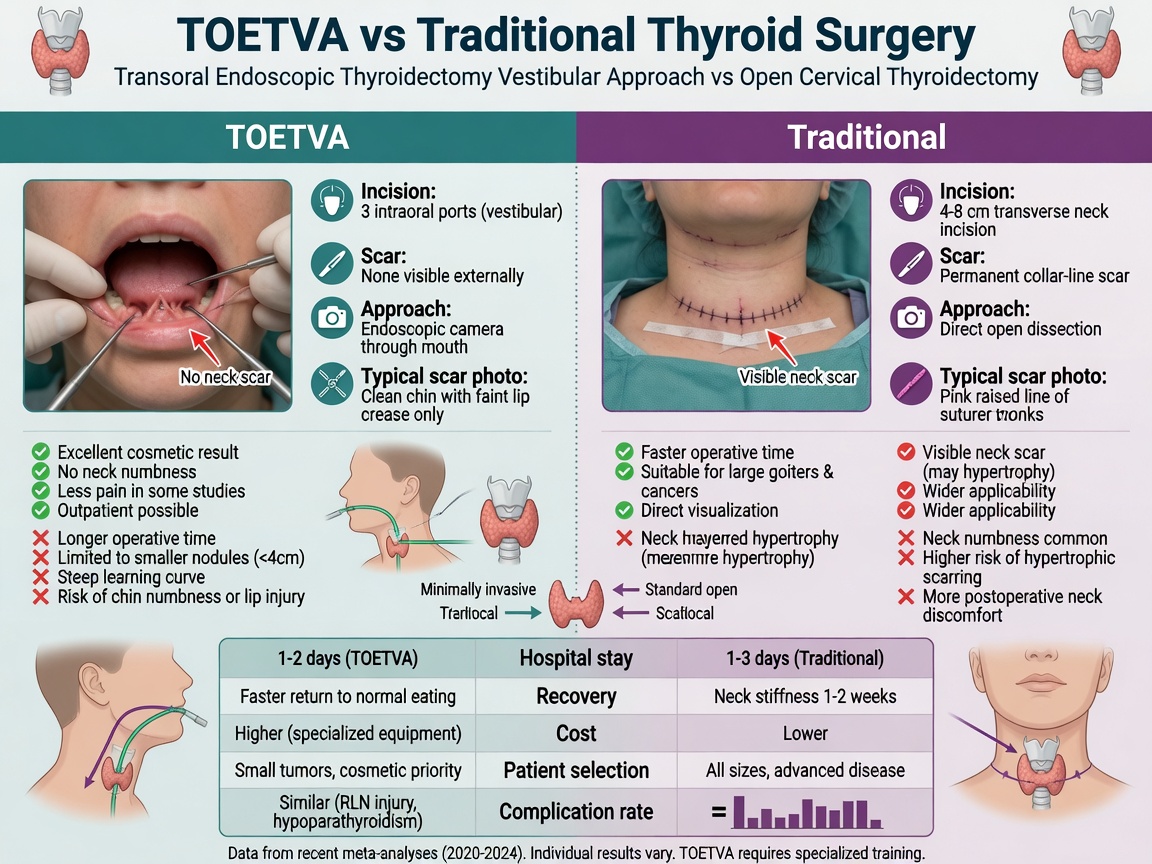
Caption: TOETVA eliminates the visible neck scar by accessing the thyroid through the mouth, while traditional thyroidectomy leaves a 2-4 inch neck incision.
TOETVA vs. Traditional Surgery: A Comparison
| Aspect | Traditional Thyroidectomy | TOETVA (Scarless) |
|---|---|---|
| Incision | Neck, 2-4 inch scar | Mouth, no visible scar |
| Hospital stay | 1-2 days | 1-2 days |
| Post-operative pain | Moderate | Mild |
| Voice risk | 1-5% temporary | Similar, possibly lower (less neck dissection) |
| Candidates | All patients | Select patients (tumor <4cm, no thyroiditis, no lymph node metastasis) |
| Cosmetic satisfaction | Lower | Higher |
The comparison reveals that TOETVA matches traditional surgery on safety while offering clear advantages in pain and appearance. Voice risk may be slightly lower with TOETVA because the approach involves less dissection around the neck structures that can tug on the recurrent laryngeal nerve.
Are You a Candidate for Scarless Surgery?
Not everyone qualifies for TOETVA. Ideal candidates have:
- Tumor size: Nodules under 4 cm in diameter.
- No thyroiditis: Active thyroid inflammation makes the tissue too fragile.
- No prior neck surgery: Scar tissue interferes with the endoscopic approach.
- No suspicious lymph nodes: If cancer has spread to neck nodes, traditional open surgery is preferred.
- Favorable anatomy: A slim neck and appropriate jaw structure.
If your nodule is under 3 cm and you have a slim neck, you’re likely a candidate. A review article in the Annals of Thyroid discusses patient selection criteria in detail (TOETVA candidacy criteria from AOT, 2020). Your surgeon should evaluate these factors during your consultation.
Benefits Beyond Cosmetic: Reduced Pain and Faster Recovery
The advantages of TOETVA extend beyond appearance. Because the technique avoids cutting through neck muscles, patients experience less postoperative pain and often require fewer pain medications. Some patients are discharged the same day, though most stay overnight for monitoring.
Many TOETVA patients report returning to work within one week — faster than the typical 1-2 weeks for traditional surgery. The ability to eat and drink normally immediately after surgery (no swallowing discomfort from a neck incision) is another practical benefit that patients consistently highlight.
Whether you choose traditional or scarless, understanding the recovery process is essential. Let’s walk through it step by step.
Thyroid Surgery Recovery and Post-Operative Care
Recovery from thyroid surgery is generally quick — most patients leave the hospital within 24 hours and return to work within 1–2 weeks (Mayo Clinic, 2024). The first 24 hours focus on pain management and monitoring calcium levels. Understanding the timeline helps you plan your recovery and manage expectations.
Your Recovery Timeline: Hospital Stay to Full Healing
Day 1: You’ll be discharged the same day or the next morning. Pain is controlled with oral medications (ibuprofen or acetaminophen). You can eat soft foods and drink normally. Your calcium level will be checked before discharge.
Week 1: Voice rest is recommended for the first 1-2 days — limit speaking, no whispering (which strains the vocal cords more than normal speech). Avoid heavy lifting (over 10 pounds). You’ll have a follow-up appointment to check calcium levels and wound healing.
Month 1: Most patients return to full activity. Scar care begins (sunscreen, silicone gel if desired). Thyroid hormone medication (if your entire thyroid was removed) will be adjusted based on blood tests.
By week 1, you can walk and do light household tasks. The Mayo Clinic notes that return to work typically happens within 1-2 weeks, with full recovery taking about 4-6 weeks (Mayo Clinic thyroid surgery recovery timeline, 2024).
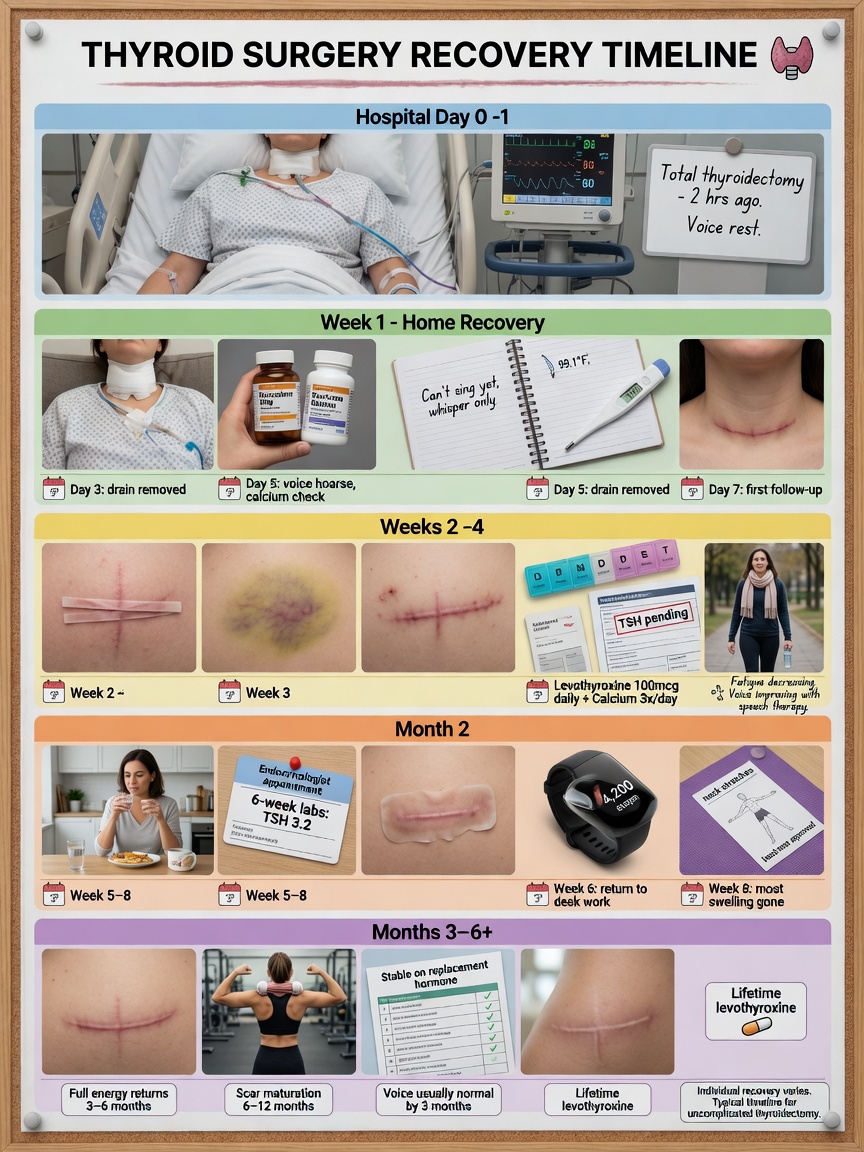
Caption: Most thyroid surgery patients return to desk work within two weeks and achieve full recovery by week six.
Pain Management and the First 24 Hours
Pain after thyroid surgery is typically mild to moderate — most patients describe it as a sore throat combined with neck stiffness. Over-the-counter pain relievers like ibuprofen or acetaminophen are usually sufficient. Narcotics are rarely needed beyond the first day.
Ice packs applied to the neck for 20-minute intervals help reduce swelling and discomfort. You’ll be encouraged to get up and walk within hours of surgery, which reduces the risk of blood clots and speeds recovery.
Voice Rest and Calcium Monitoring After Surgery
Two aspects of aftercare deserve special attention. First, voice rest: you’ll be advised to limit speaking for 24-48 hours after surgery. This allows any swelling around the recurrent laryngeal nerve to subside. After that, gradual use of your voice is encouraged — complete silence beyond two days is unnecessary.
Second, calcium monitoring is critical because the parathyroid glands (which control calcium levels) sit directly behind the thyroid and can be temporarily stunned during surgery. You’ll have your calcium level checked before discharge. Symptoms of low calcium include tingling in the fingertips, lips, or toes, and muscle cramps. If these occur, calcium and vitamin D supplements are prescribed, typically for a few weeks until the parathyroid glands recover.
The American Thyroid Association recommends calcium monitoring after total thyroidectomy (ATA post-operative guidelines, 2024).
When Can You Return to Work and Normal Activities?
- Desk jobs: 1-2 weeks.
- Physical jobs (lifting, manual labor): 4-6 weeks.
- No heavy lifting: For 2 weeks after surgery.
- Driving: After 1 week, provided you’re not taking narcotic pain medication.
Now that you know what recovery looks like, the most critical decision remains: who will perform your surgery? Let’s explore how to choose a surgeon and hospital in Thailand.
Choosing Surgeons and Hospitals for Thyroid Surgery in Thailand
Choosing the right surgeon and hospital is the most important decision you’ll make — one that directly impacts all three corners of the Thyroid Surgery Risk Triangle. The American Thyroid Association recommends surgeons performing more than 100 thyroidectomies per year, and JCI accreditation ensures hospital quality (ATA, 2024). This section provides a step-by-step framework to evaluate your options in Thailand.
What Makes a Top Thyroid Surgeon? Credentials and Volume
The single strongest predictor of a good outcome is surgeon volume. The American Thyroid Association recommends asking how many thyroidectomies the surgeon performs each year — more than 100 is ideal (ATA guide on selecting a thyroid surgeon, 2024). A surgeon who does 30 thyroid surgeries per year has a different risk profile than one doing 200.
Key credentials to verify:
- Board certification in endocrine surgery or general surgery with a thyroid focus.
- Experience with your desired technique — if you’re interested in TOETVA, ask how many scarless procedures the surgeon has performed.
- Complication rates — a transparent surgeon will share their own data on RLN injury and hypoparathyroidism.
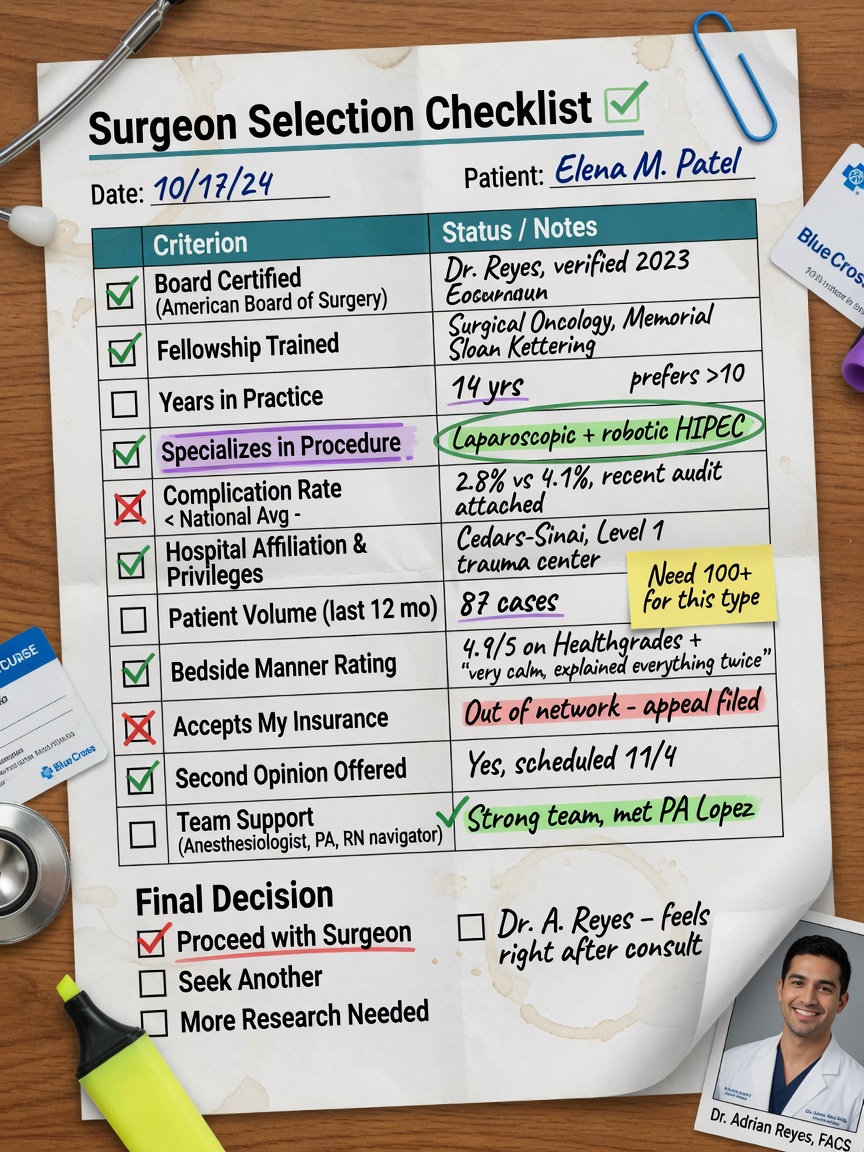
Caption: Use this five-step checklist to evaluate thyroid surgeons in Thailand and reduce your surgical risk.
The Importance of Hospital Accreditation: JCI and Beyond
JCI (Joint Commission International) accreditation is the gold standard for international hospitals. It signifies rigorous global standards in patient safety, surgical care, and infection control (JCI hospital accreditation standards, 2024). Thailand has several JCI-accredited hospitals with dedicated thyroid surgery programs.
Beyond JCI, look for:
- ISO certification for quality management.
- Patient reviews from medical tourism platforms.
- Transparent pricing — hospitals that publish package prices online.
Accreditation is transparent — you can verify a hospital’s JCI status directly on the JCI website.
Questions to Ask Before Your Surgery
Before committing to a surgeon, ask these specific questions:
- “How many thyroidectomies do you perform per year?”
- “What is your rate of recurrent laryngeal nerve injury and transient hypoparathyroidism?”
- “Do you offer TOETVA or other scarless techniques? Am I a candidate?”
- “What is my expected recovery timeline based on my specific case?”
- “What is the total cost, including hospital, surgeon, anesthesia, and follow-up care?”
A transparent surgeon will share their outcomes data willingly. If a surgeon hesitates or gives vague answers, consider it a red flag.
Cost and Value: What to Expect in Thailand
Thyroid surgery in Thailand typically costs 60-80% less than in the United States or Western Europe. Package prices usually include the surgeon’s fee, hospital stay, anesthesia, pre-operative tests, and follow-up consultations. Many JCI-accredited hospitals offer free online price estimates.
When comparing costs, ensure you’re comparing complete packages — some quotes may exclude anesthesia or pathology fees. The value proposition of Thailand’s medical tourism sector lies not just in lower prices but in access to high-volume surgeons and accredited facilities at a fraction of Western costs.
While most patients have successful outcomes, it’s important to understand the limitations and when to consider alternatives.
Limitations, Risks, and When to Seek Alternatives
Common Pitfalls: What Can Go Wrong?
Even in the best hands, thyroid surgery carries potential complications. Understanding them helps you make an informed decision:
- Incomplete tumor removal — requiring reoperation, which carries higher risk due to scar tissue.
- Hypoparathyroidism — temporary or permanent low calcium requiring supplements. Temporary cases affect 5-10% of patients; permanent cases are under 2%.
- Bleeding or hematoma — occurs in less than 1% of cases but requires immediate surgical drainage.
- Infection or seroma — fluid collection under the incision, usually resolving without intervention.
A 2022 meta-analysis in PubMed provides comprehensive complication rates (PubMed RLN injury incidence, 2022). Each of these risks is lower when surgery is performed by a high-volume surgeon at an accredited hospital.
When Is Surgery Not the Best Option?
Surgery is not always the right answer. Consider these alternatives:
- Benign nodules without symptoms — monitoring with annual ultrasound is reasonable and avoids unnecessary surgery.
- Small, low-risk papillary microcarcinomas (under 1 cm) — active surveillance (regular monitoring without surgery) is an accepted approach per international guidelines.
- High surgical risk due to comorbidities — radiofrequency ablation (RFA) of thyroid nodules may be an alternative where available.
A 2019 review in PubMed discusses active surveillance as a valid alternative for low-risk nodules (Thyroid nodule management review, 2019). Always consult an endocrinologist for individualized decision-making.
When to Seek a Second Opinion or Specialist Care
You should seek a second opinion if:
- Your surgeon cannot provide their outcome statistics.
- You’re offered TOETVA for a tumor over 4 cm without clear rationale.
- You have prior neck surgery or radiation exposure — these cases require a tertiary specialist.
- You feel rushed or pressured into a decision.
Consult a high-volume thyroid surgeon for the best outcomes. The Thyroid Surgery Risk Triangle framework reminds you that your priorities matter — a good surgeon will help you balance them.
Frequently Asked Questions
Do most thyroid nodules turn out to be cancerous?
No, the vast majority of thyroid nodules are benign. Over 95% of nodules are non-cancerous. When a nodule is found, doctors use ultrasound and sometimes a biopsy (FNA) to determine if it’s malignant. Even when cancer is detected, the most common type (papillary thyroid cancer) has an excellent prognosis, with a 5-year survival rate above 98% when treated appropriately.
Will my voice change after thyroid removal?
Voice changes after thyroid removal are possible but not common. Temporary hoarseness affects 1-5% of patients due to swelling or nerve irritation. Permanent vocal cord damage is rare, occurring in only 0.5-2% of surgeries. Your surgeon’s experience dramatically influences this risk. Most voice changes improve within 6-12 months with voice rest or therapy.
How long does it take to recover from thyroid surgery?
Most patients recover from thyroid surgery within 1-2 weeks for desk work and 4-6 weeks for full recovery. You’ll typically stay in the hospital for 24 hours. The first days involve pain management (mild, controlled with over-the-counter meds), voice rest, and calcium monitoring. By week 2, most people resume normal activities, avoiding heavy lifting for 2 weeks.
How do I choose the best surgeon for thyroid surgery in Thailand?
Choose a surgeon with high annual volume and specific thyroid expertise. The American Thyroid Association recommends asking how many thyroidectomies the surgeon performs each year — more than 100 is ideal. Verify board certification, experience with your desired technique (traditional vs. TOETVA), and ask about complication rates. A transparent surgeon will gladly share their outcomes.
What is scarless thyroid surgery and is it safe?
Scarless thyroid surgery (TOETVA) is a minimally invasive procedure performed through the mouth, leaving no visible neck scar. It is safe and effective for appropriate candidates (tumors under 4 cm, no thyroiditis, and favorable anatomy). A systematic review in PubMed found comparable surgical outcomes to traditional surgery, with superior cosmetic satisfaction and less postoperative pain.
Conclusion
For patients considering thyroid surgery in Thailand, the key is understanding the Thyroid Surgery Risk Triangle: balancing cancer treatment effectiveness, voice preservation, and cosmetic outcome. Over 95% of nodules are benign, and even when cancer is found, 5-year survival exceeds 98%. The best approach combines choosing a high-volume surgeon (>100 cases/year), a JCI-accredited hospital, and aligning the surgical technique (traditional or TOETVA) with your personal priorities.
The Risk Triangle framework turns fear into actionable decision-making. Instead of being overwhelmed by three separate worries, you can evaluate each corner based on your own values — then ask the right questions: “What is your RLN injury rate?” and “How many TOETVAs do you do?” This structured approach leads to better outcomes and less anxiety.
Start by researching JCI-accredited hospitals in Thailand that offer thyroid surgery. Request consultations with two or three surgeons, ask the questions from this guide, and compare their responses. Your informed decision today will shape your recovery and quality of life for years to come.
This content is for informational purposes only and does not constitute medical advice. Consult a qualified healthcare provider.