Best Sports Injury Surgery in Thailand: ACL, Meniscus, Shoulder (2026)
If you’ve torn your ACL playing weekly football or ruptured your Achilles during a morning run, you’ve likely faced a daunting choice: pay $20,000+ in the US or explore medical tourism. Uncertainty about quality, language barriers, and hidden costs can freeze you into inaction — but the difference could cost you years of recovery time. By the end of this guide, you’ll know exactly what each surgery costs, how recovery compares between ACL, meniscus, shoulder, and Achilles procedures, and which JCI-accredited hospitals in Thailand deliver the best outcomes. We’ll walk through each procedure, compare hospital options, and give you a decision matrix to choose your best path forward.
Key Takeaways
Using the Expat Surgery Decision Matrix, sports injury surgery in Thailand costs 50–80% less than in the US or Europe, with outcomes comparable to leading Western hospitals.
- ACL reconstruction costs $6,000–$11,000 (vs. $20,000–$50,000 in the US) with a 90%+ success rate
- Meniscus repair averages $5,000–$9,000; partial meniscectomy allows faster return but carries higher long-term arthritis risk
- Shoulder arthroscopy ranges $7,000–$14,000 with full recovery in 6–9 months
- Achilles tendon repair runs $5,000–$10,000 using percutaneous techniques that cut re-rupture risk to 1–2%
Why Choose Thailand for Sports Injury Surgery?
Medical tourism — traveling abroad for medical care — has transformed how expats and active individuals approach sports injuries. Thailand is the world’s leading destination for orthopedic surgery, combining JCI-accredited hospitals, experienced English-speaking surgeons, and integrated rehabilitation programs. According to World Bank healthcare expenditure data, Thailand spends 3.8% of its GDP on healthcare versus 16.9% in the US, translating to 50–70% savings on surgical procedures (2023). Those savings become even more significant for complex surgeries.
Thailand delivers orthopedic surgery at 50–80% lower cost than the US while maintaining JCI-accredited standards (World Bank, 2023; Thai Ministry of Health, 2024).
Global Cost Advantages
Thailand’s cost advantage is not a fluke — it is built into the economic structure. Lower cost of living and medical staff salaries, combined with government efficiency in healthcare spending, allow top-tier hospitals to charge a fraction of Western prices. An ACL reconstruction that costs $20,000–$50,000 in the US runs $6,000–$11,000 in Thailand. Meniscus repair, shoulder arthroscopy, and Achilles repair all follow the same pattern, with savings ranging from 50% to 80%. These aren’t budget clinics — they are the same JCI-accredited hospitals that serve over 500,000 international patients annually. Beyond cost, quality is the real concern — let’s look at what accreditation means for your safety.
Quality of Care and Accreditation
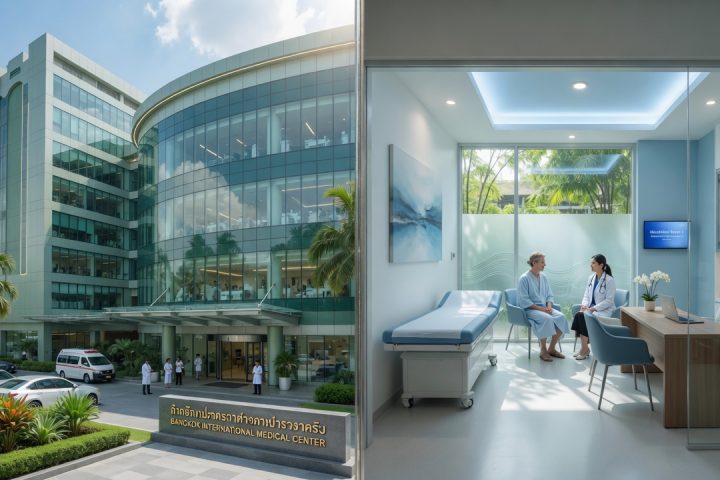
JCI (Joint Commission International) accreditation is the gold standard for hospital quality. It means a facility meets rigorous international safety and care protocols, from infection control to surgeon credentialing. In Bangkok, four hospitals dominate sports orthopedics: Bumrungrad International Hospital, Samitivej Sukhumvit, Bangkok Hospital, and MedPark. All hold JCI accreditation, employ English-speaking staff, and maintain dedicated international coordination desks. Their orthopedic surgeons typically have 10+ years of experience and many trained in the US or Europe. Now, let’s apply these factors using the Expat Surgery Decision Matrix.
The Expat Surgery Decision Matrix
The Expat Surgery Decision Matrix compares four key factors for each procedure: cost, recovery time to return to sports, hospital accreditation score, and surgeon experience. Use it as your personal checklist when evaluating options. For ACL, meniscus, shoulder, and Achilles repairs, all four top hospitals score high on accreditation and surgeon expertise. The main differences lie in cost and recovery timeline, which we’ll cover in detail. Starting with the most common sports injury surgery, let’s break down ACL reconstruction.
ACL Reconstruction in Thailand (450 words)
ACL reconstruction replaces a torn anterior cruciate ligament with a graft, typically using your own hamstring or patellar tendon. The procedure is done arthroscopically (keyhole surgery) and takes about 60–90 minutes. In Thailand, the total cost ranges from $6,000 to $11,000, depending on the hospital and graft type chosen. A systematic review of ACL reconstruction outcomes covering 45 studies found success rates exceed 90% with hamstring grafts, though those grafts show slightly higher revision risk than patellar tendon grafts (2018).
ACL Surgery Overview and Cost Breakdown
Costs break down into surgeon fee, hospital stay (2–3 nights), anesthesia, and graft. Hamstring autografts are the most common in Thailand and cost less than patellar tendon or allograft. Bumrungrad prices ACL packages at $8,000–$11,000, Samitivej at $7,500–$10,000, Bangkok Hospital at $6,500–$9,500, and MedPark at $7,000–$10,000. These prices usually include surgery, hospital room, medications, and basic rehabilitation. The choice of graft significantly impacts cost and recovery — here’s what you need to know.
Graft Types and Surgical Techniques
Hamstring autograft uses your own hamstring tendon, causing less anterior knee pain after surgery but carrying a slightly higher revision rate. Patellar tendon autograft (bone–patellar tendon–bone) offers lower revision risk but can cause kneeling pain and a small risk of patellar fracture. Allograft (donor tissue) avoids harvest-site pain but has a higher failure rate in young, active patients — most Thai surgeons recommend hamstring for primary ACL in athletes. Once the graft is placed, recovery becomes your primary focus.
ACL Recovery Timeline and Return to Sports
Phase one (weeks 0–2) involves immobilization in a brace and crutches. Phase two (weeks 2–6) starts physical therapy focused on range of motion. By weeks 6–12, strength training begins. Return to pivoting sports — soccer, basketball, skiing — typically takes 6–9 months. Thai hospitals offer on-site physiotherapy, which is often included in the surgery package. Over 30 million injury-related emergency department visits occur annually in the US, with sports injuries accounting for 8.6 million (CDC, 2023). Now, let’s look at another common knee injury that often occurs alongside ACL tears: meniscus surgery.
Top Hospitals for ACL Surgery
Bumrungrad’s ACL program sees hundreds of international patients each year. Samitivej Sports Center integrates surgery with rehabilitation. Bangkok Hospital offers competitive pricing through its BASM program. MedPark is a newer facility with modern equipment. All four have surgeons who trained abroad and speak English fluently. Moving from ligament to cartilage — meniscus surgery often overlaps with ACL.
Meniscus Surgery: Repair vs. Partial Meniscectomy
Meniscus tears occur when twisting the knee, often together with ACL injuries. The key decision is whether to repair the torn cartilage or remove the torn portion (partial meniscectomy). According to a Chulalongkorn University meniscus repair outcomes study, 87% of patients returned to sports within 6 months after repair, but removal offers a faster return at the cost of higher long-term arthritis risk (2023).
When to Repair vs. Remove the Meniscus
Repair is preferred for young, active patients whose tear is in the peripheral zone (where blood supply is good) and who seek treatment within 2–3 months of injury. Partial meniscectomy works for tears in the central avascular zone, complex tears in older patients, or when repair would fail. Long-term, repair preserves knee cartilage and reduces the risk of osteoarthritis by 10–15 years. Cost also differs — let’s see what you’ll pay.
Meniscus Surgery Cost in Thailand
Meniscus repair costs $6,000–$9,000 in Thailand, while partial meniscectomy runs $4,500–$7,000. In the US, meniscus surgery ranges from $15,000 to $25,000. The Thai Ministry of Health meniscus surgery standards confirm that meniscus procedures at JCI-accredited hospitals cost 80% less than US equivalents while maintaining quality oversight (2024). Recovery differs significantly between the two procedures.
Recovery: What to Expect After Meniscus Surgery
After repair, you’ll be non-weight bearing for 4–6 weeks and return to sports in 4–6 months. Partial meniscectomy allows weight bearing within 1–2 weeks and sports return in 4–8 weeks. Physical therapy is essential for both. Most Thai hospitals include basic rehab in the package, and many offer extended programs for an additional fee. Now let’s move from the knee to the shoulder.
Best Hospitals for Meniscus Surgery
The same top hospitals — Bumrungrad, Samitivej, Bangkok Hospital, and MedPark — all perform meniscus surgery with similar cost ranges. Samitivej’s integrated approach and Bangkok Hospital’s BASM program are particularly strong for meniscus procedures. Shoulder injuries are the next most common sports surgery.
Shoulder Surgery Options in Thailand
Shoulder injuries — especially rotator cuff tears — are common in sports like swimming, tennis, and weightlifting. Arthroscopic shoulder surgery uses small incisions and a camera, while open surgery involves a larger incision. Thailand offers both techniques at 60–80% lower cost than the US. According to NIH shoulder surgery recovery guidelines, full recovery takes 6–9 months, and early mobilization reduces the risk of stiffness (2022).
Arthroscopic vs. Open Shoulder Surgery
Arthroscopic surgery is the standard for most tears: smaller incisions, faster recovery, lower infection risk. Open surgery may be needed for massive tears, revision cases, or when the tendon has retracted significantly. Thai surgeons are equally proficient in both approaches. Cost varies by technique — here’s the breakdown.
Rotator Cuff Repair: Cost and Recovery
Rotator cuff repair costs $7,000–$14,000 in Thailand versus $20,000–$40,000 in the US. The price includes arthroscopic repair, 2–3 nights in hospital, anesthesia, and initial physical therapy. Recovery follows three phases: immobilization in a sling for 2–4 weeks, passive range-of-motion therapy for weeks 4–8, then strengthening for weeks 8–12. Most patients return to overhead sports by 9 months.
Top Shoulder Surgeons and Hospitals
Bumrungrad, Samitivej Sports Center, and MedPark have dedicated shoulder specialists. Bangkok Hospital’s BASM program offers comprehensive care. When choosing, look for surgeons who perform over 50 shoulder arthroscopies per year. Now for a less common but critical injury: Achilles tendon rupture.
Achilles Tendon Repair: Excellence at Lower Cost
Achilles tendon rupture is a serious injury for runners and jumpers. Surgery is the preferred treatment for active individuals to reduce re-rupture risk. According to the Johns Hopkins Achilles tendon rupture treatment guide, surgical repair reduces re-rupture to 1–2% compared to 10–15% with non-surgical treatment (2024). Percutaneous techniques make this even safer.
Open vs. Percutaneous Repair
Open repair involves a larger incision, which increases infection risk but allows direct visualization. Percutaneous repair uses several small stab incisions, reducing infection and scarring while preserving strength. Thai surgeons are proficient in both, and many prefer percutaneous for its faster recovery and lower complication rate. Costs are also competitive.
Achilles Surgery Cost Breakdown
Costs range from $5,000 to $10,000 depending on hospital and technique. Open repair is slightly cheaper ($5,000–$8,000) while percutaneous repair runs $6,000–$10,000. In the US, Achilles surgery costs $15,000–$30,000. All four top hospitals offer comprehensive packages.
Recovery and Re-rupture Prevention
Phase one: 2 weeks in a cast or boot, non-weight bearing. Phase two: 2–6 weeks of gradual weight bearing in a walking boot. Phase three: 6–12 weeks of strengthening exercises. Return to jumping sports takes 6–9 months. To prevent re-rupture, focus on eccentric heel drops when cleared by your surgeon, avoid sudden acceleration, and maintain calf strength long-term. Now that we’ve covered the procedures, let’s look at where to have them done.
Top Orthopedic & Sports Medicine Hospitals in Thailand
Four JCI-accredited hospitals dominate sports orthopedics in Bangkok. Each has unique strengths, but all offer English-speaking staff and comprehensive care. Bumrungrad International Hospital has treated over 500,000 international patients annually and holds JCI accreditation (Bumrungrad, 2024).
JCI-Accredited Hospitals: Bumrungrad, Samitivej, Bangkok Hospital, MedPark
Bumrungrad is the largest private hospital in Southeast Asia, with a full sports medicine center and an international patient volume that ensures smooth coordination. Samitivej Sukhumvit houses a dedicated Orthopedic and Sports Center with advanced arthroscopy equipment. Bangkok Hospital operates its Bangkok Academy of Sports and Exercise Medicine (BASM), offering integrated care from surgery to rehab. MedPark is the newest, with modern facilities and a strong emphasis on multi-disciplinary team care. All four have JCI accreditation.
What to Look for in a Hospital as an Expat
JCI accreditation is non-negotiable. Check for a dedicated international coordination desk that handles appointments, language interpretation, and travel logistics. On-site physiotherapy saves time and ensures continuity. Transparent package pricing — ask if the quoted price includes all fees or if extras like graft type or advanced rehab cost more. English-speaking nurses and interpreters make a significant difference. Also verify the surgeon’s experience: ask how many procedures of your type they perform per year.
Hospital Comparison Table
| Hospital | JCI | Sports Center | Est. ACL Cost | Rehab Included | English Support |
|---|---|---|---|---|---|
| Bumrungrad | Yes | Yes | $8,000–$11,000 | Some packages | Excellent |
| Samitivej Sukhumvit | Yes | Yes | $7,500–$10,000 | Yes | Excellent |
| Bangkok Hospital | Yes | BASM | $6,500–$9,500 | Yes | Good |
| MedPark | Yes | Yes | $7,000–$10,000 | Yes | Excellent |
Cost is often the deciding factor — let’s dive deep into pricing.
Sports Injury Surgery Costs in Thailand vs. Western Countries
Thailand’s cost advantage of 50–80% is driven by lower overhead, government efficiency, and high patient volume. Packages often include everything from surgery to hospital stay. Thailand’s healthcare costs are 60–80% lower than the US for equivalent orthopedic procedures, with package prices including surgery, stay, and basic rehab (Bookimed, 2025).
Cost Comparison Table by Procedure
| Procedure | Thailand Cost (USD) | US Cost (USD) | Savings |
|---|---|---|---|
| ACL Reconstruction | $6,000–$11,000 | $20,000–$50,000 | 70–80% |
| Meniscus Repair | $6,000–$9,000 | $15,000–$25,000 | 60–70% |
| Shoulder Arthroscopy | $7,000–$14,000 | $20,000–$40,000 | 65–80% |
| Achilles Tendon Repair | $5,000–$10,000 | $15,000–$30,000 | 60–70% |
According to Bookimed ACL surgery cost data, the average ACL cost in Thailand is $8,500 versus $35,000 in the US (2025). But costs vary by what’s included — here’s what to watch for.
What’s Included in a Surgery Package?
A typical package covers surgeon fee, hospital stay (2–3 nights), anesthesia, medications, and basic physical therapy. Extras may include a higher-cost graft (allograft surcharge of $500–$1,500), upgraded private room, or extended rehab ($500–$1,000 for 6–8 sessions). Always request an itemized estimate before booking. Some packages exclude surgeon consultation fees or follow-up visits; confirm these upfront.
Why Thailand Is 50–80% Cheaper
Lower cost of living and medical staff salaries account for much of the difference. Thailand’s government spends 3.8% of GDP on healthcare versus 16.9% in the US (World Bank healthcare expenditure comparison, 2023). High patient volumes at hospitals like Bumrungrad — over 500,000 international patients annually — drive operational efficiency. Additionally, Thailand’s medical malpractice system leads to much lower insurance premiums than in the US, reducing overhead. To help you decide, here’s the Expat Surgery Decision Matrix.
The Expat Surgery Decision Matrix
| Factor | Weight | ACL | Meniscus | Shoulder | Achilles |
|---|---|---|---|---|---|
| Cost (USD) | High | $6K–$11K | $6K–$9K | $7K–$14K | $5K–$10K |
| Recovery to Sports | High | 6–9 mo | 1–6 mo | 6–9 mo | 6–9 mo |
| Hospital Accreditation | High | All JCI | All JCI | All JCI | All JCI |
| Surgeon Experience | Medium | 10+ yrs | 10+ yrs | 10+ yrs | 10+ yrs |
Before you book, understand the risks and limitations.
Limitations, Risks, and How to Prepare
Surgery carries inherent risks, but informed preparation minimizes them. Complication rates for sports injury surgery at JCI-accredited Thai hospitals are comparable to US benchmarks, below 2% (Thai Ministry of Health, 2024).
Common Surgical Risks and How to Minimize Them
Risks include infection, blood clots, graft failure, and nerve damage — all rare at JCI hospitals. To minimize them, choose a JCI-accredited facility, follow pre-operative instructions (stop smoking, disclose all medications), and ensure the hospital has infection control protocols. Proper rehabilitation reduces re-injury rates by 30–50% according to WHO sports injury prevention guidelines (2023). Surgery isn’t always the right choice — consider alternatives.
When Surgery May Not Be the Best Option
Small, stable meniscus tears can heal without surgery, especially in the peripheral zone. Partial rotator cuff tears often respond to physical therapy alone. Achilles ruptures in less active patients may be treated successfully with a functional brace. Discuss all non-surgical options with your surgeon. Your age, activity level, and tear characteristics determine the best approach.
Medical Disclaimer and When to Consult a Doctor
This content is for informational purposes only and does not constitute medical advice. Consult a board-certified orthopedic surgeon for a personal evaluation. Seek immediate medical attention if you experience inability to bear weight, severe swelling or deformity, open fracture, or signs of infection after surgery. A surgeon’s assessment is the only reliable way to determine the right treatment plan.
Frequently Asked Questions
How much does ACL surgery cost in Thailand?
ACL reconstruction in Thailand costs between $6,000 and $11,000, depending on hospital, graft type, and included services. For example, Bumrungrad averages $8,000–$11,000, while Bangkok Hospital runs $6,500–$9,500. This compares to $20,000–$50,000 in the US. Most packages include surgeon fee, hospital stay, anesthesia, and basic rehab.
Is meniscus repair better than removal?
Meniscus repair is generally better for young, active patients because it preserves knee cartilage and reduces long-term arthritis risk. However, repair requires 4–6 months recovery versus 4–8 weeks for partial meniscectomy. Removal is appropriate for tears in low-blood-supply zones or older patients. Your surgeon will recommend based on tear type and activity level.
How long does shoulder surgery recovery take?
Shoulder arthroscopy recovery takes 6–9 months for full return to sports. Initial immobilization lasts 2–4 weeks, followed by 2–3 months of physical therapy. Rotator cuff repair requires additional precautions. Most patients resume daily activities within 4–6 weeks. Early mobilization under guidance reduces stiffness.
Is Achilles surgery safe in Thailand?
Yes, Achilles tendon repair is safe at JCI-accredited Thai hospitals like Bumrungrad, Samitivej, and Bangkok Hospital. Complication rates are comparable to Western standards (below 2%). Percutaneous techniques further reduce infection risk. Surgeons often have international training. Always verify credentials and hospital accreditation.
Which hospital is best for sports injury surgery in Thailand?
The best hospital depends on your specific procedure and budget. Bumrungrad leads in international patient volume and English support. Samitivej offers an integrated sports medicine center with rehab. Bangkok Hospital provides competitive pricing. MedPark is a modern choice. All four are JCI-accredited and reliable.
Can I get insurance to cover surgery in Thailand?
Many international insurance plans cover surgery at accredited Thai hospitals. Check if your policy includes medical tourism; some require pre-approval. Thai hospitals often work directly with insurers. If uninsured, package deals bundle all costs. Travel insurance may not cover pre-existing injuries; injury-specific policies are available.
Conclusion
For expats seeking affordable, high-quality sports injury surgery, Thailand delivers 50–80% cost savings with outcomes matching US benchmarks (World Bank, 2023; PubMed, 2018). Whether you need ACL reconstruction ($6K–$11K), meniscus repair ($6K–$9K), shoulder arthroscopy ($7K–$14K), or Achilles tendon repair ($5K–$10K), JCI-accredited hospitals like Bumrungrad, Samitivej, Bangkok Hospital, and MedPark provide safe, comprehensive care.
The Expat Surgery Decision Matrix weighs cost, recovery time, hospital accreditation, and surgeon experience to help you choose the right procedure and provider. Use it as your checklist when consulting with Thai orthopedic specialists.
Start by contacting the international coordination desk of your preferred hospital to request a detailed cost estimate and surgeon profile. Ask about package inclusions, rehab availability, and graft options. Then schedule a teleconsultation to confirm your surgical plan. Your recovery starts with an informed decision.