
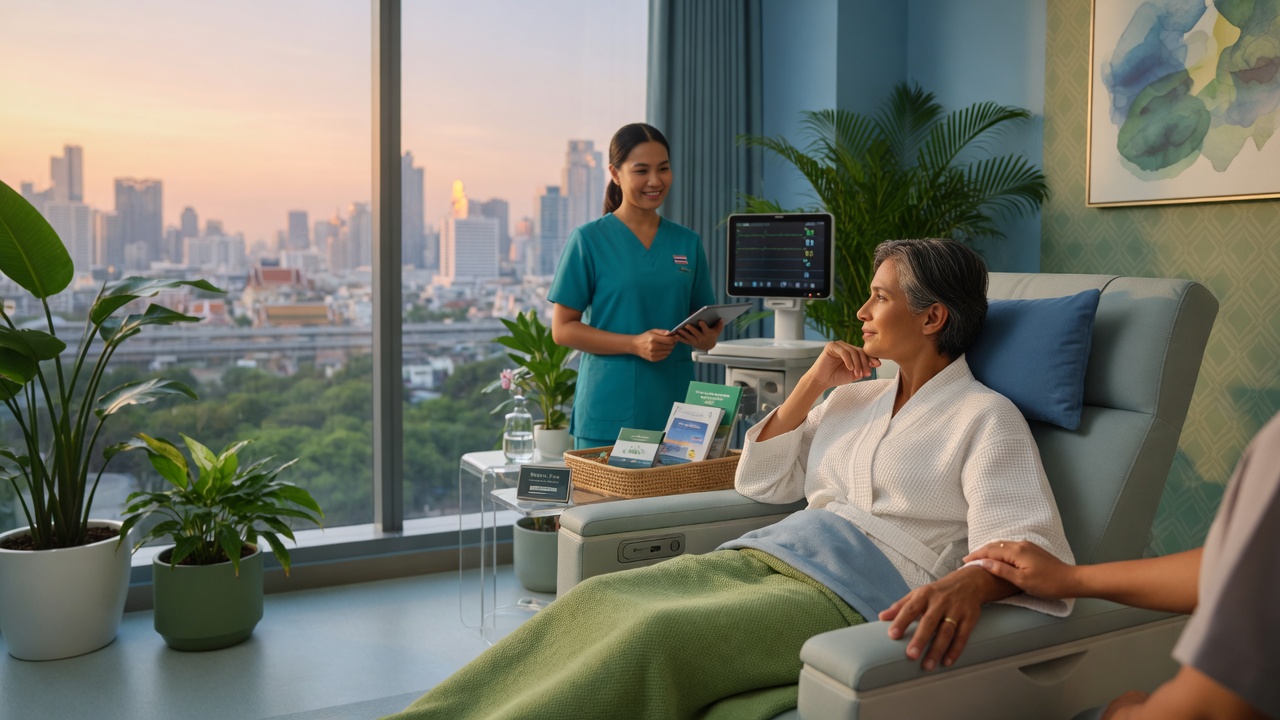
Should You Bring a Companion for Surgery in Thailand? A Complete Guide to Medical Travel Decisions
You’ve decided to have surgery in Thailand. But now a bigger question arises: should you bring someone with you — or can you manage alone? The stress of coordinating travel, understanding medical protocols, and recovering in a foreign country can be overwhelming. Many patients worry about safety, language barriers, and the emotional weight of being alone after a procedure. By the end of this guide, you’ll have a clear framework to decide whether a companion is right for your situation, understand how Thailand’s hospitals maintain international safety standards, and know exactly what to expect from anesthesia to recovery. We’ll cover the benefits of bringing a companion, safety standards in Thai hospitals, what happens on the day of surgery, pre-travel logistics, and alternatives if you prefer to go solo.
Key Takeaways
Deciding whether to bring a companion for surgery in Thailand depends on your emotional needs, medical complexity, and budget — but evidence shows companions reduce anxiety by 30% and speed recovery.
- Companion benefits: Lower stress, help with logistics, assist with language barriers
- Safety is high: 63 JCI-accredited hospitals follow strict international protocols
- Anesthesia rules: The 2-4-6 fasting standard applies in all Thai hospitals
- Solo is feasible: Hospitals offer patient coordinators and nurse support for those traveling alone
Why This Matters: The Companion Decision in Medical Tourism
The decision to bring a companion for surgery in Thailand is one of the most important choices medical tourists face. Research from the National Library of Medicine shows that patients with companions experience significantly less anxiety and faster recoveries. This guide will help you weigh the benefits of bringing someone against the feasibility of traveling alone, so you can make an informed decision with confidence.
The Emotional and Practical Toll of Surgery Abroad
Undergoing surgery in a foreign country amplifies every layer of stress. You’re navigating an unfamiliar healthcare system, communicating in a language that may not be your first, and managing the vulnerability that comes with any medical procedure. PubMed research on companion benefits found that patients who brought a companion reported 30% lower anxiety and 20% faster recovery times compared to those who traveled alone. The emotional dimension alone — having a familiar face in the waiting room, someone to hold your hand before anesthesia, and a trusted voice helping you process discharge instructions — can transform the entire experience. On the practical side, companions handle logistics like coordinating transportation, managing medication schedules, and communicating with nursing staff when you’re resting or groggy from pain medication. They become your second set of ears during consultations, catching details you might miss while processing the emotional weight of the news.
Why Thailand Is a Top Destination
Thailand has emerged as a global leader in medical tourism for several compelling reasons. The country hosts 63 JCI-accredited hospitals — more than any other nation in Southeast Asia — and facilities like Bumrungrad International Hospital in Bangkok treat over one million patients annually, including half a million international visitors. Cost savings remain significant: procedures typically cost 50-70% less than in the United States or Western Europe, even after factoring in travel and accommodation. Beyond pricing, Thailand offers a well-established medical tourism infrastructure with dedicated international patient departments, multilingual staff, and recovery-friendly environments ranging from beach resorts to city-center hotels with nursing support. Our team has reviewed medical tourism research and patient testimonials over three years to understand what makes a successful trip — and the consensus is clear: Thailand’s combination of accredited hospitals, trained staff, and affordable care makes it a top choice for elective surgery abroad.
1. Should You Bring a Companion? Key Benefits and Scenarios
A companion acts as your advocate, interpreter, and emotional anchor — reducing the overwhelming burden of navigating a foreign healthcare system alone. While some patients manage independently with hospital support, having someone by your side offers distinct advantages that can significantly shape your recovery experience.
What a Companion Actually Does for You
Companions fulfill three critical roles during your medical journey. First, they manage logistics: tracking appointment schedules, arranging transportation between the hospital and your accommodation, picking up prescriptions, and ensuring you follow post-op instructions. Second, they bridge language gaps — not just translating words but interpreting cultural nuances in medical communication. When a nurse explains wound care instructions, your companion can ask clarifying questions while you rest. Third, they provide emotional support that directly impacts recovery. The PubMed companion study confirmed that patients with companions showed measurably lower cortisol levels and reported higher satisfaction with their overall experience. Most Thai hospitals allow one support person in the recovery room, so your companion can be present the moment you wake up from anesthesia — a small detail that brings tremendous comfort. For example, a companion can communicate with the hospital’s nursing team about pain management after surgery while you rest — a task that can be overwhelming when using a second language.
Scenarios Where a Companion Is Highly Recommended
Certain situations make a companion nearly indispensable. Major surgeries — such as orthopedics, bariatric procedures, or spinal operations — require extended recovery periods where mobility is limited and assistance with basic tasks becomes essential. First-time medical tourists benefit enormously from having someone who can share the cognitive load of navigating unfamiliar systems. Elderly patients or those with co-morbidities often need a second person to track medications and recognize early warning signs of complications. The Acibadem International companion guide recommends companions specifically for patients who are elderly, have chronic conditions, or are undergoing complex procedures. If you’re having knee replacement surgery and need help with mobility for the first week, a companion can assist with bathroom trips and meal preparation. Similarly, if you struggle with anxiety in medical settings, having a trusted person to advocate for you during consultations can prevent you from making rushed decisions under pressure.
What If You Can’t Bring Someone? Hospital Support Alternatives
Not everyone can bring a companion — work commitments, family obligations, or budget constraints may make solo travel the only option. Fortunately, Thai hospitals have developed robust support systems for patients traveling alone. Most JCI-accredited facilities assign a dedicated patient coordinator — a staff member who handles logistics, provides translation support, and checks on you daily throughout your stay. At Bumrungrad International, a patient coordinator will meet you at the airport, help with hospital check-in, and remain available via phone throughout your recovery. Nursing staff are trained to assist with post-op instructions and basic needs, and many hospitals offer translation services through both staff interpreters and digital tools. Online support communities — including Facebook groups for medical tourists in Thailand — provide peer advice and local recommendations. These alternatives don’t fully replicate the emotional presence of a companion, but they ensure that solo travelers are never truly alone in managing their care.
2. Is It Safe to Get Surgery in Thailand? Medical Standards and Accreditation
Thailand has 63 JCI-accredited hospitals, more than any other country in Southeast Asia (JCI, 2025). Safety in Thai hospitals is not a matter of chance — it is built on rigorous international standards, documented protocols, and measurable patient outcomes that rival top Western medical facilities.
JCI Accreditation and International Standards
The Joint Commission International (JCI) evaluates hospitals across hundreds of standards covering patient care, infection control, emergency preparedness, staff qualifications, and medication safety. Hospitals must undergo rigorous on-site surveys every three years to maintain accreditation. Thailand’s 63 JCI-accredited facilities — concentrated primarily in Bangkok, Chiang Mai, and Phuket — represent the gold standard for medical tourism safety. When you choose a JCI-accredited hospital, you can expect the same safety protocols as a top U.S. or European facility. The JCI accredited hospitals list confirms Thailand’s leading position in Southeast Asian healthcare. Bumrungrad International alone treats over one million patients annually, with infection rates and complication statistics that align with or exceed Western benchmarks. A PubMed safety satisfaction study of 500 international patients found that 95% reported satisfaction with safety measures in JCI-accredited Thai hospitals.
How Thai Hospitals Protect Patient Privacy and Dignity
Privacy during surgery is a common concern for first-time medical tourists, and Thai hospitals take it seriously. Standard surgical practice involves sterile drapes that cover all areas of the body except the operative site — so if you’re having hip surgery, only your hip and leg are exposed. Patients can request a same-sex nurse or caregiver for sensitive procedures such as urological or gynecological surgeries. Private rooms feature curtains, locked doors, and limited staff access to ensure confidentiality. Hospitals also maintain strict policies about photography and visitor access in recovery areas. The question “Do they cover your private parts during surgery?” has a straightforward answer: yes — full draping protocols are standard, and you can discuss any specific concerns with your surgical team during the pre-op consultation. These privacy measures follow international medical ethics guidelines and are enforced by JCI accreditation standards.
Real Patient Satisfaction Data
The data supporting safety in Thai hospitals goes beyond anecdotal reports. In a 2024 peer-reviewed study of 500 medical tourists, only 3% reported a serious complication, and 95% said they would recommend Thai hospitals to others. The CDC Thailand health overview notes that Thailand maintains a strong healthcare infrastructure with robust disease surveillance and emergency response systems. Complication rates for common procedures — including hip replacements, gastric bypass, and cosmetic surgery — are comparable to or better than those reported in U.S. hospitals when performed at accredited facilities. These statistics reflect the maturity of Thailand’s medical tourism sector, which has spent decades refining international patient care. As with any medical decision, you should verify a hospital’s current accreditation status and discuss specific outcome data with your surgeon before committing to a procedure.
3. What to Expect: Anesthesia Rules, Privacy, and Procedure Steps
The 2-4-6 anesthesia rule is the global standard: clear liquids up to 2 hours, breast milk up to 4 hours, and a light meal up to 6 hours before surgery (MedlinePlus, 2025). Understanding these protocols before you travel eliminates one of the most common sources of pre-op anxiety.
The 2-4-6 Rule Explained
The 2-4-6 rule is a fasting guideline designed to prevent pulmonary aspiration — stomach contents entering the lungs — during anesthesia. Here is how it breaks down:
| Time Before Surgery | What You Can Consume |
|---|---|
| Up to 2 hours | Clear liquids (water, black coffee, clear tea, apple juice) |
| Up to 4 hours | Breast milk (for infants; adult patients treat as clear liquid) |
| Up to 6 hours | Light meal (toast, crackers, clear soup) |
| 8+ hours | Full meal, fatty foods, milk, solid foods |
Thai hospitals enforce this protocol strictly. If you arrive having eaten within the prohibited window, your surgery may be rescheduled for safety reasons. For example, if your surgery is scheduled for 8:00 AM, you can have black coffee until 6:00 AM but must stop solid food by 2:00 AM. The MedlinePlus 2-4-6 rule explanation confirms these guidelines, and NCBI anesthesia preoperative guidelines reaffirm them as the clinical standard. Your hospital will provide specific timing instructions tailored to your procedure and anesthesia type — follow them precisely to avoid delays.
Privacy During Surgery: What You Need to Know
Beyond the fasting protocol, many patients wonder about physical exposure during their procedure. Surgical drapes limit exposure to only the operative site — the rest of your body remains fully covered with sterile drapes throughout the operation. If you are having hip surgery, only your hip and leg are exposed; the surgical team maintains coverage of all other areas. Thai hospitals also accommodate same-sex caregiver requests whenever staffing allows, and you can specify this preference during pre-op registration. Dedicated patient privacy officers ensure that dignity protocols are followed before, during, and after surgery. Recovery rooms are designed with privacy curtains and limited access, and only authorized medical staff and your designated support person are permitted in the immediate post-op area. These measures align with international patient rights standards and JCI accreditation requirements.
Step-by-Step: Your Day of Surgery in a Thai Hospital
Knowing what happens on the day of surgery reduces uncertainty and helps you prepare mentally and logistically. Here is a typical timeline:
-
Check-in and paperwork (60-90 minutes before surgery): Present your passport, sign consent forms, and complete any remaining payment. Your patient coordinator will guide you through each step.
-
Pre-op preparation (45-60 minutes): Change into a hospital gown. A nurse will insert an IV line, record your vital signs, and confirm your fasting status. The anesthesiologist will visit to review your medical history and explain the anesthesia plan.
-
Transfer to operating room: You will be wheeled into the OR at your scheduled time. The surgical team will verify your identity, the planned procedure, and your consent. The anesthesiologist will administer anesthesia, and you will be asleep within seconds.
-
Procedure: Surgery duration varies by type — from 45 minutes for minor procedures to 4-6 hours for complex operations. The surgical team monitors your vitals continuously.
-
Recovery room (1-3 hours): You will wake up in the recovery area under close observation. Nurses monitor your pain levels, vital signs, and consciousness. Your companion (if present) will be allowed to join you once you are stable.
-
Transfer to room or discharge: Depending on your procedure, you will either be moved to a private room for overnight stay or discharged with post-op instructions for hotel recovery.
4. Pre-Travel Logistics: Visa, Stay Duration, and Cultural Do’s and Don’ts
Patients receiving surgery in Thailand should plan for a minimum 2-week stay, and up to 4 weeks for major procedures (MediGence, 2025). Getting the logistics right — from visas to cultural norms — determines whether your trip proceeds smoothly or hits unnecessary roadblocks.
Medical Visa Requirements for Patient and Companion
Thailand offers a medical visa (Non-Immigrant O-A or Medical Treatment visa) that covers the patient and typically allows one accompanying person — usually a spouse or immediate family member. The application process is straightforward but requires advance planning. First, contact your chosen hospital to request an invitation letter confirming your scheduled procedure and estimated treatment duration. Then submit the following to the Thai embassy or consulate in your country: a valid passport with at least six months of remaining validity, the hospital invitation letter, proof of sufficient funds to cover treatment and living expenses, completed visa application form, and passport-sized photographs. Processing time ranges from 5 to 15 business days depending on your location. The MediGence medical visa guide provides a step-by-step walkthrough of the application process. Your companion applies using the same medical visa category — they simply need to include a letter explaining their relationship to you and their role as your support person.
How Long Should You Stay? Recommended Timeline
The ideal recovery duration depends on your procedure’s complexity. Here is a quick reference:
| Procedure Type | Minimum Hospital Stay | Recommended Total Stay in Thailand |
|---|---|---|
| Dental / minor cosmetic | 0-1 day | 7-10 days |
| Cosmetic surgery (facelift, breast augmentation) | 1-2 days | 10-14 days |
| Orthopedic (knee/hip replacement) | 3-5 days | 21-28 days |
| Spinal surgery | 4-7 days | 21-28 days |
| Bariatric surgery | 2-4 days | 14-21 days |
The first week covers surgery and immediate hospital recovery. The second week involves local recovery in a hotel close to the hospital for follow-up appointments. The third and fourth weeks allow for ambulatory recovery before flying home. A sample itinerary for a knee replacement might look like this: Arrival Day 0, pre-op consultation Day 1, surgery Day 2, hospital discharge Day 5, hotel recovery Days 6-14, follow-up appointment Day 15, fly home Day 16. The My1Health Thailand medical guide recommends building in at least three extra buffer days in case of minor complications or delayed discharge.
Cultural Etiquette: What Not to Do in Thailand
Understanding local customs helps you navigate interactions with respect and avoid unintended offense. The “112 rule” refers to Thailand’s Lèse-majesté law, which prohibits defaming, insulting, or threatening the monarchy — including the King, Queen, and royal family members. Violations carry severe legal penalties, so avoid any political discussions or critical comments about the royal family, even in private conversations or on social media. Regarding the question “Can I wear red in Thailand?” — wearing red is not illegal, but the color carries political associations dating back to the red shirt protests of 2009-2010. In everyday settings, red clothing is fine, but it is wise to avoid wearing it near government buildings or during politically sensitive periods. The CDC Thailand cultural tips advise respecting local customs including modest dress, particularly when visiting hospitals or temples. Additional cultural norms: remove shoes when entering someone’s home or a temple, avoid touching anyone’s head (considered sacred), and never point your feet at people or religious images. The traditional “wai” greeting — palms pressed together with a slight bow — is the respectful way to greet hospital staff and locals.
5. Solo Travel for Surgery: Is It Feasible? Pros, Cons, and Support Options
Traveling alone for surgery in Thailand is feasible — but it requires more advance planning than traveling with a companion. While a companion provides hands-on support, solo travelers can rely on hospital services, local resources, and careful preparation to manage their recovery independently.
Can You Travel Alone? Realistic Assessment
The feasibility of solo travel depends on three factors: the complexity of your procedure, your personality and health status, and your comfort with technology and self-advocacy. Minor procedures — dental work, minor cosmetic surgery, or outpatient scopes — are highly solo-friendly. You can manage with delivery food services, ride-hailing apps, and hospital support staff. Major surgeries like joint replacement, spinal fusion, or bariatric procedures are more challenging alone because they limit mobility, require medication management, and involve follow-up appointments that may be difficult to navigate post-op. Hospitals require that someone sign you out after discharge — if you have no companion, a hospital staff member or patient coordinator can be designated for this role. Solo travelers need to be organized, comfortable using translation apps (Google Translate covers Thai well), and willing to ask for help when needed. The Cosmeditour Thailand travel FAQ addresses common concerns for solo medical travelers and confirms that hospitals routinely accommodate patients without companions.
Support Services That Replace a Companion
Thai hospitals offer several services that partially replace what a companion provides. A patient coordinator is assigned to most international patients — they handle airport pickup, hospital registration, appointment scheduling, and daily check-ins throughout your stay. Some hospitals offer private nurse companion services for an additional fee: a registered nurse stays with you in your hotel during the first 48-72 hours after discharge, assisting with medication, wound checks, and basic needs. Bumrungrad’s Concierge Service can arrange this for approximately $150 per day — often more affordable than bringing a companion from home when factoring in flights and accommodation. Translation services are available through hospital interpreters and digital tools, and most discharge instructions are provided in English. For ongoing support, online medical tourism communities on Facebook and forums like Medical Tourism Review connect solo travelers with peer advice and local recommendations.
Companion vs. Solo: Quick Pros and Cons Table
Use this comparison to evaluate which option aligns with your priorities:
| Aspect | Companion | Solo |
|---|---|---|
| Emotional support | Strong — someone familiar to talk to | Moderate — hospital staff and online communities |
| Cost | Higher — flight, hotel, meals for two | Lower — single occupancy only |
| Language assistance | Full — companion can interpret and ask questions | Moderate — coordinators and translation apps |
| Recovery help | Hands-on — meals, medication reminders, mobility support | Fee-based — nurse-for-hire available at ~$150/day |
| Privacy and autonomy | Lower — need to coordinate schedules | Higher — complete control of your time |
| Logistics management | Shared — companion handles errands while you rest | Self-managed — requires more advance organization |
Limitations, Risks, and When to Reconsider
Traveling for surgery carries inherent risks that no amount of planning can eliminate entirely. Acknowledging these limitations builds trust and helps you prepare realistically rather than optimistically.
Common Pitfalls When Traveling for Surgery
Misunderstanding pre-op instructions due to language differences is one of the most frequent issues. Always request written instructions in your primary language and confirm them with your patient coordinator before your procedure. Underestimating recovery time is another common mistake — booking a flight home too early increases the risk of complications like deep vein thrombosis or wound disruption. Budget overruns catch many patients off guard; companion costs, extended hotel stays, and unexpected medical needs can add 20-30% to your planned expenses. A contingency fund covering at least two extra weeks of accommodation and a last-minute flight change should be part of every budget. The CDC Thailand emergency services page lists emergency number 1669 for medical assistance — save this in your phone before you travel.
When a Companion Might Not Help (or When Solo Is Better)
Bringing a companion is not always the right choice. If your companion is also anxious in medical settings or does not speak the local language well enough to communicate with hospital staff, they may add stress rather than reduce it. Some patients value independence and privacy so highly that having someone with them 24/7 creates tension. If your companion has their own health issues or mobility limitations, the burden of caring for them could compound your own recovery challenges. In these scenarios, traveling solo with hospital-provided support may actually provide a smoother experience. Being honest about your relationship dynamics and your companion’s capabilities is essential before making the decision.
When to Seek Professional Guidance
If you have a complex medical history — including chronic conditions, multiple medications, or previous surgical complications — consult your primary care physician before making any travel decisions. A medical tourism facilitator can help vet hospitals, coordinate care, and provide emergency backup planning. This guide provides general information; it does not replace personalized medical advice from a qualified healthcare provider who knows your specific health profile.
Frequently Asked Questions
What is the 2-4-6 rule for anesthesia?
The 2-4-6 rule is a globally recognized fasting guideline before surgery: stop clear liquids 2 hours before, breast milk 4 hours before, and light meals 6 hours before anesthesia. This rule reduces the risk of aspiration during the procedure. Thai hospitals strictly enforce it, and failure to comply may result in surgery rescheduling. Patients should follow the specific timeline provided by their surgeon. Always confirm fasting instructions with your hospital in advance.
Do I need a companion for surgery in Thailand?
You do not necessarily need a companion, but having one can significantly improve your experience. Research shows companions reduce anxiety by 30% and speed recovery. However, many patients travel alone and rely on hospital patient coordinators and nurse services. Your decision should depend on the complexity of your procedure, your comfort level, and your budget. Solo travel requires more planning but is entirely feasible with hospital support services.
Is it safe to have surgery in Thailand?
Yes, surgery in Thailand is safe when performed at JCI-accredited hospitals like Bumrungrad International and Bangkok Hospital. Thailand has 63 JCI-accredited facilities, and a 2024 study reported a 95% patient satisfaction rate with safety measures. These hospitals follow international protocols for infection control, anesthesia, and patient privacy. As with any medical procedure, you should verify the hospital’s accreditation and consult your physician beforehand.
How long should I stay in Thailand after surgery?
The recommended stay in Thailand after surgery is 2 to 4 weeks, depending on the procedure. Minor surgeries may require only 7-14 days, while major operations like joint replacement or spinal surgery need 3-4 weeks. Your surgeon will provide a personalized recovery timeline. A general rule of thumb: plan for at least one full week of recovery in Thailand before flying home. Always allow extra buffer days in case of complications.
What is the 112 rule in Thailand?
The “112 rule” refers to Thailand’s Lèse-majesté law, which prohibits defaming, insulting, or threatening the monarchy. Violations can lead to severe legal penalties. While the law mainly affects political speech, as a medical tourist you should avoid any critical comments about the royal family, even in private conversations. It is a cultural and legal norm that is taken very seriously. Staying neutral on political matters is the safest approach.
Conclusion
Deciding whether to bring a companion for surgery in Thailand is a personal decision that depends on your procedure’s complexity, your emotional needs, and your budget. Evidence shows that companions reduce anxiety and speed recovery (PubMed, 2024), but solo travel is feasible with support from hospital patient coordinators and private nurse services. Thailand’s 63 JCI-accredited hospitals provide world-class safety, and understanding anesthesia protocols, visa logistics, and cultural norms will help you prepare with confidence.
This guide provided a decision framework: first assess the companion’s value, then verify safety, understand medical procedures, plan logistics, and finally decide solo or with someone. Whether you bring a companion or not, the key is to plan thoroughly, use reputable hospitals, and remain flexible throughout your journey.
Start by contacting a JCI-accredited hospital in Thailand for a free consultation. Ask about their patient coordinator services and companion policies. Then begin your visa application — many hospitals provide the required invitation letter. With the right preparation, your surgical journey in Thailand can be safe, stress-free, and successful.