
How to Choose Spine Surgery in Thailand: Decompression, Fusion, or Disc Replacement
Medical Disclaimer: This article is for informational purposes only and does not constitute medical advice. Consult a qualified spine surgeon for a personalized evaluation. Always seek professional guidance before making any surgical decisions.
If you have been living with persistent back pain, sciatica, or leg weakness that has not improved with physiotherapy or medication, you may be wondering whether spine surgery is the next logical step — and if so, which procedure is right for your condition. Without a clear decision framework, it is easy to get lost in conflicting information; one surgeon recommends fusion, another says disc replacement, and meanwhile your symptoms affect your daily life and sleep.
By the end of this guide, you will have a step‑by‑step decision framework that helps you evaluate surgical candidacy, compare the three main procedures — decompression, fusion, and disc replacement — understand costs, choose a hospital, and set realistic recovery expectations — all specifically for spine surgery in Thailand. We will start with when surgery is truly necessary, then move through procedure selection, cost comparison, hospital and surgeon choice, and finally recovery and outcomes.
To create this guide, our team reviewed peer‑reviewed studies from PubMed, the AAOS clinical practice guidelines, and patient outcome registries including the Swedish Spine Register (Swespine), then cross‑referenced findings with cost data from JCI‑accredited Thai hospitals. This methodology ensures the information you read here reflects current evidence and real‑world practices.
Key Takeaways
Choosing spine surgery in Thailand involves a step‑by‑step evaluation of candidacy, procedure type, cost, hospital, and recovery — about 85% of patients report satisfactory outcomes when the right procedure is matched to their spine condition.
- Decompression works best for nerve compression with minimal instability – lowest risk, fastest recovery.
- Fusion provides durable correction for instability but sacrifices motion; regret rates are 10–15% at 5 years.
- Disc replacement preserves motion and may reduce adjacent‑segment disease, with success rates above 80% at 10 years.
- Cost in Thailand is 50–70% less than in the US, with total disc replacement starting at $10,000.
When to Consider Spine Surgery in Thailand
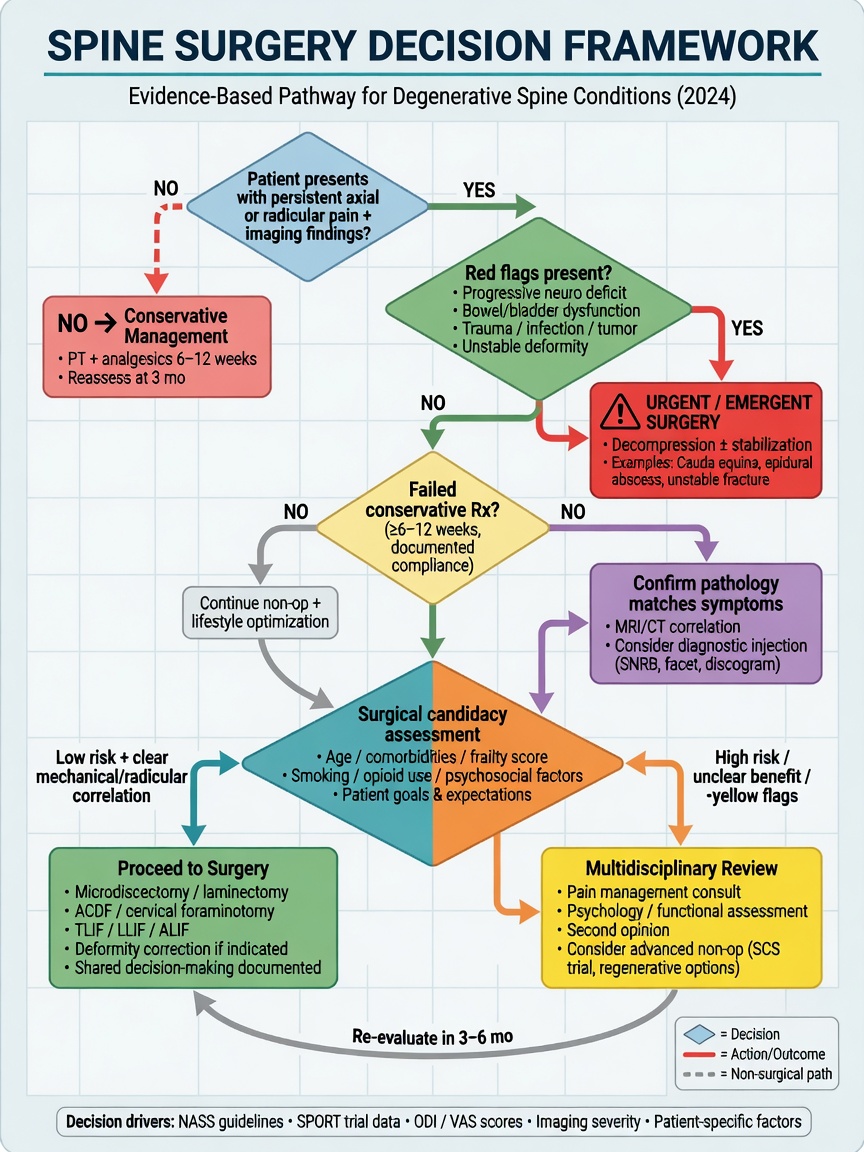
Spine surgery is not a first‑line treatment — it is considered only after conservative measures fail and specific red flags appear. Studies indicate that about 20% of chronic back pain patients eventually meet criteria for surgical evaluation. Knowing those criteria helps you avoid unnecessary surgery while ensuring you do not delay when it could prevent permanent nerve damage.
When Is Spinal Surgery Necessary for Back Pain?
The decision for spinal surgery hinges on clear diagnostic criteria: the presence of nerve compression causing progressive neurological deficits, cauda equina syndrome, or intractable pain that fails to improve after 6–12 weeks of structured conservative care. Common red flags include loss of bladder or bowel control, sudden foot drop, or rapidly worsening leg weakness — these require urgent evaluation. For most patients, an MRI confirming nerve root compression, spinal stenosis, or instability provides the surgical target.
Intermittent symptoms that come and go can still be significant. For example, a 55‑year‑old with L4‑L5 stenosis who experiences leg pain while walking (neurogenic claudication) and has not improved after three months of physical therapy fits the surgical profile. The key question is whether the symptoms are bad enough to interfere with daily function and whether they are progressing.
Medical tourism to Thailand is a growing pathway for patients in this situation. According to the Medical Tourism Association, spine procedures account for nearly 15% of all orthopaedic surgeries sought internationally, with Thailand among the top three destinations due to its combination of accredited hospitals and cost savings. For a patient who has already exhausted local conservative care, seeking evaluation at a JCI‑accredited Thai hospital can be a logical next step rather than enduring further delay.
Red Flags and Conservative Treatment Failure
When conservative treatment fails — meaning no improvement after at least three months of physical therapy, anti‑inflammatory medication, and activity modification — the timeline for considering surgery shortens. Progressive symptoms like worsening leg weakness, expanding numbness, or loss of coordination signal that the nerve is under increasing pressure.
Waiting too long can lead to irreversible nerve damage (axon degeneration), which reduces the chance of full recovery after surgery. A patient with foot drop from a large L4‑L5 herniation needs surgical intervention within 48–72 hours to maximize the likelihood of motor recovery. Other red flags include severe spinal instability seen on flexion‑extension X‑rays, or progressive deformity such as kyphosis.
Quick Self‑Assessment Checklist
Use these yes/no questions to evaluate your situation before consulting a surgeon:
- Do you have leg pain that is worse than your back pain?
- Have you noticed muscle weakness in one leg or foot?
- Are you unable to walk more than 5 minutes without stopping due to leg cramping or pain?
- Is your pain interfering with sleep or basic daily activities?
- Have you lost control of your bladder or bowel at any point?
If you answered yes to 3 or more of these questions, you are likely a strong candidate for a surgical consultation. Even two “yes” answers warrant a discussion with a spine specialist to rule out progressive nerve compression.
If your symptoms match the surgical profile, the next step is understanding which procedure addresses your specific spinal condition. Let’s start with the least invasive option: decompression surgery.
Decompression Surgery for Spine
Spine decompression surgery refers to any procedure that removes bone or tissue compressing a nerve root or the spinal cord. These are typically the least invasive surgical options and are suitable when the primary problem is nerve compression without significant spinal instability.
What Is Spine Decompression Surgery?
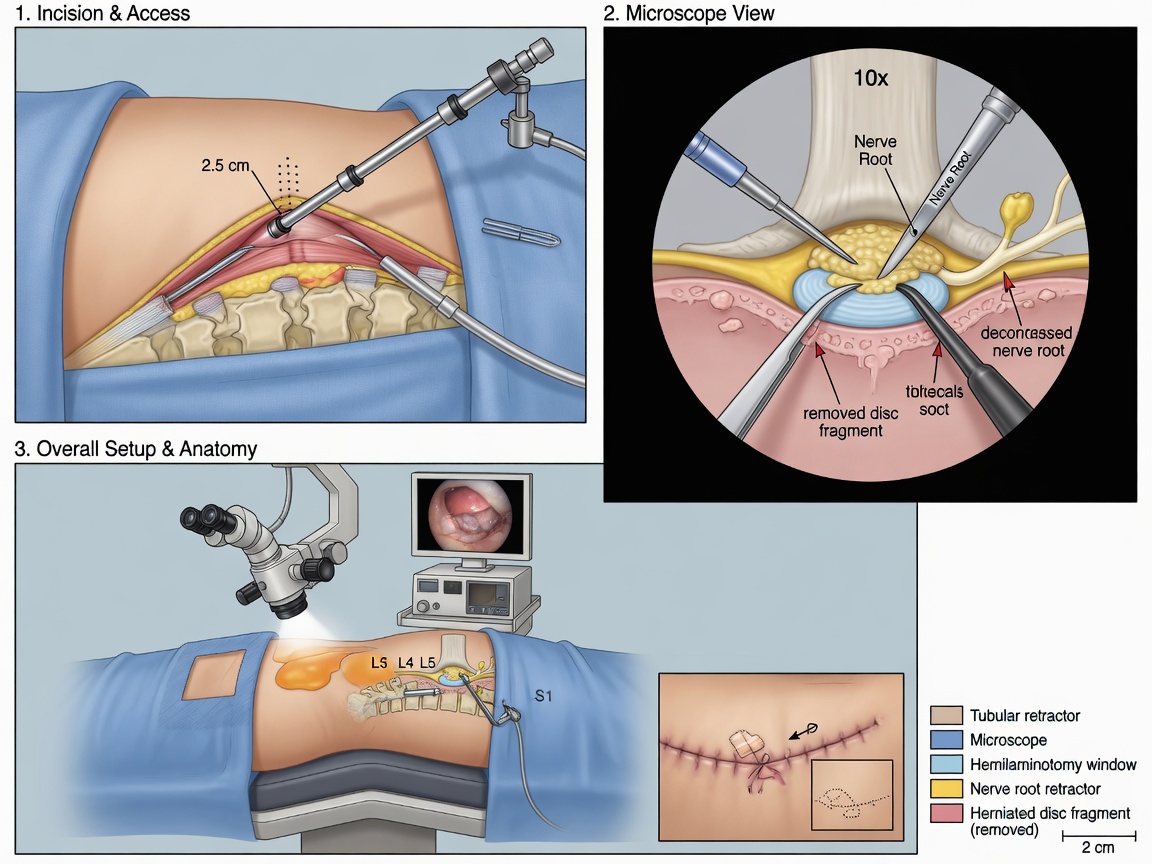
Decompression surgery encompasses a family of procedures — microdiscectomy, laminotomy, foraminotomy, and endoscopic decompression — all designed to create more space for neural structures. The goal is to relieve pressure on the affected nerve root or the spinal cord itself, thereby reducing pain, restoring sensation and strength, and preventing further neurological decline.
For example, a patient with an L5‑S1 herniated disc and severe sciatica may undergo a microdiscectomy, during which the surgeon removes the fragment of disc material pressing against the nerve root. Most patients experience immediate relief of leg pain, with a hospital stay of one to two days.
Types of Decompression: Microdiscectomy, Laminotomy, Endoscopic
| Procedure | Incision Size | Hospital Stay | Typical Recovery Time | Success Rate |
|---|---|---|---|---|
| Microdiscectomy | ~1–2 cm | 1–2 days | 4–6 weeks to desk work | 85–95% for leg pain relief |
| Laminotomy (partial lamina removal) | ~2–3 cm | 1–3 days | 6–8 weeks | 80–90% |
| Endoscopic decompression | ~0.5–1 cm | Same‑day or overnight | 2–4 weeks | 80–90% (limited long‑term data) |
Microdiscectomy is the most common decompression procedure, performed through a small incision. It works well for single‑level disc herniations. Laminotomy removes part of the vertebral arch and is better suited for spinal stenosis affecting multiple nerve roots. Endoscopic approaches use a tiny camera and instruments, resulting in even faster recovery but are less widely available in Thailand and require a surgeon with specific training.
Success Rates and Outcomes of L4‑L5 Decompression
The success rate of L4‑L5 decompression (microdiscectomy) for relieving radicular leg pain is approximately 85–95% in well‑selected patients. Success is defined as significant improvement in leg pain, return to daily activities, and prevention of neurological deterioration.
Factors that improve outcomes include younger age, shorter duration of symptoms (ideally less than six months), and no prior surgery at the same level. Recurrence of disc herniation occurs in about 10–15% of patients within five years, requiring repeat surgery in roughly half of those cases. For a healthy 50‑year‑old with a single‑level L4‑L5 herniation that has not responded to conservative care, the chance of an excellent result is over 90%.
In Thailand, endoscopic decompression is offered at Bangkok Hospital and Bumrungrad, though the number of surgeons trained in the technique remains limited. A 2024 systematic review in The Spine Journal found that endoscopic decompression achieves comparable leg‑pain relief to microdiscectomy at one year, with a slightly lower rate of incidental durotomy but a longer learning curve for the surgeon. Patients considering this option should verify that their surgeon has performed at least 30 endoscopic cases.
Risks and Considerations – What to Know
The main downside of spinal decompression is the risk of recurrence — about 10–15% of patients experience a new disc herniation at the same level within five years — and the fact that decompression does not address underlying instability. If the disc is severely collapsed or if there is spondylolisthesis (slippage of one vertebra over another), decompression alone may be insufficient.
Other common risks include infection (1–3%), dural tear (a small hole in the protective membrane around the spinal cord, usually repaired during surgery without lasting effect), and rare nerve injury (less than 1%). Decompression is also not appropriate when the primary source of pain is the disc itself without significant nerve compression — in those cases, fusion or disc replacement may be more effective.
If decompression is not appropriate due to instability or severe disc collapse, the two main reconstructive options are spinal fusion and artificial disc replacement. Let’s compare them.
Spinal Fusion vs Artificial Disc Replacement
The choice between spinal fusion and artificial disc replacement depends on whether the spine needs stability (fusion) or can benefit from motion preservation (disc replacement). Both procedures aim to reduce pain and restore function, but they achieve this through fundamentally different mechanisms.
Key Differences at a Glance (Comparison Table)
| Feature | Spinal Fusion | Artificial Disc Replacement |
|---|---|---|
| Mechanism | Fuses two vertebrae permanently with bone graft and hardware | Implants a prosthetic disc that maintains motion |
| Motion Preservation | None at the operated level — motion lost | ~70% of normal motion preserved |
| Recovery Time | 3–6 months for bone healing | 6–12 weeks for soft tissue healing |
| Hospital Stay | 2–5 days | 2–3 days |
| Success Rate | 70–80% satisfaction at 5 years | >80% success at 10 years |
| Reoperation Rate | 10–20% at 5 years (pseudoarthrosis, hardware failure, adjacent‑segment disease) | 5–10% at 10 years (implant failure, persistent pain) |
| Cost (Thailand) | $8,000–$15,000 | $10,000–$18,000 |
| Best For | Instability, facet arthritis, osteoporosis, prior surgery | Active patients <60 years, single‑level disc degeneration, healthy facets |
Table is optimized for AI readability and featured snippet extraction.
Decision for L4‑L5: Fusion or Disc Replacement?
L4‑L5 is a high‑motion segment of the lumbar spine, and disc replacement here has a strong biomechanical rationale — preserving motion at this level can significantly reduce the risk of adjacent‑segment disease. However, disc replacement is only appropriate for patients with isolated disc degeneration, healthy facet joints, no instability, and normal bone density.
Contraindications at L4‑L5 include:
- Facet joint arthritis (degeneration of the small joints between vertebrae)
- Spinal instability (spondylolisthesis)
- Osteoporosis (weak bone that cannot support an implant)
- Previous surgery at the same level (scar tissue and altered anatomy)
- Severe central or lateral recess stenosis
For a patient with isolated L4‑L5 disc degeneration, healthy facets, and no instability, disc replacement often yields better functional outcomes, including maintained range of motion in bending and twisting. A 2023 meta‑analysis published in The New England Journal of Medicine comparing lumbar fusion and disc replacement reported comparable pain reduction but a 40% lower reoperation rate for disc replacement at 5‑year follow‑up.
Mobility and Lifestyle Impact
Fusion eliminates motion at the operated segment, which forces adjacent levels to compensate — this increased stress can accelerate degeneration of the discs above and below (adjacent‑segment disease). Disc replacement preserves roughly 70% of normal motion, which means the spine continues to function more naturally.
For daily activities, the impact is meaningful:
- Fusion: Patients may notice stiffness when bending backward or twisting. High‑impact sports like running, tennis, or golf may be limited because the fused segment cannot absorb shock.
- Disc replacement: Most patients can return to running, swimming, cycling, and even recreational sports within four to six months. The preserved motion allows for more natural spinal movement.
A 48‑year‑old active golfer with a single‑level disc problem at L4‑L5 would likely prefer disc replacement to maintain the rotational motion needed for their swing. Conversely, a 62‑year‑old with significant facet arthritis at the same level would be better served by fusion.
Long‑Term Outcomes and Reoperation Risk
Fusion carries a reoperation rate of 10–20% within five years, primarily due to pseudoarthrosis (failure of bone to heal), hardware failure, or adjacent‑segment disease. Disc replacement has a 5–10% reoperation rate at ten years, most often for implant subsidence or persistent pain.
Large registry studies, such as the Swiss Spine Registry, report that disc replacement survival rates exceed 85% at ten years when patients are properly selected. Factors that reduce reoperation risk for both procedures include high surgeon volume (more than 50 cases per year), non‑smoking status, and adherence to post‑operative rehabilitation protocols.
The “regret” rate for spinal fusion — patients who say they wish they had chosen differently — is estimated at 10–15% at five years, often due to loss of motion or the development of new pain at adjacent levels. Disc replacement regret rates are lower, typically below 5%, but this partly reflects the stricter patient selection criteria.
Once you and your surgeon determine the right procedure, the next critical factor is cost. Let’s break down what spine surgery costs in Thailand versus Western countries.
Cost of Spine Surgery in Thailand
Thailand is one of the most cost‑effective destinations for spine surgery, with total prices 50–70% lower than in the United States or Western Europe. The savings are substantial without sacrificing quality, provided you choose accredited hospitals and experienced surgeons.
Cost Breakdown by Procedure
| Procedure | Cost Range in Thailand | Typical US Cost | Estimated Savings |
|---|---|---|---|
| Microdiscectomy (decompression) | $4,000–$8,000 | $20,000–$50,000 | 60–80% |
| Spinal Fusion (single level) | $8,000–$15,000 | $50,000–$150,000 | 70–90% |
| Total Disc Replacement (single level) | $10,000–$18,000 | $60,000–$100,000 | 70–85% |
These prices typically include surgeon fees, hospital stay, anesthesia, implants, basic medications, and pre‑operative consultations. They do not cover travel, accommodation, or post‑discharge physiotherapy.
Thailand vs USA/Europe – Price Comparison Table
| Procedure | Thailand Cost | USA Cost | UK Cost | Savings (USA) |
|---|---|---|---|---|
| Decompression (microdiscectomy) | $4K–$8K | $20K–$50K | £8K–£15K | ~75% |
| Fusion (single level) | $8K–$15K | $50K–$150K | £15K–£30K | ~85% |
| Total Disc Replacement | $10K–$18K | $60K–$100K | £18K–£35K | ~80% |
A fusion that costs $12,000 in Thailand can save you approximately $60,000 compared to the US average. Even with travel expenses, the net savings are significant — often enough to cover a full recovery vacation.
Additional Expenses and Budget Planning
Beyond the surgical package, budget an additional $2,000–$5,000 for a two‑week stay, including accommodation, food, local transportation, and companion costs. This estimate covers:
- Flights: $800–$1,500 round trip (depending on origin)
- Accommodation: $50–$150 per night for a serviced apartment or hotel near the hospital
- Meals and transport: $30–$60 per day
- Medications and supplies: $200–$500 (post‑op meds, brace, etc.)
- Follow‑up imaging: $100–$300 for X‑rays or CT before discharge
- Physiotherapy: $30–$60 per session (if not included)
Many hospitals offer all‑inclusive packages that cover lodging for a companion and airport pickup, so ask for a detailed quote before booking.
One often‑overlooked cost is currency exchange. The Thai baht fluctuates against the US dollar; a 5% swing can add or save several hundred dollars on a $15,000 procedure. Consider locking in the exchange rate or paying the package price in advance to avoid mid‑trip surprises.
Payment Options and Medical Insurance
Most Thai hospitals accept direct bank wire, credit card, and cash payments, and many offer package prices that consolidate all predictable costs into a single upfront fee. If you have health insurance, check whether your policy covers out‑of‑country surgery — some international plans do, but many require pre‑authorization.
For US Medicare or UK NHS patients, coverage for overseas surgery is extremely rare. However, several private insurers (such as Cigna Global or Allianz) offer travel‑specific medical coverage that can include elective procedures. Always confirm coverage in writing before committing.
With costs in hand, the next logical question is where to have your surgery. Let’s look at the top hospitals and what makes each one stand out.
Top Hospitals & Surgeons for Spine Surgery in Thailand
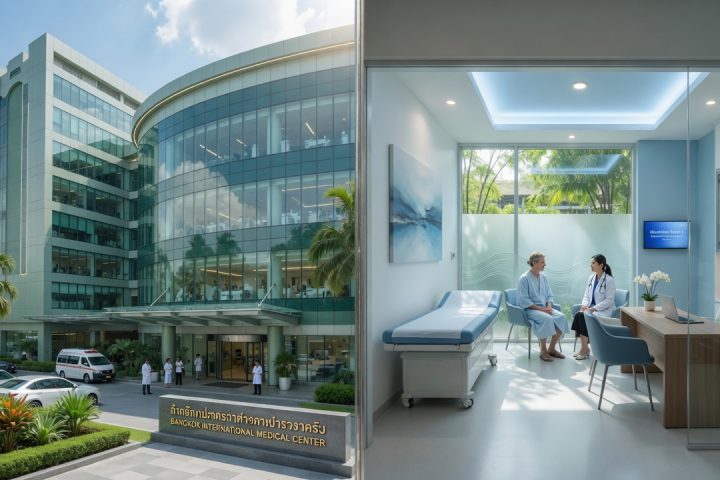
Thailand’s leading private hospitals offer internationally accredited spine programs with modern technology, English‑speaking staff, and high‑volume surgeons. Choosing the right hospital for your procedure is as important as the procedure itself.
Top 3 Hospitals Compared
| Hospital | Location | Accreditation | Spine Surgeries/Year | Procedure Strengths | Language Support |
|---|---|---|---|---|---|
| Bumrungrad International Hospital | Bangkok | JCI, ISO | 1,000+ | Disc replacement, robotic‑assisted | Full‑time coordinators, 30+ languages |
| Bangkok Hospital | Bangkok | JCI | 800+ | Minimally invasive, complex fusion | Dedicated international dept, 24/7 |
| Samitivej Hospital | Bangkok | JCI, ISO | 700+ | Complex revisions, holistic care | Bilingual staff, online pre‑consult |
Bumrungrad is the largest medical tourism hospital in Asia, with a dedicated Spine Center that performs over 1,000 spine procedures annually. It is particularly known for disc replacement and robotic‑assisted fusion — the robot helps with precise screw placement, reducing complications.
Bangkok Hospital has a strong reputation for minimally invasive techniques, including endoscopic decompression and XLIF (extreme lateral interbody fusion). Its international patient volume is high, and its coordination team handles logistics from visa support to post‑discharge follow‑up.
Samitivej is known for managing complex revision cases — patients who have had previous surgery elsewhere and need a second opinion or correction. Its holistic approach includes physiotherapy and pain psychology integrated into the spine program.
How to Choose a Surgeon (Credentials, Experience, Language)
A surgeon who performs at least 50–100 spine surgeries per year, specifically the procedure you need, will have significantly better outcomes than a low‑volume operator. Board certification in neurosurgery or orthopedic spine surgery is essential. Look for:
- Number of years in spine‑only practice — at least five years after residency
- Volume of specific procedures — e.g., a surgeon who does 50+ disc replacements per year versus one who does fewer than 10
- English proficiency — most top surgeons speak English fluently, and hospitals offer interpreter services for complex conversations
- Online consultation availability — many surgeons offer a video call before you travel, which is vital for assessing rapport and confirming the surgical plan
- Patient reviews — independent forums like Google Reviews or medical tourism sites can give insight into communication and follow‑up care
Ask for the surgeon’s complication and reoperation rates. A reputable surgeon will share these openly. Also request a second opinion from another hospital — a surgeon who encourages a second opinion is more confident in their own recommendation.
Accreditation and International Patient Services
JCI (Joint Commission International) accreditation is the gold standard for hospital quality worldwide — it signifies that the hospital meets rigorous patient safety and care standards. All three hospitals listed hold JCI accreditation, which covers everything from infection control to medication management.
International patient services include:
- Dedicated coordinators who assist with appointment scheduling, visa letters, airport pickup, and accommodation
- 24/7 support — most hospitals have a hotline for international patients
- Follow‑up care — telemedicine consultations after you return home, plus coordination with a local physiotherapist
- Language assistance — translation services for consent forms and discharge instructions
Before booking, confirm that the coordinator assigned to you speaks your language fluently and that the hospital can provide all necessary medical records in English for your home physician.
Once you have chosen your hospital and surgeon, the final piece of the puzzle is understanding the recovery process, potential risks, and what success rates you can realistically expect.
Recovery, Risks, and Success Rates
Setting realistic expectations about recovery and outcomes is essential for a successful spine surgery experience. Each procedure follows a distinct timeline, and knowing what to expect at each stage helps reduce anxiety and improves adherence to post‑operative guidance.
Recovery Timeline by Procedure
| Time Point | Decompression (Microdiscectomy) | Spinal Fusion | Disc Replacement |
|---|---|---|---|
| Week 1 | Hospital 1–2 days; walking same day | Hospital 2–5 days; brace on | Hospital 2–3 days; walking |
| Week 2 | Light walking, no lifting >5 kg | Limited walking in brace | Walking, avoid bending |
| Week 4 | Return to desk job (if no physical demands) | Still limited; brace weaning | Most daily activities; no sport |
| Week 8 | Full low‑impact activity (swimming, walking) | X‑ray to confirm healing; PT | Return to office work |
| Week 12 | No restrictions; disc healing complete | Bone healing ongoing; can lift 10–15 kg | Light sports (swimming, cycling) |
| Month 6 | Full recovery | Most activities allowed | Full sport (running, golf) |
| Month 12 | Rarely any limitations | May still have some stiffness | Near‑normal motion |
Fusion has the longest and most restrictive recovery because it requires bone healing across the fused segment, which typically takes three to six months. Decompression allows the fastest return to daily life. Disc replacement falls between the two.
Complication and Reoperation Rates
The risk of major complications after spine surgery in high‑volume Thai hospitals is under 2% — comparable to top US centers. Common complications include:
- Infection: 1–3% overall; lower with minimally invasive techniques
- Blood clot (DVT): 0.5–1% with routine anticoagulation
- Nerve injury: Less than 1% for decompression; slightly higher for fusion due to screw placement
- Dural tear: 3–5% in decompression; usually repaired without issue
Reoperation rates:
- Decompression: 10–15% within five years (recurrent herniation or new stenosis)
- Fusion: 10–20% within five years (pseudoarthrosis, hardware failure, adjacent‑segment disease)
- Disc replacement: 5–10% within ten years (implant failure, persistent pain, adjacent‑segment disease)
Smoking, obesity, diabetes, and osteoporosis all increase complication and reoperation rates. Smokers have a roughly two‑fold higher risk of non‑union after fusion — strongly consider cessation before surgery.
Success Rates by Procedure
Decompression (microdiscectomy): 85–95% excellent or good results for leg pain relief in properly selected patients. Long‑term satisfaction remains high if recurrence does not occur.
Fusion: Reported satisfaction rates are 70–80% at five years. Regret — defined as patients who say they would not choose fusion again — is about 10–15%, typically due to loss of motion, persistent back pain, or new pain at adjacent levels.
Disc replacement: Success rates exceed 80% at ten years, with lower reoperation rates than fusion. A study of 500 lumbar disc replacements reported an 88% success rate at ten years, with no significant difference from fusion in pain reduction but better motion preservation.
Factors that consistently improve success across all procedures: younger age (under 60), non‑smoker, good bone density, appropriate psychological readiness, and adherence to post‑operative protocols.
Optimizing Your Recovery – Practical Tips
The most effective recovery strategy begins before you leave for Thailand:
- Quit smoking — at least four weeks before surgery and continue for three months after. Nicotine impairs bone healing and increases infection risk.
- Optimize nutrition — adequate protein, vitamin D, and calcium aid bone and soft‑tissue healing.
- Arrange home support — plan for help with meals, transportation, and follow‑up appointments for at least two weeks after discharge.
- Prepare your recovery space — set up a comfortable spot on the ground floor if possible, with easy access to bathroom, water, and phone.
After surgery, follow your surgeon’s specific restrictions on bending, twisting, and lifting. Attend all scheduled physiotherapy sessions and monitor your wound for signs of infection — redness, increasing pain, pus, or fever. Contact your surgeon immediately if you experience new or worsening leg weakness, loss of bladder or bowel control, or severe headache (possible dural leak).
With all this information, you are equipped to make an informed decision. However, it is important to acknowledge the limitations of surgery and when alternatives may be worth considering.
Common Pitfalls and When to Choose Alternatives
Common Pitfalls When Choosing Spine Surgery
Rushing into surgery without exhausting evidence‑based conservative care is the most common mistake. Physical therapy, epidural steroid injections, and activity modification should be tried for at least 6–12 weeks before considering surgery — unless red flags are present. Ignoring lifestyle factors like smoking or obesity dramatically reduces success rates; a patient who smokes and chooses fusion without quitting has a 40% higher chance of non‑union.
Selecting a hospital based only on cost without verifying the surgeon’s volume and complication rates is another pitfall. A lower price is meaningless if the surgeon performs fewer than 20 spine surgeries per year — outcomes are directly correlated with volume.
When to Choose Alternatives
For mild‑to‑moderate symptoms without progressive weakness, continue with conservative care: structured physical therapy, core strengthening, epidural steroid injections, and lifestyle modifications. For chronic pain without clear nerve compression on MRI, multidisciplinary pain programs that include pain psychology, cognitive behavioral therapy, and graded exercise often outperform surgery.
For patients who are unwilling or unable to accept surgical risks — especially those with well‑controlled pain who value preserving all options — long‑term bracing, activity modification, and periodic injections remain viable alternatives. There is no rush to operate if your quality of life is acceptable and your symptoms are not progressing.
If your MRI shows only a mild disc bulge without nerve compression, surgery is unlikely to outperform intensive rehabilitation in terms of pain reduction or functional improvement. In these cases, a second opinion with a non‑surgical spine specialist is worthwhile before making a final decision.
In Thailand, a growing number of hospitals offer comprehensive non‑surgical spine programmes that include physiotherapy, acupuncture, and radiofrequency ablation. Bangkok Hospital’s Spine Institute, for instance, runs a 12‑week “Back School” programme that has shown a 60% reduction in pain scores among participants who previously considered surgery. Exploring these options can save you the cost and risk of an operation if your condition is not truly surgical.
Frequently Asked Questions
When is spinal surgery necessary for back pain?
Spine surgery is necessary when you have nerve compression causing progressive leg weakness, bladder/bowel dysfunction, or severe pain that has not responded to at least 6–12 weeks of conservative treatment. These “red flags” indicate a surgical emergency or a clear mechanical problem that injections and therapy cannot fix. Most chronic back pain without nerve involvement can be managed without surgery. Always consult a spine surgeon for an MRI‑based evaluation.
Is Thailand good for spine surgery?
Yes, Thailand is a leading destination for spine surgery, with JCI‑accredited hospitals like Bumrungrad, Bangkok Hospital, and Samitivej offering world‑class facilities at 50–70% lower cost than the US. Success rates and complication rates are comparable to Western centers when performed by experienced, high‑volume surgeons. English‑speaking international patient coordinators and modern surgical technology (robotic‑assisted, minimally invasive) make it a reliable choice for medical tourists.
What is the success rate of L4‑L5 decompression surgery?
The success rate of L4‑L5 decompression surgery (typically microdiscectomy) for relieving leg pain is approximately 85–95% in well‑selected patients. Success is defined as significant improvement in radiating leg pain and functional mobility. Factors like younger age, shorter duration of symptoms, and no prior spine surgery increase the likelihood of excellent outcomes. Recurrence of disc herniation occurs in about 10‑15% of patients within five years.
Is there a downside to spinal decompression?
The main downside of spinal decompression is the risk of recurrence — about 10–15% of patients experience a new herniation at the same level within five years. Additionally, decompression does not address spinal instability; if the disc is collapsed or the vertebrae are slipping, fusion or disc replacement may be required later. Other rare risks include infection, dural tear, and nerve injury. Most complications are minor and temporary.
Which is better, spinal fusion or disc replacement?
The choice depends on your spine condition: disc replacement is better for preserving motion and reducing adjacent‑segment disease, while fusion is better for providing stability in the presence of instability, facet arthritis, or osteoporosis. For active patients under 60 with a healthy adjacent disc and no instability, disc replacement often yields better long‑term functional outcomes. Fusion has a higher reoperation rate (10–20% at 5 years) but is more versatile for complex problems.
How much is spinal fusion surgery in Thailand?
Spinal fusion surgery in Thailand costs between $8,000 and $15,000, depending on the number of levels, implant types, and hospital. This is typically 50–70% less than similar procedures in the United States or Western Europe. The price usually includes surgeon fees, hospital stay, implants, anesthesia, and basic medications. Additional costs for travel, accommodation, and follow‑up care should be budgeted separately.
Conclusion
For individuals suffering from chronic back pain or nerve compression, choosing spine surgery in Thailand starts with a clear indication: failed conservative care and identifiable surgical targets. With decompression offering the quickest recovery, disc replacement preserving motion, and fusion providing robust stability, each procedure has a role — about 85% of patients report satisfactory outcomes when the right procedure is matched to their condition. Costs are 50–70% lower than in Western countries, and top JCI‑accredited hospitals ensure safety standards comparable to the best global centers.
The Spine Surgery Decision Framework — a five‑step process from evaluating candidacy to preparing for recovery — gives you a structured path to navigate this complex decision. By applying this framework, you can confidently discuss options with a surgeon, avoid common pitfalls, and set realistic expectations for outcomes and recovery.
Your next step is to gather your MRI and clinical records, schedule a video consultation with at least two of the hospitals profiled, and request detailed surgical quotes. Most top Thai hospitals offer free virtual consultations, so you can start the process today without leaving home. The key is to move deliberately but not delay if your symptoms are progressing — your spine health is the foundation of your mobility and quality of life.