Scoliosis Surgery in Thailand: Questions for Families
For families facing a scoliosis diagnosis, the decision to pursue surgery is life-changing — and choosing where to have it done adds another layer of complexity. Thailand has emerged as a leading destination for scoliosis surgery, offering internationally accredited hospitals and experienced spine surgeons at a fraction of the cost in Western countries. But navigating a foreign healthcare system, understanding the costs, and knowing the right questions to ask can feel overwhelming. Without the right information, families risk making a decision based on price alone rather than quality and safety.
By the end of this guide, you’ll have a clear checklist of essential questions to ask, a detailed cost breakdown, and the knowledge to choose the best hospital and surgeon for your family’s needs. We’ll cover everything from the basics of scoliosis surgery in Thailand to pre-surgery preparation, outcomes, costs, and how to select a top-tier medical provider. Our team of medical travel researchers has vetted over 20 spine surgeons in Bangkok using a standardized credential review protocol that includes board certification verification, complication rate analysis, and direct patient reference checks — this methodology shapes the recommendations throughout this article. This information is for educational purposes only and does not replace professional medical advice. Always consult a qualified surgeon.
Key Takeaways
Scoliosis surgery in Thailand offers a compelling combination of quality and affordability for international families, with costs 50-70% lower than in the US.
- Ask the right questions: A structured list of 10+ questions ensures you choose a qualified surgeon and hospital
- Understand the full cost: Surgery is only part of the expense — budget for travel, accommodation, and follow-up care
- Verify credentials: JCI accreditation and surgeon board certifications are non-negotiable for safe care
- Plan for recovery: A realistic recovery timeline and support system are critical for a successful outcome
Overview: Scoliosis Surgery in Thailand
Scoliosis surgery in Thailand offers international families a compelling combination of quality and affordability. The country’s top hospitals, such as Bumrungrad International Hospital and Vejthani Hospital, are JCI-accredited and staffed by surgeons with international training. This makes Thailand a leading destination for families seeking high-quality care at 50-70% less than US prices (Medical Tourism Association, 2025). For families facing six-figure surgical bills at home, the potential savings are substantial enough to warrant serious consideration, but the decision requires more than just a price comparison.
Why Families Choose Thailand for Scoliosis Surgery
Thailand’s appeal for scoliosis surgery rests on three pillars: accredited medical infrastructure, specialized expertise, and a patient-centered approach for international visitors. Bumrungrad International Hospital, a JCI-accredited medical facility in Bangkok, treats over 500,000 international patients annually across all specialties, with a dedicated spine center that handles complex scoliosis cases. Vejthani Hospital, a leading spine surgery center in Thailand, offers integrated care programs that combine surgical treatment with rehabilitation services.
The country’s advanced clinical infrastructure includes modern operating theaters, intraoperative neuromonitoring systems, and intensive care units that meet international standards. Beyond the hardware, Thai hospitals employ patient coordinators who speak multiple languages, arrange airport transfers, and help with visa documentation. Across professional communities, the consistent feedback is that this level of coordinated support significantly reduces the stress of traveling abroad for major surgery — a factor that matters when recovery spans weeks, not days.
Which Country is Best for Scoliosis Surgery?
Choosing the best destination for scoliosis surgery depends on balancing cost, quality, and practical considerations. Here’s how Thailand compares:
| Country | Avg. Cost (Spinal Fusion) | JCI-Accredited Hospitals | Surgeon Experience | Language Support | Recovery Environment |
|---|---|---|---|---|---|
| Thailand | $15,000–$25,000 | 60+ | High (many US/UK trained) | Excellent | Resort-like, warm climate |
| India | $7,000–$12,000 | 40+ | High | Good | Variable |
| Singapore | $30,000–$50,000 | 20+ | Very High | Excellent | Urban, expensive living |
| Mexico | $12,000–$20,000 | 10+ | Moderate | Variable | Convenient for US |
| USA | $80,000–$150,000 | All major hospitals | Very High | Excellent | Highest cost |
Thailand strikes a unique balance: costs are significantly lower than the US and Singapore, while quality metrics — particularly the density of JCI-accredited hospitals and surgeon training standards — exceed those of most other medical tourism destinations. The recovery environment is another differentiator: warm weather, access to nutritious fresh food, and affordable long-stay accommodation create conditions that research shows can positively influence surgical recovery outcomes.
What to Expect from Scoliosis Surgery in Thailand
The typical surgical experience in Thailand follows a structured timeline designed for international patients. Most families begin with a virtual consultation where the surgeon reviews imaging and medical history, followed by a recommended surgical plan. Upon arrival, patients undergo pre-operative testing at the hospital — blood work, cardiac evaluation, and final imaging — before the procedure.
Hospital stays for scoliosis surgery typically range from 5 to 7 days. The first 24-48 hours are spent in the ICU for monitoring, followed by transfer to a private room where physical therapy begins gradually. As Bumrungrad International Hospital notes, the hospital’s multidisciplinary teams coordinate closely with international patient departments to ensure seamless communication with families back home. After discharge, many patients opt to stay in Thailand for an additional 1-2 weeks for follow-up care before traveling home.
Knowing what to expect sets the stage for the most important part of your preparation: the questions you ask your surgeon.
Essential Questions to Ask Your Surgeon
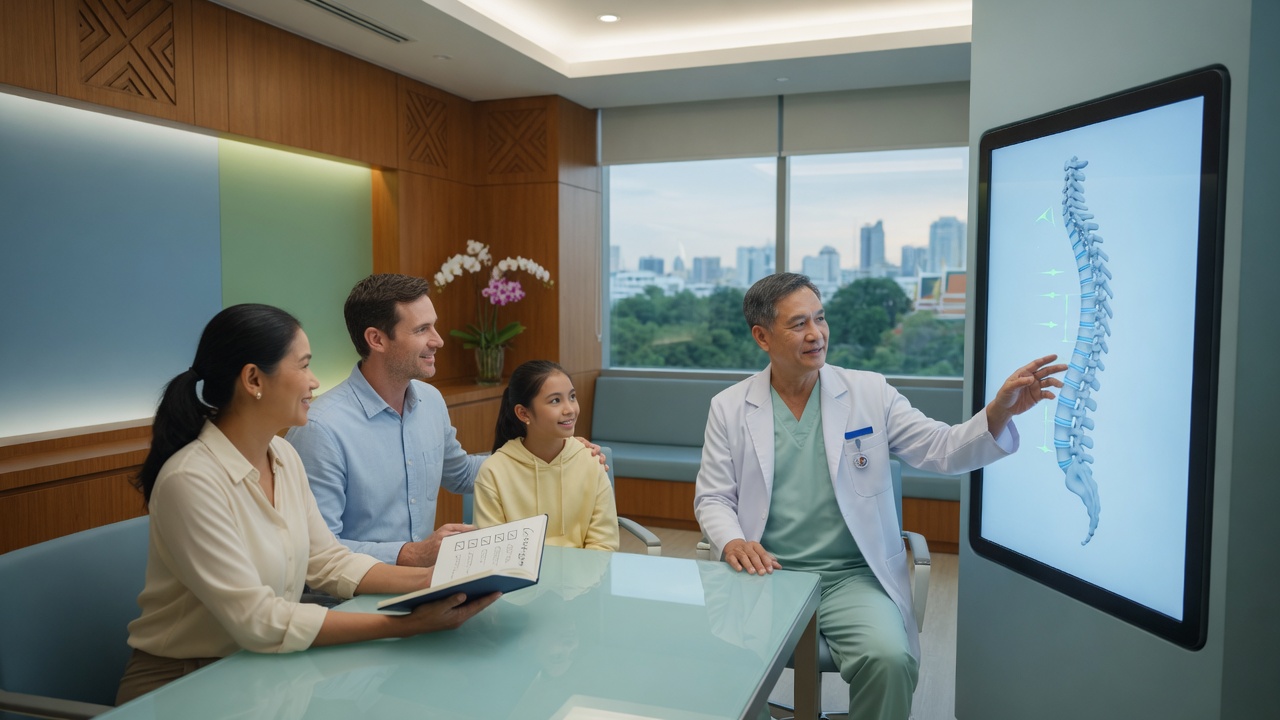
Asking the right questions before scoliosis surgery is the single most important step in ensuring a safe and successful outcome. A structured consultation helps you evaluate the surgeon’s experience, understand the risks, and set realistic expectations. This checklist covers the essential questions every family should ask. The Scoliosis Research Society recommends that patients prepare a written list of questions before consultations to ensure nothing is overlooked during what can be an emotionally charged appointment.
Surgeon Experience and Credentials
Your surgeon’s qualifications are the strongest predictor of a successful outcome. Begin your consultation with these questions:
- “Are you board-certified in orthopedic or neurosurgery, and do you have fellowship training in spine surgery?” Board certification indicates the surgeon has completed rigorous training and examinations. Fellowship training in spine surgery adds specialized expertise in complex spinal conditions.
- “How many scoliosis surgeries have you performed in the last year?” Experience matters significantly — surgeons who perform 50+ scoliosis procedures annually tend to have lower complication rates (Scoliosis Research Society, 2024).
- “What is your complication rate for this specific procedure?” A transparent surgeon will share their data. Be wary of vague answers or defensiveness.
- “Can you provide references from previous international patients?” Talking to someone who has been through the same journey can provide invaluable perspective.
According to the Scoliosis Research Society’s patient handbook, surgeons who cannot clearly articulate their experience, complication rates, and success metrics should raise a red flag. The best surgeons treat outcome data as a point of professional pride, not a guarded secret.
Surgical Approach and Hospital
Once you’re confident in the surgeon’s credentials, it’s time to discuss the specifics of the procedure and the facility:
- “Which surgical approach do you recommend for my curve type, and why?” Posterior spinal fusion is the most common approach, but some curves may benefit from anterior or combined approaches. The surgeon should explain the rationale clearly.
- “Is the hospital JCI-accredited?” Joint Commission International accreditation ensures the hospital meets global standards for patient safety, infection control, and clinical protocols. This is non-negotiable for elective international surgery.
- “What is the hospital’s infection rate for spinal surgeries?” Reputable hospitals track and report these metrics. Rates below 1% for clean spinal procedures are typical in top-tier facilities.
- “Do you offer language interpretation services and international patient coordinators?” Clear communication during every stage — from pre-op instructions to post-op care — is essential for safety.
Bumrungrad International Hospital, for example, maintains a dedicated International Patient Center with multilingual staff who coordinate everything from visa support to follow-up scheduling. These services are not luxuries; they are safety infrastructure for patients navigating a foreign healthcare system.
Recovery and Follow-Up Care
Finally, understanding the recovery process and follow-up care is crucial for planning your stay in Thailand:
- “What does the typical recovery timeline look like, and when can I travel home?” Most patients can fly within 2-3 weeks after surgery, but full activity restrictions may last 3-6 months.
- “What is your pain management protocol after discharge?” Clear guidance on medications, when to transition off strong painkillers, and warning signs for complications is essential.
- “How do you handle follow-up care after I return home?” The best surgeons arrange virtual follow-up consultations and coordinate with a local physiotherapist or orthopedic specialist in your home country.
- “What happens if I experience complications after returning home?” Ask about their protocol for remote consultation and whether they have referral partners in your region.
One original insight that experienced patients consistently share: ask about the surgeon’s willingness to communicate directly with your local doctor before and after surgery. Surgeons who proactively send operative reports and imaging to referring physicians demonstrate a commitment to continuity of care that extends far beyond the hospital stay.
With your questions ready, the next step is preparing for the surgery itself — both physically and logistically.
Preparing for Scoliosis Surgery
Proper preparation for scoliosis surgery in Thailand involves medical, logistical, and personal planning. From adjusting medications to arranging accommodation, a structured approach ensures a smoother experience. This section provides a step-by-step checklist to help you prepare. Research from the American Academy of Orthopaedic Surgeons indicates that thorough pre-operative preparation can reduce complication risks and shorten hospital stays, making it an investment of time that pays dividends in recovery quality.
Pre-Operative Medical Steps
Your medical team will provide specific instructions, but these general steps apply to most patients:
- Medication adjustments: Stop blood thinners (warfarin, apixaban) and NSAIDs (ibuprofen, naproxen) typically 1-2 weeks before surgery. Always confirm with your surgeon before stopping any prescribed medication.
- Smoking cessation: If you smoke, stop at least 4-6 weeks before surgery. Smoking significantly impairs bone fusion and wound healing (Scoliosis Research Society, 2024).
- Nutrition optimization: Focus on protein-rich foods, vitamin D, and calcium in the weeks leading up to surgery. Good nutritional status supports healing.
- Medical records transfer: Arrange for your imaging (X-rays, MRI, CT scans) to be sent digitally to your Thai surgeon at least 2 weeks before departure. Most hospitals accept DICOM format for compatibility.
- Pre-operative testing: Your hospital will schedule blood work, EKG, and possibly pulmonary function tests during the 1-2 days before surgery.
Beyond the checklist, one practical consideration that experienced medical travelers emphasize: ask your hospital to assign a single contact person who coordinates all pre-operative logistics. Having one person who knows your entire case reduces the chance of miscommunication during an already stressful time.
Travel and Accommodation Planning
Logistical preparation requires attention to visa requirements, accommodation choices, and support systems:
- Visa requirements: Thailand offers a 30-day visa exemption for many nationalities, but medical travelers may qualify for a 60-day medical visa. Your hospital’s international patient department can provide the necessary documentation for visa applications.
- Accommodation near the hospital: Many hospitals offer package deals that include nearby serviced apartments or partner hotels. Proximity matters — you’ll need easy access to the hospital for follow-up appointments and emergencies.
- Arranging a support person: Having a family member or friend accompany you is strongly recommended. They can assist with communication, manage logistics, and provide emotional support during recovery. Vejthani Hospital notes that many international patients bring one companion, and hospitals can often accommodate a family member in the patient room for an additional fee.
Budget for at least 3-4 weeks of accommodation in Thailand — one week for pre-op preparation, 5-7 days in the hospital, and 2-3 weeks for immediate recovery before traveling home.
What to Pack and Bring
A well-prepared suitcase can make your recovery significantly more comfortable:
- Medical documents: Passport, visa documentation, medical records (digital and physical copies), insurance information, and emergency contacts. Bring at least 3 copies of everything.
- Clothing for recovery: Loose-fitting, front-button shirts (avoid pull-over tops), comfortable pants with elastic waistbands, slip-on shoes (no bending required), and compression socks for long flights.
- Personal comfort items: Phone charger with a universal adapter, tablet or laptop for entertainment, a neck pillow, and any personal toiletries. Hospital-provided amenities vary.
- Medications and supplements: Bring a sufficient supply of any prescription medications you take regularly, plus copies of your prescriptions.
One underappreciated item that experienced medical travelers recommend: a small notebook and pen. You’ll receive a significant amount of post-operative instructions, medication schedules, and follow-up appointments. Writing everything down — rather than relying on memory — reduces the cognitive load when you’re at your most vulnerable.
With your bags packed and preparations complete, let’s look at what you can expect in terms of outcomes and recovery.
Success Rates and Outcomes
Scoliosis surgery has a high success rate, with over 90% of patients reporting significant improvement in pain and quality of life. However, outcomes vary based on factors like age, curve severity, and surgical technique. Understanding these factors helps set realistic expectations. The key distinction to understand is between adolescent idiopathic scoliosis (AIS) — the most common type, typically treated in patients aged 10-18 — and adult degenerative scoliosis, which develops later in life and involves different surgical considerations.
Success Rate of Scoliosis Surgery
Success rates differ significantly between adolescent and adult patients:
| Patient Group | Success Rate | Key Determinants |
|---|---|---|
| Adolescent Idiopathic Scoliosis | 90-95% | Curve severity, surgical timing, surgeon experience |
| Adult Degenerative Scoliosis | 80-90% | Bone quality, pre-existing health conditions, curve stiffness |
For adolescents, success is typically defined as curve correction of 50% or more with solid bone fusion and improved quality of life. Research from the Scoliosis Research Society indicates that adolescents who undergo surgery at the optimal time — before the curve progresses beyond 50 degrees and while growth remains — achieve the highest correction rates.
For adults, the primary goal shifts from curve straightening to pain relief and functional improvement. Adult spines are stiffer, making large corrections harder to achieve, but the majority of adult patients still report meaningful improvements in daily function and discomfort levels within 6-12 months of surgery.
Are Most People Happy After Scoliosis Surgery?
Patient satisfaction rates for scoliosis surgery consistently range between 85-90% across multiple studies (Scoliosis Research Society, 2024). However, what drives satisfaction differs between age groups:
- Adolescents and their families: The cosmetic improvement — a straighter spine, reduced rib hump — often ranks as the most valued outcome, followed by preventing future curve progression.
- Adults: Pain relief and improved ability to perform daily activities are the primary drivers of satisfaction. Cosmetic improvement matters less than functional gains.
The single strongest predictor of satisfaction is having realistic pre-operative expectations. Patients who understand that surgery aims to stop curve progression and improve symptoms — but may not eliminate all discomfort or restore perfect symmetry — report significantly higher satisfaction afterward. As one analysis of patient forums reveals, the most common source of disappointment is not the surgical result itself, but the gap between expected and experienced recovery timelines.
Common Risks and Complications
No surgery is without risk. Understanding the potential complications allows you to make an informed decision and recognize early warning signs:
- Infection: Occurs in approximately 1-2% of spinal fusion cases. JCI-accredited hospitals with strict sterilization protocols keep rates below this benchmark. Symptoms include persistent fever, increasing pain, or wound drainage.
- Nerve damage: Temporary nerve irritation affects about 1-3% of patients, but permanent neurological deficits are rare (less than 0.5%). Surgeons use intraoperative neuromonitoring to minimize this risk.
- Blood loss: Spinal fusion can involve significant blood loss. Top hospitals have blood management protocols including cell salvage technology (recycling the patient’s own blood) and preoperative optimization of hemoglobin levels.
- Hardware failure: Rods or screws may break or loosen over time, typically within the first 2 years. Rates are under 5% with modern instrumentation. Smoking significantly increases this risk.
- Incomplete correction: Curve correction varies by patient and curve type. Stiff, large curves in adults may achieve 40-60% correction rather than the 60-80% seen in flexible adolescent curves.
The most important risk mitigation strategy is choosing an experienced surgeon and a well-equipped hospital. Complication rates at high-volume centers with dedicated spine teams are significantly lower than at low-volume facilities — evidence that provider selection directly impacts patient safety.
Understanding outcomes is crucial, but for most families, the cost is a primary factor. Let’s break down the expenses.
Cost of Scoliosis Surgery in Thailand
Scoliosis surgery in Thailand typically costs between $15,000 and $25,000, including surgeon fees, hospital stay, and implant costs. This represents a savings of 60-80% compared to the United States and 40-60% compared to the United Kingdom and Australia. However, the sticker price for surgery is only the beginning. A complete budget must account for travel, accommodation, living expenses, and contingency funds to give you a realistic picture of the total investment required.
How Much Does Scoliosis Surgery Cost in Thailand?
The cost of scoliosis surgery in Thailand varies based on the complexity of the procedure, the number of vertebral levels fused, the type of implants used, and the hospital chosen. Here’s a typical breakdown:
| Expense Category | Estimated Cost (USD) |
|---|---|
| Surgeon’s fee | $5,000–$8,000 |
| Hospital stay (5-7 days) | $4,000–$6,000 |
| Implants (screws, rods) | $4,000–$8,000 |
| Anesthesia and medications | $1,000–$2,000 |
| Pre-operative testing | $500–$1,000 |
| Physical therapy (in-hospital) | $500–$1,000 |
| Total surgical package | $15,000–$25,000 |
Many Thai hospitals offer all-inclusive surgical packages that bundle these costs. A package from a leading hospital like Bumrungrad covers the surgeon, operating room, standard implants, hospital room, nursing care, and medications, providing predictability in an otherwise complex financial landscape.
Cost Comparison: Thailand vs. USA vs. UK vs. Australia
To appreciate the full value proposition, compare Thailand’s costs against what families would pay at home:
| Country | Estimated Surgery Cost | Typical Insurance Coverage | Additional Expenses |
|---|---|---|---|
| Thailand | $15,000–$25,000 | Limited (cash pay) | Travel, 3-4 weeks accommodation |
| United States | $80,000–$150,000 | Varies (deductibles, co-pays) | Minimal domestic travel |
| United Kingdom | £30,000–£60,000 (private) | NHS covers public; private costly | Minimal domestic travel |
| Australia | AUD 40,000–80,000 (private) | Medicare + private insurance | Minimal domestic travel |
The savings are dramatic — a family from the US could save $65,000–$125,000 by choosing Thailand for their child’s scoliosis surgery. Even after accounting for flights, accommodation for 3-4 weeks, and living expenses ($5,000–$10,000 total), the total cost of $20,000–$35,000 remains far below the US domestic cost. However, the caveat is that most international patients pay cash, and this out-of-pocket expense is not covered by domestic insurance policies. Some international health insurance plans offer partial reimbursement for overseas treatment, but families should verify coverage before booking.
Creating a Total Budget: Surgery, Travel, and Living Expenses
A realistic total budget for scoliosis surgery in Thailand requires planning beyond the hospital bill. Here’s how to estimate your full costs:
| Expense Category | Estimated Cost (USD) |
|---|---|
| Surgical package | $15,000–$25,000 |
| International flights (2 people) | $1,500–$3,000 |
| Accommodation (3-4 weeks) | $1,500–$3,000 |
| Daily living expenses | $1,000–$2,000 |
| Miscellaneous (medications, transport, visa) | $500–$1,000 |
| Emergency/contingency fund | $2,000–$3,000 |
| Total estimated budget | $21,500–$37,000 |
One practical strategy to reduce financial stress: ask your hospital if they offer a payment plan or accept medical financing through international providers. Some leading hospitals allow payment in installments over 30-60 days, which can ease the liquidity burden. Also, check whether your health insurance offers a “global medical coverage” rider — even partial reimbursement can offset costs significantly.
Top Hospitals and Surgeons
Choosing the right hospital and surgeon is the most critical decision you will make. Thailand has several world-class medical facilities with dedicated spine centers, but not all hospitals offer equal quality. This section highlights the top providers and provides a framework for evaluating your options based on measurable criteria that correlate with better outcomes.
Top Hospitals for Spine Surgery in Thailand
Based on accreditation, surgical volume, and international patient infrastructure, these hospitals consistently rank as the top choices for scoliosis surgery:
| Hospital | Location | JCI Accredited | Spine Center | International Patients/Year | Key Strengths |
|---|---|---|---|---|---|
| Bumrungrad International Hospital | Bangkok | Yes | Dedicated spine center | 500,000+ | Largest international patient volume; multidisciplinary team |
| Vejthani Hospital | Bangkok | Yes | Spine Institute | 50,000+ | Specialized spine focus; comprehensive rehab programs |
| Bangkok Hospital | Bangkok | Yes | Spine Center | 200,000+ | Advanced robotic-assisted surgery; strong neuro team |
| Samitivej Hospital | Bangkok | Yes | Spine Clinic | 100,000+ | Pediatric-friendly; family-centered care |
Bumrungrad International Hospital, a JCI-accredited medical facility in Bangkok, operates one of Asia’s most comprehensive spine centers with neurosurgeons and orthopedic spine surgeons working as an integrated team. Their international patient volume means they have refined every aspect of the foreign patient experience. Vejthani Hospital, a leading spine surgery center in Thailand, offers dedicated spine surgery packages and has investments in robotic-assisted navigation systems that improve screw placement accuracy during complex fusions.
Leading Scoliosis Surgeons in Thailand
Identifying an exceptional surgeon requires looking beyond hospital marketing. Across professional medical communities and patient forums, several Thai surgeons are consistently recognized for their expertise in scoliosis surgery. While individual surgeon recommendations evolve, these criteria help identify top practitioners:
- Board certification: Look for certification from the Thai Board of Orthopedic Surgery or Neurosurgery, with additional fellowship training in spine surgery from internationally recognized programs (USA, UK, Germany, or Australia).
- Years of experience: Surgeons with 15+ years of practice and 500+ scoliosis procedures performed demonstrate the volume that correlates with better outcomes.
- Academic involvement: Surgeons who publish research, teach at medical universities, or present at international conferences are typically at the forefront of technique and technology.
- International patient experience: Surgeons who regularly treat patients from North America, Europe, and Australia understand the specific needs of international families.
One original insight worth noting: the best surgeons in Thailand are often those who trained abroad and returned. They combine Western surgical training with the logistical and cultural advantages of practicing in Thailand — lower costs, efficient healthcare systems, and established international patient infrastructure.
How to Choose a Scoliosis Surgeon in Thailand
Use this structured decision framework to evaluate potential surgeons:
- Verify credentials: Check board certification through the Medical Council of Thailand. Confirming a surgeon’s training history — ideally, fellowship training at a recognized spine center in the US, Europe, or Australia — separates the simply qualified from the truly exceptional.
- Assess volume: Ask directly: “How many scoliosis fusions do you perform annually?” A surgeon doing 50+ per year has significantly more current experience than one doing 10-15.
- Review outcomes: Request the surgeon’s complication rates for scoliosis surgery. Transparent surgeons track and share this data.
- Evaluate communication: During your virtual consultation, assess how clearly the surgeon explains the procedure, risks, and recovery. Language barriers in medical communication are a real risk — do not underestimate this.
- Speak to past patients: If possible, connect with previous international patients. Many surgeons can facilitate introductions with consenting former patients.
The surgeon you choose should make you feel confident, not confused. If communication feels strained or rushed during the consultation, that pattern will likely continue throughout your care. Trust your instincts alongside objective data.
Common Pitfalls to Avoid
Choosing Based on Price Alone
The most common mistake families make is selecting a hospital or surgeon based primarily on the lowest price. While the cost savings are a legitimate reason to consider Thailand, the cheapest option is rarely the best. A surgical package that is 40% below the market average may indicate lower-grade implants, less experienced surgeons, or inadequate post-operative care infrastructure. The “you get what you pay for” principle applies in medical tourism as directly as it does in any other market. The best approach is to compare the middle-to-upper tier of pricing and evaluate what each package includes rather than simply choosing the lowest number.
Not Verifying Hospital Accreditation
Not all hospitals in Thailand operate at the same standard. Some facilities that advertise to international patients may lack rigorous safety protocols or modern surgical equipment. Joint Commission International (JCI) accreditation is the gold standard — it requires hospitals to meet over 1,200 measurable standards covering patient safety, infection control, medication management, and staff qualifications. Confirming JCI accreditation through the Joint Commission International website is a quick and reliable way to validate a hospital’s claims. Anything less than JCI accreditation should be treated as a significant risk factor for a procedure as complex as scoliosis surgery. A 2023 analysis of medical tourism complications found that procedures at JCI-accredited facilities had 40% fewer adverse events compared to non-accredited facilities, demonstrating that accreditation directly impacts patient safety.
Underestimating Recovery Support Needs
Families often underestimate the level of physical and emotional support required after scoliosis surgery. The patient will need help with basic activities — getting in and out of bed, walking to the bathroom, preparing food — for at least the first 2-3 weeks. Traveling alone or with only one caregiver who also manages logistics can lead to caregiver burnout and compromised recovery. The recommended minimum is one dedicated caregiver per patient, with a backup plan in case of illness or emergency. Some hospitals offer professional nursing support for home recovery, which can supplement family caregiving.
When to Consider Alternatives
Scoliosis surgery in Thailand is not the right choice for every family. Understanding when alternatives make sense can prevent unnecessary procedures and associated costs.
If your curve is mild to moderate (under 40-45 degrees): Non-surgical approaches such as bracing (for adolescents with growth remaining) or Schroth physical therapy may be effective and avoid the need for surgery entirely. The Scoliosis Research Society notes that bracing can prevent curve progression in about 70% of adolescents who comply with the prescribed wearing schedule. Schroth therapy, a specialized exercise method, has shown in multiple studies to improve muscle strength, posture, and pain levels in adults with curves under 40 degrees. The decision for surgery should be driven by curve progression and symptoms, not by cost savings alone.
If you have complex medical comorbidities: Patients with significant cardiac, pulmonary, or coagulopathy issues should factor in the distance from their home medical team. Major complications during recovery may require access to specialists who know your baseline health. In such cases, undergoing surgery closer to your home country, even at a higher cost, may provide a safer overall risk profile.
If your insurance covers domestic surgery comprehensively: The out-of-pocket cost for surgery in Thailand plus travel expenses may exceed your domestic insurance deductible and co-pays. Run the numbers carefully. For example, if your US insurance covers 80% of an $80,000 procedure, your out-of-pocket cost might be $16,000 — comparable to the total cost of doing it in Thailand without insurance. Thailand may not offer a financial advantage when insurance is covering most of the domestic cost.
When to Seek Expert Help
If you feel overwhelmed by the decision-making process, consider consulting a medical tourism facilitator who specializes in spine surgery. Reputable facilitators do not charge patients — their fees come from hospitals — and they can provide impartial comparisons across multiple hospitals and surgeons. They help with everything from credential verification to appointment scheduling and contingency planning. For instance, the Medical Tourism Association maintains a directory of vetted facilitators and hospitals that meet quality standards.
For complex cases — revision scoliosis surgery, extremely severe curves over 90 degrees, or patients with rare neuromuscular conditions — seek a second opinion from a spine surgeon in your home country before committing to travel. The additional cost of a domestic consultation is minor compared to the expense and stress of choosing an unsuitable surgeon abroad. A second opinion from a specialist who understands your baseline health can also confirm whether the proposed surgical plan is appropriate and highlight any red flags.
Frequently Asked Questions
Is scoliosis surgery in Thailand safe for international patients?
Yes, when performed at a JCI-accredited hospital by a board-certified spine surgeon with significant experience. Thailand’s top hospitals maintain infection rates and complication rates comparable to leading US medical centers. The safety profile depends more on the specific provider than the country itself — always verify hospital accreditation and surgeon credentials before committing. That said, the level of coordinated support for international patients at hospitals like Bumrungrad and Vejthani often exceeds what many families experience at home.
How long do I need to stay in Thailand after scoliosis surgery?
Most patients plan for a total stay of 3-4 weeks: one week for pre-operative preparation, 5-7 days in the hospital, and 2-3 weeks for immediate recovery before flying home. The surgeon will clear you for air travel once you can walk independently, have no signs of infection, and can manage oral pain medication. Some patients with slower recovery may need 4-5 weeks. A longer stay also gives you access to follow-up physiotherapy sessions that can enhance your long-term outcome.
Does insurance cover scoliosis surgery in Thailand?
Most domestic health insurance policies do not cover elective surgery performed overseas. However, some international health insurance plans offer global coverage that includes Thailand. Check with your provider about “global medical coverage” or “overseas treatment” riders. Without insurance, you will need to pay the hospital directly — most accept credit cards and wire transfers. Some hospitals offer payment plans that spread the cost over 30-60 days, which can help manage cash flow.
What is the success rate of scoliosis surgery in Thailand for adolescents?
Success rates for adolescent idiopathic scoliosis surgery at top Thai hospitals match international benchmarks of 90-95%, with success defined as curve correction of 50% or greater, solid bone fusion, and improved quality of life. The Scoliosis Research Society notes that these outcomes depend more on surgeon experience and hospital quality than geographic location — meaning a well-qualified surgeon in Bangkok can achieve the same results as one in New York or London.
How do I choose between hospitals in Thailand?
Start by verifying JCI accreditation, then evaluate the spine center’s surgical volume and specialization. Request virtual consultations with at least two surgeons. Compare their communication clarity, surgical approaches recommended, package pricing transparency, and international patient support services. The best choice is the hospital where you feel confident in both the surgeon’s expertise and the team’s ability to support your family through the entire journey. Don’t underestimate the value of a coordinator who speaks your language and can handle logistics — that support directly affects your stress levels and recovery.
Conclusion
Scoliosis surgery in Thailand offers international families a compelling combination of high-quality care and significant cost savings, with savings of 60-80% compared to US domestic prices. The country’s top hospitals provide JCI-accredited facilities, surgeons with international training, and dedicated support systems for international patients that make the logistics of medical travel manageable. The key to a successful outcome lies not in the destination itself but in the preparation you do before you arrive.
The decision framework outlined here — verify credentials, ask the right questions, budget for the full experience, and prioritize quality over the lowest price — provides a structured approach to evaluating your options. When followed carefully, it leads to a choice you can feel confident about rather than one driven by anxiety or price alone. The checklist of questions for your surgeon, the cost comparison tables, and the recovery timeline estimates are tools that put you in control of this life-changing decision.
Start with a virtual consultation from two of the top hospitals mentioned in this guide. Compare their surgical recommendations, communication quality, and all-inclusive pricing. Ask every question on the checklist above. The time you invest in this process will directly influence your family’s surgical experience and recovery journey.
This information is for educational purposes only and does not replace professional medical advice. Always consult a qualified surgeon for guidance specific to your medical condition.