Why Revision Rhinoplasty in Thailand Is More Complex
If your first rhinoplasty left you unhappy or with breathing difficulties, you’ve probably heard that a revision is more challenging. But why exactly? The stakes are higher: scar tissue, disfigured anatomy, and depleted cartilage make each surgery a meticulous, high-stakes procedure. A poorly chosen surgeon can lead to worse outcomes, not better. By the end of this guide, you’ll understand the specific reasons revision rhinoplasty is harder, how much extra it costs, and how to select a surgeon who can handle these challenges in Thailand. We’ll walk through surgical hurdles, safety considerations, and a comparison with Turkey, then provide actionable steps for your decision.
Key Takeaways
Revision rhinoplasty is fundamentally different from primary surgery — scar tissue, structural damage, and cartilage deficiency increase complexity and risk.
- Scar tissue prolongs surgery — increases operative time by 30% and asymmetry risk by 45% (PubMed, 2019).
- Cartilage grafting is needed in 70% of revisions (JAMA, 2024) — adding to operating time and cost.
- Costs are 60% higher than primary rhinoplasty, driven by complexity (Harvard Health), with packages in Thailand starting around $3,000–$8,000+.
Why Is Revision Rhinoplasty Harder? The Core Reasons
Why revision rhinoplasty harder than the first nose job? The answer lies in three biological realities: scar tissue, altered anatomy, and reduced cartilage stock. A PubMed study of 200 revision cases found that scar tissue increases operative time by 30% and the risk of asymmetry by 45% compared to primary procedures. This means a revision is not just a repeat — it’s a fundamentally different, more complex surgery requiring advanced skills.
The Role of Scar Tissue
After primary surgery, the body lays down fibrotic scar tissue that blurs the normal tissue planes. This fibrous web makes dissection significantly harder for the surgeon. The PubMed study on scar tissue complications in revision rhinoplasty found that scar tissue prolongs operative time by 30% and raises asymmetry risk by 45% because achieving symmetric dissection becomes far more difficult. Additionally, scar tissue reduces blood supply to the overlying nasal skin envelope, increasing the risk of skin necrosis if dissection is too aggressive. Scar tissue also masks underlying deformities, making it harder to predict the final outcome.
Transition: Scar tissue is the primary obstacle, but the underlying skeleton — the cartilage and bone — is often even more compromised.
Navigating Altered Anatomy and Cartilage Depletion
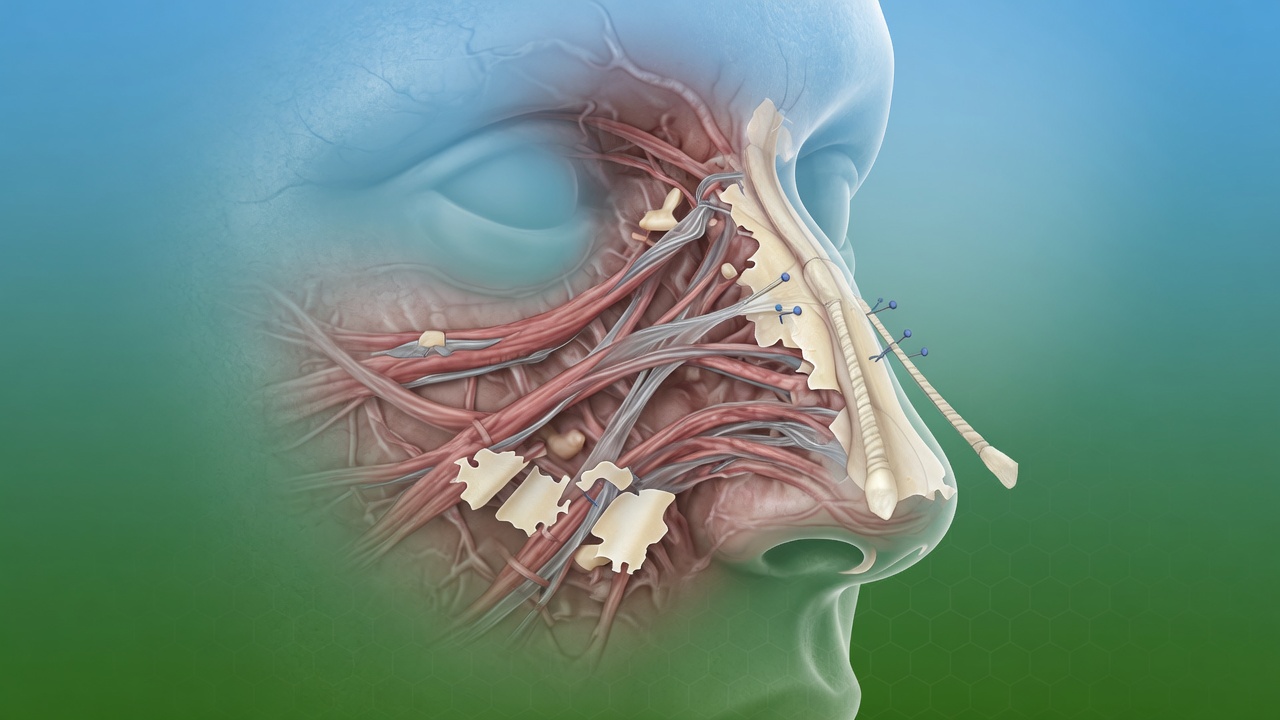
The first surgery may have removed or weakened cartilage, leaving the nose with less structural support. Common changes include a resected nasal dorsum, weakened tip support, and collapse of the internal nasal valves — structures that regulate airflow. Cartilage grafting — taking cartilage from the septum, ear, or rib — is needed in 70% of revisions, according to a JAMA study on cartilage grafting needs in revision rhinoplasty (2024). When septal cartilage is available, it’s the first choice. If depleted (common in revisions), the surgeon moves to ear cartilage (conchal bowl) or rib cartilage. A Cochrane review of cartilage grafting success rates (2022) reports rib grafts have a 90% success rate in achieving stable structure versus 75% for ear cartilage. Graft harvesting adds operating time — often 1.5 hours — and creates an additional surgical site (ear or rib).
Transition: With the structural foundation compromised, the surgeon must also address functional concerns — namely, the nasal valves that regulate airflow.
The Surgeon’s Perspective: The Revision Triage
No two revisions are alike. Each requires a tailored approach — what we call The Revision Triage: the evaluation framework surgeons use to prioritize structural stability versus aesthetic outcome. In primary rhinoplasty, the surgeon starts with a normal structure. In revision, they must correct existing deformities while preserving what remains. The triage question becomes: fix function (breathing) first or form (appearance)? Often, one must take priority. Revision surgeons need to be adept at open rhinoplasty techniques, graft carving, and managing unpredictable scenarios — expertise that comes from performing dozens of revision cases each year. This nuance is often missing from generic competitor content.
Transition: These surgical realities directly lead to heightened risks and a more demanding recovery. Next, we’ll explore the specific surgical hurdles in detail.
Key Surgical Challenges During a Revision
A revision rhinoplasty demands that the surgeon navigate a landscape of scar tissue, depleted cartilage, and altered anatomy. Each step carries unique technical challenges that extend surgery time and raise the stakes.
Scar Tissue Resection and Bleeding
During a revision, the surgeon must carefully dissect fibrotic scar tissue while preserving the skin envelope and underlying structures. Because scar tissue obscures normal tissue planes, an open approach is standard — it provides the visibility needed for precise work. The PubMed study on scar tissue complications notes that scar tissue increases operative time by 30%, largely due to the meticulous dissection required. Bleeding risk is also higher because scarred tissue is more vascular. If the dissection is too aggressive, skin necrosis can occur — a serious complication that may require additional reconstructive surgery. Surgeons use careful sharp dissection and electrocautery to minimize bleeding, but the added time and risk are significant.
Transition: But scar tissue is only part of the challenge. Often, the nose lacks the very building blocks needed for a stable result — cartilage.
Cartilage Grafting – Septum, Ear, and Rib Options
When the septum has been depleted by the first surgery, the surgeon turns to alternative sources. Ear cartilage (conchal bowl) is flexible and works well for tip grafts, but it is less strong and may not provide enough structural support. Rib cartilage is the strongest option and is preferred when significant rebuilding is needed. The JAMA study on cartilage grafting reports that harvesting and carving rib cartilage adds approximately 1.5 hours to the procedure. The Cochrane review of cartilage grafting success rates (2022) shows rib grafts achieve 90% structural stability versus 75% for ear grafts. However, rib cartilage carries risks of warping and chest scarring. Surgeons must expertly carve grafts into shape — strut grafts for tip support, spreader grafts to open internal nasal valves, and shield grafts for projection. The choice of graft material depends on the patient’s anatomy, the amount of correction needed, and the surgeon’s experience.
Transition: Structural support is also essential for the internal nasal valves, which are often compromised after the first surgery.
Addressing Nasal Valve Collapse
The internal nasal valves are the narrowest part of the nasal airway, formed by the septum, upper lateral cartilage, and inferior turbinate. Primary surgery may weaken the upper lateral cartilages, leading to collapse during inhalation. This causes persistent breathing difficulty — a common complaint among revision candidates. Nasal valve collapse is present in up to 60% of revision cases. Repair involves placing spreader grafts — thin strips of cartilage between the septum and upper lateral cartilage to open the valve. Failure to address valve collapse is a frequent reason for revision failure. NIH research on functional risks reports that revision rhinoplasty is 40% more likely to result in functional breathing issues due to scar tissue and structural depletion compared to primary surgery.
Transition: These surgical complexities translate directly into higher risks and a longer, more careful recovery. In the next section, we address safety, complications, and what to expect after surgery.
Risks, Recovery, and Safety in Thailand
The data speaks clearly: revision rhinoplasty carries a 10–15% complication rate, nearly double that of primary surgery, according to MedlinePlus revision rhinoplasty complication rates (2023). Understanding these numbers — and the safety measures that mitigate them — is essential for any patient considering surgery abroad.
Higher Complication Rates – What the Data Says
Complications include infection, asymmetry, breathing difficulties, graft failure, and skin necrosis. Why are rates higher? Scar tissue leads to asymmetric healing; grafts may shift or resorb; compromised blood supply increases necrosis risk. NIH research on functional risks indicates a 40% higher chance of functional breathing issues in revision cases. The 10–15% figure from MedlinePlus contrasts with 5–8% for primary rhinoplasty. These statistics underscore the importance of choosing a highly experienced surgeon and a facility with robust emergency protocols.
Transition: These numbers underscore the importance of choosing a clinic that meets international safety standards — which we’ll cover next.
Ensuring Your Safety – Accreditation and Surgeon Credentials
The World Health Organization reports that complication rates in non-accredited facilities can be up to three times higher than in accredited hospitals (WHO medical tourism safety guidelines). In Thailand, the gold standard is JCI accreditation (Joint Commission International). You can check a hospital’s JCI status online. The U.S. State Department medical tourism advisory recommends JCI-accredited clinics with 24-hour emergency response capabilities. Surgeon credentials matter equally: look for board certification by the Thai Medical Council, membership in the International Society of Aesthetic Plastic Surgery (ISAPS), and a portfolio showing at least 20–30 revision cases. A surgeon who doesn’t specialize in revisions is a red flag.
Transition: Safety measures directly influence recovery. Here’s what an average revision recovery looks like.
Realistic Recovery Timeline – Week by Week
Recovery from revision rhinoplasty is typically longer than from primary surgery due to the extra dissection and grafting required. Here’s what you can expect:
- Week 1–2: Splint and packing are removed. Significant swelling and bruising are present. Rest is required. If rib cartilage was harvested, chest discomfort persists.
- Week 3–4: You can return to light activity (desk work, walking). Most swelling subsides. Nasal packing is gone, but internal swelling remains.
- Month 2–3: About 60–70% of visible swelling resolves. The final aesthetic result may take up to 12–18 months. Revision often has more prolonged swelling due to scar tissue.
- Important restrictions: Avoid strenuous activity for 4–6 weeks. Sleep with your head elevated. Do not wear glasses on your nose for at least 6 weeks.
Transition: Now that you understand the complexity, risks, and recovery, let’s examine one of the most practical considerations: cost.
Costs and Packages for Revision Rhinoplasty in Thailand (Summary)
Revision rhinoplasty is more expensive — Harvard Health breakdown of revision cost increase reasons reports 60% higher costs than primary surgery. This increase is driven by longer operating room time, the need for cartilage grafts, and the surgeon’s higher fee for revision expertise.
Typical all-inclusive packages in Thailand range from $3,000 to $8,000+, depending on the extent of revision and the clinic’s reputation (sources: Bookimed, Flymedi). What’s usually included: surgeon fee, anesthesia, hospital stay (1–2 nights), medications, and post-operative garments. Not included: flights, accommodation, and follow-up visits after discharge.
For a detailed breakdown with package comparisons, see our full guide on detailed cost of revision rhinoplasty in Thailand.
Selecting the Best Revision Rhinoplasty Surgeon in Thailand (Summary)
Finding the right surgeon is the single most important decision. Key credentials to verify: board certification in plastic surgery (Thai Medical Council), ISAPS membership, and a revision case portfolio showing at least 20–30 revision cases. Kamol Hospital rhinoplasty services provide an example of a Thai clinic that lists revision rhinoplasty among its services.
Questions to ask during a virtual consultation: “How many revision rhinoplasties do you perform per year?” and “What is your specific approach to scar tissue and cartilage grafting?” Red flags include: a surgeon who doesn’t specialize in revisions, cannot show before/after photos of revision cases, or is vague about success rates.
For a step-by-step selection checklist and questions to ask, see our full guide on guide to selecting a revision rhinoplasty surgeon.
Thailand vs. Turkey for Revision Rhinoplasty (Summary)
Both Thailand and Turkey offer affordable revision rhinoplasty with qualified surgeons. Turkey may have slightly lower total package costs, but Thailand has a higher number of JCI-accredited hospitals and a recovery-friendly environment with established medical tourism infrastructure. Flymedi revision rhinoplasty packages in Thailand serve as a reference for cost comparison. The choice ultimately depends on your priorities: if safety accreditation and a pleasant recovery setting matter most, Thailand may be the better fit. If lower price is critical, Turkey could be worth exploring.
For a detailed head-to-head comparison including cost tables and patient reviews, see our full guide on detailed comparison of Thailand vs. Turkey for revision rhinoplasty.
Revision Rhinoplasty: Understanding the Risks and Limitations
Even with the best surgeon, outcomes are not guaranteed. Revision rhinoplasty carries a higher risk of dissatisfaction compared to primary surgery. These limitations must be acknowledged upfront.
Common Pitfalls and What Can Go Wrong
Pitfall 1: Inadequate scar tissue management. If the surgeon does not fully release scar tissue, asymmetric healing can result. Mitigation: Choose a surgeon who has demonstrated expertise in scar tissue resection, with multiple before/after photos of revision cases.
Pitfall 2: Over-reliance on ear cartilage when stronger rib graft was needed. Ear cartilage may not provide enough structural support for severe deformities. Mitigation: The surgeon must assess the structural needs using three‑dimensional imaging and plan graft sourcing accordingly.
Pitfall 3: Underestimating recovery time. Revision recovery can take 12–18 months for final results. Mitigation: Plan to take at least 2–3 weeks off work and avoid strenuous activity for 4–6 weeks.
When to Consider Alternatives
Alternative 1: Non-surgical rhinoplasty (dermal fillers) for minor asymmetries. This cannot fix functional problems or major aesthetic deformities.
Alternative 2: Accepting the results of the first surgery if the risks of revision outweigh potential benefits — especially after multiple prior surgeries.
Alternative 3: Choosing a surgeon in your home country if traveling to Thailand is not feasible or if you have complex medical history.
When to Seek Expert Help
If you have severe breathing difficulty, had multiple previous rhinoplasties, or have been told your case is “inoperable,” seek a board-certified craniofacial surgeon or a revision rhinoplasty specialist with at least 10 years of experience in complex cases.
Frequently Asked Questions
1. How risky is a revision rhinoplasty compared to a primary rhinoplasty?
Revision rhinoplasty carries a 10–15% complication rate, roughly double the 5–8% rate of primary surgery. The increased risk stems from scar tissue, altered anatomy, and the need for cartilage grafting. Common complications include infection, asymmetry, breathing difficulties, and graft displacement. For example, scar tissue alone can increase asymmetry risk by 45% (PubMed, 2019). However, choosing an experienced, board-certified revision specialist in a JCI-accredited facility significantly reduces these risks.
2. Is it safe to get revision rhinoplasty in Thailand?
Yes, revision rhinoplasty in Thailand can be safe if you choose a JCI-accredited hospital and a board-certified surgeon with a track record in revisions. Thailand has many internationally accredited facilities that follow strict sterilization and safety protocols. The World Health Organization notes that unaccredited facilities have up to three times higher complication rates. To maximize safety, verify JCI accreditation, ask the surgeon about revision case numbers, and ensure the clinic has 24‑hour emergency response capabilities.
3. How long does it take to recover from revision rhinoplasty?
Initial recovery takes 2–3 weeks for most swelling and bruising to subside, but full final results can take 12–18 months. During the first week, you’ll have a splint and may need to rest. By week 3–4, you can return to light work. Because revision surgery often involves more dissection and grafting, swelling may be more prolonged than with primary rhinoplasty. Avoid strenuous activity for 4–6 weeks and don’t wear glasses on your nose for at least 6 weeks.
4. Why is revision rhinoplasty more expensive than primary?
Revision rhinoplasty costs up to 60% more than primary surgery due to increased surgical complexity, longer operating time, and the need for cartilage grafting. The surgeon must spend more time dissecting scar tissue and harvesting grafts, which often adds 1.5 hours to the procedure. In Thailand, revision packages typically range from $3,000 to $8,000+, compared to $2,000–$5,000 for primary. The higher cost reflects the advanced skills required.
5. Should I choose Thailand or Turkey for revision rhinoplasty?
The choice depends on your priorities: Thailand offers more JCI-accredited hospitals and a recovery-friendly environment; Turkey may have slightly lower total package costs. Both countries have board-certified surgeons with revision experience. Thailand’s medical tourism infrastructure is well-established for international patients. We recommend evaluating the specific surgeon’s revision portfolio and the clinic’s accreditation rather than focusing solely on destination. A dedicated guide covering this comparison is available.
Conclusion
For patients considering revision rhinoplasty in Thailand, the procedure is undeniably more complex — scar tissue, cartilage deficiency, and altered anatomy raise complication rates to 10–15%. Yet with proper surgeon selection (board-certified, revision specialist) and a JCI-accredited clinic, risks can be minimized. The key is informed decision-making: understand the why behind complexity, the cost increase, and the safety measures before committing.
Remember The Revision Triage — each case prioritizes function, form, or both. The surgeon’s expertise in balancing these priorities determines the outcome. Don’t rush. Verify credentials, review portfolios, and ask tough questions during consultation.
Start by compiling a list of board-certified revision specialists in Thailand. Request virtual consultations with at least two surgeons. Use the selection checklist from our dedicated surgeon guide to evaluate each one. Your nose — and your peace of mind — deserve the best possible care.
Prices and features verified as of April 2025. Costs may vary.
Disclaimer: This content is for informational purposes and does not substitute professional medical advice.