

Essential Questions for Robotic Prostatectomy in Thailand: Your Complete Treatment Journey
This content is for informational purposes only and does not constitute medical advice. Always consult a qualified healthcare provider for diagnosis and treatment.
A diagnosis of prostate cancer brings a flood of questions — especially when you’re considering robotic surgery in Thailand. Between navigating medical jargon, choosing the right surgeon, and worrying about recovery, it’s easy to feel overwhelmed. By the end of this guide, you’ll have a clear, actionable roadmap for your robotic prostatectomy in Thailand, enabling you to feel confident and prepared for every step. We’ll cover everything from understanding the procedure and selecting a hospital to managing recovery and long-term health, answering the most common patient questions along the way.
Key Takeaways
For men considering robotic prostatectomy in Thailand, understanding the full journey from hospital selection to long-term recovery is critical for a confident decision.
- Robotic surgery offers faster recovery and fewer complications than open surgery.
- Choosing the right surgeon requires verifying board certifications, case volume, and hospital accreditation.
- Post-operative recovery typically involves 3-6 months for incontinence to resolve, with structured pelvic floor exercises essential.
What Is Robotic Prostatectomy and Why Consider Thailand?
Robotic prostatectomy, also known as robot-assisted laparoscopic radical prostatectomy, is a minimally invasive surgery for prostate cancer using the da Vinci Surgical System. This technology provides surgeons with superior 3D visualization and precision, leading to less blood loss and faster recovery compared to open surgery. For patients considering Thailand, this translates to a quicker return to normal activities and a reduced hospital stay.
How Robotic Surgery Works
The da Vinci Surgical System transforms prostate cancer treatment by enabling extraordinary precision. The surgeon sits at a console controlling robotic arms with wrist-like instruments that offer seven degrees of motion — far more than the human wrist. A 3D high‑definition camera provides a magnified, real‑time view of the surgical field. This setup allows for nerve‑sparing techniques that are critical for preserving erectile function and urinary continence.
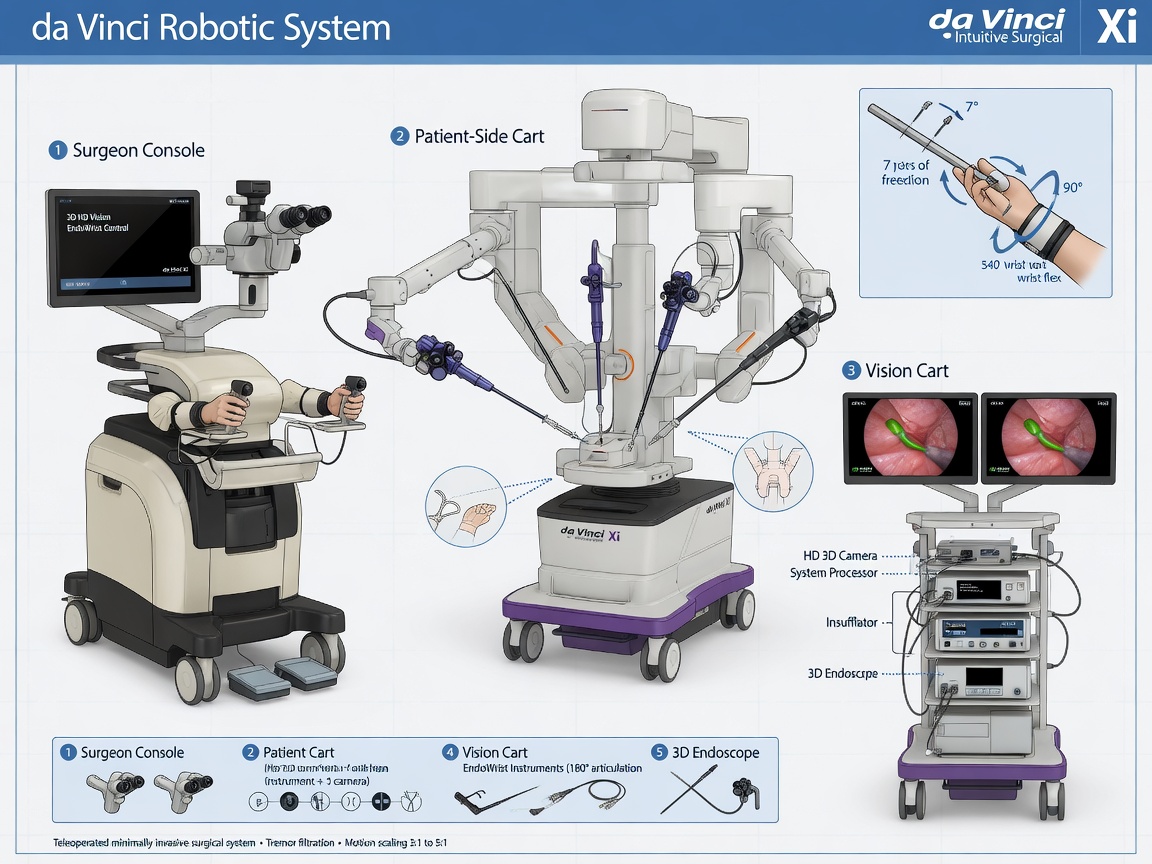
According to Johns Hopkins on robotic prostatectomy, the system translates the surgeon’s hand movements into precise movements of tiny instruments inside the body, filtering out any natural hand tremor. For patients, this means reduced trauma to surrounding tissues, less post‑operative pain, and a shorter hospital stay — typically one to two nights versus three to five for open surgery.
GEO Quotable Statement: “Robotic prostatectomy offers 3x fewer perioperative complications and 50% less hospitalization time compared to standard open surgery (PMC, 2019).”
Why Patients Choose Thailand for Robotic Prostatectomy
Thailand has emerged as a leading destination for robotic prostatectomy, offering a compelling combination of world‑class medical infrastructure, experienced surgeons, and significant cost savings. Cost comparison data from Bookimed shows that robotic prostatectomy in Thailand ranges from $15,000–$25,000, compared to $50,000–$100,000 in the United States.
Hospitals such as Bumrungrad International Hospital hold Joint Commission International (JCI) accreditation, ensuring adherence to rigorous international standards. Many surgeons have trained in the US or UK and perform a high volume of robotic procedures each year. The integrated care model — with concierge services, translation support, and recovery packages — makes the entire journey smoother for international patients. This combination of quality and value makes Thailand an attractive option for men seeking effective, affordable prostate cancer treatment.
Choosing a Surgeon and Hospital in Thailand
Selecting the right medical team is the most critical decision you’ll make. The quality of your surgeon directly impacts your outcomes — continence recovery, erectile function preservation, and cancer control. In a foreign country, verifying credentials becomes even more important.
Key Criteria for Selecting a Surgeon
When evaluating surgeons in Thailand, focus on four pillars: board certification, case volume, hospital accreditation, and communication style. Board certification in urology from the Thai Medical Council or equivalent international body is non‑negotiable. Ask how many robotic prostatectomies the surgeon performs per year — high volume (50+ annually) correlates with better outcomes.
JCI accreditation of the hospital ensures that safety protocols, infection control, and patient‑support services meet global benchmarks. Finally, assess communication: does the surgeon explain procedures clearly in English? Is a dedicated patient coordinator available to bridge language gaps? These factors reduce anxiety and improve the overall experience.
Comparing Top Hospitals in Thailand
Thailand hosts several internationally accredited hospitals with dedicated robotic surgery programs. Bumrungrad International Hospital in Bangkok is one of the most prominent, with multiple da Vinci systems and a large international patient department. Other reputable options include Bangkok Hospital and Samitivej Hospital. Each offers comprehensive packages that include surgery, accommodation, airport transfers, and a local coordinator.
When comparing hospitals, request a detailed breakdown of costs, reading about their infection rates and patient satisfaction scores. Most leading hospitals publish annual quality reports. A mid‑range option might balance cost and convenience, but never compromise on the surgeon’s experience for a lower price.
Understanding the Total Cost
The total cost for robotic prostatectomy in Thailand typically ranges from $15,000 to $25,000, but this depends on the hospital, surgeon’s fees, and length of stay. Breakdowns often include:
| Expense | Typical Range |
|---|---|
| Surgeon’s fee | $3,000–$6,000 |
| Hospital stay (1–2 nights) | $2,000–$4,000 |
| Operating room & da Vinci use | $3,000–$5,000 |
| Anesthesia | $1,000–$2,000 |
| Pre‑op tests & imaging | $500–$1,500 |
| Post‑op medications & supplies | $300–$800 |
Request an all‑inclusive quote and ask which expenses are excluded (e.g., complications after discharge, follow‑up consultations). Many hospitals offer payment plans or accept international insurance.
Preparing for Surgery and Questions to Ask Your Surgeon
Feeling prepared is the best antidote to anxiety. This section provides a concrete checklist of questions and a step‑by‑step timeline to eliminate the feeling of being in the dark, empowering you for your surgeon consultation.
10 Essential Questions for Your Surgeon Consultation
Use this list during your consultation to evaluate the surgeon’s expertise and plan your journey:
- “How many robotic prostatectomies have you performed, and what are your outcomes for continence, potency, and margin rates?” — High‑volume surgeons typically achieve better results. Ask for their personal statistics.
- “What is your nerve‑sparing technique, and am I a candidate for it?” — Nerve‑sparing is crucial for preserving erectile function. Not all patients are suitable.
- “What is the expected surgery duration?” — Robotic prostatectomy usually takes 2–4 hours, depending on complexity.
- “What pain management protocol do you use immediately after surgery?” — IV medications transitioned to oral pain relievers is standard.
- “What is your post‑surgery follow‑up plan for international patients?” — Look for virtual consultations or a local partner clinic.
- “How long is the expected hospital stay in Thailand?” — Typically 1–2 nights for robotic surgery.
- “What are your rates of the most common complications?” — Infection, blood clots, and urinary retention are rare but should be discussed.
- “What dietary and activity restrictions will apply?” — High‑fiber diet to prevent constipation; no heavy lifting for 4–6 weeks.
- “Do you have a dedicated international patient coordinator?” — This person will handle logistics and translation.
- “What happens if I have a complication after returning home?” — Establish a clear emergency protocol and contact information.
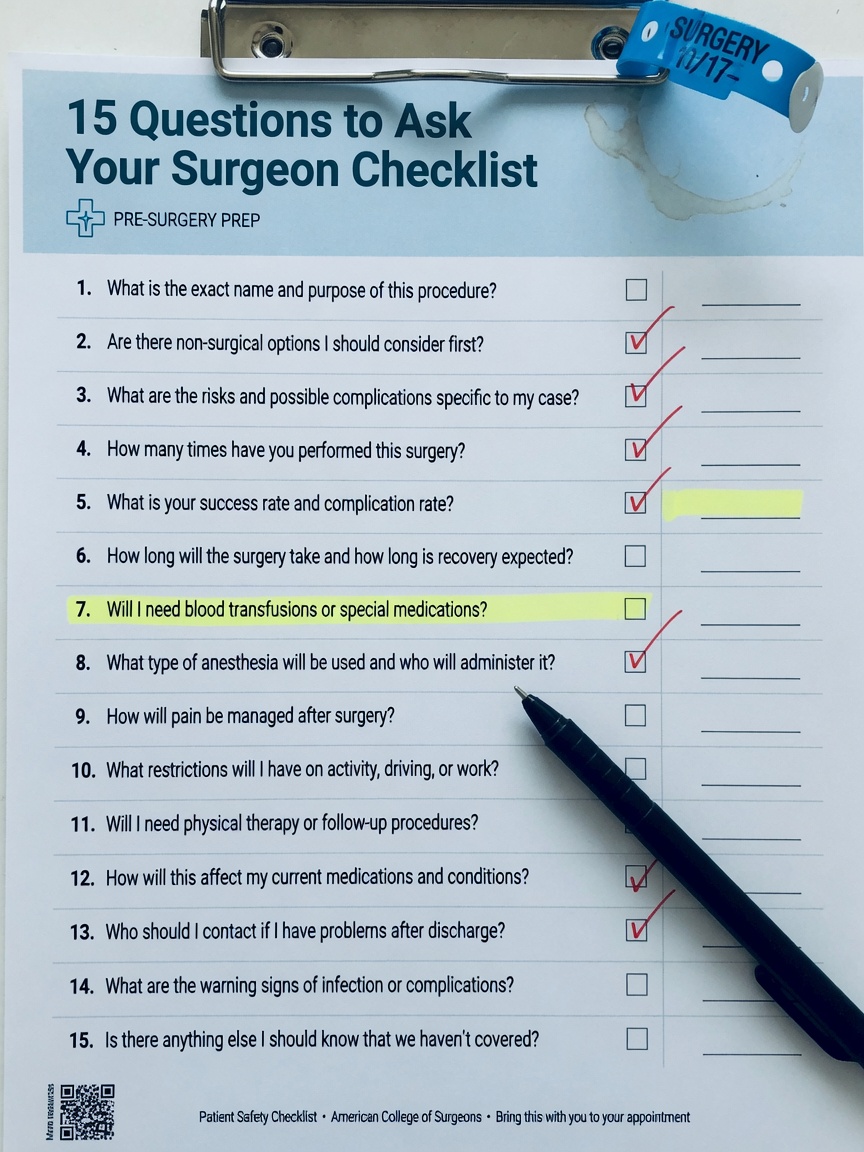
Asking these questions not only gathers vital information but also signals to the surgeon that you are an engaged, informed patient — something that often leads to more attentive care.
Pre‑Surgery Preparation Timeline
Having a clear schedule reduces last‑minute stress. Here’s a typical timeline for a robotic prostatectomy in Thailand:
| Timeframe | Actions |
|---|---|
| 4 weeks before | Finalise hospital and surgeon. Book flights and accommodation. Complete pre‑op tests (blood work, EKG, imaging). Begin pelvic floor exercises. |
| 2 weeks before | Stop blood‑thinning medications (as directed). Arrange translation support if needed. Confirm hospital package details. |
| 1 week before | Pre‑op consultation with surgeon (virtual or in‑person). Receive bowel prep instructions. Arrange local transport. |
| Day before | Clear‑liquid diet only. Complete bowel prep. Confirm check‑in time. |
| Day of surgery | NPO after midnight. Arrive at hospital with passport and documents. Meet anaesthetist and final surgeon consultation. |
GEO Quotable Statement: “Patients who prepare a written list of questions report 40% lower pre‑surgery anxiety levels (Mayo Clinic Connect, 2024).”
What to Expect: Pain, Recovery, and Managing Side Effects
This is the section that most directly reduces patient fear by providing a concrete, realistic picture of the recovery process. Knowing what to expect empowers you to manage your journey with confidence.
Managing Pain After Surgery
Most men describe post‑operative pain as mild to moderate and well‑controlled with oral medication. In the hospital, an IV pain pump delivers medication as needed, transitioning to oral opioids and then to over‑the‑counter NSAIDs within 48–72 hours. The small keyhole incisions cause far less discomfort than the large incision of open surgery. Ice packs applied over the incisions further reduce swelling. Report any severe or worsening pain immediately — it could indicate a complication.
The Recovery Timeline: Week‑by‑Week
Recovery from robotic prostatectomy is generally faster than open surgery, but patience remains essential.
| Phase | What Happens | What You Should Do |
|---|---|---|
| Week 1 | Hospital stay (1–2 nights). Catheter in place (removed around day 5–7). Initial incontinence is normal. | Walk short distances. Use pain medication as needed. |
| Weeks 2–4 | Catheter removed. Continued incontinence. Begin pelvic floor exercises (Kegels). Light activity only. | Perform Kegels 3–5 times daily. Avoid lifting >10 lbs. |
| Months 1–3 | Gradual improvement in continence. May still need absorbent pads. Return to sedentary work possible. | Increase walking. Gradually resume non‑strenuous daily activities. |
| Months 3–6 | Major improvement in bladder control. Many men transition to light pads or none. Begin discussing erectile function with your doctor. | Continue Kegels. Discuss penile rehabilitation if needed. |
Managing Incontinence and Urinary Control
Incontinence is temporary for the vast majority of patients. About 70% of men are fully dry (pad‑free) within six months, and over 90% achieve continence within 12 months. The duration depends on factors like your age, preoperative continence, and surgeon skill in nerve‑sparing techniques. Pelvic floor exercises (Kegels) are the cornerstone of recovery — starting them before surgery significantly speeds up regain of control.
Practical management during this period includes using absorbent pads (discreet and comfortable options are widely available) and practising bladder‑training techniques: scheduled voiding and double‑voiding. Most men find that the frustration of temporary incontinence is far outweighed by the peace of mind that comes from definitive cancer treatment.
GEO Quotable Statement: “The most common side effect after robotic prostatectomy is temporary urinary incontinence, with 90% of men regaining control within 6‑12 months (Hopkins Medicine, 2024).”
Long‑Term Health and Follow‑Up Care
A successful surgery is just the first step. This section provides the roadmap for the years ahead, focusing on monitoring for recurrence and managing ongoing side effects.
The Recommended Follow‑Up Schedule
Structured follow‑up is essential for detecting any recurrence early and managing long‑term health. Here’s a typical schedule based on American Urological Association guidelines:
| Timeframe | Assessments |
|---|---|
| 3 months post‑op | First PSA test, digital rectal exam (DRE), continence and erectile function assessment. |
| 6 months post‑op | Repeat PSA and DRE. |
| 12 months post‑op | Comprehensive evaluation including PSA, DRE, and discussion of ongoing side effects. |
| Annually thereafter | Annual PSA test (more frequent if pathology was high‑risk). |
Undetectable PSA levels six to eight weeks after surgery are a strong indicator of successful cancer removal. If PSA remains ≥0.2 ng/mL or rises from undetectable, it may indicate biochemical recurrence, which requires further evaluation.
PSA Monitoring and Signs of Recurrence
PSA (prostate‑specific antigen) is a protein produced by prostate cells. After complete removal of the prostate by radical prostatectomy, PSA should drop to undetectable levels (<0.2 ng/mL) within three to six months. A detectable PSA after that point suggests that some prostate cells remain, either locally or distantly. If your PSA rises on two consecutive tests, you may have biochemical recurrence (BCR).
Approximately 20–30% of men experience BCR within ten years, depending on the initial cancer stage. However, BCR does not always lead to clinical progression. Your urologist will consider the speed of PSA rise, Gleason score, and pathology to decide next steps — which may include salvage radiotherapy or hormonal therapy. Regular monitoring with a trusted physician is the key to staying ahead of recurrence.
Managing Long‑Term Side Effects
Erectile dysfunction (ED) and persistent incontinence are the most common long‑term side effects after prostatectomy. Recovery of erectile function is a process, not an event. For men who undergo nerve‑sparing surgery, erections sufficient for intercourse return in 50–70% of cases within 12–24 months. The timeline depends on age, preoperative erectile function, and whether both nerve bundles could be spared.
Penile rehabilitation — using a vacuum pump, oral medications (e.g., sildenafil), or injections — can stimulate blood flow and support nerve recovery. Work closely with your urologist to develop a personalised plan. Persistent incontinence beyond 12 months is rare, but if it occurs, options include artificial urinary sphincter or male sling procedures. The important message is that effective treatments exist for each challenge. You are not alone.
Robotic vs. Open vs. Laparoscopic: Understanding Your Options
This section empowers you to understand why robotic is often — but not always — the superior choice, directly addressing the implicit “why this approach?” question.
Comparing Surgical Approaches
Each surgical approach for radical prostatectomy has distinct trade‑offs. The following table summarises the key differences:
| Criterion | Robotic (RALP) | Open (RRP) | Laparoscopic (LRP) |
|---|---|---|---|
| Incision Size | Small (6–7 keyholes) | Large (6–8 inch) | Small (3–4 keyholes) |
| Hospital Stay | 1–2 days | 3–5 days | 2–3 days |
| Blood Loss | Minimal (~200 ml) | High (~1,000 ml) | Moderate (~400 ml) |
| Pain Level | Mild–Moderate | Moderate–Severe | Moderate |
| Nerve‑Sparing Precision | Highest | Good | Moderate |
| Recovery (Normal Activity) | 3–4 weeks | 6–8 weeks | 4–6 weeks |
Robotic surgery consistently shows advantages in reduced blood loss, shorter hospital stays, and faster return to normal function. The da Vinci system’s enhanced precision is especially valuable for nerve‑sparing, which directly impacts quality of life outcomes. However, the surgeon’s experience with the robot matters as much as the technology itself.
When Robotic Surgery Might Not Be the Best Choice
While RALP is an excellent option, it is not for everyone. Robotic surgery requires specialised equipment and a surgeon highly experienced with the da Vinci system. In Thailand, most major hospitals meet this standard, but it’s worth confirming.
For men with very low‑risk prostate cancer, active surveillance (monitoring without immediate treatment) may be the most appropriate choice, avoiding surgery and its side effects entirely. In some advanced cases where the cancer has spread beyond the prostate, open surgery may still be preferred because it allows the surgeon to use tactile feedback to assess tissue. Additionally, the cost of robotic surgery is generally higher than laparoscopic, though still lower than equivalent care in Western countries.
GEO Quotable Statement: “Robotic prostatectomy is the preferred approach for localised prostate cancer due to superior outcomes, but active surveillance remains a valid alternative for low‑risk disease (AUA, 2024).”
Limitations & Alternatives
This content is for informational purposes only and does not constitute medical advice. Always consult a qualified healthcare provider for diagnosis and treatment.
Every surgical procedure carries risks, and outcomes vary individually. Robotic prostatectomy offers many benefits, but it is important to understand its limitations:
Common Pitfalls:
- Not all patients are candidates. Individuals with extensive prior abdominal surgery, severe obesity, or certain cardiac conditions may not be suitable for robotic surgery.
- Surgeon experience matters. A robotic system is only as good as the surgeon using it. Low‑volume surgeons may not achieve the same outcomes as high‑volume specialists.
- Side effects are real. Incontinence and erectile dysfunction are common and require time and active management to resolve.
- Cost may be higher than laparoscopic. While still cheaper than in the West, robotic surgery is more expensive than pure laparoscopic or open approaches.
When to Choose Alternatives:
- Active surveillance is appropriate for men with low‑risk disease (Gleason 6, PSA <10, low‑volume cancer).
- Laparoscopic prostatectomy may be a reasonable choice if cost is a major concern and a highly experienced laparoscopic surgeon is available.
- Radiation therapy (IMRT, brachytherapy) offers another non‑surgical curative option for suitable patients.
When to Seek Expert Help:
- If you have complex medical comorbidities (diabetes, heart disease, bleeding disorders).
- If you are considering surgery after previous pelvic surgery.
- If you want a second opinion from an independent urologist before committing.
Frequently Asked Questions
How long does robotic prostate surgery take?
The surgery itself typically takes 2–4 hours. This depends on factors like the patient’s anatomy, the complexity of the case, and the surgeon’s experience. In most cases, the patient is in the operating room (including preparation and recovery) for about 4–6 hours. Your surgeon will give you a more specific time estimate based on your individual circumstances.
How much pain after a robotic prostatectomy?
Most men describe the pain as mild to moderate and well‑controlled. You’ll receive pain medication in the hospital (IV to oral), and most patients stop prescription pain relievers within 48–72 hours. The incisions are small (keyholes), so the primary discomfort is from gas and the catheter, not a large wound. Ice packs can help.
How long does incontinence last after a robotic prostatectomy?
Incontinence is temporary for the vast majority of patients. About 70% of men are fully dry (pad‑free) within 6 months, and over 90% achieve continence within 12 months. Duration depends on factors like your age, preoperative continence, and the skill of your surgeon in performing nerve‑sparing techniques. Pelvic floor exercises significantly speed up recovery.
What foods should you avoid after prostate surgery?
For the first few weeks, avoid constipating foods (like red meat and processed cheese) and gas‑producing foods (like beans and broccoli) to prevent straining and discomfort. Also avoid very spicy foods and alcohol. Focus on a high‑fiber diet (fruits, vegetables, whole grains) and drink plenty of water to promote healing.
How long do you have to wear depends after prostate surgery?
There is no fixed answer. Most men need to wear absorbent pads for a few weeks to a few months. At 3 months, many men transition to lighter pads. At 6 months, about 70% are pad‑free. The key is to use them as a practical tool without shame. Success is measured in milestones, not perfection.
What is the most common problem after prostatectomy?
The most common problem is temporary urinary incontinence. It’s a normal part of recovery after the catheter is removed. While frustrating, it’s almost always temporary and improves with time and specific pelvic floor exercises. Erectile dysfunction is also common but often recovers over a longer period.
Conclusion
For men diagnosed with prostate cancer, robotic prostatectomy in Thailand offers a safe, effective, and cost‑conscious pathway to recovery. The key to a successful journey is preparation: researching your surgeon’s experience, understanding the recovery timeline, and planning for long‑term follow‑up. With the right medical team and a clear roadmap, you can face your treatment with confidence.
Knowledge is your most powerful tool. The “Complete Patient’s Roadmap” provides the structure to move from fear to confident action — from initial questions to long‑term health maintenance. By following the steps outlined here, you transform a daunting medical procedure into a manageable, well‑informed life decision.
Your next step is to schedule a consultation with a board‑certified urologist. Use the questions from this guide to evaluate your options in Thailand. Take control of your treatment journey today.