

Pain Control After Orthopedic Surgery in Thailand: Complete Guide
This content is for informational purposes only and does not constitute medical advice. Consult your healthcare provider for personalized guidance.
You’ve scheduled your orthopedic surgery in Thailand – now comes one of the most important parts of your recovery: pain control. Without a solid plan, managing medication refills, nerve block timing, and travel logistics can turn a smooth recovery into a stressful ordeal. Relying on generic advice from home country sources won’t work – Thailand has different regulations, availability, and customs procedures. A last-minute scramble for pain relief can ruin your recovery experience.
Whether you’re researching pain control after orthopedic surgery in Thailand or fine-tuning your recovery strategy, this guide offers a complete, actionable plan. By the end, you’ll have a comprehensive strategy tailored to your Thailand surgery – covering medications, nerve blocks, rebound pain prevention, and travel with medication – so you can focus on healing with confidence. We’ll start with the foundation of multimodal analgesia, then explore nerve blocks, dive into rebound pain prevention, and finish with everything you need to travel safely with pain medication.
Key Takeaways
Successful pain control after orthopedic surgery in Thailand combines multimodal medications, nerve blocks, and proactive timing to prevent rebound pain.
- Multimodal analgesia – acetaminophen, NSAIDs, and opioids work together to reduce side effects and improve relief
- Nerve blocks provide targeted, long-lasting pain control but require careful timing to avoid rebound pain
- Preemptive medication scheduling – starting oral painkillers before the nerve block wears off is the key to smooth transition
- Travel smart – know which painkillers are legal in Thailand, carry proper documentation, and plan for delays
Multimodal Pain Control After Orthopedic Surgery
Multimodal analgesia is the modern standard for managing pain after orthopedic surgery. This approach combines two or more different types of painkillers – typically acetaminophen, NSAIDs, and opioids – to target pain through multiple pathways, reducing reliance on any single drug (AAOS, 2023). For patients recovering in Thailand, understanding this approach is essential for safe and effective pain control.
The traditional approach of relying solely on opioids for post-surgical pain has given way to a more balanced strategy. By attacking pain at different points in the nervous system, multimodal analgesia delivers better relief with fewer side effects. Research from major medical centers shows that multimodal analgesia reduces opioid consumption by 30-50% compared to opioid-only protocols. This is especially valuable in Thailand, where opioid access is more restricted than in many Western countries.
Multimodal analgesia – combining acetaminophen, NSAIDs, and opioids – reduces opioid consumption by 30-50% compared to opioid-only regimens (AAOS, 2023).
Acetaminophen, NSAIDs, and Opioids
Acetaminophen (also known as paracetamol) serves as the foundation of most post-operative pain regimens. This common over-the-counter pain reliever works centrally in the brain to reduce pain signals. Standard dosing is 1 gram every 6 hours, with a maximum daily limit of 4 grams. In Thailand, acetaminophen is widely available without a prescription at any pharmacy.
Nonsteroidal anti-inflammatory drugs (NSAIDs), such as ibuprofen and naproxen, target inflammation at the surgical site. These medications reduce swelling and pain by blocking prostaglandin production. Typical dosing includes ibuprofen 400-600 mg every 6 hours or naproxen 250-500 mg twice daily. NSAIDs are particularly valuable after orthopedic surgery because inflammation is a primary driver of pain in bone and joint procedures (Cleveland Clinic, 2023). However, they should be taken with food to reduce gastrointestinal side effects, and patients with kidney disease or a history of stomach ulcers should use them cautiously.
Opioids, including codeine, tramadol, morphine, and oxycodone, are reserved for moderate to severe pain that doesn’t respond to acetaminophen and NSAIDs alone. These prescription-only controlled substances work by binding to opioid receptors in the brain and spinal cord. For orthopedic surgery, opioids are typically used for the first 3-7 days post-operatively. Common side effects include constipation, nausea, and drowsiness. In Thailand, opioid regulations are stricter than in many Western countries – you’ll need a valid Thai prescription, and bringing them from abroad requires special documentation.
For a typical hip replacement, the multimodal regimen starts with scheduled acetaminophen and ibuprofen, with oxycodone 5-10 mg added every 4-6 hours as needed for breakthrough pain during the first 48 hours. By day three, most patients can manage with just acetaminophen and NSAIDs.
Nerve Pain Medications After Surgery
Sometimes nerve pain – characterized by burning, shooting, or tingling sensations – persists after orthopedic surgery. This neuropathic pain is different from the surgical wound pain and requires different medications. Gabapentinoids like gabapentin and pregabalin calm overactive nerve signals, reducing the abnormal sensations. Antidepressants such as amitriptyline and duloxetine are also effective for neuropathic pain through their action on pain-modulating pathways in the brain.
These medications are typically started at low doses and gradually increased to minimize side effects like dizziness and sedation, following guidelines from the Mayo Clinic. They’re usually prescribed for 1-4 weeks after surgery, depending on the extent of nerve involvement. Your surgeon will determine if neuropathic pain medications are appropriate for your specific procedure.
Scheduling Your Pain Medication for Steady Relief
Taking pain medication on a schedule – not waiting for pain to spike – is the key to consistent relief. The “pain cycle” works like this: when medication levels drop, pain intensifies, requiring higher doses to get back under control. Around-the-clock dosing prevents these fluctuations.
| Medication | Typical Dose | Frequency | Duration Post-Op |
|---|---|---|---|
| Acetaminophen | 1,000 mg | Every 6-8 hours | 7-14 days |
| Ibuprofen | 400-600 mg | Every 6 hours | 7-14 days |
| Oxycodone (breakthrough) | 5-10 mg | Every 4-6 hours as needed | 3-7 days |
| Gabapentin (nerve pain) | 100-300 mg | Three times daily | 1-4 weeks |
For patients receiving nerve blocks, the oral medication schedule should be started before the block wears off. Many surgeons recommend beginning oral acetaminophen and ibuprofen 6-8 hours before the expected end of the nerve block, so the drugs are already active when the block fades. This proactive approach prevents the sudden pain surge known as rebound pain.
Thailand-Specific Medication Considerations
Not all pain medications available in your home country are accessible in Thailand. Acetaminophen and standard NSAIDs are readily available over-the-counter. Tramadol requires a prescription but is relatively easy to obtain with a doctor’s note. Stronger opioids like morphine and oxycodone are restricted to hospital use and require prior approval from the Thai Food and Drug Administration (Thai FDA) for import.
Discuss your pain medication needs with your surgeon before traveling. They can provide prescriptions that Thai pharmacies will recognize and help you arrange import permits for controlled substances. Some medications commonly used in the US, such as codeine-containing compounds (Tylenol 3), are strictly prohibited in Thailand without a special license.
While oral medications are the foundation of pain control, many orthopedic surgeries now incorporate nerve blocks for more targeted, longer-lasting relief. Let’s look at how nerve blocks work and how they fit into your recovery plan.
Nerve Blocks: How They Work and What to Expect
Nerve blocks are injections of local anesthetic near a specific nerve or group of nerves to provide targeted pain relief after surgery. Unlike oral medications that affect the whole body, nerve blocks numb only the surgical area, offering hours to days of pain control with fewer systemic side effects (Yale Medicine, 2023). For orthopedic surgeries in Thailand, nerve blocks are commonly used for knee, hip, and shoulder procedures.
Research from major medical centers shows that nerve blocks significantly reduce pain scores, lower opioid consumption by 30-50%, and enable earlier discharge from the hospital. For the medical traveler, this means a more comfortable recovery and potentially shorter hospital stays.
Up to 40% of patients experience moderate to severe rebound pain after a nerve block wears off, but preemptive medication can reduce its severity (ASRA, 2018).
Types of Nerve Blocks for Surgery
| Block Type | Surgery | Duration | Key Consideration |
|---|---|---|---|
| Adductor canal block | Knee replacement | 12-18 hours | Preserves quadriceps strength for early walking |
| Interscalene block | Shoulder surgery | 12-24 hours | May cause temporary diaphragm weakness |
| Femoral nerve block | Hip/knee surgery | 12-24 hours | Weakens leg; fall precautions needed |
| Sciatic + femoral blocks | Foot/ankle surgery | 18-24 hours | Complete lower leg numbness |
Adductor canal block targets the saphenous nerve in the thigh and is the preferred block for knee replacement surgery. Its key advantage: it numbs the knee while preserving quadriceps muscle strength, allowing patients to walk within hours of surgery. This is particularly valuable for early mobilization protocols used in Thai hospitals (Yale Medicine, 2023).
Interscalene block is used for shoulder surgeries like rotator cuff repair or shoulder replacement. It provides excellent pain relief for the upper arm and shoulder but can cause temporary phrenic nerve palsy – weakness of the diaphragm on the same side. Patients with chronic obstructive pulmonary disease or other respiratory conditions may not be suitable candidates.
Femoral nerve block offers robust pain relief for hip and knee surgeries but significantly weakens the quadriceps muscle. Falls are a real risk with this block, so patients require assistance walking until the block wears off. Many surgeons now prefer adductor canal blocks for knee surgery for this reason.
Nerve Block Safety and Effectiveness
Nerve blocks are highly effective when performed by experienced anesthesiologists using ultrasound guidance. Pain scores in the first 24 hours are typically 50-70% lower compared to oral medications alone. Patients require fewer opioids, which means less nausea, constipation, and sedation.
Complications are rare. Nerve damage occurs in approximately 0.1-0.5% of cases and is usually temporary. Infection and bleeding at the injection site are also uncommon, with modern ultrasound guidance reducing risks further. Allergic reactions to local anesthetics are extremely rare.
However, nerve blocks aren’t 100% effective for everyone. Some patients experience “patchy” blocks where certain areas of the surgical site retain sensation. Others may find the block doesn’t cover the entire pain source. Your anesthesiologist will assess block effectiveness in the recovery room and adjust your pain plan accordingly.
Rebound Pain When Block Wears Off
Rebound pain is a sudden, often intense pain that occurs when a nerve block wears off, affecting up to 40% of patients. This phenomenon happens because the nerve becomes hyperexcitable as the local anesthetic concentration drops rapidly. The pain can be more severe than the baseline surgical pain would have been without the block (ASRA, 2018).
Understanding rebound pain is critical for your recovery plan. Many patients expect a gradual return of sensation, but instead experience a sharp pain spike that can be frightening. The duration of rebound pain varies – some patients experience it for a few hours, while others struggle for 24-48 hours.
Because rebound pain can be intense, preventing it is a key part of your pain plan. The next section will show you exactly how.
Preventing Rebound Pain After Nerve Blocks
Rebound pain is a sudden, often intense pain that occurs when a nerve block wears off, affecting up to 40% of patients. If not managed proactively, it can turn a comfortable recovery into a painful ordeal. The good news is that a simple timing strategy – The Bridge Protocol – can dramatically reduce its severity (ASRA, 2018).
Starting oral pain medication 6 hours before the nerve block ends can reduce rebound pain severity by up to 50% (ASRA, 2018).
Bridge Protocol: Timing Oral Meds
The Bridge Protocol is a preemptive timing strategy that starts oral pain medications before the nerve block wears off. The concept is straightforward: since oral medications take 30-60 minutes to reach peak effectiveness, you need them already circulating in your bloodstream when the block fades. This creates a seamless transition with no gap in pain control.
Here’s how it works step by step:
-
Know your nerve block duration. Ask your surgeon or anesthesiologist how long your specific block is expected to last. A single-shot block typically lasts 12-24 hours.
-
Set a timer for 6-8 hours before the expected end. This is your “Bridge Start” time.
-
Take your first scheduled dose of oral pain medication at the Bridge Start time. This usually includes acetaminophen and an NSAID.
-
Continue scheduled oral medications as prescribed through the block’s final hours, overlapping with the fading block.
-
Have breakthrough opioid available for unexpected pain peaks during the transition.
Why this works: Evidence suggests that preemptive medication can reduce rebound pain severity by up to 50%. By the time the block fades, your oral medications are already at therapeutic levels in your system.
Non-Pharmacologic Comfort Measures
Beyond medications, several non-drug approaches can ease the transition when a nerve block wears off. These techniques work alongside your medication schedule to reduce pain intensity and improve comfort:
- Ice application: Apply ice packs around the surgical site for 20 minutes on, 20 minutes off. This reduces swelling and numbs the area.
- Elevation: Keep the surgical limb elevated above heart level to minimize swelling.
- Gentle movement: Walk short distances, perform ankle pumps, or gently move the joint as tolerated. Movement prevents stiffness and promotes circulation.
- Relaxation techniques: Deep breathing, guided imagery, or listening to calming music can reduce the anxiety that amplifies pain perception.
- Distraction: Audiobooks, podcasts, or conversation with visitors shifts focus away from discomfort.
Sample Medication Timing Schedule
Concrete example: Let’s say you have total knee replacement surgery at 8:00 AM with an adductor canal block placed during the procedure. Your surgeon estimates the block will last approximately 18 hours, wearing off around 2:00 AM.
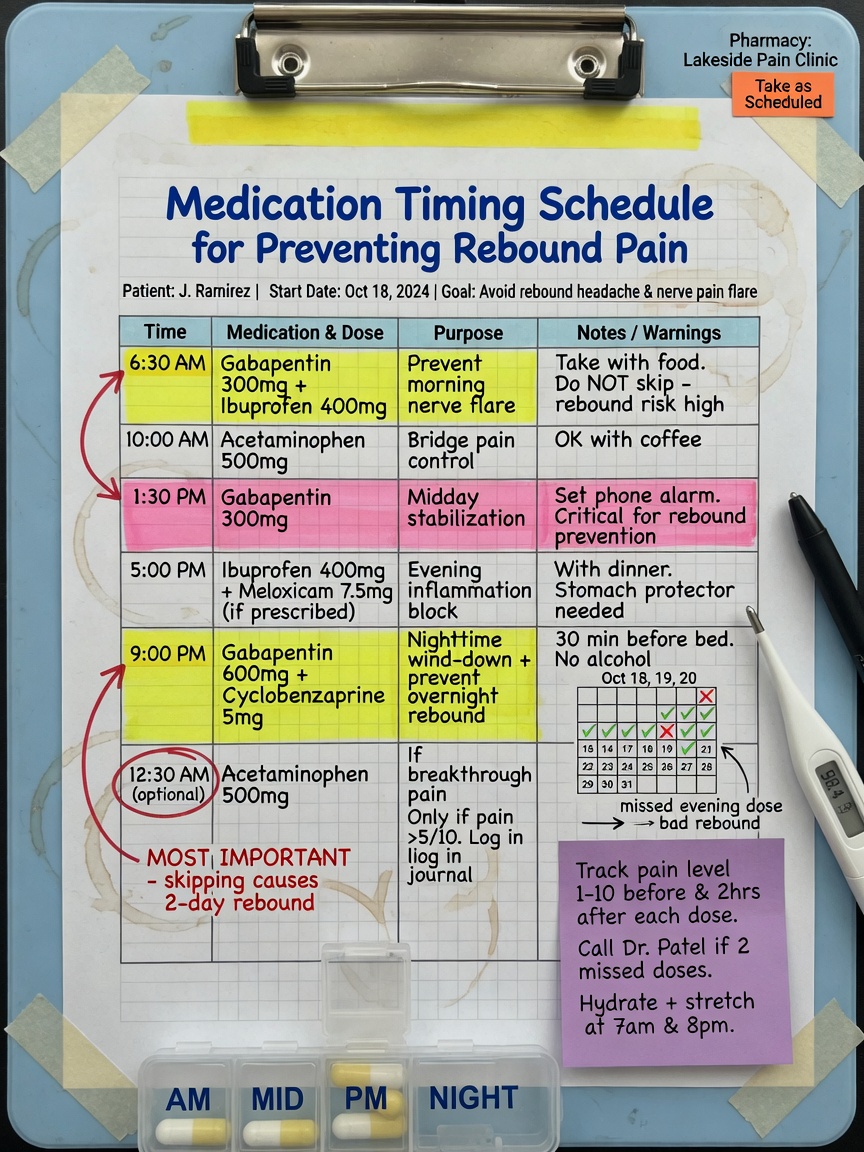
| Time | Event | Action |
|---|---|---|
| 8:00 AM (Day 1) | Block placed + surgery | IV pain medications in hospital |
| 8:00 PM (Day 1) | Bridge Start (T-6 hours) | Take acetaminophen 1,000 mg + ibuprofen 400 mg |
| 10:00 PM (Day 1) | T-4 hours | Take ibuprofen 400 mg (if prescribed every 6 hours) |
| 2:00 AM (Day 2) | Block fades (~18 hours) | Oral medications now active; have oxycodone 5 mg at bedside |
| 6:00 AM (Day 2) | Morning dose | Continue regular schedule of acetaminophen and NSAIDs |
This schedule (ASRA, 2018) ensures you never experience a gap in pain control. The oral medications are already working when the block fades, turning what could be a painful crisis into a manageable transition.
A well-timed medication schedule can prevent the worst of rebound pain. But what about the medications themselves? If you’re traveling to Thailand for surgery, you need to know exactly which painkillers are legal and how to bring them safely. That’s what the next section covers.
Safe Travel to Thailand with Pain Medication
Traveling to Thailand for orthopedic surgery means you must carefully plan how to bring your pain medications. Thai customs strictly controls narcotics, and even common medications like codeine can land you in legal trouble if not properly documented. Knowing the rules in advance will save you stress and ensure you have the pain relief you need.
Bringing codeine-containing medication to Thailand without a prescription can result in up to 5 years in prison (Thai Embassy, 2023).
Thai Controlled Substances Rules
The Thai Food and Drug Administration (Thai FDA) classifies medications into categories based on their abuse potential. Opioids like morphine, oxycodone, and fentanyl are Category 2 narcotics – they require a special import permit from the Thai FDA before you can bring them into the country. Tramadol and codeine fall under less strict categories but still require a valid prescription and are typically limited to a 30-day supply.
Here’s a practical breakdown of common pain medications and their Thai status:
| Medication | Thai Status | Documentation Needed | Max Supply |
|---|---|---|---|
| Acetaminophen (paracetamol) | No restrictions | None required | Unlimited for personal use |
| Ibuprofen, naproxen | No restrictions | None required | Unlimited for personal use |
| Celecoxib | No restrictions | Prescription recommended | 30-day supply reasonable |
| Tramadol | Controlled substance | Valid prescription in English | 30-day supply |
| Gabapentin, pregabalin | Controlled substance | Valid prescription | 30-day supply |
| Codeine (any form) | Prohibited without license | Special import permit needed | Restricted |
| Morphine, oxycodone | Category 2 narcotic | Import permit from Thai FDA | Must specify quantity |
| Fentanyl patches | Category 2 narcotic | Import permit from Thai FDA | Must specify quantity |
The penalties for bringing unapproved narcotics into Thailand are severe. Codeine-containing medications like Tylenol 3 or cough syrups with codeine can result in confiscation, fines, and even imprisonment. Thai Embassy information warns that violations of the Narcotics Act can carry penalties of up to 5 years in prison.
Allowed Painkillers: Practical Guide
For most orthopedic surgery patients, the medications you’ll need post-operatively can be brought legally with proper planning. Here’s your practical guide:
Allowed without special permit (with prescription):
- Acetaminophen
- Ibuprofen, naproxen, celecoxib
- Tramadol (up to 30-day supply)
- Gabapentin, pregabalin
- Muscle relaxants (if prescribed)
Require prior approval (apply 2-4 weeks in advance):
- Morphine
- Oxycodone
- Fentanyl patches
- Hydromorphone
Prohibited without special license:
- Codeine in any form (including combination products)
- Buprenorphine
- Methadone (except under specific medical programs)
If you regularly take codeine for any reason, work with your doctor to switch to an alternative before traveling. Dextromethorphan-based cough suppressants are legal alternatives.
Travel Documentation Checklist
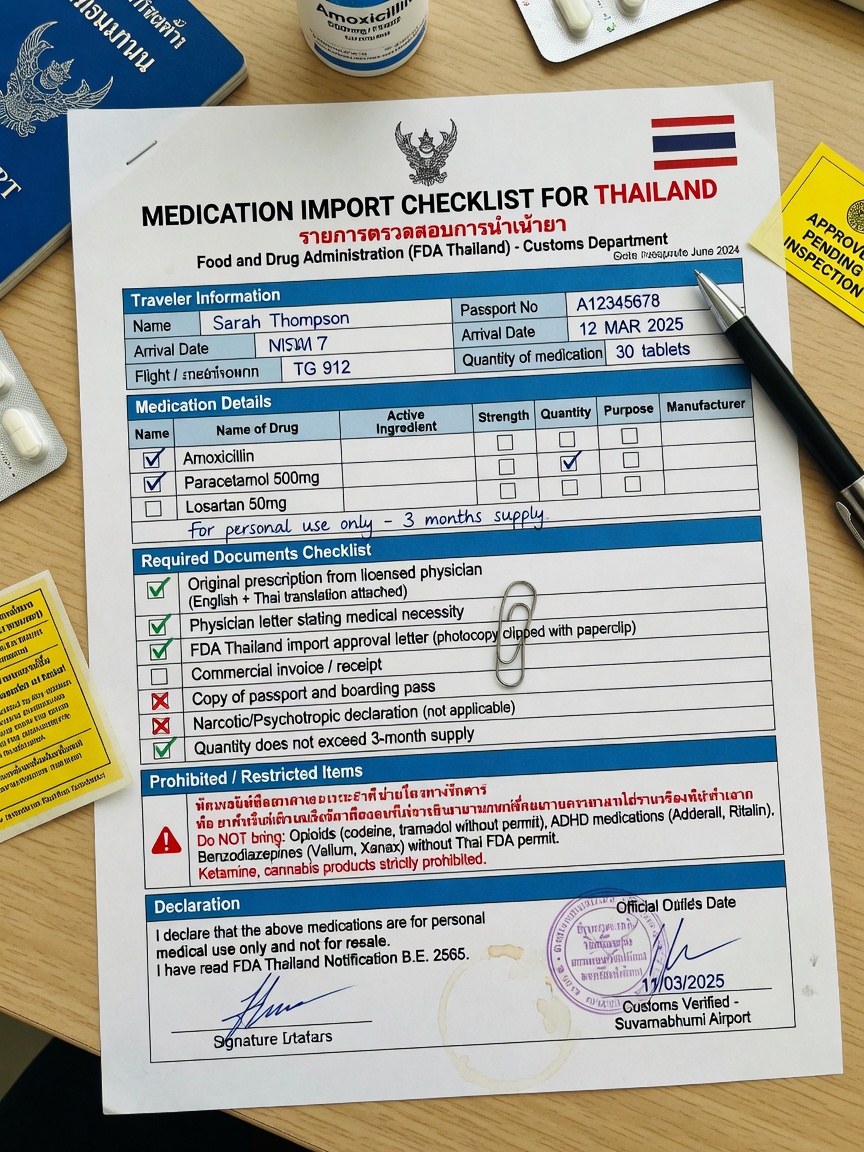
Carrying the right paperwork is essential for getting your medications through Thai customs smoothly. Use this checklist before your flight:
Essential documents:
- Valid passport with visa (if required for your nationality)
- Original written prescriptions from your surgeon – must be in English, clearly stating medication names, dosages, and your name
- Letter of medical necessity on hospital letterhead – include your diagnosis, all medication names and doses, and your treating physician’s contact information
- Customs declaration form – declare all medications at arrival (failure to declare can be treated as smuggling)
- Copy of your Thai hospital contact details – in case customs officials need verification
Medication packing rules:
- Keep all medications in original prescription bottles with pharmacy labels
- Pack essential medications (first 24-48 hours’ supply) in your carry-on luggage
- Checked luggage should contain the remainder, but always keep critical pain meds accessible
- Never mix medications with other items – keep them separate for easy inspection
Pre-travel steps:
- Confirm your medication plan with your Thai hospital’s international patient department
- Check the Thai Embassy website for the latest regulations – laws can change
- Notify your travel insurance provider about your medications in case of loss or theft
- Consider carrying a copy of the Thai FDA regulations for narcotics importation
With the right preparation, traveling with pain medication is straightforward. But what if things go wrong? Let’s look at some common limitations and caveats to keep in mind.
Limitations & Caveats
Common Pitfalls in Pain Management After Surgery
Understanding what can go wrong helps you prepare for a smoother recovery. Here are the most common pitfalls patients encounter and how to avoid them:
Underestimating pain: Many patients feel good the first day after surgery (thanks to the nerve block) and skip scheduled oral medications. When the block wears off, they’re caught off guard. Always follow the protocol, even if you feel fine – the pain will come.
Ignoring medication side effects: Constipation from opioids is nearly universal and can be painful if not managed proactively. Request stool softeners (like Colace) from the start. Nausea and dizziness are also common – antiemetics should be part of your pain plan.
Misjudging nerve block duration: Blocks can wear off earlier than expected, especially if the catheter dislodges or the anesthetic volume is insufficient. Always have oral medications ready, not just scheduled for later.
Travel document issues: Arriving without proper paperwork for controlled substances is the most common problem medical travelers face. Even with a prescription, customs officials may confiscate medications if they’re not in original bottles or lack a doctor’s letter.
When to Seek Professional Help
Certain situations require immediate medical attention. If you experience any of the following, contact your Thai surgical team or seek emergency care:
- Pain that is not controlled despite following the protocol – you should not be in severe pain for extended periods
- Signs of nerve injury – numbness, tingling, or weakness that persists beyond the expected block duration
- Severe medication side effects – difficulty breathing, allergic reaction (rash, swelling), or extreme drowsiness
- Signs of infection – fever, increasing redness or warmth around the surgical site, drainage of pus
- Medication loss or theft during travel – your hospital can help arrange replacements and proper documentation
Your Thai surgical team has 24/7 availability for post-operative concerns. Keep their contact information accessible at all times.
This content is for informational purposes only and does not constitute medical advice. Consult your healthcare provider for personalized guidance tailored to your specific medical condition, medications, and travel plans.
Frequently Asked Questions
What medication helps with nerve pain after surgery?
Gabapentinoids like gabapentin and pregabalin are the most common medications for nerve pain after surgery. They work by calming overactive nerve signals in the spinal cord and brain. Antidepressants such as amitriptyline and duloxetine are also used for neuropathic pain because they enhance the body’s natural pain-modulating pathways. These medications are typically prescribed for 1-4 weeks after orthopedic surgery, starting at low doses and gradually increasing to minimize side effects like dizziness and sedation. Always follow your surgeon’s dosing instructions and report any persistent side effects.
When to take pain meds after nerve block?
Start your oral pain medications 6-8 hours before the nerve block is expected to wear off. This timing, called The Bridge Protocol, ensures the drugs are at therapeutic levels in your system when the block fades, preventing severe rebound pain. For example, if your adductor canal block lasts 18 hours, take your first oral dose at hour 12. Confirm the expected block duration with your anesthesiologist before leaving the recovery room. This proactive approach reduces the severity of rebound pain by up to 50% (ASRA, 2018).
Are nerve blocks safe?
Yes, nerve blocks are very safe when performed by an experienced anesthesiologist using ultrasound guidance. Serious complications like permanent nerve damage occur in less than 0.5% of cases. Temporary side effects include muscle weakness (especially with femoral blocks), rebound pain when the block wears off, and rare allergic reactions to the anesthetic. Patients with bleeding disorders, infections at the injection site, or certain respiratory conditions may not be candidates. Your anesthesiologist will evaluate your medical history to determine if a nerve block is appropriate.
What painkillers can I take to Thailand?
You can bring acetaminophen, ibuprofen, naproxen, tramadol (with prescription), and gabapentin to Thailand for personal use. Stronger opioids like morphine and oxycodone require an import permit from the Thai FDA applied for 2-4 weeks in advance. Codeine is strictly prohibited without a special license. Always carry original prescriptions in English, a doctor’s letter of medical necessity, and declare all medications at customs. Check with the Thai Embassy for the latest restrictions before traveling.
Conclusion
For international patients undergoing orthopedic surgery in Thailand, effective pain control requires a three-part plan: multimodal medications for balanced relief, nerve blocks for targeted coverage, and careful timing – The Bridge Protocol – to prevent rebound pain. With proper preparation, you can manage post-surgical pain comfortably while staying compliant with Thai regulations. The key is to plan ahead and communicate openly with your surgical team.
The Bridge Protocol we covered isn’t just a theory – it’s a practical timing strategy that can make the difference between a smooth recovery and a painful crisis. By scheduling your oral medications to overlap with the nerve block’s fade, you take control of your pain before it takes control of you.
Before your flight, use the medication travel checklist: confirm your prescriptions, apply for any necessary permits, and pack your documentation. Discuss your pain plan with your surgeon at your pre-op consultation. With these steps, you’ll arrive in Thailand prepared for a successful recovery.
*This blog post draws from clinical practice guidelines (AAOS, ASRA), hospital resources (Cleveland Clinic, Mayo Clinic, Yale Medicine), and Thai government sources (Thai Embassy). Medication recommendations reflect standard perioperative care for orthopedic surgery. Readers should always follow their surgeon’s specific instructions.