

MTF Bottom Surgery in Thailand: Complete Guide to Types, Recovery, Costs & Surgeon Selection
If you are researching MTF bottom surgery, you already know it is a life-changing step. But the sheer number of options — different techniques, surgeons, and recovery paths — can feel overwhelming. A wrong choice can lead to dissatisfaction, complications, or thousands of dollars wasted, yet finding reliable, consolidated information is surprisingly difficult.
By the end of this guide, you will understand every major surgical technique, know exactly what recovery looks like week by week, have a clear picture of costs, and know exactly what to ask your surgeon — so you can make a confident, informed decision. We will start by breaking down the types of surgeries available, then move through recovery, dilation, costs, surgeon selection, and critical questions to ask. A printable checklist is included throughout.
This content is for informational purposes only and does not constitute medical advice. Always consult a qualified surgeon for personalized guidance.
Key Takeaways
MTF bottom surgery in Thailand offers multiple techniques with varying outcomes, recovery, and costs. Success depends on matching technique to anatomy and choosing an experienced surgeon.
- Penile inversion is the most common technique, offering reliable results with shorter recovery
- Peritoneal vaginoplasty provides extra depth but requires longer dilation commitment
- Cost ranges from $10,000-$25,000 depending on clinic and technique — 60-80% less than the US
- Proper dilation is the #1 factor preventing post-surgical stenosis
Types of MTF Bottom Surgery in Thailand
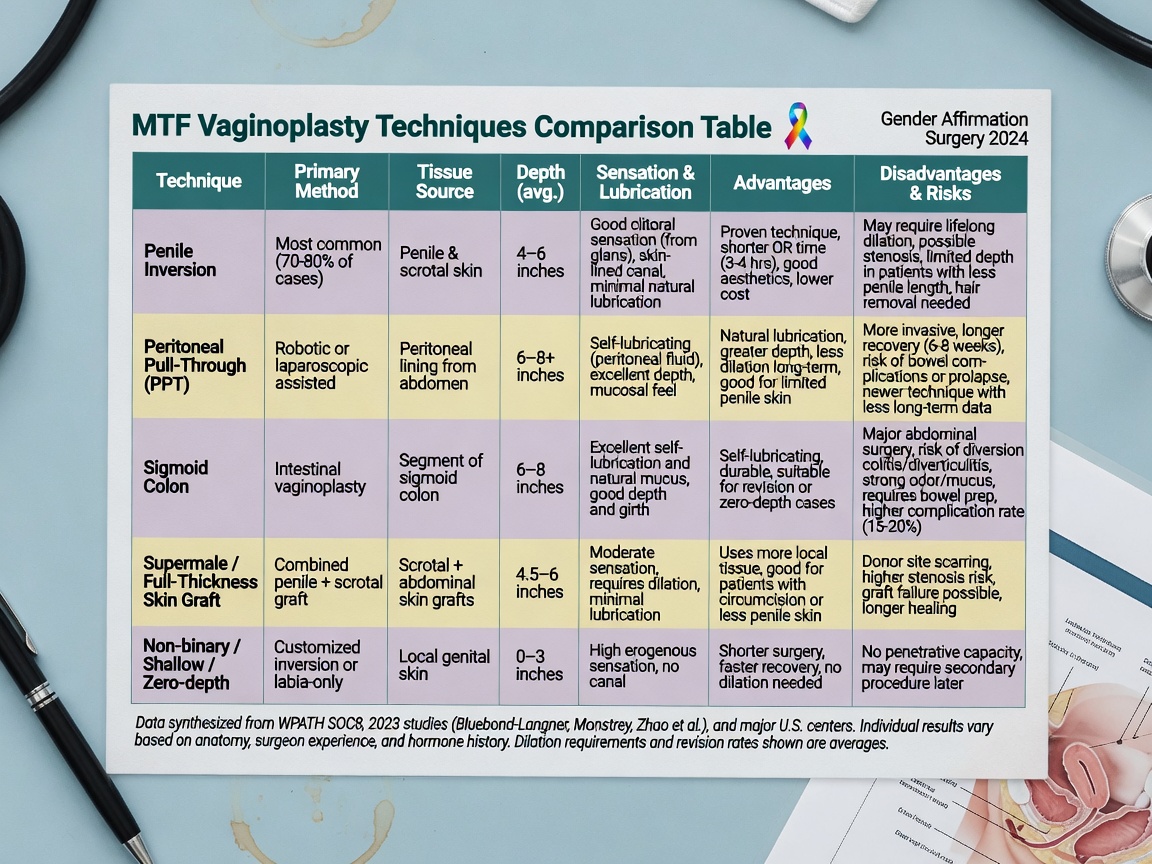
MTF bottom surgery in Thailand primarily uses one of three techniques: penile inversion vaginoplasty, peritoneal pull-through vaginoplasty, or intestinal vaginoplasty. Each technique differs in how the vaginal canal is created, recovery requirements, and final aesthetic outcome. The right choice depends on your anatomy, desired depth, and surgeon recommendation.
Overview of Primary Techniques
Penile inversion vaginoplasty is the most widely performed technique, used by over 80% of surgeons worldwide as their primary method (Kamol Hospital, 2024). The procedure uses penile and scrotal skin to create the vaginal canal and external genitalia. It is suitable for most patients and offers predictable, reliable results with a well-established recovery protocol. The main advantage is that this technique uses existing tissue with a robust blood supply, which promotes better healing and sensation preservation.
Peritoneal vaginoplasty, also called PPT (Peritoneal Pull-Through), uses a section of the peritoneal lining — the membrane that lines the abdominal cavity — to create the vaginal canal. This approach can offer additional depth compared to penile inversion, which is particularly valuable for patients with limited penile or scrotal tissue. Another benefit is that peritoneal tissue does not grow hair, eliminating the need for permanent hair removal before surgery. However, the dilation protocol is more demanding, and the technique is newer with less long-term outcome data available. Recovery from PPT often involves a longer initial hospital stay because the peritoneal harvest requires entering the abdominal cavity.
Intestinal vaginoplasty is a less common option that uses a segment of the sigmoid colon to construct the vaginal canal. This technique provides natural lubrication and can achieve excellent depth, but it carries additional risks associated with abdominal surgery, including bowel complications and longer initial recovery. It is typically reserved for revision cases or patients who have had previous failed vaginoplasty.
Kamol Hospital offers all three techniques under one roof, while Dr. Pichet Rodchareon at PAI Clinic specializes primarily in penile inversion with a focus on aesthetic outcomes. Your choice should be guided by a thorough consultation where the surgeon evaluates your anatomy, medical history, and personal goals.
Quick Comparison Table
| Technique | How It Works | Best For | Typical Depth | Recovery Complexity | Cost Range |
|---|---|---|---|---|---|
| Penile Inversion Vaginoplasty | Uses penile/scrotal skin to create vaginal canal | Most patients; standard technique | 4-6 inches (10-15 cm) | Moderate; established protocol | $10,000-$18,000 |
| Peritoneal Pull-Through (PPT) | Uses peritoneal lining for vaginal canal | Patients needing extra depth; less donor tissue | 5-7 inches (13-18 cm) | Higher; complex dilation protocol | $14,000-$22,000 |
| Intestinal Vaginoplasty | Uses sigmoid colon segment | Revision cases; previous failed surgery | 5-8 inches (13-20 cm) | Highest; abdominal surgery risks | $18,000-$25,000 |
| Combined (Inversion + Graft) | Penile inversion with scrotal or skin graft | Patients with limited penile tissue | 4-6 inches (10-15 cm) | Moderate to high | $12,000-$20,000 |
Additional Procedures: Labiaplasty & Clitoroplasty
Vaginoplasty is almost always combined with labiaplasty and clitoroplasty in the same surgical session. Labiaplasty involves creating the external labia (labia majora and minora) from scrotal tissue, which is shaped and positioned to achieve a natural female appearance. This step is critical for aesthetic satisfaction and contributes significantly to the overall result.
Clitoroplasty uses a portion of the penile glans tissue to create a sensate clitoris. The neurovascular bundle is carefully preserved during this procedure, which means most patients retain the ability to experience orgasm after healing is complete. Sensory outcomes depend on surgical technique, surgeon experience, and individual healing patterns.
These additional procedures are performed simultaneously with vaginoplasty under the same anesthesia, so there is no need for separate surgeries. The combined procedure typically takes 4-6 hours depending on the complexity and technique used.
With the techniques understood, the next big question is: how long does recovery take, and what can you expect week by week?
Recovery Timeline & Stages
The first three months after vaginoplasty are the most intensive recovery period, with a strict dilation protocol required to maintain depth and prevent complications (Gender Confirmation Center, 2024). Recovery unfolds in distinct phases, each with specific milestones and challenges.
Hospital Stay (Days 1-7)
The first week is the most demanding part of your recovery. Days 1-2 involve strict bed rest with intravenous fluids, a urinary catheter, and wound drains in place. Pain is managed with intravenous medications, and you are not yet allowed to eat solid food — most clinics start with clear liquids.
By days 3-5, you will begin mobilizing with assistance. Nurses will help you stand and take short steps to the bathroom. The catheter and drains are still in place, and you will have your first look at the surgical site with a nurse present. A liquid diet progresses to soft foods as bowel function returns.
Days 6-7 bring significant milestones. The catheter is removed if there are no complications, and you begin your first dilation session under supervision. Kamol Hospital typically discharges patients between day 7 and day 10, depending on healing progress (Kamol Hospital, 2024).
The first bowel movement after surgery is often the most painful moment of recovery. Stool softeners and laxatives are routinely given to ease this process. Patients commonly report that passing the first bowel movement is the single most uncomfortable experience of the entire recovery (Restore Med Center, 2024).
Week one is the toughest, but once you are discharged, the focus shifts to at-home recovery and dilation.
First Month at Home (Weeks 2-4)
Once discharged, you will need to remain in Thailand for at least another 1-3 weeks before returning home. Pain during this phase is manageable with oral medications — typically acetaminophen and NSAIDs — and most patients taper off prescription pain relievers within 7-10 days.
Dilation begins in earnest at 3 times per day, with each session lasting 20-30 minutes. This schedule is exhausting and requires strict discipline. Wound healing progresses steadily — keep the area clean, use prescribed antimicrobial ointments, and watch for signs of infection such as unusual redness, swelling, or discharge.
Light walking around your accommodation is encouraged to prevent blood clots, but you must avoid lifting anything heavier than 5 kg (11 lbs), sitting on hard surfaces for extended periods, and any activity that strains the pelvic floor. Visible healing of external incisions takes approximately 4 weeks, but internal healing continues for months.
The first month is demanding, but by month two, you will notice gradual improvements in comfort and mobility.
Months 1-3: The Critical Dilation Period
Between weeks 4 and 12, you will be dilating 4 times per day. This is the most critical phase for preserving your surgical result. Each session takes 20-30 minutes, meaning you spend 1.5-2 hours per day on dilation alone. This time requirement can feel overwhelming, but consistency is everything.
Vaginal stenosis — narrowing or shortening of the vaginal canal — is the primary risk during this period. If dilation is skipped or reduced too early, the canal begins to contract as granulation tissue forms. Once significant depth is lost, surgical revision may be required to restore it.
Sexual activity is strictly prohibited during this phase. You will have follow-up appointments with your surgeon to assess depth, check healing, and adjust the dilation schedule if needed. By the end of month three, dilation frequency typically drops to 3 times per day.
After three months, the dilation frequency reduces and you can gradually return to normal activities.
Months 3-6: Returning to Normal Life
Most people who work desk jobs can return after 4-6 weeks, though sitting for full days may be uncomfortable for longer. Manual labor roles typically require 3-4 months off. Light exercise such as walking and gentle yoga is permitted, but heavy lifting, cycling, and high-impact activities should wait until month six.
Sexual activity is sometimes cleared at the 3-month mark, but many surgeons recommend waiting until 6 months for full internal healing. When you do resume, proceed slowly with plenty of lubrication. Sensation continues to evolve during this phase as nerves regenerate.
Dilation frequency drops to 3 times per day during months 3-6, offering more freedom and flexibility in your daily schedule.
Months 6-12 are the final phase of internal healing and dilation maintenance.
6-12 Months & Beyond
By 6 months post-surgery, dilation reduces to 2 times per day. Scar maturation continues, and sensation typically reaches its final state around 9-12 months. Most patients report that results look and feel increasingly natural as swelling fully resolves and tissues soften.
After one year, dilation drops to once weekly for life. This lifelong maintenance is non-negotiable — even years after surgery, stopping dilation can lead to gradual depth loss. Annual follow-up with a gynecologist or your original surgeon is recommended to monitor long-term health.
Sexual activity can resume fully, and research from major gender confirmation clinics indicates that the majority of patients who follow their dilation protocol report satisfying sensation and function after one year. Sensation continues to evolve as nerves regenerate, and most patients find their final results at around 9-12 months.
Throughout recovery, one element is absolutely critical: dilation. Let us dive into the details.
Dilation & Post-Operative Care
Dilation starts within the first week after surgery at a frequency of four times daily, tapering to once weekly after six months (Gender Confirmation Center, 2024). Proper dilation is the single most important factor determining long-term surgical success.
Why Dilation is Non-Negotiable
The interior of the vaginal canal is not a natural body cavity — it is a surgically created space lined with skin or peritoneal tissue. As this lining heals, the body naturally produces granulation tissue, and the canal contracts. Dilation physically stretches the tissue, preventing contraction from progressing to stenosis.
Stenosis — narrowing of the vaginal canal — is the most common long-term complication after vaginoplasty. When it occurs, it can reduce depth, make penetration painful or impossible, and may require surgical revision to correct. The simple analogy is physical therapy after an injury: if you stop stretching, the tissue tightens back up.
Patients commonly report that the first few months of dilation feel like a chore, but those who adhere to their schedule consistently maintain their depth. Those who skip sessions often regret it when they notice gradual shortening that cannot be reversed without surgery.
Sample Dilation Schedule
| Time Period | Frequency | Session Length | Notes |
|---|---|---|---|
| Weeks 1-12 | 4 times daily | 20-30 minutes | Most critical period; set alarms |
| Months 3-6 | 3 times daily | 20-30 minutes | Gradually increasing flexibility |
| Months 6-12 | 2 times daily | 20-30 minutes | Most people adapt to this routine |
| After 1 year | Once weekly | 20-30 minutes | Lifelong maintenance |
Your surgeon will provide a personalized schedule based on your specific technique and healing progress. Use a water-based, antibacterial lubricant for each session — avoid silicone-based lubricants as they can be difficult to clean and may irritate sensitive healing tissue (Gender Confirmation Center, 2024).
Dilator Sizes & Hygiene
Surgeons provide a set of graduated dilators, typically from the Soul Source or medico brands. Standard sets include 4 sizes, progressing from small (size 1, approximately 0.8 inches diameter) to large (size 4, approximately 1.5 inches diameter). You start with the smallest size during the first week and progress to larger sizes over the following weeks as healing allows.
Clean dilators with soap and warm water before and after each use. You can also use antibacterial wipes for quick cleaning when traveling. Signs of infection include unusual pain during dilation, foul-smelling discharge, redness around the vaginal opening, or fever above 100.4°F. If any of these occur, contact your surgeon immediately.
How long to dilate after bottom surgery: The answer is for life, but the frequency drops dramatically. After one year, a single weekly session of 20-30 minutes is all that is required to maintain depth.
Wound Care & Activity Restrictions
During the first 6-8 weeks, keep the surgical site clean and dry. Change absorbent pads regularly — you will have some discharge and light bleeding, which is normal. Use the antimicrobial ointment your surgeon prescribes to prevent infection in the suture lines.
No baths, swimming pools, hot tubs, or sexual activity until your surgeon clears you, typically around 6-8 weeks. Showers are allowed after day 3-5, but avoid directing water pressure directly at the surgical site. Sitz baths — shallow, warm water baths for the pelvic area — can be started after a few weeks if your surgeon approves, and they help soothe the area and promote healing.
Activity restrictions include no heavy lifting (over 5 kg), no cycling or horseback riding, no squats or deep lunges, and no prolonged sitting on hard surfaces. Use a doughnut cushion or small pillow when sitting for meals or car rides.
Dilation and recovery are only part of the equation — the financial side is also critical. How much does it all cost?
Costs & Financing
MTF bottom surgery in Thailand costs between $10,000 and $25,000, while the same procedure in the United States typically ranges from $40,000 to $100,000 (Bookimed, 2024). The cost difference is substantial, making Thailand one of the most popular destinations for gender confirmation surgery worldwide.
Average Cost Breakdown in Thailand
| Cost Component | Typical Range |
|---|---|
| Surgeon fees | $4,000 – $8,000 |
| Hospital stay (7-10 days) | $3,000 – $5,000 |
| Anesthesia fees | $1,000 – $2,000 |
| Pre-operative tests | $300 – $600 |
| Medications & supplies | $300 – $700 |
| Follow-up appointments | $200 – $500 |
| Total surgery package | $10,000 – $25,000 |
Additional expenses to budget for include international flights ($800-$1,500 round trip), accommodation before and after hospital stay ($500-$1,500), food and incidentals ($300-$600), and emergency funds for unexpected needs.
Bookimed lists MTF surgery packages in Thailand from $9,000 to $25,000, with penile inversion at the lower end and peritoneal or intestinal techniques at the higher end (Bookimed, 2024).
What’s Included in a Package Deal?
Most Thai clinics offer all-inclusive packages that cover surgeon fees, hospital room (private or shared), nursing care, meals during hospital stay, pre-operative tests, and post-operative follow-up appointments for a specified period.
Kamol Hospital’s package includes a 7-day hospital stay, the surgeon’s fee, anesthesia, operating room costs, and one month of follow-up care. Yanhee Hospital offers competitive pricing with a shared room as standard; private room upgrades are available at an additional cost.
Be aware that packages typically exclude medications after discharge, dilation supplies (dilator sets cost $100-$200), future revision surgeries, and travel or accommodation for a companion. Always ask for a detailed breakdown of what is included before committing.
Comparing Costs: Thailand vs. US/Europe
| Location | Typical Cost Range | Travel Costs Added | Notes |
|---|---|---|---|
| Thailand | $10,000 – $25,000 | $1,500 – $3,000 | JCI-accredited hospitals available |
| United States | $40,000 – $100,000 | Minimal | Often covered by insurance |
| Europe (Spain, Germany) | $20,000 – $40,000 | $500 – $1,500 | Some public coverage available |
| Mexico | $8,000 – $15,000 | $500 – $1,000 | Growing destination, fewer surgeons |
The savings from choosing Thailand are substantial even after factoring in travel and accommodation. Many Thai hospitals hold JCI (Joint Commission International) accreditation, which means they meet rigorous international quality standards comparable to Western hospitals.

Financing and Payment Options
Self-pay is the most common approach for Thailand surgery, as few US insurance plans cover procedures performed abroad. Some clinics offer payment plans with 0% interest for 6-12 months if you pay a deposit upfront. Medical loans through companies like CareCredit or Prosper are another option — these offer fixed interest rates with terms from 12 to 60 months.
Crowdfunding through platforms like GoFundMe is frequently used by patients raising funds for gender confirmation surgery. Many community organizations also maintain lists of grants and scholarships available to trans individuals seeking surgery.
Insurance Coverage for Thailand Surgery
Insurance coverage for MTF bottom surgery in Thailand is rare but not impossible. A small number of US insurers have international networks that include overseas providers. Before booking surgery, call your insurance company and ask specifically about out-of-network coverage for procedures performed internationally, particularly in Thailand.
Some patients receive partial reimbursement by submitting itemized bills after surgery, even without pre-authorization. This is not guaranteed and depends entirely on your policy. Work with your clinic to obtain detailed, English-language invoices that insurance companies will accept.
Once you have a budget in mind, the next step is choosing the right surgeon. Let us compare the leading options in Thailand.
Surgeon Selection & Clinic Options
Dr. Kamol Pansritum has performed over 5,000 gender confirmation surgeries and offers all three vaginoplasty techniques, making him one of the most experienced surgeons in Thailand (Kamol Hospital, 2024). Thailand is home to several world-renowned surgeons with decades of specialized experience in gender confirmation surgery.
How to Evaluate a Surgeon’s Credentials
Begin by verifying board certification with the Thai Medical Council — this is the minimum standard. Beyond certification, look for membership in WPATH (World Professional Association for Transgender Health) or international gender surgery societies, which indicates ongoing engagement with best practices in the field.
Years of experience and surgical volume matter significantly. Ask how many vaginoplasties the surgeon has performed — numbers in the thousands indicate deep expertise. Some surgeons publish their complication and revision rates, which is a strong sign of transparency.
Check hospital accreditation. JCI accreditation is the gold standard for international hospitals and ensures the facility meets rigorous safety and quality standards. ISO certification is another positive indicator.
Patient reviews and community forums provide valuable insight into surgeon communication style, bedside manner, and how they handle complications. Reddit communities (r/Transgender_Surgeries), Transbucket, and Susan’s Place are popular platforms where patients share detailed experiences.
How to choose a bottom surgeon in Thailand: Prioritize surgeons who are transparent about their complication rates, show you before-and-after photos of patients with similar anatomy to yours, and take time to answer all your questions without rushing.
Top Surgeons in Thailand: Profiles & Specialties
Kamol Hospital (Dr. Kamol Pansritum)
Dr. Kamol Pansritum is a pioneer in gender reassignment surgery with over 20 years of experience and more than 5,000 surgeries performed. He founded Kamol Cosmetic Hospital, which has since become Kamol Hospital — a dedicated facility in Bangkok specializing exclusively in gender confirmation procedures.
Techniques offered: All three primary techniques — penile inversion vaginoplasty, peritoneal pull-through vaginoplasty, and intestinal vaginoplasty. Dr. Kamol is one of the few surgeons in Thailand who performs peritoneal vaginoplasty routinely.
Price range: $13,000-$20,000 depending on technique and package inclusions.
Patient feedback: Praised for thorough pre-operative education and comprehensive aftercare. Some patients note that recovery feels longer compared to other clinics, which may reflect the hospital’s conservative approach to discharge criteria.
Strengths: Offers the widest range of techniques, experienced with complex revisions, well-established hospital infrastructure.
Ideal for: Patients who want access to multiple technique options, particularly those considering peritoneal vaginoplasty (Kamol Hospital, 2024).
Dr. Pichet Rodchareon (PAI Clinic)
Dr. Pichet Rodchareon is known for penile inversion vaginoplasty with excellent aesthetic results, having performed approximately 3,000 surgeries over 15 years. He operates at PAI (Plastic Aesthetic International) Clinic in Bangkok and is widely regarded for his attention to external appearance.
Techniques offered: Primarily penile inversion vaginoplasty, with a focus on creating natural-looking labia and clitoris.
Price range: $12,000-$15,000.
Patient feedback: High satisfaction scores for cosmetic appearance of external genitalia. Some patients report less overall vaginal depth compared to other surgeons or techniques. His aesthetic results are frequently praised in online communities.
Strengths: Specializes in aesthetic outcomes, competitive pricing, strong community reputation.
Ideal for: Patients who prioritize external appearance and have adequate donor tissue for penile inversion (MTFSurgery.net, 2024).
Yanhee Hospital
Yanhee Hospital is a large international hospital in Bangkok with a dedicated gender surgery department staffed by multiple surgeons. The hospital has been performing gender confirmation surgery for over a decade and offers competitive pricing.
Techniques offered: Penile inversion vaginoplasty, some combined graft techniques for patients with limited tissue.
Price range: $10,000-$14,000, making Yanhee one of the more affordable options.
Patient feedback: Appreciated for affordability and accessibility. Some patients note that the experience feels less personalized compared to smaller clinics due to the hospital’s high patient volume (Yanhee Hospital, 2024).
Strengths: Lowest price point among major clinics, established reputation, multiple surgeons available.
Ideal for: Patients on a tighter budget who are comfortable with a larger hospital setting.
Other Notable Clinics
Dr. Sanguan at Phuket Plastic Surgery Center offers penile inversion vaginoplasty with a focus on personalized care in a less urban setting. Dr. Chai at Bumrungrad International Hospital — one of Thailand’s most prestigious hospitals — provides gender confirmation surgery with the backing of world-class medical infrastructure, though at a higher price point.
Surgeon Comparison Table
| Surgeon/Clinic | Technique | Price Range | Experience | Best Known For | Patient Feedback Tone |
|---|---|---|---|---|---|
| Dr. Kamol (Kamol Hospital) | All three techniques | $13,000-$20,000 | 5,000+ surgeries, 20+ years | Technique variety, thorough care | Positive — thorough but longer recovery |
| Dr. Pichet (PAI Clinic) | Penile inversion | $12,000-$15,000 | ~3,000 surgeries, 15+ years | Aesthetic excellence | Positive — high satisfaction for appearance |
| Yanhee Hospital | Penile inversion + grafts | $10,000-$14,000 | Multiple surgeons, 10+ years | Affordability, accessibility | Mixed — affordable but less personalized |
| Dr. Sanguan (Phuket) | Penile inversion | $11,000-$15,000 | 2,000+ surgeries, 12+ years | Personalized care, beach setting | Positive — caring but less known |
| Bumrungrad (Dr. Chai) | Penile inversion + PPT | $18,000-$25,000 | 1,000+ surgeries, 10+ years | Prestigious hospital, JCI accredited | Positive — excellent facilities, higher cost |
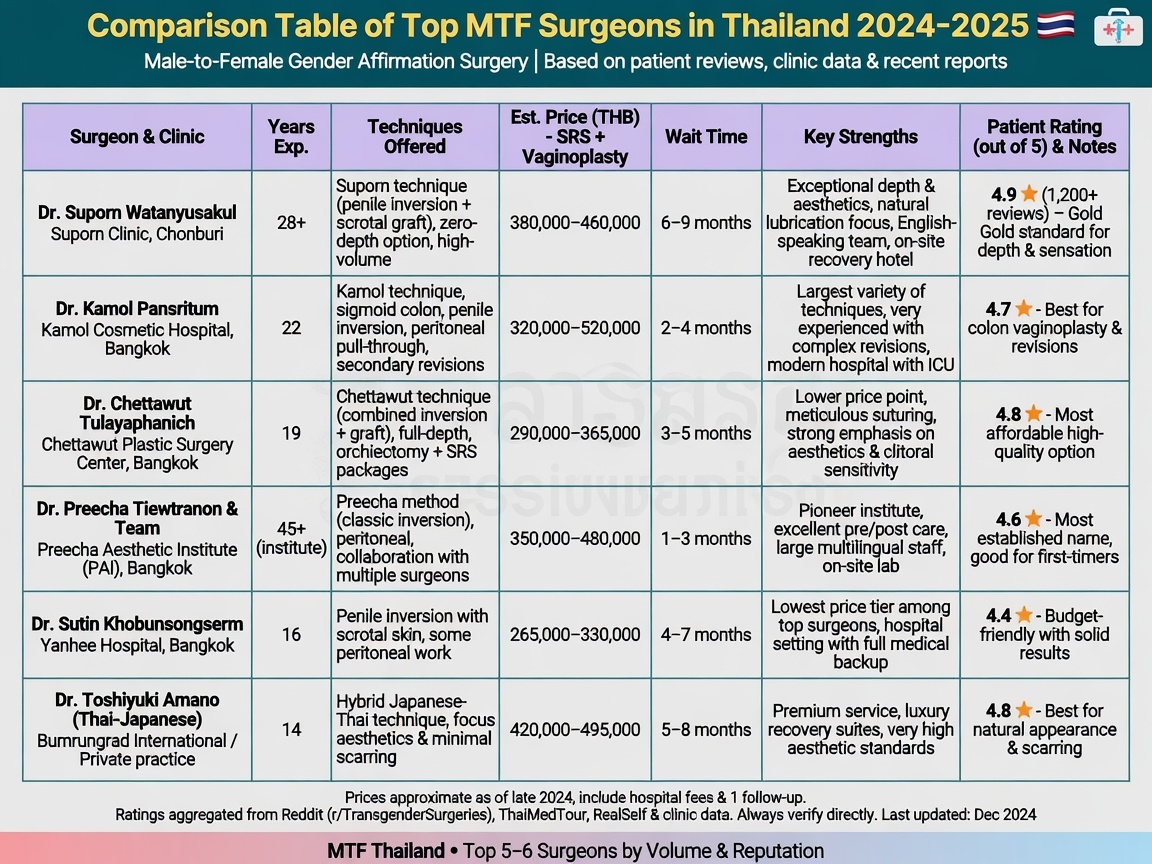
Before booking a consult, it is essential to know exactly what questions to ask. Our next section provides a ready-to-use checklist.
Questions to Ask Your Surgeon
Asking about a surgeon’s revision rate and complication management protocol is just as important as asking about cost (Gender Confirmation Center, 2024). Your pre-operative consultation is the most important opportunity to vet a surgeon and set expectations for your outcome.
Questions About Surgeon Experience & Technique
- “How many vaginoplasties have you performed, and how many per year do you currently perform?”
- “What is your revision rate, and what are the most common reasons for revision?”
- “Which technique do you recommend for my anatomy, and why?”
- “Can you show me before-and-after photos of patients with similar body type and donor tissue availability?”
- “How do you handle complications, and what is your revision policy — is there a cost, or is it covered?”
A surgeon who hesitates to answer these questions or cannot provide a clear revision policy is a red flag. You want someone who is transparent about their outcomes and committed to supporting you if things do not go as planned.
Questions About Recovery & Aftercare
- “How long will I stay in the hospital, and what are the criteria for discharge?”
- “What is the typical pain level on a scale of 1-10, and how is it managed?”
- “When can I return to work — specifically for my job type (desk vs. manual labor)?”
- “When can I resume exercise, and are there any activities I should permanently avoid?”
- “What is your specific dilation schedule, and who will teach me the proper technique?”
- “Do you offer a nerve block or long-acting local anesthetic for post-op pain control?”
- “What kind of support can I expect after I return home — telemedicine follow-ups or local referrals?”
These questions help you plan your time off, arrange support at home, and set realistic expectations for when life returns to normal.
Questions About Risks & Outcomes
- “What is the risk of vaginal stenosis specifically with my chosen technique?”
- “What depth can I realistically expect based on my anatomy?”
- “Can I expect to achieve orgasm, and what percentage of your patients report this?”
- “What happens if I stop dilation after a year — how much depth will I lose?”
- “Do you have data on your complication rates for fistula, necrosis, and infection?”
- “How long do you typically recommend waiting before flying home after discharge?”
Be wary of any surgeon who promises guaranteed results or specific depth measurements. Honest surgeons will give you a range and explain the factors that influence outcomes.
Red Flags to Watch For
Rushing the consultation: If your surgeon spends less than 30 minutes with you or seems distracted, that is a clear warning sign. This is a major surgery, and your consultation should reflect that seriousness.
No before-and-after photos or only best-case examples: Any experienced surgeon should have a portfolio of results spanning different body types. If they only show you their best cases or refuse to show photos at all, consider it a red flag.
Avoiding complication discussions: A surgeon who downplays risks or refuses to discuss specific complication rates is not being transparent. Every surgery carries risks, and an honest surgeon addresses them openly.
Promising perfect results: No ethical surgeon will guarantee a perfect outcome. There are always variables in healing, and anyone who promises otherwise is overselling.
Unclear revision policy: Some surgeons charge full price for revisions, while others offer reduced rates or cover them entirely. If the policy is vague or your surgeon avoids the question, get it in writing before proceeding.
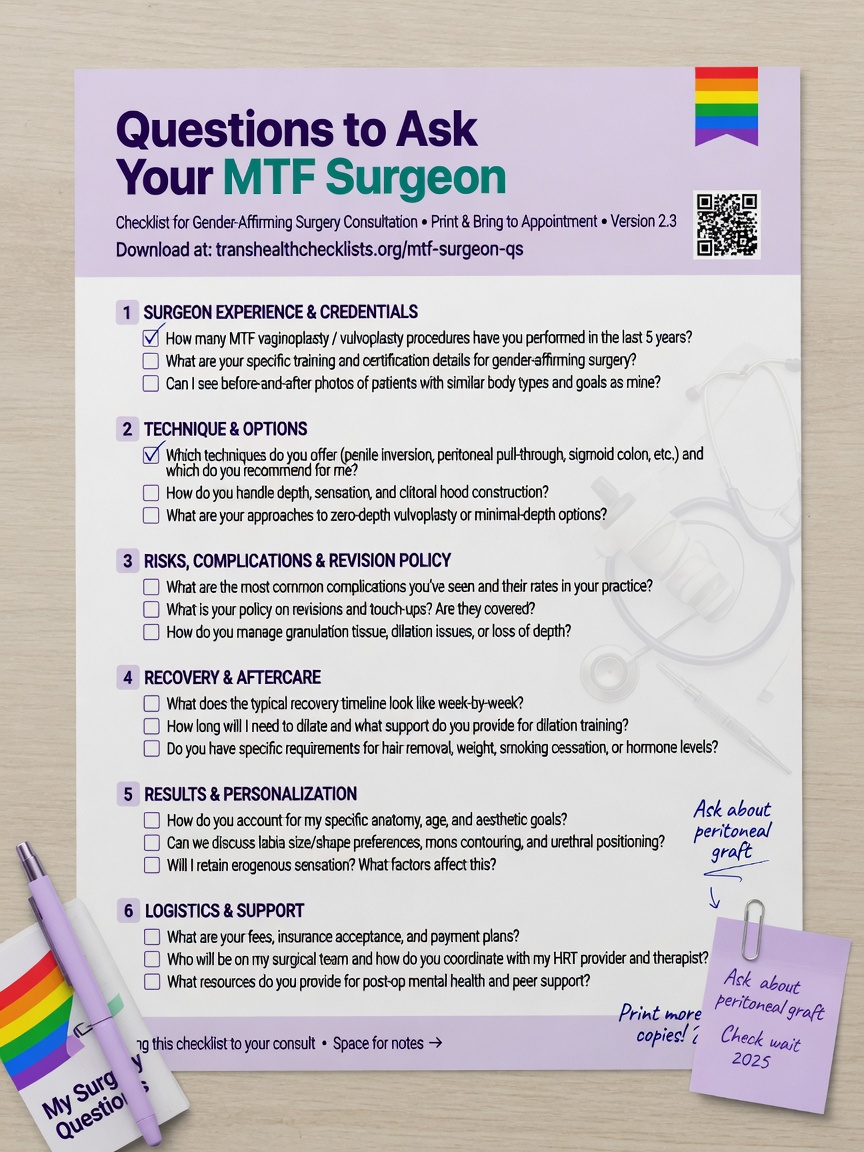
Once you have selected a surgeon and scheduled surgery, preparation begins. Here is exactly what to do before you go to Thailand.
Pre-Operative Preparation & Hospital Stay
Most Thai clinics require a total stay of 21 to 30 days in Thailand to allow for pre-op evaluation, surgery, and initial recovery before discharge (Kamol Hospital, 2024). Proper preparation reduces stress and ensures you are medically ready for surgery.
Pre-Op Checklist
4-6 weeks before surgery:
- Stop smoking completely — nicotine impairs wound healing and increases complication risks
- Stop blood-thinning medications: aspirin, ibuprofen, naproxen, vitamin E, and herbal supplements like ginkgo biloba and fish oil (consult your prescribing doctor)
- Begin permanent hair removal in the genital area if recommended for your technique — this is essential for penile inversion to prevent hair growth inside the vaginal canal
1-2 weeks before surgery:
- Complete all pre-operative blood tests, ECG, and any imaging your surgeon requires
- Arrange for a companion to stay with you for the first week after discharge — this is strongly recommended
- Confirm your accommodation near the hospital for post-discharge recovery
- Pack your hospital bag (see packing list below)
24-48 hours before surgery:
- Switch to clear liquids only 24 hours before surgery
- Complete bowel prep as instructed (typically enemas)
- Shower with antibacterial soap the night before and morning of surgery
- Do not shave the surgical site — the surgical team will handle hair removal if needed
| Common Medications to Stop | When to Stop | Reason |
|---|---|---|
| Aspirin, ibuprofen, naproxen | 2 weeks before | Increase bleeding risk |
| Vitamin E, fish oil, ginkgo biloba | 2 weeks before | Thin blood |
| Prescription blood thinners (warfarin, apixaban) | As directed by prescribing doctor | Consult your physician |
Hospital Stay: What to Expect Day-by-Day
Day 0 (Surgery Day): You will be admitted in the morning, meet with the anesthesiologist, and undergo surgery lasting 4-6 hours. You wake up in the recovery room with a catheter, drains, and IV lines in place.
Days 1-2: Strict bed rest. Pain is managed with IV medications. You will have a urinary catheter, one or two wound drains (Jackson-Pratt or similar), and an IV for fluids and medications. No eating — clear liquids only.
Days 3-4: You will be assisted to stand and take short steps. The catheter remains in place. Drains are typically removed when output decreases below a certain threshold. You start a soft diet.
Days 5-6: Catheter removal if healing is on track. You will have your first dilation session with a nurse teaching you proper technique. Pain shifts from sharp to more of a deep ache.
Days 7-10: Discharge criteria include: tolerating food, passing stool, catheter-free with adequate urine output, able to walk independently, and demonstrating correct dilation technique. Not everyone is discharged on day 7 — some need additional days if healing is slower.
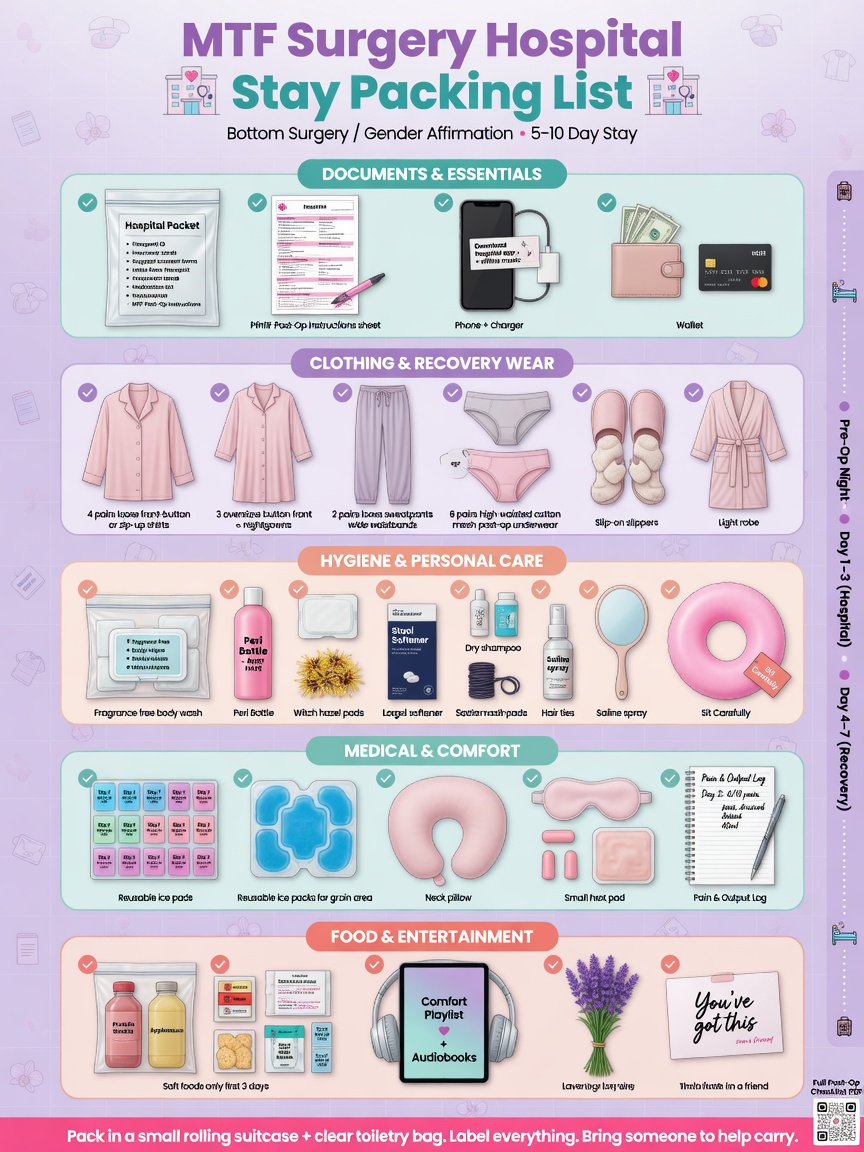
Packing List for Your Hospital Stay
Essentials:
- 2-3 front-closing nightgowns or loose dresses (easier to put on with limited mobility)
- Slip-on shoes or sandals (no bending to tie laces)
- Maternity or maxi pads (heavy absorbency for post-op discharge)
- Water-based lubricant (your clinic may provide this, but bring your own as backup)
- Perineal spray bottle for gentle cleaning
Comfort items:
- Loose, high-waisted pants or sweatpants for travel home
- Doughnut cushion or pregnancy pillow for comfortable sitting
- Entertainment: tablet, books, podcasts (you will have plenty of downtime)
- Phone charger with extended cable (outlets may be far from bed)
Do NOT bring:
- Tampons or menstrual cups (nothing internal without surgeon approval)
- Tight pants or underwear that presses on the surgical site
- Heavy electronics or valuables — hospital rooms have limited secure storage
- Scented soaps or lotions that may irritate healing tissue
Travel & Visa Requirements
Most patients from visa-exempt countries (United States, United Kingdom, Australia, Canada, most European nations) receive a 30-day visa on arrival, which is sufficient for the standard recovery timeline. You must have a passport valid for at least 6 months beyond your travel dates.
If you need to stay longer than 30 days — for example, if complications require extended recovery — apply for a medical visa through the Thai embassy in your home country. This visa allows up to 90 days and requires a letter from your hospital confirming the procedure and intended stay.
Always carry your hospital confirmation letter when entering Thailand. Immigration officers may ask about the purpose of your visit, and having documentation from your clinic prevents issues at the border.
Preparation minimizes stress. Equally important is understanding potential risks so you can make an informed decision and recognize complications early.
Risks, Complications & Pain Management
Major complications from MTF bottom surgery, such as fistula or necrosis, occur in fewer than 5% of cases when performed by an experienced surgeon (Restore Med Center, 2024). Being informed about risks helps you prepare mentally and respond appropriately if something goes wrong.
Common Complications & Prevention Tips
| Complication | Cause | Typical Incidence | Prevention | Treatment |
|---|---|---|---|---|
| Vaginal stenosis | Inadequate or inconsistent dilation | 10-15% | Strict adherence to dilation schedule | Dilation protocol adjustment; pelvic floor physical therapy; surgical revision if severe |
| Infection | Poor wound hygiene, bacteria | 3-8% | Antibiotics, proper wound care, hand hygiene | Oral or IV antibiotics; drainage if abscess forms |
| Bleeding / hematoma | Surgical trauma, anticoagulants | 2-5% | Stop blood thinners pre-op, avoid straining | Pressure, observation; rarely surgical evacuation |
| Fistula (recto-vaginal) | Tissue damage during surgery | 1-3% | Surgeon experience, careful dissection | Surgical repair (often requires colostomy temporarily) |
| Necrosis (tissue death) | Poor blood supply to flap | <1% | Surgeon assessment of tissue viability | Debridement, wound care, reconstructive surgery |
| Urinary complications | Urethral reconstruction issues | 3-8% | Surgeon technique, catheter care | Urethral dilation, surgical revision if stricture |
The best prevention for most complications is choosing an experienced surgeon and following all post-operative instructions without shortcuts.
Pain Levels Realistically Described
Pain after vaginoplasty is significant but manageable. On a scale of 1-10, patients typically report:
- Immediate post-op (first 24 hours): 5-7/10 — primarily a deep, pressure-like pain in the pelvic area
- Days 2-7: 4-6/10 — shifting to more of a soreness with sharp spikes during movement
- Weeks 2-4: 3-4/10 — manageable with over-the-counter medications
- Weeks 5-12: 2-3/10 — occasional discomfort during dilation and bowel movements
The two most painful moments during recovery are the first bowel movement after surgery and the first few dilation sessions. Both improve quickly as healing progresses.
Pain Management Options
Thai hospitals typically use a multimodal approach to pain management that minimizes opioid use. For the first 24-48 hours, you may receive intravenous opioids (morphine or fentanyl) or a patient-controlled analgesia (PCA) pump. After that, the focus shifts to non-opioid options.
Acetaminophen (paracetamol) is given regularly around the clock — staying ahead of pain is more effective than waiting for it to spike. NSAIDs like ibuprofen or diclofenac are started after day 2 (once bleeding risk decreases) and are highly effective for the inflammatory component of surgical pain.
Ice packs applied to the perineal area for 10-15 minutes at a time significantly reduce swelling and provide local pain relief. Use a thin cloth between the ice pack and your skin to prevent cold injury. Alternating with a warm compress (after the first week) can also soothe muscle tension.
Positioning makes a real difference. A doughnut cushion or pregnancy pillow takes pressure off the surgical site when sitting. Sleeping with a pillow between your knees reduces strain on the pelvic area.
Some surgeons offer nerve blocks or long-acting local anesthetics (like liposomal bupivacaine) injected during surgery, which can provide 24-72 hours of localized pain relief after you wake up. Ask your surgeon if this option is available.
Non-pharmacologic strategies can further reduce discomfort. Gentle breathing techniques and guided relaxation help manage the anxiety that often accompanies dilation. A TENS unit (transcutaneous electrical nerve stimulation) placed on the lower back, under a physiotherapist’s guidance, may relieve referred pelvic pain. Acupuncture has also been reported anecdotally to help with post-surgical pain, though evidence is limited.
When to Seek Emergency Help
Contact your surgeon or go to the nearest emergency room if you experience any of these:
Signs of deep vein thrombosis (DVT): Sudden leg pain, swelling in one leg, warmth or redness in the calf or thigh, chest pain, or difficulty breathing. DVT is a risk after any major pelvic surgery.
Severe bleeding: Soaking through more than one pad per hour, passing large clots, or bleeding that does not slow down with pressure.
Signs of infection: Fever above 101°F (38.3°C), chills, increasing redness around incisions, pus or foul-smelling discharge, or severe pain that worsens instead of improving.
Severe unrelieved pain: Pain at 8-10/10 that does not respond to your prescribed medications.
Urinary retention: Inability to urinate after the catheter is removed, accompanied by lower abdominal pain.
Your clinic will provide an emergency contact number. Keep it accessible at all times during your stay in Thailand.
Understanding the full picture helps you weigh the benefits against risks. Now let us address some common questions that may still be on your mind.
Frequently Asked Questions
How much does MTF bottom surgery cost in Thailand?
MTF bottom surgery in Thailand typically costs between $10,000 and $25,000, depending on the technique and clinic you choose. This represents a savings of 60-80% compared to similar surgery in the United States. Package deals usually include surgeon fees, hospital stay, and some aftercare appointments. However, travel expenses, accommodation, medications after discharge, and dilation supplies are additional costs that should be factored into your budget. Always confirm the latest pricing directly with your chosen clinic as rates can change annually.
Which vaginoplasty technique is best?
The best technique depends on your individual anatomy, desired depth, and surgeon recommendation. Penile inversion vaginoplasty is the most common and reliable technique, suitable for the majority of patients with adequate donor tissue. Peritoneal vaginoplasty can offer extra depth, making it a strong option for those with limited penile or scrotal tissue. Intestinal vaginoplasty is typically reserved for revision cases or patients who have had previous failed surgery. Your surgeon should evaluate your anatomy and discuss the pros and cons of each approach before making a recommendation.
How long is recovery after MTF bottom surgery?
Full recovery is a 6-12 month process, but the timeline varies significantly by stage. Your hospital stay lasts 7-10 days, followed by at-home recovery in Thailand for another 1-3 weeks. The first three months at home require dilation 4 times daily, which is the most demanding phase. Most people with desk jobs return to work after 4-6 weeks, while manual labor roles need 3-4 months off. Sexual activity is typically cleared after 3-6 months, and final internal healing and scar maturation continue for up to a year after surgery.
What are the biggest risks of vaginoplasty?
The most common risks include vaginal stenosis, infection, bleeding, and more rarely fistula or necrosis. Stenosis affects approximately 10-15% of patients and is largely preventable with consistent dilation. Infection occurs in 3-8% of cases and is minimized with proper wound care and prophylactic antibiotics. Major complications like recto-vaginal fistula or tissue necrosis occur in fewer than 5% of cases when performed by an experienced surgeon (Restore Med Center, 2024). Your surgeon should discuss your individual risk profile during your pre-operative consultation.
Do I need a medical visa for gender surgery in Thailand?
Most patients do not need a special medical visa if they are from visa-exempt countries and plan to stay under 30 days. The United States, United Kingdom, Australia, Canada, and most European nations receive a 30-day visa exemption upon arrival in Thailand, which is sufficient for standard surgery recovery. If your surgeon recommends a longer stay due to complications or a more complex recovery, you can apply for a medical visa through the Thai embassy, which allows up to 90 days. Always carry your hospital confirmation letter for immigration clearance.
How often do I need to dilate after vaginoplasty?
Dilation typically starts at 4 times per day for the first 3 months, with each session lasting 20-30 minutes. The frequency then gradually decreases: 3 times daily from months 3-6, 2 times daily from months 6-12, and once weekly for life after the first year. Consistency during the first three months is critical — missing sessions can lead to irreversible depth loss or stenosis. Your surgeon will provide a personalized schedule based on your specific technique and healing progress.
Limitations & When to Explore Alternatives
While MTF bottom surgery in Thailand offers excellent outcomes for many patients, it is not the right choice for everyone. Acknowledging this limitation honestly helps you make the most informed decision possible.
When Surgery May Not Be Right for You
Patients with uncontrolled medical conditions such as poorly managed diabetes, clotting disorders, or significant cardiovascular disease need extra medical clearance before surgery. These conditions increase the risk of complications during and after the procedure, and your surgeon may require clearance from your primary care physician or a specialist.
Mental health readiness is equally important. WPATH standards of care recommend that any significant mental health conditions — including depression, anxiety, or gender dysphoria-related distress — be stable and under treatment before proceeding with surgery. Surgery does not resolve mental health challenges, and the stress of recovery can exacerbate underlying conditions if you are not adequately supported.
Financial readiness extends beyond the surgery cost itself. You need to afford post-operative supplies (dilators, lubricants, pads), time off work, and potentially a companion to help you during the first week of recovery. If these additional costs create significant financial strain, it may be worth delaying surgery until you can prepare more fully.
When to Choose Alternatives
Non-surgical gender expression through social transition and hormone therapy alone may be sufficient for some individuals. Not every trans woman requires vaginoplasty to live authentically. If your primary source of gender dysphoria is not centered on genital anatomy, ongoing hormone therapy and social transition may be the right path for you.
Orchiectomy without vaginoplasty — removal of the testicles without creating a vaginal canal — is an option for those who want to stop taking anti-androgens and achieve a smoother feminine appearance without the commitment of vaginoplasty recovery and lifelong dilation. This is a simpler procedure with a much shorter recovery period.
Vaginoplasty in your home country is worth considering if you have insurance coverage or if travel to Thailand is not feasible due to work, family, or health constraints. While the cost is higher, the convenience of recovering near home with access to your regular healthcare providers can be valuable, especially if complications arise. If you are open to other destinations, countries such as Mexico, Spain, and Germany also offer gender confirmation surgery at competitive prices, though surgeon availability and wait times vary.
Conclusion
For trans women seeking MTF bottom surgery, Thailand offers world-class options at a fraction of the cost of Western countries. With experienced surgeons like Dr. Kamol and Dr. Pichet, techniques ranging from penile inversion to peritoneal vaginoplasty, and a recovery timeline that requires diligent dilation, success depends on informed choice and preparation. This guide consolidates everything you need — from cost breakdowns to consultation questions — so you can plan your journey with confidence.
Use the comparison table in this guide to match your anatomy and goals to the right technique. Then apply our consultation checklist to vet surgeons thoroughly. Finally, prepare for your hospital stay using the packing list provided. Every tool here supports your empowerment as you make one of the most important decisions of your life.
Start by shortlisting surgeons from our comparison table and scheduling at least two consultations. Ask all the questions outlined in this guide, and trust your instincts about who makes you feel most comfortable and informed. With the right preparation, your journey to Thailand for MTF bottom surgery can be a safe, transformative experience that brings you closer to living as your authentic self. Every step you take is a step toward aligning your body with who you truly are.