

Body Lift After Weight Loss: Staging, Scars & Recovery Guide
This article does not replace professional medical advice. Consult a board-certified plastic surgeon for personalized guidance on your candidacy and surgical options.
After losing a significant amount of weight — whether through bariatric surgery, diet, or exercise — you’re left with a new body. But for many, stubborn loose skin around the belly, arms, thighs, and back hides the transformation and creates discomfort, hygiene issues, and emotional frustration. While the weight loss journey is complete, the excess skin remains a constant reminder, affecting how clothes fit, causing rashes in skin folds, and making exercise uncomfortable.
By the end of this guide, you’ll understand the candidacy requirements, staging options, scar expectations, and real recovery timeline for body lift surgery in Thailand — so you can make an informed decision. We’ll cover who qualifies, the difference between single-stage and two-stage approaches, what scars really look like, how recovery unfolds week by week, and how to choose a safe clinic within your budget.
Key Takeaways for Body Lift After Weight Loss
Body lift surgery removes excess skin and tightens the torso after massive weight loss — but candidacy requires a stable weight for 12-18 months and a BMI under 30 (MedlinePlus, NIDDK).
- Staging matters: Single-stage is faster but requires strict patient selection; two-stage allows safer recovery and more refined results (PubMed, 2016)
- Scars fade over 12-18 months with proper care: silicone sheets, sun protection, and massage (ASPS)
- Recovery takes 4-6 weeks to return to non-strenuous work, with full healing up to 6 months (Cochrane)
- Thailand offers 50-70% cost savings but requires verifying clinic accreditation and surgeon credentials (WHO)
What Is a Body Lift After Weight Loss?
A body lift after weight loss — also called a circumferential body lift or belt lipectomy — is a surgical procedure that removes excess skin and tightens the underlying tissues of the torso after massive weight loss. It typically includes an abdominoplasty (tummy tuck) and may extend to the back, buttocks, and thighs. This is not one single surgery but a combination of procedures: abdominoplasty, thigh lift, and sometimes lower body lift, all designed to restore body contour and improve quality of life.
The procedure addresses both functional and aesthetic concerns. Excess skin — known as a pannus when it hangs over the waist — can cause chronic rashes, skin infections, and hygiene difficulties. It can also make exercise uncomfortable and limit clothing choices. For many patients, the emotional relief of shedding this physical barrier is as significant as the visual transformation.
According to MedlinePlus, body contouring surgery is usually performed after weight has been stable for 6 to 12 months. However, most surgeons prefer a longer stability period of 12 to 18 months for the safest outcomes.
Who Is a Good Candidate for Body Lift Surgery?
Not everyone with loose skin is a safe candidate for a body lift. The NIDDK states that body lift surgery candidates should have maintained a stable weight for at least 12 months and be in good health. Weight fluctuations can compromise results — if you regain or lose additional weight after surgery, your new contours may shift or sag again.
Beyond weight stability, surgeons evaluate overall health. Non-negotiables include no active smoking (tobacco delays healing and increases complication risk significantly) and well-controlled chronic conditions such as diabetes or hypertension. You must also have realistic expectations about what body lift surgery can achieve. It will remove excess skin and tighten your torso, but it will not address fat deposits or muscle tone that may need separate management.
For example, a 38-year-old woman who lost 120 pounds after gastric bypass, maintained her weight for 18 months, has a BMI of 27, is a non-smoker, and is otherwise healthy would be an ideal candidate. A 45-year-old man who lost 100 pounds through diet and exercise but has a BMI of 32 and smokes would likely need to reduce his BMI and quit smoking before being considered.
[A PubMed study on patient selection for body lift identified BMI under 30, no active smoking, and absence of significant comorbidities as the primary criteria for safe single-stage body lift (PubMed, 2016).]
BMI and Health Requirements
The BMI threshold is one of the most critical factors in body lift candidacy. For single-stage body lift, a BMI below 30 is standard. For two-stage surgery, BMI up to 35 may be acceptable for the first stage — typically a panniculectomy to remove the lower abdominal apron — with a subsequent second stage after further weight loss reduces the BMI.
| BMI Range | Candidacy Status | Reasoning |
|---|---|---|
| Under 25 | Ideal candidate | Lowest complication risk; best healing outcomes |
| 25-30 | Good candidate (single-stage) | Acceptable risk with careful monitoring |
| 30-35 | Candidate for two-stage only | Higher complication rate; first stage for panniculectomy only |
| Over 35 | Not recommended | Significantly elevated risk of wound dehiscence, seroma, and infection |
Health requirements extend beyond BMI. Surgeons assess cardiac health, pulmonary function, diabetes control, and any history of deep vein thrombosis (DVT). Higher BMI increases the risk of wound dehiscence (incision separation), seroma (fluid accumulation), and surgical site infection. The PubMed study on patient selection found that these complications occur significantly more often in patients with BMI over 30, which is why the threshold is strictly enforced for single-stage procedures.
Why Thailand for Body Lift Surgery?
Thailand has become a leading destination for body lift surgery, and the reasons extend beyond cost. Body lift packages in Thailand typically start at $8,000 to $15,000 USD depending on the extent of surgery and clinic reputation. Compare this to $20,000 to $50,000 in the United States or similar ranges in the UK and Europe — a savings of 50 to 70 percent.
The quality of care in Thailand is not compromised by lower costs. Many hospitals hold Joint Commission International (JCI) accreditation, the gold standard for international healthcare quality. Surgeons often train in the US, Europe, or Australia and are certified by the Thai Board of Plastic Surgery. The WHO recommends that patients seeking medical tourism choose accredited facilities and ensure proper informed consent (WHO).
Practical benefits include all-inclusive packages that cover airport transfer, accommodation for the patient and a companion, pre-operative testing, and post-operative follow-up. Many clinics assign a patient coordinator who speaks English and manages logistics throughout your stay.
Staging Options: Single-Stage vs Two-Stage
One of the most important decisions you’ll make is whether to address all areas in one surgery or split the procedure into two separate operations. This concept is called staging, and the choice depends on your health profile, the extent of loose skin, and your surgeon’s recommendation.
What Does “Staging” Mean?
Staging refers to performing body lift surgery in either one operation (single-stage) or two separate surgeries (two-stage). In a single-stage total body lift, all areas — lower body, abdomen, back, and thighs — are addressed simultaneously. In a two-stage plan, the abdomen and lower body are typically addressed first, with the thighs and back treated in a second surgery three to six months later.
The reason staging exists is safety. Longer surgery time means higher anesthesia exposure, greater blood loss, and increased post-operative fatigue. A two-stage approach reduces per-procedure risk while allowing the body to heal fully between operations. The right choice depends on your specific health situation, not just convenience or cost.
Single-Stage Total Body Lift
A single-stage total body lift addresses the abdomen, waist, back, and thighs in one operation lasting five to eight hours under general anesthesia. Hospital stay is typically two to four nights, with drains in place and a compression garment worn immediately.
The ideal candidate for single-stage, per the PubMed selection criteria, has a BMI under 30, is a non-smoker, has no significant medical comorbidities, and is well-motivated with realistic expectations. A 2016 study found that single-stage total body lift yields higher patient satisfaction than two-stage surgery when appropriate candidates are selected, with similar complication rates (PubMed, 2016).
Consider this case: a 42-year-old male, BMI 28, lost 150 pounds after gastric sleeve surgery, non-smoker. He underwent single-stage total body lift at an accredited Bangkok hospital. Hospital stay was three nights, drains were removed at two weeks, and he returned to a desk job at six weeks. Full visible results appeared at nine months.
Advantages of single-stage include one surgery, one recovery period, lower cumulative cost, and a faster overall timeline to final results. The trade-offs are longer anesthesia exposure, higher blood loss during surgery, more post-operative fatigue immediately after, and an increased risk of wound complications in less-than-ideal candidates.
Two-Stage Body Lift Plan
A two-stage body lift plan splits the procedure into two separate surgeries spaced three to six months apart. Stage one focuses on the lower body — abdominoplasty, back lift, and buttock lift. Stage two addresses the thighs, arms, or upper body as needed.
Each stage involves a shorter operating time of three to five hours, which means less anesthesia exposure per surgery and faster per-stage recovery. The PubMed study found that two-stage body lift had similar complication rates compared to single-stage but lower patient satisfaction in well-selected candidates (PubMed, 2016). However, for patients who do not meet the strict criteria for single-stage, two-stage is often the safer choice.
Consider this case: a 52-year-old woman, BMI 33 after a 100-pound weight loss, with well-controlled diabetes. She underwent stage one — lower body lift — at a Bangkok hospital. After four months, additional weight loss brought her BMI to 29, allowing stage two — thigh and arm lift. Total recovery time to final results was 14 months.
Ideal candidates for two-stage include those with BMI between 30 and 35, smokers willing to quit before stage one (they may not qualify for stage two until smoking cessation is confirmed), and patients with significant excess skin requiring multiple large areas of correction. Disadvantages include two separate recoveries, higher total cost (two surgeries, two hospital stays, two sets of compression garments), and a longer overall timeline of six to twelve months for full results.
Comparison: Which Approach Is Right for You?
| Factor | Single-Stage | Two-Stage |
|---|---|---|
| Surgery time | 5-8 hours | 3-5 hours per stage |
| Hospital stay | 2-4 nights | 2-3 nights per stage |
| Total recovery to full activity | 6-8 weeks | 8-14 weeks total |
| Total healing to final results | 9-12 months | 12-18 months |
| Cost | $12,000 – $20,000 | $15,000 – $25,000 total |
| Best for | BMI < 30, healthy non-smoker | BMI 30-35, need staged healing |
| Complication risk (per PubMed 2016) | Similar to two-stage in ideal candidates | Similar to single-stage overall |
What to Expect from Body Lift Scars
Scars are an unavoidable part of body lift surgery because the procedure requires long incisions to remove excess skin. Understanding where incisions are placed, how scars heal over time, and what you can do to minimize their appearance is essential for setting realistic expectations.
Where Are Body Lift Incisions Placed?
Surgeons plan incisions to be as hidden as possible under normal clothing. Typical incision patterns include a low transverse incision along the bikini line, a vertical midline incision if needed for severe skin excess, an incision across the upper back, and incisions around the breasts for women.
In a circumferential body lift, the main incision runs from the front at the bikini line, around the sides of the waist, and across the lower back — essentially a full circle around the torso. This allows the surgeon to remove excess skin from the entire circumference of the lower body.
Even with careful placement, scars will be visible in underwear and swimwear. This is a trade-off that must be accepted. However, most patients find that the functional and aesthetic benefits of a contoured torso far outweigh the presence of scars.
Do Body Lift Scars Go Away?
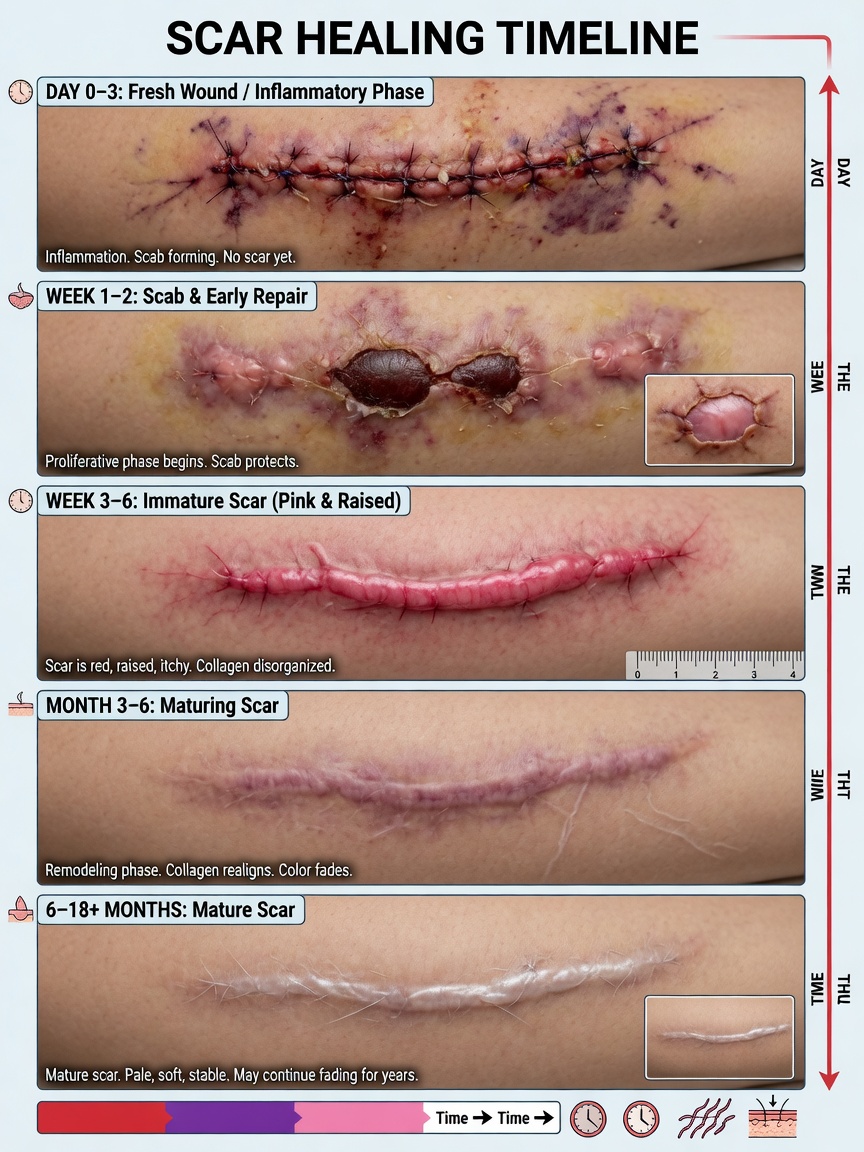
Body lift scars never fully disappear, but they do fade significantly over time. Within 12 to 18 months, scars change from red or purple lines to pale, flat marks that are far less noticeable. The American Society of Plastic Surgeons (ASPS) confirms that scars typically fade over 12-18 months, with silicone sheets and sun protection recommended for optimal healing (ASPS).
Scar healing follows three phases. During weeks 0 to 6, the inflammatory phase, the scar is red, raised, and tender. During weeks 6 to 12, the proliferative phase, cells rebuild and the scar may thicken. During months 3 to 18, the maturation phase, the scar gradually flattens and becomes paler.
Factors that affect scar quality include genetics, wound tension at the incision site, post-operative care quality, sun exposure, and smoking. A well-cared-for scar on a non-smoker with good genetics may become nearly invisible within two years, while a poorly managed scar on a smoker may remain prominent indefinitely.
Scar Healing Timeline (0–18 Months)
Weeks 1-2: Incisions are closed, drains are in place or recently removed. The scar appears as a thin, pink line that may be slightly raised. Keep the incision clean and dry as directed by your surgeon.
Weeks 3-6: The scar may become redder and slightly thicker. This is a normal inflammatory response — not a sign something is wrong. If your surgeon approves, you can start using silicone sheets at around week four.
Months 2-3: The scar enters the proliferative phase. It may become itchy and firm as new tissue forms. Gentle massage can help reduce thickness and improve flexibility.
Months 4-12: The scar gradually flattens and fades. Daily application of sunblock with SPF 30 or higher is essential to prevent permanent hyperpigmentation (darkening) of the scar tissue. UV exposure can permanently darken a healing scar.
Months 12-18: The final result — a pale, flat scar that is still slightly visible but far less noticeable than at earlier stages. Some patients opt for laser treatments (pulsed dye laser or fractional laser) to address persistent redness or raised areas after this point.
Tips to Minimize Scarring
You can take several active steps to improve scar appearance starting from the early recovery period. The evidence from plastic surgery research supports these strategies.
The ASPS recommends silicone sheets or silicone gel as the first-line treatment. Start using them around weeks two to four, once all incisions are fully closed with no drainage. Apply silicone sheets for 12 hours daily for at least three months. Clinical studies show silicone can reduce scar thickness and improve color.
Sun protection is non-negotiable. Apply SPF 30 or higher sunscreen to all scar areas every day for at least 12 months. UV exposure can cause permanent darkening of scar tissue that is difficult to reverse.
Gentle circular massage with vitamin E oil or a silicone-based cream can reduce scar thickness and improve flexibility. Start this around week four, using light pressure and increasing gradually.
For persistent redness or raised scars at six to twelve months, professional treatments such as pulsed dye laser or fractional laser can further improve appearance. These treatments are available in Thailand at many aesthetic clinics for a fraction of the US cost.
Avoid smoking entirely — tobacco reduces blood flow to healing tissue and significantly impairs scar quality. Also maintain a stable weight, as stretching the skin can widen and distort scars.
Recovery Time & Post-Operative Care
The recovery timeline for body lift surgery spans six to eight weeks for initial healing, but six to twelve months for full results. Understanding each phase helps you plan your stay in Thailand, coordinate time off work, and set realistic expectations for your mobility and comfort level.
Body Lift Recovery Timeline: Week by Week
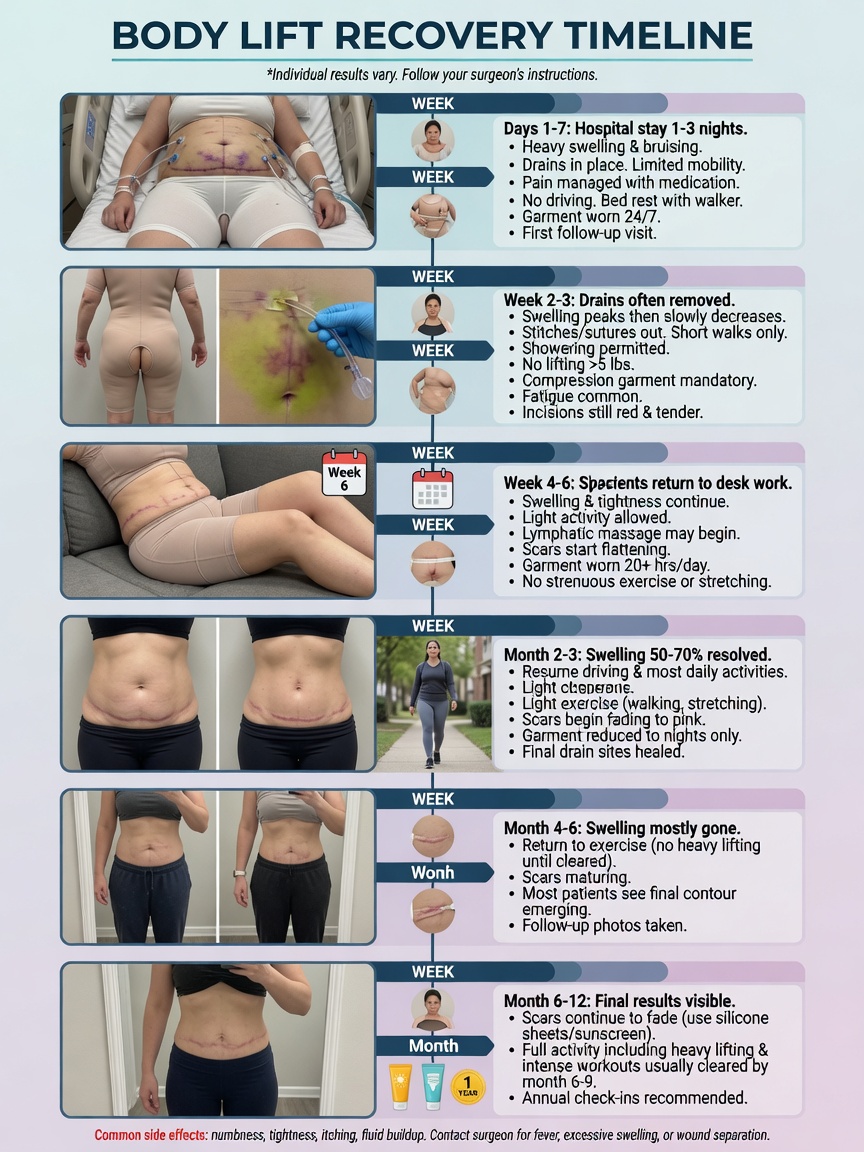
Week 1: You remain in the hospital for two to four nights. Drains are in place to remove excess fluid, and you wear a compression garment to reduce swelling and support healing tissues. Walking with assistance is encouraged to prevent blood clots. Pain is controlled with intravenous and oral medications.
Week 2: Drains are typically removed during a follow-up appointment. Mobility is still limited, but you can shower if your surgeon approves. Continue wearing the compression garment as directed. Sleep on your back with pillows under your knees to reduce tension on incisions.
Weeks 3-4: You can return to light activities within your home, such as short walks and preparing simple meals. Stitches are removed if you received non-absorbable sutures. Gradually increase walking distance, but avoid any lifting over five pounds. Do not drive if you are still taking narcotic pain medication.
Weeks 5-6: Many patients return to desk jobs during this period. A Cochrane review found that most patients return to non-strenuous work by six weeks, with complete healing taking up to six months (Cochrane). Light exercise such as walking is allowed, and you may reduce compression garment wear to 12 hours per day.
Weeks 7-8: Gradual return to full activities, including gentle stretching and low-impact exercise. Begin active scar management with silicone sheets and sun protection. Schedule your final follow-up appointment before leaving Thailand.
How Painful Is a Body Lift?
Body lift is a major surgery, and the pain level reflects that. Expect moderate to severe pain for the first three to four days after surgery. Pain is controlled with multimodal analgesia — a combination of NSAIDs, acetaminophen, and short-term opioid medications for breakthrough pain.
After day five to seven, the pain transitions from sharp to a sensation of soreness and tightness. The most difficult movement is transitioning from lying down to standing, as this stretches the abdominal and back incisions. Patients often describe the first week as the hardest, with significant improvement noticeable each day afterward.
By week two, most patients manage pain with over-the-counter medications only. By week three, pain is minimal during normal activities but may still be present during specific movements like twisting or reaching overhead.
Best Sleeping Positions After Body Lift
Sleeping on your back is the only safe position for the first four to six weeks after body lift surgery. Elevate your upper body on a wedge pillow or stacked pillows, and place additional pillows under your knees. This position reduces tension on all incision lines — front, sides, and back — and minimizes swelling in the lower body.
Why this matters: any side or stomach sleeping places direct pressure on healing incisions. Rolling onto your side overnight can stretch or separate wounds, delay healing, and increase scarring. Use a pregnancy pillow or body pillow on both sides of your body to physically prevent turning in your sleep.
Before sleeping, set up a “recovery nest” with water, medications, your phone, and a remote control within easy reach. Waking up and reaching for items across the room is painful and risks injury.
Returning to Work and Normal Activities
Return-to-work timing depends entirely on the physical demands of your job. For desk jobs, plan for four to six weeks off. Most patients return at six weeks, often starting with half-days for the first week to gauge their stamina. For physical jobs — construction, nursing, warehouse work — expect eight to twelve weeks before returning, and only after receiving written clearance from your surgeon.
Driving is permitted at four weeks, provided you are no longer taking narcotic pain medication and can perform an emergency stop without hesitation or discomfort.
Exercise follows a gradual progression. Walking is allowed from week two. No heavy lifting over ten pounds for six weeks. Gentle stretching at week six. Low-impact cardio like stationary cycling at eight weeks. Full return to the gym, including weightlifting, at 12 weeks with surgeon approval.
Warning Signs of Complications
Knowing the warning signs of complications is essential for a safe recovery, especially when you are abroad. Contact your surgeon immediately if you experience any of the following:
- Fever over 101°F (38.3°C)
- Increased wound drainage or fresh bleeding
- Severe pain not controlled by prescribed medication
- Redness spreading around incision lines
- Pus or foul odor from any wound
- Sudden shortness of breath or chest pain — possible pulmonary embolism (PE)
- Unilateral leg swelling, pain, or warmth — possible deep vein thrombosis (DVT)
Common complications include seroma — fluid accumulation under the skin — which occurs in 15 to 20 percent of body lift patients and is treated with needle aspiration. Wound dehiscence — separation of the incision edges — occurs in 5 to 10 percent and requires cleaning, possible restitching, and prolonged wound care. Infection occurs in 2 to 5 percent of cases and is treated with antibiotics. Most complications are treatable if caught early. According to Dr. Stoker, complications such as seroma, infection, and wound separation are manageable with early intervention (Dr. Stoker).
Before leaving Thailand, ensure you have both the direct contact number for your surgeon and a local follow-up plan with a physician in your home country.
Body Lift Cost & Choosing a Clinic in Thailand
Cost is a major factor in the decision to travel to Thailand for body lift surgery, but it should never be the only factor. Understanding the true cost — including hidden expenses — and knowing how to evaluate clinic quality will protect both your health and your investment.
How Much Does a Body Lift Cost in Thailand?
Body lift packages in Thailand offer substantial savings compared to Western countries. Typical price ranges from Bookimed indicate that single-stage lower body lift ranges from $8,000 to $15,000 USD, single-stage total body lift from $12,000 to $20,000 USD, and two-stage total from $15,000 to $25,000 USD (Bookimed). Compare this to $20,000 to $50,000 in the United States, and you can see why Thailand is a leading destination.
Factors affecting the price include the surgeon’s experience and reputation, the hospital’s accreditation level, the number of body areas addressed (lower body only vs. total body lift vs. adding arm lift), and whether the package includes ancillary services like airport transfer and companion accommodation.
The cost difference is not due to lower quality. Thailand’s lower operating costs, favorable exchange rates, competitive medical tourism market, and lower labor costs for non-medical staff allow clinics to offer competitive pricing while maintaining international standards.
Full Body Lift Price Packages: Clinic Comparison
| Clinic | Procedure Type | Price (USD) | Hospital Stay | Inclusions | Accreditation |
|---|---|---|---|---|---|
| Kamol Hospital | Single-stage total body lift | $12,000 – $18,000 | 3-4 nights | Pre-op tests, surgeon fee, anesthesia, compression garment, airport transfer, companion accommodation | JCI accredited |
| Bangkok Hospital | Single-stage total body lift | $14,000 – $20,000 | 3-5 nights | Pre-op tests, surgeon fee, anesthesia, medications, compression garment | JCI accredited |
| Bumrungrad International | Lower body lift single-stage | $15,000 – $25,000 | 3-4 nights | Full pre-op workup, surgeon fee, anesthesia, post-op medications, room, nurse care | JCI accredited |
Medical Departures provides a useful platform for comparing packages across multiple accredited clinics (Medical Departures).
What’s Included in a Body Lift Package?
Most inclusive packages cover pre-operative consultations (often via video before your travel), blood tests and medical clearance, anesthesia fees, the surgeon’s professional fee, hospital stay (typically three to four nights), a compression garment, post-operative follow-up appointments, airport transfer, and accommodation for a companion.
However, hidden or excluded costs can add up. Ask specifically about medications — painkillers and antibiotics may be billed separately. Additional compression garments beyond the first one may cost extra. If your recovery requires more nights than the standard package allows, you will pay daily hospital charges. Drain removal may also be charged separately. Revision surgery, if needed, is almost never included in the initial package price.
Essential checklist when reviewing packages:
- [ ] Request a full, itemized quote in writing
- [ ] Confirm exactly what medications are included
- [ ] Ask about extra night costs if recovery is slow
- [ ] Verify drain removal is included
- [ ] Understand revision surgery policy and pricing
- [ ] Check if companion accommodation includes meals
How to Choose a Safe Clinic in Thailand
Selecting a clinic is the most important decision you will make. Safety should always be prioritized over price. Use the following criteria to evaluate your options.
Accreditation: JCI (Joint Commission International) accreditation is the gold standard for hospital quality globally. ISO 9001 certification for management systems is also a positive signal. Thai Ministry of Public Health accreditation is mandatory for all Thai hospitals. Verify current accreditation status on the JCI website, not just the clinic’s own marketing materials.
Surgeon credentials: Your surgeon should be certified by the Thai Board of Plastic Surgery. Look for international training or fellowship experience in body contouring after massive weight loss. Ask how many body lift procedures they perform annually — a surgeon who does 20 or more per year has significantly more relevant experience than one who does a handful.
Patient reviews: Look for objective reviews on platforms like Trustpilot, Google Reviews, and RealSelf. Beware of clinics with only recently posted positive reviews — this can indicate marketing-generated testimonials. Look for consistent patterns across multiple reviewers.
Direct communication: Speak with the surgeon via video call before booking any flight. A reputable surgeon will gladly offer a free consultation. During this call, ask to see before-and-after photos of body lift cases specifically — not just tummy tucks or breast augmentations. The surgeon should be able to explain their staging recommendations for your specific situation.
FlyMedi recommends verifying JCI accreditation and speaking directly with the surgeon before booking (FlyMedi).
Risks, Limitations & When to Consider Alternatives
Every surgical procedure carries risks, and body lift is no exception. A balanced understanding of potential complications, contraindications, and alternatives will help you make an informed decision.
Common Risks and Complications
The overall complication rate for body lift surgery ranges from 15 to 25 percent in published studies, though most complications are minor and treatable. Seroma — fluid accumulation under the skin — is the most common complication, occurring in 15 to 20 percent of patients. It is typically treated with needle aspiration in an outpatient setting.
Wound dehiscence — partial separation of the incision — affects 5 to 10 percent of patients. This requires careful wound cleaning, possible restitching, and a longer healing period. Surgical site infection occurs in 2 to 5 percent and is treated with antibiotics.
Major complications are rare. Deep vein thrombosis (DVT) and pulmonary embolism (PE) occur in less than 1 percent of cases, but these are serious and require immediate medical attention. Unfavorable scarring occurs in some cases, particularly in patients with a history of keloid formation.
Choosing an experienced, board-certified surgeon operating in a JCI-accredited hospital dramatically reduces the risk of complications. The Cochrane review emphasizes that patient selection — following strict candidacy criteria — is the most effective risk reduction strategy.
When Body Lift May Not Be Right for You
Body lift surgery may not be appropriate if you have a BMI over 35, as the complication risk becomes unacceptably high. Smokers who cannot or will not quit for at least four to six weeks before and after surgery are also poor candidates — tobacco use delays healing and significantly increases wound complications.
Patients with uncontrolled diabetes, uncontrolled hypertension, or a history of poor wound healing should address these conditions before considering surgery. Those with unrealistic expectations — expecting “perfect” scarless results or surgical outcomes that completely eliminate all skin laxity — may be disappointed.
Significant weight loss that is ongoing or unstable is another contraindication. If you are still losing weight or plan to lose more, wait until your weight has been stable for at least 12 months. Otherwise, you risk needing revision surgery after additional weight loss creates new excess skin.
Alternatives to Body Lift Surgery
Not all cases require surgery. For patients with mild to moderate skin laxity — where the skin is loose but not hanging — non-surgical options may provide meaningful improvement.
- Radiofrequency skin tightening: Devices like ThermiTight or BodyTite use heat to stimulate collagen production and tighten skin slightly. Results are modest compared to surgery and require multiple sessions.
- Exercise and muscle toning: Building underlying muscle through strength training can improve the appearance of loose skin, particularly in the arms and legs. However, this will not eliminate significant skin excess.
- Compression garments: Wearing high-quality shapewear can smooth the appearance of loose skin for special occasions, though this is a cosmetic solution, not a permanent fix.
For patients who want significant improvement but cannot commit to the full recovery of a body lift, a limited procedure such as abdominoplasty alone — without the circumferential back lift — may be an option. Discuss all alternatives thoroughly with your surgeon during your consultation.
Frequently Asked Questions
How long is recovery from a body lift?
Recovery from a body lift takes 4 to 6 weeks to return to non-strenuous work, with full healing extending to 6 months. You can expect hospital stay of 2 to 4 nights, drains removed around week 2, and gradual return to desk work around weeks 5 to 6. Physical jobs require 8 to 12 weeks off. Light exercise begins at 6 weeks, and full gym activity at 12 weeks. Sleep on your back with elevated knees for the first 4 to 6 weeks.
Will I have scars after body lift surgery?
Yes, body lift scars are permanent but fade significantly over 12 to 18 months. Incisions are placed along natural skin folds — the bikini line, under the breasts, and across the lower back — to minimize visibility. Scars transition from red and raised (weeks 0 to 6) to paler and flatter over the maturation phase. Using silicone sheets, daily sun protection with SPF 30, and massage can improve scar appearance. Laser treatments are an option for persistent redness after 12 months.
What is the difference between single-stage and two-stage body lift?
Single-stage body lift addresses the abdomen, waist, back, and thighs in one surgery — requiring strict candidacy (BMI under 30, non-smoker, no significant health issues). Two-stage body lift splits the procedure into separate surgeries 3 to 6 months apart, allowing safer recovery for patients with BMI 30 to 35 or multiple health considerations. Single-stage has faster overall timeline and lower cumulative cost; two-stage has lower per-procedure risk and allows weight stabilization between stages.
How much does body lift surgery cost in Thailand?
Body lift cost in Thailand ranges from $8,000 to $20,000 USD depending on the extent of surgery — significantly less than $20,000 to $50,000 in the US. Single-stage lower body lift costs $8,000 to $15,000; total body lift $12,000 to $20,000; two-stage total $15,000 to $25,000. These prices typically include surgeon fees, hospital stay, anesthesia, compression garments, and post-op follow-up. Always confirm hidden costs like medications and extra nights before booking.
Am I a candidate for body lift after weight loss?
Candidates for body lift after weight loss must have maintained a stable weight for 12 to 18 months, have a BMI under 30 (ideally under 25 for lowest risk), be a non-smoker, and have well-controlled chronic conditions. You should have realistic expectations about scars and results — surgery removes excess skin but does not address fat deposits. If your BMI is 30 to 35, a two-stage approach may be an option. A BMI over 35 is generally not recommended until further weight loss is achieved.
How do I choose a safe clinic in Thailand for body lift?
To choose a safe clinic in Thailand, verify JCI accreditation on the official JCI website, confirm the surgeon’s Thai Board of Plastic Surgery certification, and speak directly with the surgeon via video call before booking. Look for objective patient reviews on Trustpilot and RealSelf. Request a full itemized quote with all inclusions and exclusions. An accredited hospital with an experienced surgeon and transparent pricing reduces your risk significantly. Avoid clinics that pressure you into booking or refuse detailed preoperative communication.
Conclusion
For individuals who have lost significant weight, a body lift after weight loss delivers substantial improvements in both physical comfort and body confidence. The best approach combines strict adherence to candidacy requirements — stable weight for 12 to 18 months and BMI under 30 — with realistic expectations about scars and recovery. The decision between single-stage and two-stage surgery should be guided by your health profile, not convenience or budget alone.
The Complete Reality Framework means accepting that body lift surgery is major — recovery takes 4 to 6 weeks from desk work, scars are permanent but manageable, and choosing an accredited clinic in Thailand requires diligence. Every patient’s path is different, but the principles are universal: prioritize safety, verify everything, and plan for the full recovery timeline.
Start by scheduling video consultations with two or three JCI-accredited clinics in Thailand. Ask about your specific candidacy based on your BMI, health history, and weight stability. Request itemized quotes that include all potential costs. A well-researched decision today leads to a safer surgery and a more satisfying outcome.