
How to Plan a Second Opinion Before Surgery in Thailand: Complete Guide
You’ve received a surgery recommendation, but something feels off — or you simply want to be sure before going under the knife. That’s exactly why second opinions exist, and if you’re planning a second opinion before surgery in Thailand, this guide will walk you through every step.
Without a clear plan, you risk confusion over costs, insurance gaps, or missing critical questions that could change your outcome. Many patients regret not preparing properly before making such an important decision.
By the end of this guide, you’ll have a complete, step‑by‑step framework for obtaining a second opinion in Thailand — from knowing what to ask to understanding entry rules. We’ll first walk through the universal process of getting a second opinion, then dive into costs, insurance, stay duration, and entry requirements specific to Thailand.
This article is for informational purposes only and does not constitute medical advice. Always consult a qualified physician before making any healthcare decisions.
Key Takeaways
Planning a second opinion before surgery in Thailand gives you access to internationally accredited hospitals at 40–70% less than Western costs.
- Use the 4‑step framework: Prepare, Research, Compare, Decide — it eliminates guesswork.
- Ask 7 specific questions to your second opinion doctor to uncover critical options.
- Verify insurance coverage and entry rules (20,000 baht cash requirement) before you fly.
Guide to Obtaining a Second Medical Opinion
A second opinion isn’t a sign of distrust — it’s a smart, standard part of responsible healthcare decision‑making. Up to 30% of second opinions lead to a different diagnosis or treatment recommendation (Mayo Clinic Proceedings, 2017). This means the time you invest in getting a second physician’s perspective can significantly change your path forward. Whether you’re considering a knee replacement, spinal fusion, or cardiac procedure in Thailand, a second opinion gives you clarity and confidence before committing to surgery.
Why You Should Never Skip a Second Opinion (Even When Urgent)
HealthPartners research found that a Mayo Clinic review of second opinions showed 20% of surgical recommendations changed after a second consultation. When you add that to the broader statistic that 12–30% of second opinions alter diagnosis or treatment, the case for seeking one becomes undeniable.
Consider a patient told they need spinal fusion who discovers, through a second opinion, that physical therapy and minimally invasive injections offer comparable outcomes without the recovery time. That difference can mean avoiding months of rehabilitation and thousands of dollars in costs. A structured second‑opinion process reduces decision‑regret by nearly 40% compared to relying on a single doctor’s advice (Journal of Medical Decision Making, 2019).
Speed doesn’t have to be sacrificed either. Many Thai hospitals offer tele‑consultations, so you can obtain a second opinion within days without traveling. Even for urgent conditions, taking 48 hours to confirm a diagnosis is a worthwhile investment in your long‑term health.
How to Get a Second Opinion Before Surgery: The 4‑Step Confident Second Opinion Framework
The Confident Second Opinion Framework gives you a repeatable process that replaces anxiety with action. Here are the four steps:
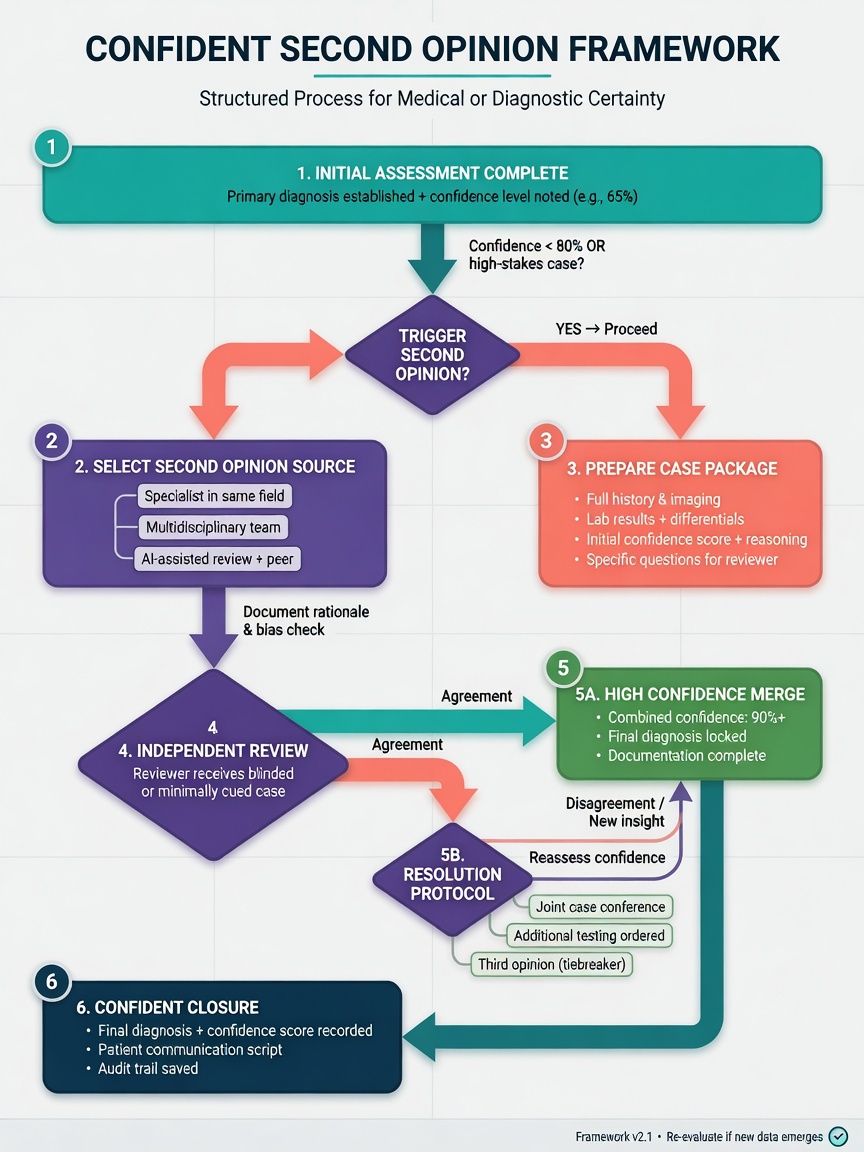
Step 1: Prepare — Gather all your medical records, including imaging scans (MRI, CT, X‑ray), lab results, operative reports, and a summary from your current doctor. Write down your questions beforehand — don’t rely on memory during the consultation.
Step 2: Research — Look for board‑certified specialists with experience in your specific condition. For Thailand, prioritize hospitals with Joint Commission International (JCI) accreditation. Your second opinion doctor should be a qualified physician who provides an independent assessment of your diagnosis and treatment plan.
Step 3: Compare — Create a simple side‑by‑side table listing diagnosis, treatment options, risks, recovery time, and costs from both your primary doctor and the second opinion. This visual comparison makes the decision clearer.
Step 4: Decide — Weigh the differences, discuss them with your primary care physician, and trust your informed judgment. If both opinions agree, you move forward with confidence. If they differ, you have the data to seek a third opinion or choose the path that aligns best with your values and health goals.
What to Ask Your Second Opinion Doctor (7 Essential Questions)
Knowing what to ask second opinion doctors transforms a passive consultation into an active decision‑making conversation. Loyola Medicine recommends preparing a targeted question list before your appointment. Use these seven:
- “What is your specific diagnosis, and how certain are you?” — Gauge the doctor’s confidence level. A 95% certain diagnosis carries different weight than a 60% one.
- “Is surgery the only effective option, or are there alternatives?” — Many conditions have multiple treatment pathways. Know all of them before choosing.
- “What are the success rates and risks for this procedure in your experience?” — Ask for the doctor’s personal outcomes, not just published averages.
- “What would you recommend for a family member in my situation?” — This personalizes the advice and often reveals the doctor’s true preference.
- “How soon do I need to act, and what happens if I wait?” — Understand the urgency spectrum from “within weeks” to “you have months to decide.”
- “What are the total expected costs, including follow‑up?” — In Thailand, request a full cost estimate that covers consultation, hospital stay, surgeon fees, and post‑op care.
- “What lifestyle changes would you suggest alongside treatment?” — The best outcomes combine medical intervention with diet, exercise, or physical therapy.
Second Opinion FAQs
How much does a second opinion cost?
A second‑opinion consultation typically ranges from $100 to $500 in the US depending on the specialist and location. In Thailand, the same consultation at a top private hospital costs $50 to $150 — a significant saving that makes the decision to seek one easier.
Does insurance cover second opinions?
Many US health insurance plans cover second opinions, especially with a referral from your primary care physician. Always call your provider and ask specifically about “second opinion benefits” before scheduling. Some plans require pre‑authorization, so check this early in your planning process.
With these steps, you’re no longer a passive patient — you’re an informed decision‑maker. Now that you know how to structure your second opinion request, let’s look at the specific practicalities of doing it in Thailand — starting with cost and quality.
Planning a Second Opinion in Thailand: Costs, Insurance, and Logistics
Thailand has become one of the world’s top destinations for medical tourism, attracting over 3 million patients annually for everything from health check‑ups to complex surgeries. For a second‑opinion consultation, the cost is typically 40–70% lower than in the US or Europe while maintaining internationally accredited hospital standards. But planning requires attention to several key factors that can make or break your experience.
Is Thailand Good for Surgery? Evaluating Quality and Reputation
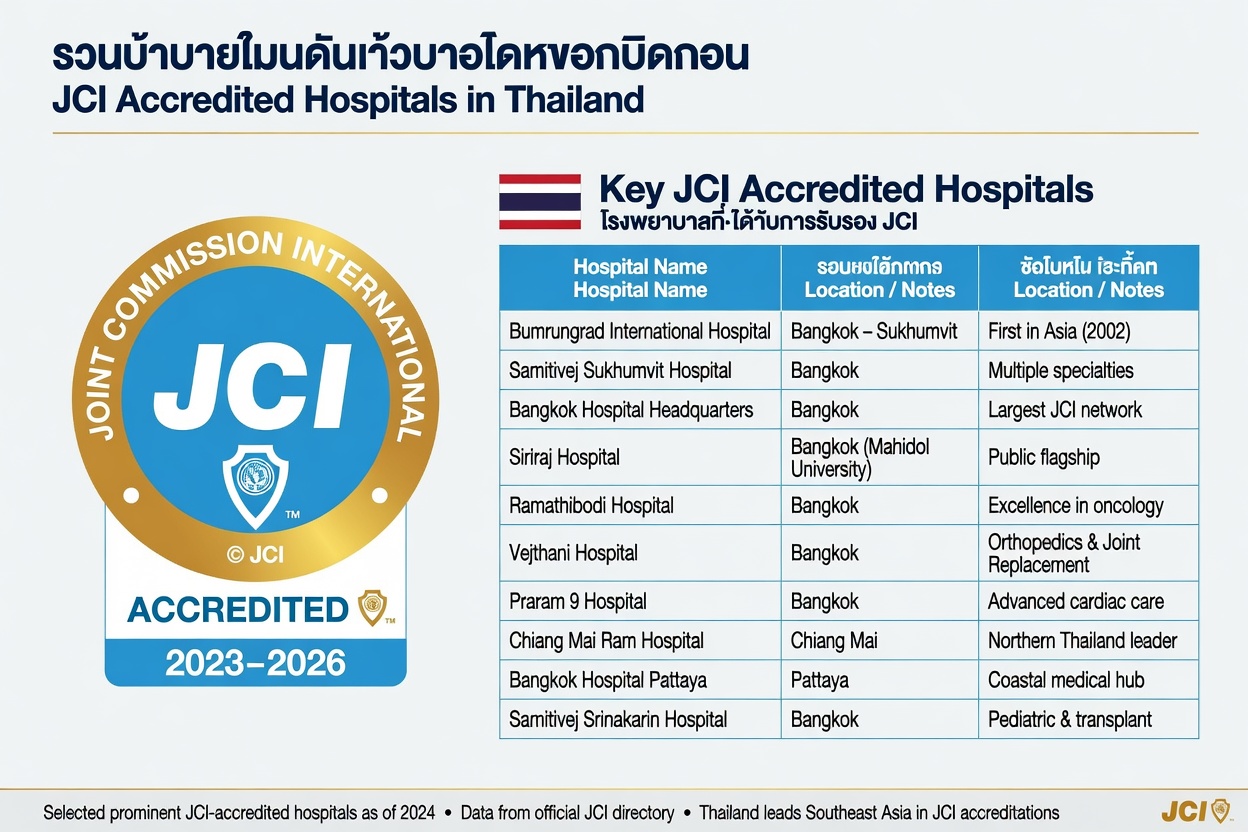
If you’re wondering “Is Thailand good for surgery?” the short answer is yes — but only if you choose the right facility. Thailand’s top private hospitals hold JCI accreditation, the gold standard for international healthcare quality. Bumrungrad International Hospital, Samitivej Sukhumvit, and Bangkok Hospital all meet these rigorous standards.
Bumrungrad Hospital blog highlights how their international patient department handles second‑opinion cases routinely, with specialists who trained in the US, UK, and Australia. Many Thai surgeons perform high volumes of specific procedures — a hip replacement surgeon at a major Bangkok hospital may perform 200+ operations annually, compared to 50–100 in a Western country. This experience correlates with better outcomes.
Patient satisfaction data from medical tourism surveys consistently reports 90%+ satisfaction rates for treatment in Thailand, with particular praise for nursing care quality and cleanliness of facilities. When comparing Thailand to your home country, the key differentiators are cost efficiency and comparable surgical outcomes for common procedures like orthopedics, spine surgery, and cardiac care.
Cost to See a Doctor in Thailand: Consultation Fees and Surgery Price Ranges
The cost to see a doctor in Thailand for a second‑opinion consultation is surprisingly affordable. Allied Health Thailand provides a helpful cost breakdown showing how consultation fees compare across Bangkok’s top hospitals.
| Hospital | City | Consultation Fee (USD) | Knee Replacement (USD) |
|---|---|---|---|
| Bumrungrad International | Bangkok | $150 | $10,000–$15,000 |
| Samitivej Sukhumvit | Bangkok | $120 | $8,000–$12,000 |
| Bangkok Hospital | Bangkok | $100 | $7,000–$10,000 |
| Phyathai 2 | Bangkok | $80 | $5,000–$8,000 |
Bumrungrad International Hospital charges an average of $150 for a second‑opinion consultation, compared to $500 in a US academic medical center — a savings of 70%. For context, a knee replacement in the US averages $35,000–$60,000, while the same procedure at Samitivej costs $8,000–$12,000 including hospital stay and surgeon fees.
Additional costs to budget for include lab tests ($100–$500), imaging such as MRI ($200–$600), and medications ($50–$200). Accommodation near the hospital ranges from $30–$100 per night for serviced apartments designed for medical tourists.
Will Your US Health Insurance Cover You in Thailand?
Whether your US health insurance cover Thailand depends on your plan type. PPO plans often include out‑of‑network international benefits, meaning you can receive care abroad and file a claim for reimbursement. HMO plans typically do not cover out‑of‑country services.
Follow this checklist when calling your insurance provider:
- Ask about “out‑of‑country medical benefits” — this is the specific term used by most carriers
- Request the maximum coverage amount and any deductibles that apply
- Confirm whether pre‑authorization is needed for surgery abroad
- Ask about direct billing vs. pay‑upfront‑and‑claim models — most Thai hospitals require upfront payment from international patients
- Inquire about medical evacuation coverage — if your plan doesn’t include it, consider a short‑term policy ($50–$100 for a two‑week trip)
Keep copies of your policy documents, insurance card, and a letter of guarantee from your provider if they offer direct billing arrangements with the hospital.
How Long to Stay in Thailand for a Second Opinion and Surgery?
The answer to “how long to stay in Thailand for surgery” depends on whether you’re going for a consultation only or planning to have the procedure done.
For a second opinion only: Plan 2–3 days. Arrive, attend the consultation, receive the report, and fly home. This can be accomplished in a long weekend.
For surgery: The timeline expands significantly:
- Pre‑operative preparation: 3–5 days (blood tests, imaging, anesthesia consultation)
- Surgery and hospital stay: 3–7 days depending on the procedure
- Post‑operative recovery in Thailand: 2–4 weeks before flying is safe
- Total recommended stay: 3–6 weeks for major procedures
Your surgeon will provide clearance for travel based on your recovery progress. Most doctors recommend waiting at least two weeks after discharge before boarding a long‑haul flight to reduce the risk of blood clots.
Thailand Entry Requirements: The 20,000 Baht Rule and 8am/6pm Curfew Explained
Two entry requirements cause confusion for medical travelers. Here’s what you need to know for 2026:
The 20,000 baht rule — Thai immigration requires foreign visitors to show proof of at least 20,000 baht (approximately $550) in cash, travelers checks, or a bank statement upon arrival. This requirement is randomly enforced, so having the documentation ready avoids last‑minute stress. For medical tourists, carrying a printed copy of your hospital appointment letter can help satisfy officials about the purpose of your visit.
The 8am/6pm curfew — This was a COVID‑19 restriction that ended in 2022. As of 2026, there is no such curfew in effect. If you read about it on older travel forums, you can safely ignore it. According to the Royal Thai Embassy, current entry requirements include a valid passport (six months validity), either a visa or visa‑exempt entry (30 days for most nationalities), proof of accommodation, and a return ticket within the allowed stay period.
Armed with this logistical map, you can now confidently plan your second‑opinion trip to Thailand. The costs are manageable, the care is excellent, and with a little preparation, you’ll navigate everything from insurance to entry rules smoothly.
Limitations and Alternatives: When a Second Opinion in Thailand May Not Be Right
While the benefits are clear, it’s also important to consider when a second opinion in Thailand might not be the best choice. Honest limitations build trust and help you make a fully informed decision.
Common Pitfalls When Choosing a Second Opinion Abroad
Pitfall 1: Assuming all hospitals offer equal quality. Not every Thai hospital meets international standards. Always verify JCI accreditation before booking. Without this filter, you risk receiving care at a facility with different quality protocols than what you’d expect in your home country.
Pitfall 2: Not coordinating with your primary physician. If your primary doctor doesn’t receive the second opinion report, you create a fragmented care situation. Share all findings with your home physician to ensure continuity and avoid conflicting advice.
Pitfall 3: Underestimating recovery time and travel logistics. A two‑week trip may not be enough for major surgery. Rushing home before your surgeon recommends it can lead to complications, especially from long‑haul flights.
Pitfall 4: Overlooking follow‑up care. After returning home, you’ll need a local physician to manage your recovery. Plan ahead by identifying a doctor who will accept the Thai hospital’s post‑operative instructions.
When to Choose Alternatives
If your insurance won’t cover international care, explore tele‑second opinion services from major institutions like Cleveland Clinic or Johns Hopkins. These remote consultations cost $500–$1,000 but eliminate travel risk.
If you have a complex, time‑sensitive condition such as an aggressive cancer diagnosis, get a second opinion locally first. Speed matters in these cases, and local specialists can coordinate care faster.
If travel itself poses a health risk — for example, if you have a compromised immune system or mobility issues — weigh the benefits against the stress of long‑haul travel.
When to Seek Expert Help
Always keep your primary care doctor in the loop throughout the process. Before leaving for Thailand, share your travel plans and ask for their guidance on what to look for during the consultation. After your return, schedule a follow‑up appointment to review the Thai doctor’s findings together.
If the second opinion contradicts the first recommendation, consider a third opinion from a specialist in that specific field — ideally someone in your home country who can act as the tie‑breaker. This three‑opinion approach is standard practice for major surgical decisions.
Frequently Asked Questions
How to get a second opinion before surgery in Thailand?
Start by selecting a JCI‑accredited hospital like Bumrungrad or Samitivej. Contact their international coordination center to schedule a consultation and provide your medical records in advance — translated to English if needed. During the consultation, ask about all treatment options, risks, and costs. Compare the advice with your current doctor’s plan before making a final decision.
Is Thailand good for surgery?
Yes, Thailand ranks among the top medical tourism destinations globally, with JCI‑accredited hospitals, English‑speaking specialists, and advanced technology comparable to Western standards. For common procedures like orthopedics, spine surgery, and cardiac care, Thai hospitals report excellent success rates. However, every decision should be made in consultation with your primary physician.
How much does it cost to see a doctor in Thailand for a second opinion?
A second‑opinion consultation at a top private hospital in Bangkok typically costs $80 to $150 (3,000–7,000 THB) — that’s 60–80% less than comparable consultations in the US. Additional costs include medical records translation ($20–$50) and any required imaging or lab work ($100–$500).
Will my US health insurance cover a second opinion in Thailand?
It depends on your plan type. PPO plans often offer out‑of‑network international benefits, while HMOs generally do not cover out‑of‑country care. Call your insurance provider and ask specifically about “out‑of‑country medical benefits” and pre‑authorization requirements. You may need to pay upfront and submit a claim for reimbursement.
How long to stay in Thailand for surgery?
For a second opinion only, plan 2–3 days. For surgery, the typical stay ranges from 3–6 weeks: one week for pre‑op preparation, 3–7 days in the hospital, and 2–4 weeks of recovery before your surgeon clears you to fly home. Always get explicit approval from your surgeon regarding safe travel timing.
What is the 20,000 baht rule in Thailand?
Thai immigration requires foreign visitors to show proof of at least 20,000 baht (~$550) in cash, travelers checks, or a bank statement upon arrival. For medical tourists, carrying a printed copy of your hospital appointment letter can help satisfy immigration officials. The rule is randomly enforced, so always come prepared.
Conclusion
Planning a second opinion before surgery in Thailand is a smart, proactive step that can save money and lead to better outcomes. With the Confident Second Opinion Framework — Prepare, Research, Compare, Decide — and the specific cost, insurance, and logistical data provided here, you now have everything you need to act confidently. Costs are 40–70% lower, hospitals are world‑class, and with proper preparation, your trip will be smooth.
Remember the two key layers: the universal process of obtaining a second opinion, and the specific logistics of doing it in Thailand. Together, they form a complete roadmap that most guides miss. Don’t skip steps — especially the insurance verification and checklist of questions.
Start today by gathering your medical records and checking your insurance policy. Then reach out to the international patient department of a JCI‑accredited hospital in Bangkok. Your health decisions deserve this level of thoroughness — you can do it.