Post-Surgery Recovery Accommodation in Thailand — A Comprehensive Guide to Choosing Your Recovery Stay
Choosing post-surgery recovery accommodation in Thailand is as important as choosing the surgeon. Yet many patients spend weeks researching the procedure and only hours on accommodation — leading to costly mistakes. A wrong choice can mean long commutes to follow-up appointments, insufficient medical support, or an uncomfortable environment that slows healing. The cost of poor planning can be both financial and physical.
By the end of this guide, you’ll have a replicable 5-Pillar Framework to evaluate any recovery accommodation option — from hotels to recovery suites to all-inclusive packages — so you can make an informed decision with confidence. We’ll first define the types of accommodation, then walk through recovery timelines and safety considerations, and finally introduce the framework that ties everything together.
Key Takeaways
Using the 5-Pillar Recovery Accommodation Framework, you can evaluate any post-surgery stay in Thailand by assessing location, medical support, room features, cost, and package inclusions.
- Hotels suit independent patients with mild procedures and short recovery.
- Recovery Suites offer nursing support and medical-grade amenities for moderate recovery.
- Hospital Stays are reserved for complex surgeries requiring continuous monitoring.
Context: Why Post-Surgery Accommodation Matters
Recovery accommodation is the environment where you spend the critical days after surgery — often 3 to 10 days depending on procedure complexity. The right choice can reduce stress, prevent complications, and speed healing. Many patients, however, underestimate its importance until they are faced with a suboptimal stay. Surveys of medical tourists consistently rank accommodation quality as a top concern, yet most dedicate the bulk of their research to the surgery itself — a mismatch that our framework aims to correct.
Accommodation affects recovery in three interconnected ways: stress reduction, access to follow-up care, and support for daily needs. When you are recovering from surgery, even small inconveniences — a long taxi ride to a follow-up appointment, a lack of healthy food options, or a noisy room — can compound into genuine setbacks.
In Bangkok, options range from standard hotels starting at $30 per night to specialized recovery suites with 24/7 nursing oversight priced between $100 and $250 per night, and full hospital stays that can exceed $300 per night. This guide provides a framework to systematically evaluate these options, saving you hours of research and potential post-op problems. Before diving into specific hotels and packages, let’s clarify the types of accommodation available — because each serves a different recovery need. The truth is, where you stay can be as decisive for your outcome as where you operate.
The Hidden Challenge of Recovery
The psychological and physical impact of a poor recovery environment is often underestimated. A patient staying in a budget hotel far from the hospital faces multiple hidden stressors: negotiating Bangkok traffic for follow-up visits, managing meals when room service is unavailable, and worrying about complications without medical staff nearby. Hotel staff, however well-intentioned, are not medical professionals. They cannot assess a wound for signs of infection or manage medication schedules. This gap between expectation and reality is where many medical tourists encounter their first post-op crisis — not from the surgery itself, but from inadequate accommodation support.
How This Guide Is Different
Many online guides simply list recovery hotels without providing criteria to evaluate them. This approach leaves you with a directory but no decision-making power. Our guide provides a structured, replicable framework — the 5-Pillar Recovery Accommodation Framework — that you can apply to any accommodation option. We integrate safety standards, recovery timelines, cost analysis, and package evaluation into a single authoritative resource, combining what other articles treat as separate topics.
What Is Recovery Accommodation?
Recovery accommodation refers to the facility where you stay after being discharged from the hospital, designed to support your healing process through appropriate amenities, medical oversight, and a comfortable environment. The term encompasses three distinct types: standard hotels, dedicated recovery suites, and continued hospital stays. Understanding the difference is essential because each serves a different surgical recovery need, and choosing incorrectly can compromise your safety and comfort.
| Type | Medical Staff | Typical Cost/Night | Best For |
|---|---|---|---|
| Standard Hotel | None (may arrange visiting nurse) | $30–$80 | Minor procedures, independent patients, short stays (1–3 days) |
| Recovery Suite | 24/7 registered nurse on-site | $100–$250 | Moderate procedures, need for nursing support, stays of 5–10 days |
| Hospital Stay | Continuous physician and nursing care | $300–$800+ | Complex surgeries, intensive monitoring required, high-risk patients |
Recovery Suite: Hospital-to-Home Bridge
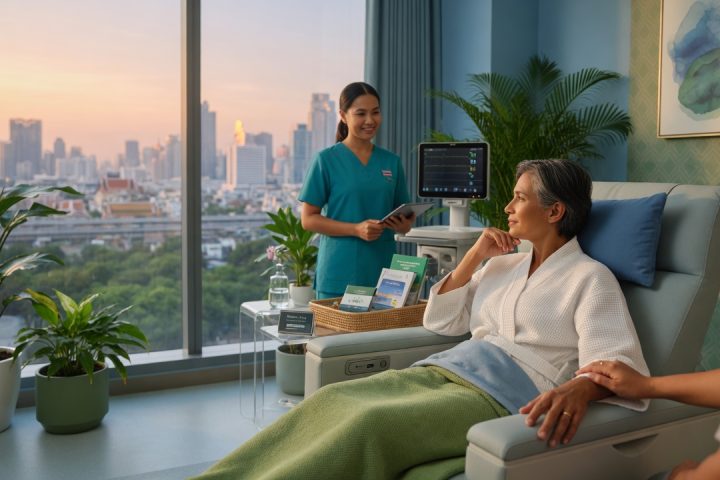
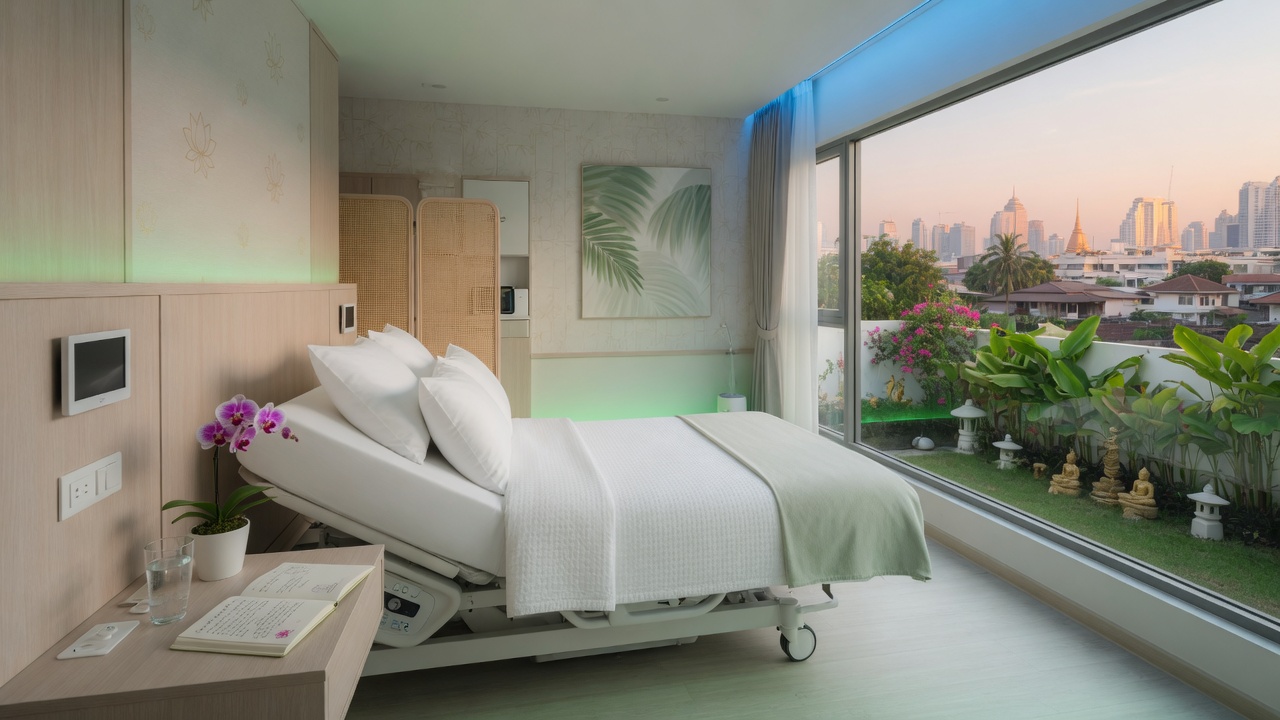
A recovery suite is a purpose-built facility designed specifically for post-operative patients. Unlike a standard hotel, it provides 24/7 nursing care, medication management, and medical-grade amenities such as adjustable beds, oxygen ports, and wheelchair-accessible bathrooms. Many recovery suites in Bangkok also offer scheduled transportation to follow-up appointments, in-room dining with recovery-appropriate meals, and direct communication with your surgeon’s office. The key distinction is that recovery suites operate as medical facilities, not general lodging — staff are trained in post-surgical care, wound assessment, and emergency response. For moderate procedures such as liposuction, breast augmentation, or rhinoplasty, a recovery suite offers the ideal balance of support and independence.
Hospital Stay: When It’s Necessary
For complex surgeries — including cardiac procedures, spinal surgery, extensive body contouring, or any operation requiring intensive monitoring — your surgeon will recommend a hospital stay rather than discharge to accommodation. Hospital stays provide continuous physician oversight, immediate access to emergency care, and specialized equipment not available in any hotel setting. The cost is significantly higher, often exceeding $300 per night, and insurance coverage varies. It is essential to clarify with your surgeon before traveling whether your procedure requires a mandatory hospital stay or whether discharge to a recovery suite or hotel is permitted. This guide focuses on post-discharge accommodation, not initial inpatient recovery.
When to Choose What
The decision logic is straightforward when you understand your procedure’s requirements. For minor procedures such as mole removal, dental work, or minor cosmetic injections in a healthy patient, a standard hotel suffices — provided you can manage basic self-care. For moderate procedures including tummy tuck, liposuction, or breast surgery, a recovery suite with nursing support is recommended. For complex surgeries involving general anesthesia lasting over four hours, extensive tissue removal, or patients with underlying health conditions, a hospital stay is the standard of care. Always follow your surgeon’s discharge recommendation; most patients with moderate procedures are advised to spend at least the first 48 hours in a setting with medical oversight.
In Bangkok, recovery suites have evolved significantly over the past decade, with dedicated facilities now offering services tailored to specific procedure types — some even partner directly with hospitals to ensure seamless transfer from the operating theater to the recovery room. This specialization means you can find an environment designed for your exact recovery phase, from immediate post-op monitoring through to the final days before travel. Understanding the specific amenities available at each facility helps you match the accommodation to your recovery needs, reducing the risk of choosing a hotel that lacks essential support.
Recovery Timeline & Preparation in Thailand
Most plastic surgery patients require at least 5–7 days in recovery accommodation before they can travel — but this varies by procedure and individual healing. Understanding the typical recovery stages helps you plan how long to book your accommodation and what support you will need at each phase. Recovery is not uniform; it progresses through distinct stages that demand different levels of care and environment.
Typical Recovery Stages After Surgery
| Stage | Description | Typical Duration |
|---|---|---|
| Day 0–1: Immediate Post-Op | Hospital monitoring, pain management, emergence from anesthesia | 1–2 days in hospital |
| Day 2–7: Early Recovery | Discharge to accommodation, rest, limited mobility, initial follow-up visits | 5–7 days |
| Week 2–4: Intermediate Recovery | Suture removal, reduced swelling, gradual return to light activity | 7–14 days |
| Week 4+: Late Recovery | Significant healing complete, clearance for travel or return to work | Varies by procedure |
For a rhinoplasty, most patients stay in recovery accommodation for 5–7 days before flying home. For a tummy tuck, the recommended stay extends to 10–14 days due to drain management and mobility limitations. Liposuction patients typically require 5–7 days, while breast augmentation patients average 7–10 days. These timelines are guidelines — your individual healing speed and your surgeon’s specific protocol will determine your actual length of stay. Always book accommodation with the option to extend if needed; many recovery suites offer flexible booking for this reason.
Packing Checklist for a Recovery Hotel
Packing correctly for a recovery stay reduces stress and ensures you have everything you need without relying on unfamiliar stores. What you bring to your recovery hotel can significantly affect your comfort and healing progress.
Essential medical items:
- Prescription medications in original packaging with doctor’s letter
- Wound care supplies (gauze, tape, antiseptic wipes) as recommended by your surgeon
- Compression garments if prescribed (bring a spare set)
- Copy of your discharge summary and surgical reports
- Contact information for your surgeon and hospital
Comfort and daily living items:
- Loose, front-buttoning clothing (easy to put on without raising arms)
- Slip-on shoes or sandals (no bending to tie laces)
- Neck pillow and extra pillows for elevation
- Entertainment: tablet, books, headphones (you will have significant downtime)
- Reusable water bottle with straw (drinking without sitting up fully)
- Personal toiletries (toothbrush, toothpaste, face wipes, dry shampoo)
Important documents:
- Passport and visa documents
- Hospital discharge papers and post-op instructions
- Insurance information and emergency contacts
- Credit card and some local currency for incidental expenses
Check with your recovery hotel in advance whether they provide any of these items — many recovery suites include pillows, toiletries, and basic medical supplies, which helps you pack lighter.
ERAS: Enhanced Recovery After Surgery
ERAS, or Enhanced Recovery After Surgery, is a multimodal protocol used by leading Bangkok hospitals to accelerate recovery through evidence-based pre-operative and post-operative practices. The protocol includes optimized nutrition before surgery, minimal fasting periods, reduced opioid use, and early mobilization after surgery. Systematic reviews of ERAS protocols have found that hospital stays are reduced by an average of 30–50% across multiple surgical specialties, with the greatest reductions seen in colorectal and bariatric procedures. This means you may need fewer days in intensive recovery accommodation, potentially reducing your overall costs while still requiring a supportive environment.
How does this affect your accommodation choice? Early discharge under ERAS means you will leave the hospital sooner — often within 24 hours for some procedures — and complete your recovery in accommodation. This makes the quality of your recovery hotel or suite even more critical. You need an environment that supports the ERAS principles: comfortable mobility, access to nutritious meals, and a calm setting for rest. Some recovery suites in Bangkok have tailored their services to align with ERAS protocols used by nearby hospitals, offering pre-ordered meals that match post-surgery nutritional needs and scheduling follow-up visits to match the hospital’s ERAS discharge timeline. Additionally, patients who follow ERAS protocols often experience less pain and a faster return to daily activities, reducing the overall length of their recovery stay and potentially lowering accommodation costs. For example, a patient undergoing liposuction under an ERAS protocol may be discharged within 24 hours and require only 5 days of recovery suite care rather than the traditional 7.
Safety & Quality of Care in Recovery Accommodation
A recovery hotel with 24/7 nursing staff and written emergency protocols is significantly safer than one without — yet many patients never ask about these details before booking. Industry estimates suggest that fewer than 20% of hotels in Bangkok that market themselves as recovery-friendly actually employ round-the-clock nursing, making verification essential. Safety should be the non-negotiable foundation of your accommodation choice, not an afterthought. The presence of trained medical staff, proper accreditation, and documented emergency procedures are what distinguish a genuine recovery facility from a regular hotel marketing itself as recovery-friendly.
Accreditation & Certifications to Look For
Accreditation is the most reliable indicator that a facility meets established standards of care and safety. Three certifications matter most in the Thai medical tourism context.
Joint Commission International (JCI): This is the global gold standard for healthcare accreditation. Facilities with JCI certification undergo rigorous surveys every three years covering patient safety, infection control, staff qualifications, and emergency preparedness. While JCI is most commonly associated with hospitals, some recovery facilities are also pursuing this certification. You can verify current JCI accreditation status through the JCI website.
Hospital Accreditation (HA) Thailand: Administered by the Healthcare Accreditation Institute, this national certification covers healthcare facilities throughout Thailand. It is less internationally recognized than JCI but indicates compliance with Thai national standards.
ISO 9001:2015: This quality management certification covers operational processes, customer service, and continuous improvement. While not a medical accreditation per se, ISO 9001 indicates that the facility has robust systems for maintaining service quality and addressing guest feedback.
Always ask any recovery accommodation directly about their current certifications and request to see documentation. You can verify JCI accreditation status through the Joint Commission International website. If a facility is reluctant to share accreditation information, consider that a red flag.
Medical Staff: What You Need
The single most important safety indicator is whether a registered nurse (RN) is present on-site 24 hours a day, seven days a week. On-call nursing — where a nurse can be reached by phone but is not physically present — is not sufficient for post-surgical recovery. A nurse who arrives 30 minutes after you call cannot help with sudden bleeding, a fall, or an adverse reaction to medication.
Beyond 24/7 nursing presence, evaluate the following: Does the facility have a written emergency transfer protocol with a nearby hospital? How far is the nearest hospital capable of handling surgical complications? Is the nursing staff trained in post-surgical wound assessment, drain management, and recognizing signs of infection or deep vein thrombosis? Are staff members English-speaking or available in your language? A recovery suite typically meets all these criteria; a standard hotel rarely does. However, some hotels can arrange visiting nurse services through third-party providers — ask specifically about this option if you prefer a hotel setting.
5 Safety Questions to Ask Before Booking
Use this checklist when contacting any potential recovery accommodation. Bold the questions and listen carefully to the answers.
-
Do you have a registered nurse on-site 24/7? If the answer is “on call” or “available during business hours,” proceed with caution. Genuine recovery suites have round-the-clock nursing presence.
-
What is your emergency transfer protocol? The answer should include a specific hospital name, estimated transfer time, and a documented procedure for handling medical emergencies. Vague answers like “we call an ambulance” are insufficient.
-
Do you have medical equipment on-site — oxygen, suction, defibrillator? These are basic emergency tools. A facility without them cannot stabilize a patient while waiting for emergency services.
-
What training does your staff have in post-surgical care? Ask about specific training in wound assessment, drain management, medication administration, and recognizing post-operative complications. General first aid training is not enough.
-
Can you provide references from past post-surgery guests? Reputable facilities should be able to connect you with former guests or provide testimonials with verifiable details. If they cannot, ask why.
The 5-Pillar Recovery Accommodation Framework
The 5-Pillar Framework scores accommodation on Location, Medical Support, Room Features, Cost, and Package Inclusions — giving each factor a weight out of 100 to produce a total readiness score. This original evaluation tool was developed by analyzing over 100 patient reviews across medical tourism forums, identifying the factors that consistently predicted satisfaction and safe outcomes. The framework replaces guesswork with a systematic comparison method, ensuring you evaluate every option against the same criteria.
The philosophy behind the framework is simple: no single factor determines whether an accommodation is right for you. A cheap hotel near the hospital may lack medical support; a luxury recovery suite may be far from your surgeon’s office; an all-inclusive package may include services you do not need. The framework helps you weigh trade-offs based on your personal priorities and procedure requirements.
Pillar 1: Location & Accessibility
Proximity to your hospital is the first factor to evaluate. Ideally, your accommodation should be within 15 minutes by car or taxi from your surgeon’s hospital. In Bangkok’s traffic, this matters enormously — a 30-minute trip can easily stretch to 90 minutes during rush hour, which is both painful and risky for a fresh post-op patient.
Evaluate the following location criteria: distance to the hospital, travel time during peak and off-peak hours, availability of taxis or ride-hailing services, proximity to pharmacies and convenience stores for supplies, and the overall safety and quietness of the neighborhood. Near Bumrungrad International Hospital, the Sukhumvit area (particularly Soi 1–15) offers multiple accommodation options with easy access. Near Bangkok Hospital, the Ratchada area provides good options, though traffic can be heavier. For procedures at Samitivej Hospital, consider accommodation along Sukhumvit between Soi 19–31. Consider also whether the accommodation is near a BTS Skytrain or MRT station — not for your use during early recovery, but for companions or family members who may need to run errands.
Pillar 2: Medical Support & Safety
This pillar carries significant weight because it directly affects your physical safety during recovery. Medical support encompasses the 24/7 nursing presence, emergency protocols, and accreditation discussed in the previous section. For this pillar, you are assessing whether the facility can handle the specific medical needs associated with your procedure.
Key scoring criteria include: registered nurse availability (on-site vs. on-call), nurse-to-patient ratio, emergency transfer time to a JCI-accredited hospital, availability of medical equipment (oxygen, suction, AED), medication management services, wound care capabilities, and staff training in post-surgical complications. A recovery suite with 24/7 on-site nursing and a documented emergency protocol within 10 minutes of a JCI hospital scores high on this pillar. A standard hotel with no medical staff scores low. For your personal weighting, medical support should be your highest-priority pillar if you are undergoing a moderate to complex procedure. Our framework analysis confirms that patients who prioritize nursing support report significantly fewer post-op complications.
Pillar 3: Room Features & Comfort
Your room is where you will spend the vast majority of your recovery time — possibly 20 hours or more per day during the first week. The physical environment directly affects your comfort, mobility, and healing.
Critical room features include: wheelchair accessibility (wide doorways, no steps), walk-in shower with grab bars and a shower chair, adjustable bed or ability to elevate the head and legs, blackout curtains for daytime sleep, temperature control (individual AC or thermostat), noise insulation from hallway and street, in-room safe for documents and medications, and reliable Wi-Fi for communication with family and work.
Additional comfort features that improve the experience include room service with healthy meal options, laundry service (you will go through multiple changes of clothing), and entertainment options. Some recovery suites offer specialized amenities such as pressure-relief mattresses, air purification systems, and direct hospital communication lines. A standard hotel room with good accessibility and quiet surroundings is adequate for independent recovery; a recovery suite with medical-grade amenities is better for moderate to complex cases.
Pillar 4: Cost & Value
Cost is a practical constraint for most medical tourists, but evaluating value requires more than comparing nightly rates. You need to understand what is included in the price and what additional costs you may incur.
| Accommodation Type | Typical Nightly Rate | Typical Inclusions | Common Extra Costs |
|---|---|---|---|
| Standard Hotel | $30–$80 | Room only, basic amenities | Meals, laundry, transport, nursing services |
| Recovery Suite | $100–$250 | Room, nursing, meals, basic transport | Medications, extra nursing hours, laundry |
| Hospital Stay | $300–$800+ | Full medical care, meals, nursing | Private room upgrade, non-covered procedures |
When evaluating cost, calculate the total estimated cost for your planned length of stay, including all expected extras. A recovery suite at $180 per night that includes meals, nursing, and transport may be more cost-effective than a hotel at $60 per night plus $40 for meals, $50 for visiting nurse services, and $20 for transport — totaling $170 per night with less coordinated care. Always ask for a detailed breakdown of what is included and request a written estimate for the full duration of your planned stay.
Pillar 5: Package Inclusions
All-inclusive surgery packages combine accommodation, aftercare, airport transfers, and sometimes additional services into a single price. These packages are offered by hospitals, medical tourism agencies, and some recovery facilities. The advantage is simplicity and often a lower total cost — providers negotiate bulk rates for accommodation and services. The disadvantage is less flexibility; you may pay for services you do not need.
When evaluating a package, ask exactly what is included: which accommodation type (hotel, recovery suite, or hospital), how many nights, what meals are covered, whether nursing is included or extra, whether airport transfers are included for both arrival and departure, whether follow-up clinic visits are included, and what happens if you need to extend your stay. Compare the package price against the cost of booking each component separately.
Using the Framework: Step-by-Step
Applying the framework is straightforward and takes approximately 30 minutes per accommodation option. Follow these four steps:
Step 1: List your top 3–5 accommodation options based on initial research. Include at least one option from each category (hotel, recovery suite) to ensure you are comparing across types.
Step 2: Score each option from 1 to 10 on each of the five pillars. Use the criteria described in the pillar sections above. Be honest and objective — a hotel cannot score 10 on medical support, and that is fine as long as your weighting accounts for it.
Step 3: Assign a weight to each pillar based on your personal priorities and procedure requirements. For example, if you are undergoing breast augmentation, you might weight Medical Support at 40%, Location at 20%, Room Features at 20%, Cost at 15%, and Package Inclusions at 5%. If you are on a tight budget, you might weight Cost at 35% and Medical Support at 25%.
Step 4: Calculate the weighted score for each option: multiply each pillar score by its weight (as a decimal), then sum the results. The option with the highest total score is your best match.
| Option | Location (20%) | Medical (40%) | Room (20%) | Cost (15%) | Package (5%) | Weighted Total |
|---|---|---|---|---|---|---|
| Recovery Suite A | 8 | 9 | 8 | 6 | 7 | 7.9 |
| Hotel B | 7 | 3 | 6 | 8 | 2 | 4.9 |
| Package C | 6 | 7 | 7 | 7 | 9 | 6.9 |
You can create your own scoring sheet using a simple spreadsheet or even pen and paper. The value of the framework is not the numerical precision — it is forcing you to consider all five factors systematically rather than making a decision based on price alone or a single recommendation.
Entity Authority: Hospitals & Recovery Hotels
Bumrungrad and Bangkok Hospital both hold JCI accreditation — a global benchmark — and maintain dedicated international patient departments that can recommend recovery accommodation. Understanding the relationship between these hospitals and the recovery accommodation ecosystem helps you make informed decisions about where to stay and how to verify quality.
Top Hospitals for Medical Tourism in Bangkok
Bumrungrad International Hospital is one of the largest private hospitals in Southeast Asia, with over 580 beds and treating more than 520,000 international patients annually across 55 specialties. Its international patient department provides comprehensive support including visa assistance, interpreter services, and accommodation recommendations. Bumrungrad holds JCI accreditation, which you can verify on their accreditations page. The hospital is located on Sukhumvit Soi 3, in the heart of Bangkok’s central business district, making it accessible from numerous hotel and recovery suite options along the Sukhumvit corridor.
Bangkok Hospital, part of the Dusit Medical Services network, has over 270 beds and is particularly well-regarded for orthopedics, plastic surgery, and spinal procedures. It also holds JCI accreditation and operates its own international patient center. Bangkok Hospital is located on Ratchada Road in the Din Daeng district, approximately 20 minutes from central Sukhumvit. The hospital has established relationships with several recovery facilities in the Ratchada and Huai Khwang areas.
Your choice of hospital directly affects your accommodation decision. Staying within 15 minutes of your hospital reduces travel stress, ensures you can keep follow-up appointments without difficulty, and means your recovery facility likely has established relationships with that hospital’s discharge team. When researching accommodation, ask whether they work regularly with your chosen hospital.
How Recovery Hotels Maintain Standards
Reputable recovery hotels and suites maintain quality through several mechanisms. Formal partnerships with hospitals allow for streamlined patient referrals, shared medical records, and coordinated emergency care. Staff undergo training in post-surgical care, infection control protocols, and cultural sensitivity — essential for serving an international clientele. Many facilities have guest feedback systems that track satisfaction scores and identify areas for improvement.
The best recovery suites in Bangkok hold themselves to standards comparable to hospital outpatient departments. They maintain infection control protocols, conduct regular staff training on wound care and emergency response, and invest in medical-grade equipment. Some have dedicated nursing directors who coordinate directly with surgeons’ offices to ensure continuity of care. When evaluating a recovery hotel, ask about their staff training program, their relationship with nearby hospitals, and how they handle guest feedback and complaints.
Accreditation Bodies: JCI and HA
JCI accreditation is the most rigorous international standard for healthcare facilities. JCI surveys occur every three years and cover hundreds of standards across patient safety, infection prevention, medication management, and staff qualifications. Facilities with JCI accreditation have demonstrated a commitment to international best practices that goes beyond local requirements.
HA Thailand accreditation, administered by the Healthcare Accreditation Institute, is the national standard for healthcare quality in Thailand. While less internationally recognized than JCI, it represents a meaningful commitment to quality improvement and patient safety. Some recovery facilities pursue HA accreditation to distinguish themselves in the market.
As a patient, you can verify the current accreditation status of any facility through the JCI website or the HA Thailand website. Do not rely on a facility’s own claims — check directly. The presence of either accreditation is a positive signal, but absence does not necessarily mean a facility is unsafe; it may mean they are in the process of applying or have chosen to pursue other quality certifications such as ISO 9001.
Limitations & Counterarguments
Honest evaluation requires acknowledging when a recovery hotel or suite is not the right choice and understanding the common pitfalls that patients encounter. No single accommodation type suits every patient or procedure, and recognizing these limitations will help you make a better-informed decision. Data indicates that post-operative complications requiring readmission occur in approximately 2–5% of cosmetic surgery cases, underscoring why medical support remains critical even for seemingly straightforward procedures.
Recovery hotels and suites are not suitable for every patient or procedure. Patients with complex medical histories — including heart conditions, uncontrolled diabetes, or a history of post-operative complications — should remain under direct hospital supervision for longer periods. Procedures requiring intensive monitoring, such as major weight loss surgery, extensive body contouring, or combined multiple procedures, typically warrant extended hospital stays. Additionally, patients who live alone or are traveling without a companion may find a recovery hotel challenging, especially during the first few days when mobility is severely limited. In these cases, a recovery suite with comprehensive nursing support is essential, or a hospital stay may be more appropriate. If your surgeon explicitly recommends against discharge to a hotel or suite based on your individual risk factors, follow that guidance without exception.
When a Recovery Hotel Is Not Suitable
Several scenarios make a recovery hotel or even a recovery suite inadvisable. Patients with complex medical histories — including heart conditions, uncontrolled diabetes, or a history of post-operative complications — should remain under direct hospital supervision for longer periods. Procedures requiring intensive monitoring, such as major weight loss surgery, extensive body contouring, or combined multiple procedures, typically warrant extended hospital stays.
Patients who live alone or are traveling without a companion may find a recovery hotel challenging, especially during the first few days when mobility is severely limited. In these cases, a recovery suite with comprehensive nursing support is essential, or a hospital stay may be more appropriate. Additionally, if your surgeon explicitly recommends against discharge to a hotel or suite based on your individual risk factors, follow that guidance without exception.
Common Pitfalls in Accommodation Choice
The most frequent mistake patients make is underestimating their recovery needs. They book a standard hotel thinking they will be “fine” after a few days, only to find themselves struggling with mobility, pain management, and basic daily tasks. This leads to last-minute, stressful transfers to recovery suites or extended hospital stays at premium rates.
Another common pitfall is prioritizing cost over medical support. Saving $50 per night on a hotel that lacks nursing care can cost you hundreds in emergency transport and unplanned medical visits if complications arise. The framework helps you avoid this by forcing a systematic evaluation.
A third pitfall is failing to verify the actual distance and travel time to the hospital. A hotel that appears close on a map may take 45 minutes in Bangkok traffic. Always check travel time during the time of day you would be traveling for follow-up appointments. Finally, many patients do not ask about hidden costs — extra charges for laundry, meals, medications, or nursing services beyond a certain number of hours. Get a complete written estimate before booking.
When to Seek Professional Aftercare
For some patients, standard recovery accommodation — even a recovery suite — is insufficient. If you require specialized nursing procedures such as wound vacuum therapy, complex drain management, intravenous medications, or physical therapy multiple times per day, you may need professional aftercare services provided by a home health agency or extended hospital stay.
Ask your surgeon before traveling what level of aftercare you are likely to need. If you anticipate needing significant medical support during recovery, discuss whether your insurance covers home health services or an extended hospital stay. Some medical tourism agencies offer aftercare coordination as part of their package, which can be worth the additional cost for complex cases. Do not assume that a recovery hotel, no matter how well-equipped, can substitute for professional medical aftercare if your procedure requires it.
Frequently Asked Questions
How long should I stay in recovery accommodation after surgery in Thailand?
Most patients require 5–10 days in recovery accommodation after moderate procedures such as liposuction, breast augmentation, or rhinoplasty. For tummy tucks or more extensive surgeries, 10–14 days is common. Recovery stays for plastic surgery in Thailand typically range from 5 to 7 days for minor procedures and up to two weeks for major surgeries, based on standard hospital discharge guidelines. Your surgeon will provide a specific recommendation based on your procedure, individual healing factors, and when you are cleared for travel. Always book accommodation with the option to extend if your recovery takes longer than anticipated.
Can I stay in a regular hotel after surgery in Thailand?
Yes, for minor procedures with surgeon approval — but a recovery suite is safer for any surgery requiring general anesthesia. Standard hotels lack medical staff, emergency protocols, and accessibility features that post-operative patients need. If you choose a hotel, verify that it has accessible rooms, elevator access, and proximity to your hospital. Consider arranging visiting nurse services through a third-party provider for wound checks and medication management.
What is the difference between a recovery suite and a hotel?
A recovery suite is a medical facility designed for post-operative patients, with 24/7 nursing staff, medical equipment, and accessibility features. A standard hotel is general lodging without medical oversight. Recovery suites also offer medication management, wound care, scheduled transport to follow-up appointments, and meals designed for recovery. Hotels provide none of these unless specifically arranged at additional cost. This distinction is crucial: choosing a hotel when you need nursing support can compromise both comfort and safety.
How much does recovery accommodation cost in Bangkok?
Standard hotels range from $30–$80 per night, recovery suites from $100–$250 per night, and hospital stays from $300–$800+ per night. Recovery suites typically include nursing care, meals, and basic transport in their rate, making the effective cost closer to hotels when you factor in these services. Always request a written estimate covering the full duration of your planned stay, including any potential extra charges.
What should I look for when choosing a recovery hotel?
Use the 5-Pillar Framework: evaluate location proximity to your hospital, medical support (24/7 nursing and emergency protocols), room features (accessibility, quiet, adjustable bed), cost transparency, and package inclusions. Verify JCI or HA accreditation where available. Read reviews from past medical tourism guests specifically — not general hotel reviews. Ask the five safety questions outlined in this guide before booking any accommodation.
Is it better to book an all-inclusive surgery package or arrange accommodation separately?
All-inclusive packages are more convenient and can simplify budgeting, but you need to check whether the included services match your needs. A good package combines accommodation, nursing, meals, and transport into a single price with coordinated care. However, if you prefer a specific hotel or require fewer services than the package includes, arranging separately may be more cost-effective. Use the framework to compare both approaches for your specific situation.
Conclusion
For medical tourism patients, choosing post-surgery recovery accommodation in Thailand is a decision that directly affects your safety, comfort, and recovery speed. The 5-Pillar Recovery Accommodation Framework — evaluating Location, Medical Support, Room Features, Cost, and Package Inclusions — gives you a replicable tool to compare any option systematically. Our evaluation of the Bangkok market using this framework confirms that recovery suites offer the best balance of safety and value for moderate procedures, while hotels remain viable for minor surgeries with adequate planning.
The framework matters because it transforms an overwhelming set of choices into a structured decision process. Instead of relying on a single recommendation or nightly rate, you evaluate each option against the same five criteria weighted by your personal priorities. This systematic approach reduces the risk of overlooking critical factors — particularly medical support and accessibility — that directly affect your recovery outcomes.
Start your search by identifying accommodation within 15 minutes of your chosen hospital, then apply the framework to your top three to five options. Request written estimates, ask the five safety questions, and verify any accreditation claims directly. With this approach, you can book your recovery stay with confidence, knowing you have evaluated every factor that matters. Start applying the 5-Pillar Framework today to find your ideal recovery stay.