Hernia Repair in Thailand: A Complete Patient’s Guide to Mesh, Techniques, Recovery & Costs
If you’re considering hernia repair abroad, you’ve likely felt overwhelmed by the number of choices — open vs laparoscopic, mesh vs no mesh, cost versus quality. Thailand has become a leading destination for medical tourism, but making the right decision requires trusted, side‑by‑side information. Choosing the wrong technique or hospital can lead to recurrence, chronic pain, or unnecessary expense — turning a routine procedure into a long‑term burden.
By the end of this guide, you’ll have a clear comparison of all surgical options, understand recurrence risks and prevention steps, know exactly what surgery costs in Thailand, and have a recovery plan — so you can book with confidence. We’ll start with a quick overview of hernia techniques, then dive into a detailed comparison, followed by recurrence, warning signs, costs, and finally a recovery roadmap.
Key Takeaways
Hernia repair in Thailand offers 90‑99% success rates using mesh reinforcement, with costs ranging from $2,200 to $3,500 depending on technique and hospital.
- Laparoscopic mesh is the gold standard: smaller scars, faster recovery, 99% success with 3D camera technology.
- Recurrence is rare (1‑10%) but can be prevented with proper lifting techniques (6‑2 rule) and weight management.
- JCI‑accredited hospitals like Samitivej and Vejthani provide high‑quality care at 30‑50% less than Western prices.
Introduction: Why This Guide Exists
Hernia repair decisions involve more than just picking a surgeon. You need to weigh surgical techniques, mesh materials, recovery timelines, costs, and hospital accreditation — all while managing the anxiety of undergoing surgery abroad. Most resources cover only one or two of these factors in isolation, leaving you to piece together the full picture on your own.
Hernia repair in Thailand combines 99% success rates with costs 30‑50% lower than in Western countries (Samitivej Hospital, 2024). This guide brings together every critical factor — from technique comparison through to recovery and hospital selection — so you can make a confident, informed decision. Whether you’re researching for yourself or a family member, you’ll find everything you need in one place.
Let’s begin with the basics of hernia surgery in Thailand.
Understanding Hernia Surgery in Thailand: Techniques at a Glance
A hernia occurs when an internal organ or tissue pushes through a weak spot in the surrounding muscle or connective tissue. The most common types are inguinal (groin), umbilical (belly button), and incisional (at the site of a previous surgery). Surgery is the only definitive treatment — hernias do not heal on their own and can lead to complications like strangulation if left untreated.
Two main surgical approaches dominate hernia repair worldwide:
Open hernia repair involves a single incision (typically 4‑6 cm) directly over the hernia site. The surgeon pushes the protruding tissue back into place, reinforces the weakened area with mesh, and closes the incision. Recovery takes 4‑6 weeks, and you’ll have a visible scar.
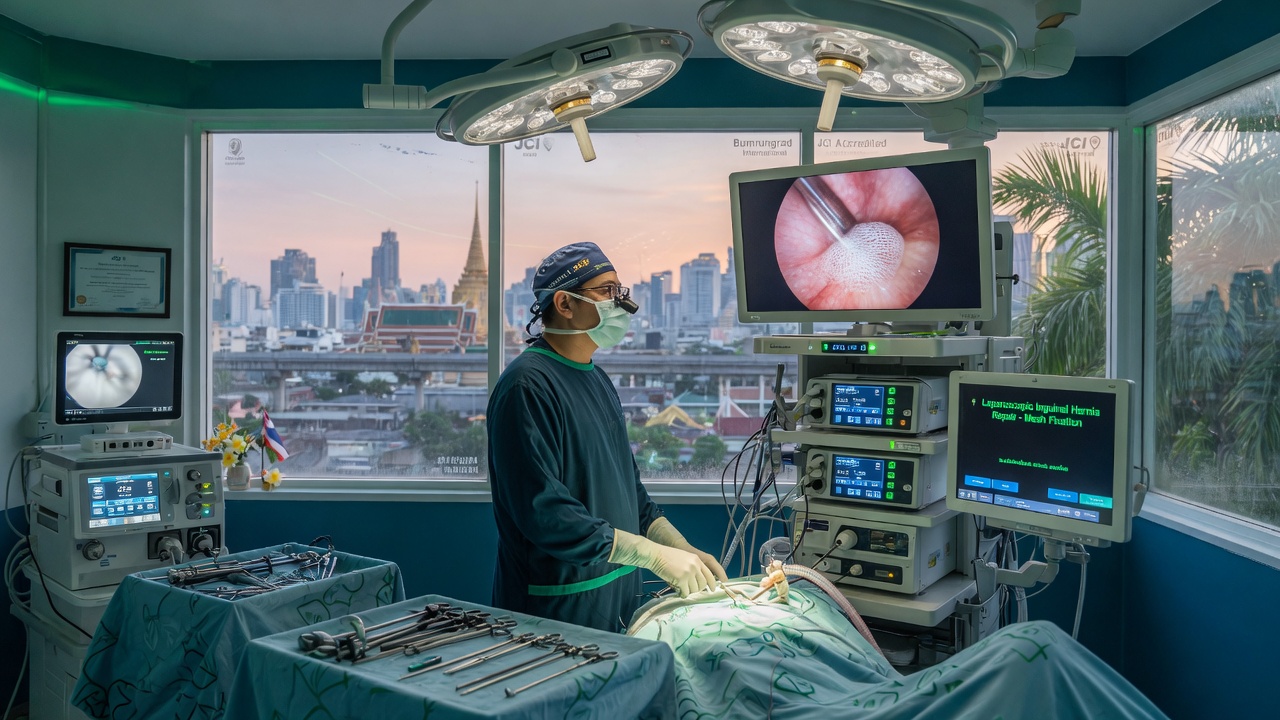
Laparoscopic hernia repair uses 3‑4 tiny incisions (5‑12 mm each) through which the surgeon inserts a 3D camera and specialized instruments. The camera provides a magnified, high‑definition view of the internal anatomy, allowing precise mesh placement with minimal tissue disruption. Recovery takes 1‑3 weeks, and scarring is minimal.
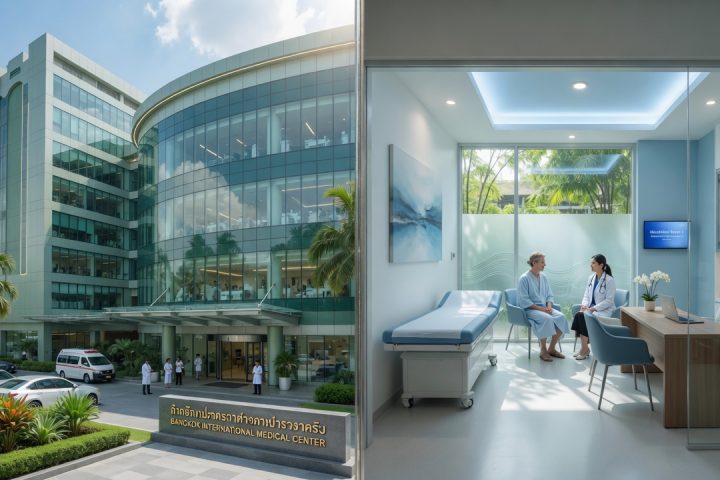
Accredited Thai hospitals such as Samitivej and Vejthani have dedicated hernia surgery departments with surgeons who perform hundreds of laparoscopic repairs annually. Both hospitals hold JCI accreditation — the gold standard for international healthcare quality.
For our complete guide on hernia surgery basics in Thailand, see Explained: Hernia Surgery in Thailand.
Laparoscopic vs Open Mesh Repair: A Detailed Comparison
The core decision in hernia repair comes down to laparoscopic versus open mesh techniques. Each approach has distinct advantages and trade-offs depending on your hernia type, health status, and recovery goals.
| Factor | Laparoscopic Mesh Repair | Open Mesh Repair |
|---|---|---|
| Success Rate | 95‑99% with experienced surgeon | 90‑97% |
| Recovery Time | 1‑3 weeks (return to desk work) | 4‑6 weeks |
| Post‑Op Pain | Mild to moderate (less tissue trauma) | Moderate to significant (larger incision) |
| Scarring | 3‑4 small scars (5‑12 mm each) | Single 4‑6 cm scar |
| Hospital Stay | 1‑2 days | 1‑3 days |
| Cost (Thailand) | $2,500‑$3,500 | $2,200‑$3,000 |
| Best For | Bilateral hernias, recurrent hernias, active patients | Large hernias, complex cases, patients unsuitable for general anesthesia |
Why Mesh Is the Gold Standard
Mesh reinforcement reduces recurrence rates dramatically compared to suture‑only repairs. Modern polypropylene mesh is permanent, integrates with your body’s tissues over time, and maintains its strength indefinitely. Studies show that mesh repair reduces recurrence from 5‑10% (suture‑only) to 1‑4% over 10 years (Boston Hernia, 2023).
TAPP vs TEP: Two Laparoscopic Techniques
Within laparoscopic repair, surgeons use two main approaches:
- TAPP (Transabdominal Preperitoneal): The surgeon enters the abdominal cavity, places the mesh behind the hernia defect, and closes the peritoneum. Best for complex or recurrent hernias.
- TEP (Totally Extraperitoneal): The surgeon works entirely outside the abdominal cavity, keeping instruments between the muscle layers. No entry into the abdomen — reduces risk of organ injury.
Both techniques achieve comparable success rates. TAPP offers better visualization for complex cases, while TEP avoids abdominal entry for patients with prior abdominal surgery.
Explore the full comparison of laparoscopic vs open mesh repair here.
Recurrence After Surgery: What You Need to Know
Hernia recurrence after modern mesh repair occurs in 1‑10% of cases, depending on the type of hernia, surgical technique, and patient factors. Laparoscopic mesh repair performed by an experienced surgeon achieves 95‑99% long‑term success. Understanding the difference between expected post-surgery sensations and signs of an actual recurrence is critical for a smooth recovery.
Top Causes of Recurrence
Three factors most commonly contribute to hernia coming back after mesh repair:
- Surgical error — inadequate mesh overlap, improper fixation, or failure to identify all hernia defects during surgery.
- Infection — mesh infections can prevent proper tissue integration, leading to loosening and eventual failure.
- Patient factors — obesity (BMI >30), smoking, chronic cough, heavy lifting too soon, and connective tissue disorders all increase risk.
How to Minimize Your Risk
- Maintain a healthy weight before and after surgery
- Quit smoking at least 4 weeks before your procedure
- Follow the 6‑2 rule: no lifting heavier than 6 pounds (2.7 kg) for 2 weeks
- Manage chronic conditions like diabetes and COPD
- Choose a surgeon who performs 100+ hernia repairs annually
For a comprehensive overview of recurrence statistics and prevention strategies, see our hernia recurrence prevention in Thailand guide.
Recognizing Signs of a Failed Repair and When to Act
Knowing what is normal after surgery versus what signals a problem is crucial for a smooth recovery. Some discomfort and swelling are expected, but certain symptoms require immediate medical attention.
Normal Post‑Op Sensations vs. Warning Signs
| Normal (Improving Over Time) | Warning Sign (Seek Help) |
|---|---|
| Mild pain at incision site, decreasing daily | Pain that worsens after day 3 |
| Minor swelling around incisions | Sudden, severe swelling or bulging |
| Slight bruising (resolves in 1‑2 weeks) | Expanding bruising or skin discoloration |
| Low‑grade fever (under 100.4°F / 38°C) | Fever over 101°F (38.3°C) |
| Constipation from pain meds | Inability to pass gas or have a bowel movement |
The #1 Symptom: Unexplained Abdominal Pain
Persistent or worsening pain — especially if it radiates, feels sharp, or interferes with sleep — warrants investigation. While some discomfort is normal, pain that escalates rather than diminishes is the most common early sign of complication.
When to Call Your Surgeon Immediately
- Sudden, severe pain that comes in waves
- Nausea and vomiting combined with abdominal pain
- Redness or warmth spreading from incision sites
- Fever over 101°F (38.3°C) — possible infection
- Return of the hernia bulge — recurrence or seroma (fluid collection)
For a full diagnostic checklist with visual guides, see our article on signs of failed hernia surgery.
Cost of Surgery in Thailand and How to Choose a Hospital
Cost is a major factor driving medical tourism, but price alone shouldn’t determine your choice. Hernia repair in Thailand typically costs $2,200‑$3,500, depending on the type of surgery and hospital tier.
Average Cost Breakdown by Surgery Type
| Surgery Type | Open Repair | Laparoscopic Repair |
|---|---|---|
| Inguinal hernia (unilateral) | $2,200‑$2,800 | $2,500‑$3,200 |
| Inguinal hernia (bilateral) | $2,800‑$3,500 | $3,000‑$3,500 |
| Umbilical hernia | $2,000‑$2,500 | $2,800‑$3,200 |
| Incisional hernia | $2,500‑$3,000 | $3,000‑$3,500 |
Prices include surgeon fees, anesthesia, hospital stay (1‑2 nights), mesh, and basic medications. Prices as of early 2026 — confirm with individual hospitals.
Factors That Influence Final Price
- Mesh type: Premium lightweight mesh or composite mesh adds $200‑$500
- Surgeon experience: Senior consultants with 20+ years may charge 15‑25% more
- Hospital accreditation: JCI‑accredited hospitals typically cost 10‑20% more than non‑accredited
- Length of stay: Extended stays for complex cases increase costs proportionally
- Additional procedures: If combined with other surgeries (e.g., gallbladder removal)
How to Choose a Hospital
Prioritize JCI‑accredited hospitals with dedicated general surgery or hernia departments. Look for surgeons who perform at least 200 laparoscopic repairs per year. Read patient reviews on platforms like MedicalTourism.com, check for English‑speaking coordinators, and ask about post‑operative follow‑up via telemedicine.
Top‑tier options include:
- Samitivej Hospital (Sukhumvit) — renowned for laparoscopic expertise
- Vejthani Hospital — specialized hernia center with English‑speaking staff
- Bumrungrad International Hospital — largest medical tourism hospital, premium pricing
For a detailed comparison of costs and hospital features at 12 JCI‑accredited facilities, see hernia surgery costs and hospital comparisons.
Your Recovery Roadmap: Diet, Exercise, and Lifestyle Changes
Recovery from hernia repair follows a predictable timeline when you follow guidelines. Most patients return to normal activities within 1‑3 weeks for laparoscopic repair and 4‑6 weeks for open repair.
Week‑by‑Week Timeline
| Week | Activities Allowed | Restrictions |
|---|---|---|
| Week 1 | Rest, walking (gentle), light housework | No lifting >6 lbs, no driving, no bending/lifting |
| Week 2 | Walking (increase duration), gentle stretching | Still no lifting >6 lbs, no sports or exercise |
| Week 3‑4 | Light exercise (walking, cycling), return to desk work | No heavy lifting >15 lbs, no contact sports |
| Week 5‑6 | Gradual return to full activity | Heavy lifting only after surgeon clearance |
| Week 6+ | Full activity, weight training (start light) | Listen to your body — stop if you feel pain |
The 6‑2 Rule Explained
The 6‑2 rule is a simple guideline: for the first 2 weeks after surgery, do not lift anything heavier than 6 pounds (approximately 2.7 kg). This protects the mesh from displacement and allows proper tissue integration. A gallon of milk weighs about 8.5 pounds — have someone else carry it. After 2 weeks, gradually increase weight as tolerated, but heavy lifting (over 15‑20 lbs) should wait until week 6.
Diet Do’s and Don’ts
Focus on high‑fiber foods: oats, fruits, vegetables, and legumes prevent constipation, which reduces straining that stresses the repair. Drink at least 8 glasses of water daily. Avoid carbonated drinks, which cause bloating and pressure on the surgical site.
The chocolate myth: You may have heard “no chocolate after hernia surgery.” The concern is that chocolate contains caffeine and theobromine, which can stimulate bowel movements. However, a small amount of high‑quality dark chocolate (1‑2 squares) is generally safe. The real priority is avoiding large amounts of caffeine and focusing on fiber‑rich foods. One cup of coffee is fine — six cups is not.
Safe Exercises to Prevent Recurrence
- Immediately: Walking — start with 5‑10 minutes, 2‑3 times daily
- Week 2‑3: Gentle stretching (avoid core twisting)
- Week 4+: Core activation exercises — pelvic tilts, dead bugs, bird dogs
- Week 6+: Full core strengthening — planks, bridges, low‑impact cardio
Exercises to avoid until cleared by surgeon: Heavy weightlifting, sit‑ups, crunches, and any exercise that increases intra‑abdominal pressure.
For detailed weekly checklists and exercise demonstration videos, see our complete recovery guide.
Limitations & Alternatives
Non‑mesh techniques have recurrence rates of 5‑15%, compared to 1‑4% with mesh — a trade-off that makes sense for some but not all patients. Every surgical decision involves trade‑offs. Acknowledging when standard approaches may not be appropriate builds trust and helps you ask the right questions.
Common Pitfalls When Choosing Hernia Surgery
- Choosing a surgeon without hernia‑specific expertise — a general surgeon who performs 20 hernia repairs per year will have different outcomes than one who does 200+
- Focusing only on cost — the cheapest hospital may use inferior mesh or lack proper accreditation, increasing recurrence and complication risks
- Ignoring pre‑existing conditions — obesity, diabetes, and smoking significantly affect healing and recurrence rates; address these before surgery
- Rushing recovery — returning to heavy lifting too soon is the single most preventable cause of hernia recurrence
When Mesh Might Not Be Best
While mesh is the gold standard for most hernias, certain situations call for alternative approaches:
- History of mesh allergy or chronic infection — non‑mesh repairs (Shouldice, Bassini) use the patient’s own tissue to reinforce the defect. These techniques have higher recurrence rates (5‑15%) but avoid foreign body complications
- Contaminated surgical field — if there’s active infection or bowel strangulation, a mesh‑free repair may be safer
- Small, asymptomatic hernias in elderly patients — watchful waiting with lifestyle modifications may be appropriate
When to Get a Second Opinion
Seek a second opinion if:
- You have a complex medical history (multiple prior surgeries, chronic conditions)
- Your hernia has recurred after a previous repair
- You’re considering non‑mesh repair
- The surgeon recommends open repair but you prefer laparoscopic (or vice versa) and you want to confirm it’s medically appropriate
Always consult a qualified surgeon to determine the best approach for your specific case.
Frequently Asked Questions
What is the 6‑2 rule for hernia recovery?
The 6‑2 rule states that for the first 2 weeks after surgery, you should not lift anything heavier than 6 pounds (2.7 kg). This protects the repair from stress during the critical initial healing phase. After 2 weeks, you can gradually increase weight as tolerated, but heavy lifting (over 15‑20 lbs) should wait until week 6. This rule applies to both open and laparoscopic mesh repairs.
How likely is it that a hernia will come back after repair?
With modern mesh techniques, the recurrence rate is 1‑10%, depending on the type of hernia, surgical approach, and patient factors. A study from Boston Hernia (2023) confirms that mesh repairs reduce long-term recurrence to 1‑4%. Laparoscopic mesh repair has a success rate of 95‑99% when performed by an experienced surgeon. Open mesh repair achieves similar rates (90‑97%). Patient factors — particularly obesity, smoking, and heavy lifting — are the strongest predictors of recurrence.
How many years does hernia mesh last?
Hernia mesh is designed to be permanent — it does not degrade over time. Modern polypropylene mesh maintains its tensile strength indefinitely, with long‑term failure rates below 5% over 10 years. The mesh integrates with your body’s tissues within 3‑6 months, becoming a permanent reinforcement structure. Most mesh‑related complications occur in the first 2 years; after that, the risk of failure is extremely low.
Why can’t you have chocolate after hernia surgery?
The myth arises because chocolate contains caffeine and theobromine, which can stimulate bowel movements and may increase the risk of constipation or straining if consumed in large quantities. However, a small amount of high‑quality dark chocolate (1‑2 squares) is generally safe. The real priority after surgery is high‑fiber foods to prevent constipation — oats, fruits, and vegetables are far more important than avoiding chocolate.
What exercises prevent hernia recurrence?
Safe exercises include walking (immediately), gentle core activation like pelvic tilts and dead bugs from week 4, and low‑impact cardio like stationary cycling after week 6. Strengthening the transversus abdominis — your deepest abdominal muscle — is key for long‑term prevention. Avoid heavy weightlifting, sit‑ups, crunches, and planks until cleared by your surgeon (typically week 6+).
How do I choose a hospital in Thailand for hernia surgery?
Prioritize JCI‑accredited hospitals with dedicated hernia or general surgery departments. Look for surgeons who perform a high volume of laparoscopic repairs (200+ per year). Read patient reviews on medical tourism platforms, check for English‑speaking coordinators, and ask about post‑operative follow‑up via telemedicine. Top options include Samitivej, Vejthani, and Bumrungrad — each offers different price points and specialization levels.
Conclusion
For patients considering hernia repair in Thailand, the combination of high success rates (95‑99% with mesh), significantly lower costs ($2,200‑$3,500), and world‑class JCI‑accredited hospitals makes it a compelling option. The best approach depends on your hernia type, health status, and preferences — but laparoscopic mesh repair is the gold standard for most cases, offering faster recovery and minimal scarring.
This guide has given you the complete decision toolkit: understand the techniques, know the risks of recurrence, recognize warning signs, plan your recovery, and choose a hospital with confidence. Use these insights in your consultation with a surgeon.
Your next step is to compare the detailed cluster articles for each topic — start with the laparoscopic vs open mesh comparison to see which technique fits your condition. Then explore costs and hospitals to find your ideal match.
This article is for informational purposes only and does not constitute medical advice. Consult a qualified surgeon for your specific condition.