
Hand Surgery in Thailand: A Complete Guide to Carpal Tunnel, Trigger Finger & More
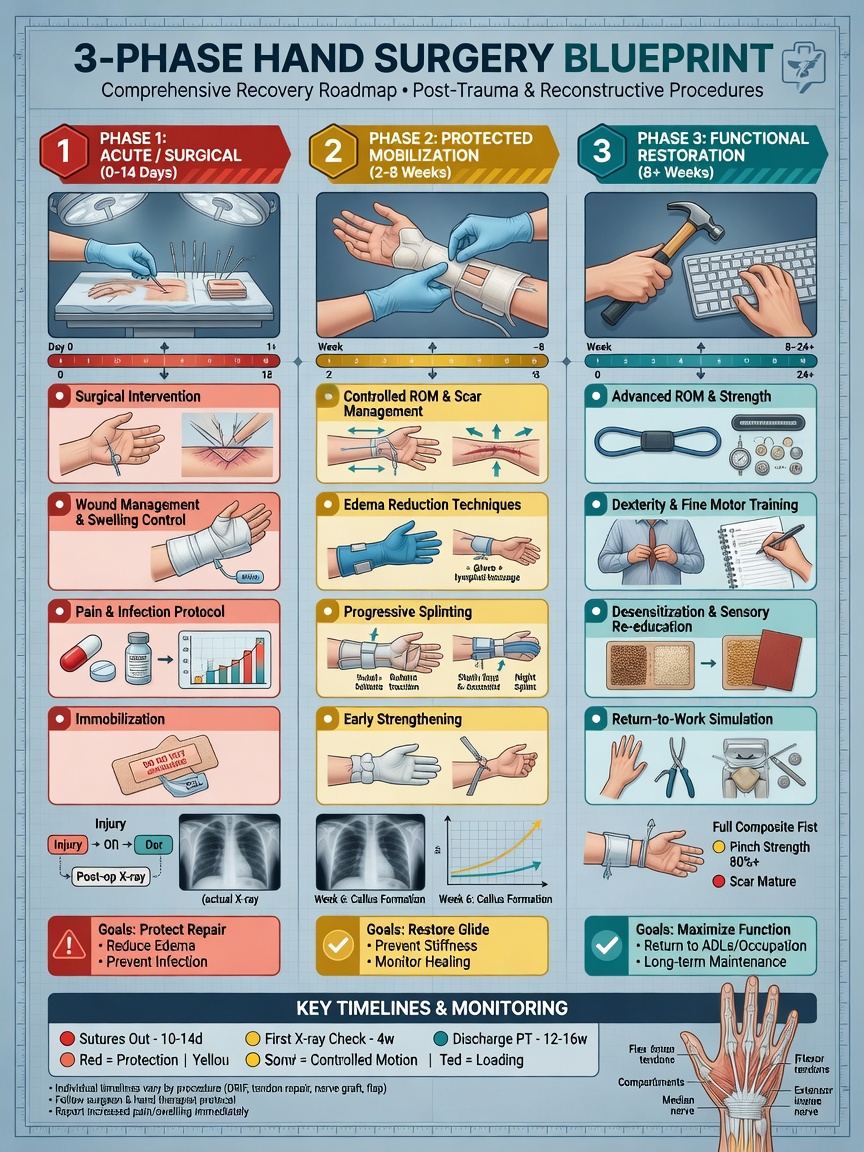
If you’re considering hand surgery – whether for carpal tunnel, trigger finger, or a tendon injury – Thailand has become a leading destination, offering high‑quality care at a fraction of Western costs. Yet navigating the options – from choosing between open and endoscopic surgery to understanding recovery timelines and hospital accreditations – can feel overwhelming. By the end of this guide, you’ll have a clear 3‑Phase Hand Surgery Blueprint – Research & Diagnosis, Procedure & Travel, Recovery & Rehab – that simplifies every step. We’ll cover the most common procedures, side‑by‑side cost comparisons, recovery expectations, minimally invasive techniques, and how to pick the right hospital and surgeon.
Key Takeaways
Hand surgery in Thailand combines board‑certified specialists, JCI‑accredited hospitals, and significant cost savings – carpal tunnel release averages $1,800–$3,000 compared to $5,000–$12,000 in the U.S.
- Carpal tunnel release has a >90% success rate, with most patients returning to light activity in 2 weeks.
- Trigger finger release is often a 15‑minute procedure under local anaesthetic.
- Tendon repair requires microsurgery and a longer recovery (6–12 weeks of therapy).
- The 3‑Phase Blueprint helps you plan from research through full recovery.
Why Consider Hand Surgery in Thailand?
Hand surgery in Thailand encompasses a range of procedures – from carpal tunnel release to tendon repair – performed by board‑certified orthopedic surgeons at internationally accredited hospitals. The country boasts over 60 JCI‑accredited hospitals (Government of Thailand), ensuring quality standards for international patients. This combination of accredited care and significant cost savings makes Thailand a compelling option for hand surgery.
What Makes Thailand a Leading Destination for Hand Surgery?
Thailand’s medical tourism sector is built on skilled surgeons, modern infrastructure, and integrated care pathways. The 3‑Phase Hand Surgery Blueprint structures your entire journey:
- Phase 1: Research & Diagnosis – Understand your condition, choose a surgeon, and plan travel.
- Phase 2: Procedure & Travel – Undergo surgery, manage hospital stay, and handle costs.
- Phase 3: Recovery & Rehab – Follow rehabilitation, timelines, and return to daily activities.
This framework ensures you never overlook a critical step – whether you’re comparing techniques, budgeting, or scheduling therapy. In the next section, we’ll dive into the three most common hand procedures available – starting with carpal tunnel syndrome.
Common Hand Surgeries Available in Thailand
Thailand offers effective surgeries for carpal tunnel, trigger finger, and tendon repair. Below we detail symptoms, procedure options, success rates, and the possibility of combined surgery.
Carpal Tunnel Release: Symptoms & Success Rates
Carpal tunnel syndrome, a compression of the median nerve at the wrist, causes numbness/tingling in the thumb, index, middle, and part of the ring finger – often worse at night (CDC carpal tunnel prevalence data). About 7.5% of Thai workers are affected (PubMed Thai prevalence study), indicating a high local prevalence that has driven surgical expertise.
Surgical release can be performed as an open procedure or as an endoscopic approach using a small camera. A Cochrane Review 2024 found that endoscopic release may allow patients to return to work about 6 days earlier, a meaningful advantage for those with desk jobs. Success rates exceed 90% for symptom relief in published studies. For patients who also have trigger finger, surgeons at Thai hospitals like Bangkok Hospital routinely treat both conditions in a single session – reducing recovery time and overall cost. The procedure typically takes 15–30 minutes under local or regional anaesthesia, with the hand usable for light tasks within days.
| Approach | Incision Size | Return to Desk Work | Cost Range |
|---|---|---|---|
| Open Release | ~2–3 cm | 2–4 weeks | $1,800–$2,500 |
| Endoscopic Release | ~1 cm | 1–2 weeks | $2,200–$3,000 |
Endoscopic release may cost slightly more but offers faster return to sedentary work.
Trigger Finger Release: A Quick Solution
Trigger finger, or stenosing tenosynovitis, occurs when a finger tendon becomes inflamed, causing locking or clicking. The NHS trigger finger guide describes release as a straightforward procedure under local anaesthetic, often taking just 15 minutes. Patients can move the finger immediately after surgery; many drive home the same day. The AAOS trigger finger evidence reports a success rate over 90% for relieving symptoms. Combined carpal tunnel and trigger finger release is routine in facilities like Bangkok Hospital and Bumrungrad.
Tendon Repair: Restoring Hand Function
Tendon repair addresses acute injuries (lacerations, sports accidents) to flexor or extensor tendons. This microsurgical procedure uses an operating microscope for precise suturing – a technique where Vejthani Hospital has particular expertise. If nerves are also damaged, nerve repair may be performed simultaneously. After surgery, the hand is immobilised in a splint, and early controlled motion begins within the first week to prevent adhesions (APTA rehabilitation guidelines). Recovery is longer – typically 6–12 weeks of therapy – but with high success in restoring function.
Now that you understand the procedures, the next crucial factor in your decision is cost. How much does hand surgery actually cost in Thailand compared to Western countries?
Cost of Hand Surgery in Thailand vs. Western Countries
As you plan Phase 2 (Procedure & Travel) of your Blueprint, understanding the full financial picture is critical. Thailand delivers significant savings while maintaining high standards.
Carpal Tunnel Surgery Cost in Thailand
Carpal tunnel surgery in Thailand typically costs $1,800 to $3,000 (Bookimed cost data), depending on the hospital and technique – endoscopic may run higher due to specialized equipment. This price usually includes surgeon fees, hospital stay, anaesthesia, and follow‑up consultations. Compare that to $5,000–$12,000 in the U.S. or £2,000–£5,000 in the UK private sector.
Several factors influence the final price. Prestigious hospitals like Bumrungrad may charge toward the higher end, while mid‑tier accredited hospitals offer the lower range. The choice between open and endoscopic technique also affects cost. Some quotes include post‑operative therapy; others charge separately. Always request an itemized breakdown when consulting.
Trigger Finger & Tendon Repair Costs
Trigger finger release costs approximately $1,200–$2,000 in Thailand. Tendon repair – a more complex microsurgical procedure – ranges from $2,500 to $5,000. Prices vary by injury extent and hospital, but even the high end of these ranges is dramatically lower than Western rates. The table below summarises average costs:
| Procedure | Thailand Cost (USD) | US Cost (USD) | UK Private Cost (GBP) |
|---|---|---|---|
| Carpal tunnel release | $1,800–$3,000 | $5,000–$12,000 | £2,000–£5,000 |
| Trigger finger release | $1,200–$2,000 | $3,000–$6,000 | £1,500–£3,000 |
| Tendon repair | $2,500–$5,000 | $10,000–$20,000 | £4,000–£8,000 |
Cost of Living: Budgeting for Your Trip
Beyond surgery, you’ll need to budget for accommodation and daily expenses. A comfortable expat lifestyle in Thailand – including a nice apartment, meals, and local transport – runs $800–$1,500 per month (see Thai government tourism information). For a 2–4 week medical stay, plan $400–$1,000 for living expenses beyond surgery costs. Can you live comfortably on $2,000 a month? Yes – this covers a comfortable apartment near a hospital ($400–$800), daily meals ($10–$15/day), and local transport. This low cost of living means you can stretch your recovery budget further.
With the costs clear, the next major concern is recovery. How long does it take to heal, and what can minimally invasive techniques offer?
Recovery Timelines and Minimally Invasive Options
Phase 3 of the Blueprint covers recovery. Clear timelines help you plan time off work, therapy, and daily activities.
Recovery After Carpal Tunnel Surgery
Most patients return to light activity within 2 weeks of carpal tunnel release, and to heavy manual work by 6–8 weeks (Systematic review of carpal tunnel recovery, 38 studies). Endoscopic procedures reduce desk‑work downtime to about 1–2 weeks compared to 2–4 weeks for open surgery. Hand therapy often begins within days – gentle range‑of‑motion exercises to prevent stiffness and optimize nerve healing. In the first week, manage swelling with ice packs and elevation; pain typically subsides within a few days.
Recovery After Trigger Finger Surgery
After trigger finger release, you can move the finger immediately. Many patients return to desk work the next day; heavy manual work typically resumes in 2–4 weeks. The finger may feel stiff for a few weeks, but nearly full function returns by 4–6 weeks.
Recovery After Tendon Repair Surgery
Tendon repair requires the most disciplined recovery. The hand is immobilised in a splint for 4–6 weeks, but early controlled motion starts within the first week to prevent adhesions. Hand therapy is critical here – physical therapists guide you through protected motion exercises like the Duran and Kleinert protocols (APTA). Return to light activity: 6–8 weeks; full strength: 12+ weeks. Compliance with therapy directly impacts outcomes.
| Procedure | Light Activity | Desk Work | Heavy Manual Work |
|---|---|---|---|
| Carpal tunnel (open) | 2 weeks | 2–4 weeks | 6–8 weeks |
| Carpal tunnel (endoscopic) | 1–2 weeks | 1–2 weeks | 6–8 weeks |
| Trigger finger release | Immediate | Next day | 2–4 weeks |
| Tendon repair | 6–8 weeks | 6–8 weeks | 12+ weeks |
Minimally Invasive Techniques
Minimally invasive carpal tunnel surgery uses an endoscope to cut the transverse carpal ligament through a small incision. Samitivej Hospital specialises in this technique, which correlates with faster return to work and smaller scars. For tendon repair, microsurgery offers higher precision and may reduce adhesion risk – especially important for musicians, artisans, or anyone requiring fine motor skills. Note: while trigger finger release is a 15‑minute procedure, the recovery still takes days to weeks; “15 minutes” refers to the surgical time, not total healing.
Knowing the procedures, costs, and recovery, the next step is selecting the right surgeon and hospital. Let’s walk through how to make that decision.
How to Choose the Right Hospital and Surgeon
Phase 1 of your Blueprint includes hospital/surgeon selection. Thailand’s top facilities have dedicated hand surgery teams and JCI accreditation.
Top Hospitals in Thailand for Hand Surgery
| Hospital | Key Strength | Hand Surgery Focus |
|---|---|---|
| Bumrungrad International Hospital | Thailand’s largest private hospital; JCI‑accredited; treats 520,000+ international patients/year | Dedicated hand surgery team |
| Bangkok Hospital | Part of BDMS network; high surgical volume | Combined carpal tunnel/trigger finger procedures |
| Samitivej Hospital | Known for minimally invasive techniques | Endoscopic carpal tunnel release |
| Vejthani Hospital | Specialised orthopedic centre | Microsurgery and tendon repair |
(Bumrungrad hand surgery page, Vejthani hand surgery article, Samitivej minimally invasive guide)
Criteria for Selecting a Hand Surgeon
To verify a surgeon’s credentials, check the hospital’s online profiles and the Joint Commission International database. You can search for accredited facilities at the JCI website. Look for these qualifications:
- Board certification in orthopedics or plastic surgery with a hand surgery subspecialty.
- Experience: How many carpal tunnel or trigger finger releases does the surgeon perform annually?
- Patient reviews – platforms like Google Reviews, MyMediTravel, and hospital‑specific feedback pages provide real patient insights.
- Language support: English‑speaking coordinators at all JCI‑accredited hospitals.
Bumrungrad treats over 520,000 international patients annually – experience with foreign patients means streamlined communication and billing.
Questions to Ask Before Your Surgery
- What is the success rate of this procedure in your hospital?
- Do you offer endoscopic or minimally invasive options?
- What is included in the quoted price (hospital stay, medications, follow‑up)?
- What is the typical recovery timeline for my specific case?
These questions help you compare options and avoid surprises.
Limitations & Alternatives
Even with the best preparation, understand when surgery may not be the first step and what alternatives exist. This builds confidence in your decision.
When Hand Surgery May Not Be Necessary
For mild carpal tunnel – wrist splints, activity modification, and corticosteroid injections can relieve symptoms. Studies suggest about 50% of mild carpal tunnel cases respond adequately to splinting alone (AAOS). For mild trigger finger (intermittent locking), rest, NSAIDs, and a steroid injection often suffice. The AAOS trigger finger treatment options describes these non‑surgical approaches. Minor tendon strains may heal with rest, immobilisation, and physical therapy. Surgery is not always the first step – discuss your grade of severity with a specialist.
Alternatives to Surgery
- Physical therapy and hand exercises – strengthen muscles, improve range of motion.
- Ergonomics and workplace adjustments – wrist supports, keyboard changes.
- Injection therapy – corticosteroids for inflammation; platelet‑rich plasma (PRP) is emerging as a promising treatment for tendon healing, with some studies showing reduced recovery time after repair (PubMed PRP tendon study). These may delay but not eliminate the need for surgery in advanced cases.
When to Seek a Second Opinion
If you’re unsure about a diagnosis or treatment plan, or if a quoted price seems unusually high/low, get a second opinion. Reputable Thai hospitals encourage this practice. Your Blueprint’s Phase 1 includes consulting multiple experts – it’s a sign of thorough care, not distrust.
Frequently Asked Questions
Is Thailand good for orthopedic surgery?
Yes, Thailand is excellent for orthopedic surgery. The country has over 60 JCI‑accredited hospitals (Government of Thailand, 2024), and many have dedicated hand surgery centres. Thai orthopedic surgeons are often trained internationally, and patient outcomes for carpal tunnel, trigger finger, and tendon repair are comparable to Western standards. This combination of quality and affordability makes Thailand a top destination for medical travelers.
How much does carpal tunnel surgery cost in Thailand?
Carpal tunnel surgery in Thailand typically costs $1,800 to $3,000, depending on the hospital and technique (Bookimed, 2025). Endoscopic procedures may be slightly more expensive than open release due to specialized equipment. This price usually includes surgeon fees, hospital stay, anaesthesia, and follow‑up consultations – a fraction of the $5,000–$12,000 typical in the U.S.
Can you have carpal tunnel surgery and trigger finger surgery at the same time?
Yes, it’s common to have both surgeries in one session. If you have both carpal tunnel syndrome and trigger finger, your surgeon can perform a combined carpal tunnel release and trigger finger release simultaneously under the same anaesthetic. This approach reduces overall recovery time because you heal once instead of twice. Hospitals like Bangkok Hospital and Bumrungrad routinely offer this combination to simplify the patient’s journey.
What is the recovery time for carpal tunnel and trigger finger surgery?
Recovery varies by procedure. After carpal tunnel release, most patients return to light activity within 2 weeks and to heavy manual work by 6–8 weeks (systematic review, 2018). After trigger finger release, you can move the finger immediately and often return to desk work the next day. Tendon repair requires 4–6 weeks of splinting and several months of therapy before full function returns.
How long does it take to heal from carpal tunnel and trigger finger surgery?
Healing time depends on the surgery. For carpal tunnel, you’ll have stitches removed in 10–14 days, with full nerve healing over several months as the nerve regenerates. For trigger finger, the finger may feel stiff for a few weeks, but most patients have full function by 4–6 weeks. Hand therapy can accelerate both recoveries by preventing stiffness and scar tissue formation.
Conclusion
For readers considering hand surgery, Thailand offers an attractive combination of accredited hospitals, skilled surgeons, and significant cost savings. The 3‑Phase Hand Surgery Blueprint – Research & Diagnosis, Procedure & Travel, Recovery & Rehab – helps you navigate each stage confidently. Whether you need carpal tunnel release (averaging $1,800–$3,000 and a 2‑week recovery to light activity) or more complex tendon repair, Thailand’s medical infrastructure is well‑equipped.
The Blueprint is your decision‑making tool: start with Phase 1 by consulting with a JCI‑accredited hospital and an experienced hand surgeon. Use the questions we’ve listed to evaluate your options. Phase 2 covers the procedure and budgeting, and Phase 3 ensures you plan for recovery. This structure takes the guesswork out of a major medical decision.
Ready to take the next step? Begin your research by visiting the websites of hospitals like Bumrungrad, Bangkok Hospital, or Samitivej to review their hand surgery programs. Discuss your condition with a qualified surgeon – they can provide a personalised treatment plan and cost estimate. Your path to restored hand function starts today.
This content is for informational purposes only and is not a substitute for professional medical advice. Always consult a qualified healthcare professional for personal medical decisions.