ACL Reconstruction in Thailand: Graft Choices, Rehab, Recovery & Travel Planning
You’ve torn your ACL and you know surgery is ahead. But between choosing a graft, planning rehab, and considering Thailand for medical tourism, the decisions can feel overwhelming — especially when a mistake could mean months of recovery setback. The graft is weakest at just 6 weeks, and flying home too soon can put your entire recovery at risk. Without a clear roadmap, many patients end up with avoidable complications or higher costs.
By the end of this guide, you’ll have a step‑by‑step plan to choose the right graft, follow the correct rehab, and safely travel for ACL reconstruction in Thailand — with expert‑backed evidence every step of the way. We’ll cover graft comparisons, the 6‑week vulnerability window, rehab milestones, cost breakdowns, destination safety, and travel logistics, so you can make an informed decision with confidence.
Important: This content is for informational purposes only and does not replace professional medical advice. Always consult your orthopedic surgeon before making decisions about surgery, rehabilitation, or travel plans.
Key Takeaways
ACL reconstruction in Thailand can save 50–70% compared to Western countries while maintaining high quality through JCI‑accredited hospitals.
- The 6‑Week Vulnerability Window – Your graft is weakest at 6–8 weeks due to cellular remodeling; protect it by avoiding pivoting and jumping.
- Autograft vs. Allograft – Autograft has lower retear rates (3–12%) but longer recovery; allograft costs more and heals slower.
- Safe travel requires at least 7–10 days in Thailand and waiting 2 weeks before flying (with DVT precautions).
Graft Choices: Autograft, Allograft, or Hybrid – What Works Best?
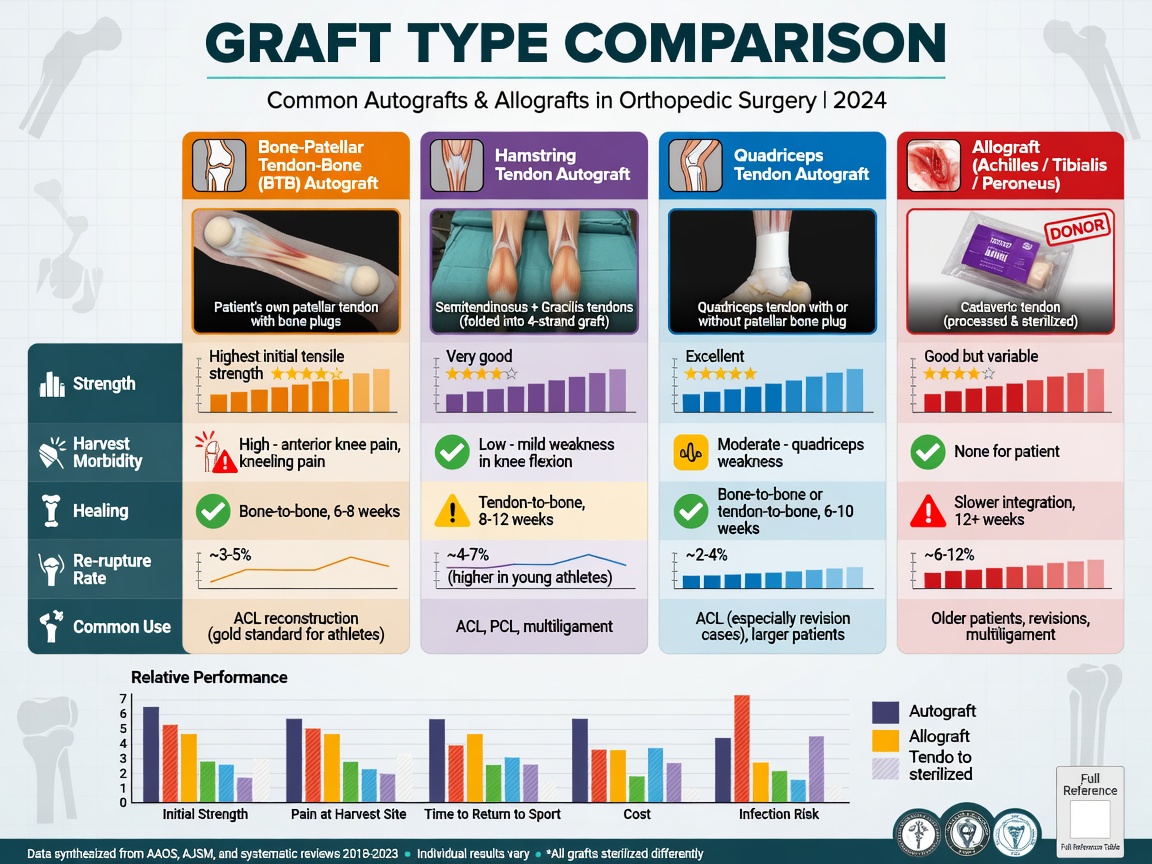
Choosing the right graft for your ACL reconstruction is the single most important decision you’ll make — it directly impacts healing time, retear risk, and long‑term function. Autograft (your own tissue) and allograft (donor tissue) have distinct trade‑offs: autograft heals faster but requires harvesting from another tendon, while allograft avoids secondary surgery but has higher failure rates (3–12% vs 2–3× higher, NCBI graft comparison review, 2022). Understanding these differences is essential before comparing costs or planning travel to Thailand.
Autograft Options: Patellar, Hamstring, and Quadriceps Tendon
Autograft ACL reconstruction uses your own tendon tissue, offering the most predictable healing and lowest retear rates. The three primary options each have distinct advantages.
The patellar tendon autograft — a bone‑tendon‑bone graft from the kneecap — remains the gold standard for athletes. Bone‑to‑bone healing provides the strongest initial fixation, making it ideal for high‑demand sports like soccer and basketball. However, it carries a risk of anterior knee pain and kneeling discomfort, which can be problematic for occupations requiring frequent kneeling.
The hamstring tendon autograft avoids anterior knee pain but has slower graft incorporation. It may reduce knee flexion strength, though most recreational athletes don’t notice the deficit. A 2022 systematic review found hamstring grafts have slightly higher retear rates (5–12%) compared to patellar tendon (3–8%), but lower donor site morbidity (NCBI graft comparison review, 2022).
The quadriceps tendon autograft has emerged as a strong option for patients over 40. It offers a larger cross‑sectional area than hamstring grafts and less donor site pain than patellar tendon. A 25‑year‑old soccer player would likely benefit from patellar tendon autograft, while a 45‑year‑old weekend warrior may prefer quadriceps tendon to minimize anterior knee pain.
All autograft options follow a similar healing timeline: the graft is weakest at 6–8 weeks due to cellular necrosis and remodeling, reaches 50–60% of final strength by 12 weeks, and achieves full strength at 9–12 months.
While autograft offers excellent healing potential, allograft provides an alternative that avoids donor site surgery — but with important trade‑offs.
Allograft: Donor Tissue Options and Considerations
Allograft ACL reconstruction uses processed donor tissue, eliminating the need for tendon harvesting from your own body. Common sources include patellar, Achilles, and tibialis posterior tendons, all processed by tissue banks regulated by the American Association of Tissue Banks to reduce disease transmission risk.
The primary advantage is faster initial recovery — there’s no second surgical site to heal, so patients often regain range of motion more quickly. However, this comes at a cost: allograft retear rates are 2–3 times higher than autograft due to slower cellular repopulation and possible immune reaction (NCBI graft comparison review, 2022). Healing time extends to 12–18 months, meaning the vulnerable period lasts longer.
Allograft is best suited for:
- Revision ACL surgery — when a previous autograft has failed
- Patients over 40 — lower activity demands reduce failure risk
- Multi‑ligament reconstructions — avoiding multiple harvest sites
- Patients wanting faster initial rehab — no donor site to recover
A 55‑year‑old recreational golfer may prefer allograft to avoid secondary tendon harvesting and start rehab sooner. Be aware that allograft adds $1,000–$3,000 to the total surgery cost due to graft processing fees.
For patients who want the best of both worlds, hybrid grafts combine autograft and allograft to balance healing speed with reduced donor site morbidity.
Hybrid Grafts: Combining Autograft and Allograft
Hybrid ACL graft reconstruction uses your own tissue as the primary bundle and augments it with donor tissue — an emerging strategy that’s gaining traction, particularly for patients over 40.
The concept is straightforward: the autograft portion provides reliable biological incorporation and strength, while the allograft adds volume without requiring a second harvest site. For example, a surgeon might use autograft hamstring for the anteromedial bundle and allograft for the posterolateral bundle, creating a graft that mimics the native ACL’s two‑bundle anatomy.
Early evidence from the 2022 NCBI review shows hybrid grafts achieve retear rates similar to autograft alone, with the added benefit of reduced donor site morbidity. A 42‑year‑old tennis player with moderate activity may benefit from this approach — faster initial recovery than pure autograft, but lower failure risk than pure allograft.
The caveat: long‑term data is still limited. Most studies have short follow‑up periods, so the 10‑year outcomes aren’t yet established. For patients under 30 with high activity demands, autograft remains the standard.
To help you compare all options at a glance, see the table below.
Comparing Graft Choices at a Glance
| Graft Type | Source | Healing Time | Retear Rate | Best For | Drawbacks |
|---|---|---|---|---|---|
| Autograft (Patellar) | Your patellar tendon | 9–12 months | 3–8% | Athletes, high‑demand | Anterior knee pain |
| Autograft (Hamstring) | Your hamstring tendon | 9–12 months | 5–12% | Recreational athletes | Hamstring weakness |
| Autograft (Quadriceps) | Your quadriceps tendon | 9–12 months | 3–7% | Patients over 40 | Larger incision |
| Allograft | Cadaver tissue | 12–18 months | 6–24% | Older patients, revision | Higher failure risk, cost |
| Hybrid | Your tissue + donor | 9–12 months | Similar to autograft | Over 40, moderate activity | Limited long‑term data |
Healing times assume typical rehab compliance; individual results vary. The right graft depends on your age, activity level, and risk tolerance. Autograft remains the standard for athletes, while hybrid grafts offer an innovative middle ground for older patients.
Now that you understand your graft options, the next critical step is navigating the rehabilitation timeline — especially the 6‑week vulnerability window we introduced earlier.
ACL Rehabilitation Timeline: From Pre‑Op to Return to Sport
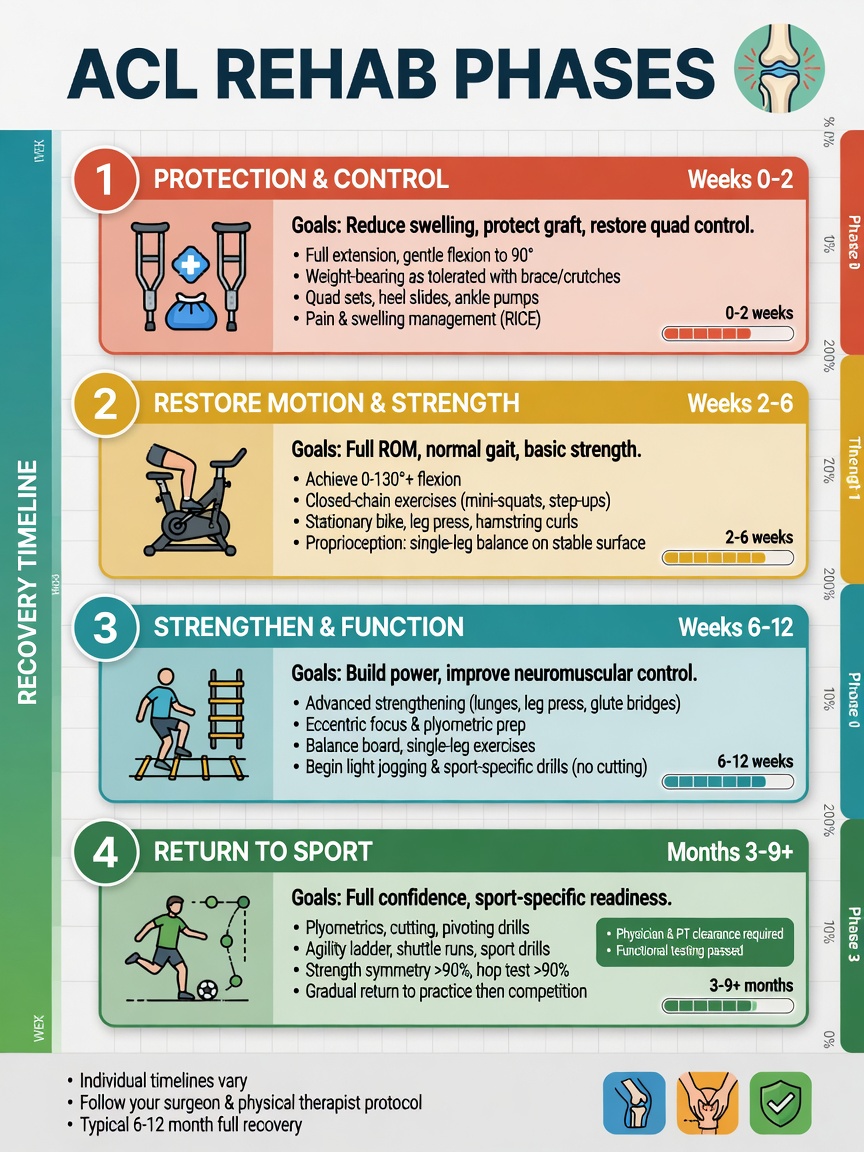
ACL rehabilitation follows a structured four‑phase protocol spanning 9–12 months. The first two weeks are about controlling swelling and regaining extension; weeks 3–6 focus on strengthening while protecting the graft during its most vulnerable period. Understanding and adhering to this timeline is critical to avoid graft failure and achieve a safe return to sport.
The 6‑Week Vulnerability Window – Why Your Graft Is Weakest Then
The graft is weakest at 6 weeks due to a biological process called ischemic necrosis. After reconstruction, the graft loses its blood supply — cells die, and the tissue becomes a scaffold that must be gradually repopulated with new cells and collagen.
Here’s what happens inside your knee during this period:
- Weeks 1–3: The graft has no blood supply. Cells begin to die, leaving a collagen scaffold.
- Weeks 4–6: New blood vessels start forming (revascularization), but the graft is structurally weak — only 30–40% of its final strength.
- Weeks 6–8: Collagen remodeling begins, but the graft remains highly vulnerable to rupture from sudden pivoting or jumping.
The NIH explanation of graft weakest period confirms that after ACL reconstruction, the graft is weakest at 6–8 weeks due to cellular necrosis and collagen remodeling, after which it gradually strengthens over 6–12 months (NIH, 2024).
Imagine the graft as a rope that is slowly being replaced fiber by fiber — during the first 6 weeks, it’s like a fraying rope that can snap with sudden tension. This is why no heavy resistance, pivoting, or jumping is allowed until at least 12 weeks post‑surgery.
This vulnerability window directly impacts your travel planning: you need to be in a stable environment with access to rehab during this critical period. Flying home too soon or staying in unsuitable accommodation can compromise your recovery.
Knowing why the graft is vulnerable leads directly to the exercises you can safely perform in each phase.
Phase‑by‑Phase Rehab Protocol (Weeks 1–36)
ACL rehabilitation exercises follow a progressive structure, with each phase building on the previous one. A systematic review of ACL rehabilitation phases from 2022 defines four rehab phases with specific exercise criteria for progression (PubMed, 2022).
Phase 1 (Weeks 1–2): Protect and Mobilize
- Goals: Reduce swelling, regain full knee extension, activate quadriceps
- Exercises: Heel slides, quad sets, straight leg raises, ankle pumps
- Restrictions: No weight‑bearing if meniscus repair was performed
- Medical tourist note: You’ll be in Thailand for this phase — your hospital will provide the initial protocol
Phase 2 (Weeks 3–6): Strengthen While Protecting
- Goals: Improve strength, maintain range of motion, protect the graft during its weakest period
- Exercises: Stationary bike (low resistance), mini‑squats, calf raises, light hamstring curls
- Restrictions: No pivoting, no jumping, no heavy resistance
- Progress only if pain‑free
Phase 3 (Months 2–4): Neuromuscular Control
- Goals: Develop single‑leg strength, balance, and movement control
- Exercises: Lunges, step‑ups, balance board, lateral band walks, pool walking
- Restrictions: Avoid contact sports and sudden direction changes
- Progress to light jogging only if cleared by your surgeon
Phase 4 (Months 5–9): Return to Sport Preparation
- Goals: Prepare for sport‑specific demands with plyometrics and agility drills
- Exercises: Plyometric jumps, agility ladder, sport‑specific drills, cutting movements
- Criteria for progression: 90% quadriceps strength symmetry, hop test with less than 10% deficit
- Full return to sport typically at 9–12 months
At month 3, a soccer player should be doing single‑leg squats and lateral shuffles before attempting ball drills. Progress only if pain‑free — pushing through pain during the vulnerable window increases failure risk.
To see your entire rehab journey on one page, refer to the milestones table below.
Week‑by‑Week Milestones Table
| Week | Milestones | Restrictions |
|---|---|---|
| 1–2 | Full extension, 90° flexion, no swelling | No weight‑bearing (if meniscus repair) |
| 3–6 | 120° flexion, single‑leg balance 10 sec | No pivoting, no jumping |
| 7–12 | Walk without limp, single‑leg squat 60° | Progress to jogging at 12 weeks |
| 13–24 | Jogging, lateral movements, plyometrics | Avoid contact sports |
| 25–36 | Sport‑specific drills, 90% strength symmetry | Full return at 9–12 months |
Milestones are averages — individual progression depends on graft type, pre‑operative fitness, and rehab adherence. The most common rehab mistake is rushing phase 3: patients feel good at 3 months, but the graft is still only 50–60% of final strength.
Rehabilitation is a marathon, not a sprint. Adhering to the phase progression and protecting the graft during the 6‑week vulnerability window are the most effective ways to prevent failure and get back to the activities you love.
With the right rehab plan, you can expect a successful recovery — but what does that actually look like in terms of outcomes?
Can You Fully Recover? Outcomes and Influencing Factors
The vast majority of patients who undergo ACL reconstruction return to some level of sport, but full recovery — defined as returning to pre‑injury performance with no re‑injury — depends on multiple modifiable and non‑modifiable factors. Here’s what the evidence says and how you can maximize your odds.
Return‑to‑Sport Statistics: What the Research Shows
According to the American Academy of Orthopaedic Surgeons, 82–90% of athletes return to some sport after ACL reconstruction, but only 55–65% return to their competitive pre‑injury level (AAOS, 2023). The gap between “returning to sport” and “returning to your sport at your previous level” is significant — and often comes down to incomplete rehab or insufficient quadriceps strength.
Graft failure rates vary by type:
- Autograft: 3–12% retear rate
- Allograft: 6–24% retear rate (2–3× higher)
- Hybrid: Similar to autograft (limited long‑term data)
The NIH explanation of graft weakest period notes that returning to sport before 9 months increases graft failure risk three‑fold (NIH, 2024). This is one of the most important numbers in this entire guide: patience is not optional — it’s protective.
Factors That Affect Your Recovery Success
Several factors influence whether you’ll achieve full recovery:
Non‑modifiable factors:
- Age: Younger patients (under 25) have higher re‑injury rates, partly due to higher activity levels
- Graft type: As discussed, autograft has lower failure rates
- Pre‑existing knee health: Prior injuries or arthritis affect outcomes
Modifiable factors (you control these):
- Rehab compliance: The single biggest controllable factor. Patients who complete all four phases have significantly better outcomes
- Timing of return to sport: Waiting 9–12 months reduces failure risk by 66%
- Quadriceps strength symmetry: Target 90% strength in the surgical leg compared to the non‑surgical leg before returning to sport
- Hamstring‑to‑quadriceps strength ratio: Strong hamstrings reduce ACL load during cutting and landing
- Neuromuscular training: Improves movement patterns and reduces re‑injury risk
A 2022 systematic review found that patients who achieved 90% quadriceps strength symmetry before returning to sport had a 50% lower re‑injury rate compared to those who returned with less than 80% symmetry (systematic review of ACL rehabilitation phases, PubMed, 2022).
How to Minimize Graft Failure Risk
- Complete all four rehab phases — don’t cut corners after feeling “good enough” at 4 months
- Strengthen your hamstrings — they act as a secondary ACL stabilizer
- Incorporate neuromuscular training — improve landing mechanics and cutting technique
- Wait for objective clearance — pass the hop test and achieve 90% strength symmetry before returning to sport
- Use a brace only if recommended — bracing is controversial and not standard for most patients
Full recovery is achievable for most patients, but it requires commitment to a complete rehab protocol and patience to wait until the graft has fully healed. The 6‑week vulnerability window is just the beginning — the entire process takes 9–12 months.
While the medical decision‑making is complex, one factor that often simplifies the choice is cost — and ACL surgery in Thailand offers significant savings.
How Much Does ACL Surgery Cost in Thailand?
One of the main reasons patients choose Thailand for ACL reconstruction is cost — savings of 50–70% compared to the U.S., UK, or Australia. But the total price varies widely based on graft type, hospital choice, and length of stay. Here’s a transparent breakdown.
Average Price Range for ACL Reconstruction in Thailand
According to Statista (2024), ACL reconstruction in Thailand averages $8,500, with a range of $4,500–$12,000 depending on the factors discussed below. This compares to $20,000–$50,000 in the United States and £10,000–£15,000 in the UK.
What’s Included in the Cost? A Detailed Breakdown
| Component | Cost Range |
|---|---|
| Surgeon fee | $2,000–$5,000 |
| Hospital fee | $1,500–$4,000 |
| Graft cost | $500–$2,000 (allograft adds $1,000–$3,000) |
| Anesthesia | $500–$1,000 |
| Implants/screws | $500–$1,000 |
| Rehab (first week) | $300–$800 |
| Total | $4,500–$12,000 |
Most hospitals provide an all‑inclusive package that covers surgeon fees, hospital stay, graft, anesthesia, and implants. Always ask for a detailed quote before booking — some packages exclude rehab or follow‑up appointments.
Cost Comparison: Thailand vs. USA, UK, Australia
| Country | Average Cost | Range |
|---|---|---|
| Thailand | $8,500 | $4,500–$12,000 |
| USA | $35,000 | $20,000–$50,000 |
| UK | $15,000 (£12,000) | £10,000–£15,000 |
| Australia | $20,000 | $15,000–$25,000 |
These figures represent the surgical cost only — they don’t include travel, accommodation, or lost income during recovery. When factoring in a 2‑week stay in Thailand, total expenses typically range from $6,000–$15,000, still significantly less than Western surgical costs alone.
Factors That Influence the Final Price
- Graft type: Allograft adds $1,000–$3,000 due to tissue processing fees
- Hospital tier: Premium hospitals (Bumrungrad, Bangkok Hospital) charge more; budget hospitals offer lower rates
- Length of stay: Longer hospital stays increase costs; most patients stay 3–5 days post‑surgery
- Surgeon reputation: Top orthopedic surgeons with international training command higher fees
- Additional procedures: Meniscus repair or multi‑ligament reconstruction adds $2,000–$5,000
While cost is a powerful motivator, always prioritize quality. A cheaper surgery that results in graft failure will cost far more in the long run — both financially and in terms of recovery time.
But cost alone isn’t enough — you also need to be confident that Thailand’s medical infrastructure meets international safety standards.
Is Thailand a Safe Destination for ACL Surgery?
Thailand has established itself as a leading destination for medical tourism, particularly for orthopedic procedures. As of 2025, Thailand has 57 JCI‑accredited hospitals and clinics — more than any other country in Southeast Asia — ensuring compliance with international patient safety standards (JCI, 2025). But safety isn’t just about accreditation — it’s about choosing the right hospital and surgeon for your specific needs.
Accredited Hospitals and International Standards (JCI)
JCI accreditation (Joint Commission International) is the gold standard for hospital quality. It means the hospital meets rigorous international standards for patient safety, infection control, and clinical outcomes. Thailand’s JCI‑accredited hospitals for ACL surgery include:
| Hospital | Location | Key Features |
|---|---|---|
| Bumrungrad International | Bangkok | 55+ JCI accreditations, dedicated orthopedic center, English‑speaking staff |
| Bangkok Hospital | Bangkok | JCI‑accredited, sports medicine clinic, advanced arthroscopy technology |
| Samitivej Hospital | Bangkok | JCI‑accredited, rehabilitation center, pediatric and adult orthopedics |
| Phyathai Hospital | Bangkok | JCI‑accredited, affordable packages, experienced ACL surgeons |
These hospitals follow international protocols for graft selection, surgical technique, and post‑operative care. They also provide comprehensive packages that include pre‑operative consultation, surgery, hospital stay, and initial rehab.
Top Orthopedic Surgeons for ACL in Thailand
Many of Thailand’s top orthopedic surgeons have trained or practiced internationally — in the US, UK, Australia, or Germany. When researching surgeons, look for:
- Board certification in orthopedic surgery
- Fellowship training in sports medicine or knee surgery
- Experience with your chosen graft type
- Patient reviews and outcome data
- English proficiency — most top surgeons are fluent
Most JCI‑accredited hospitals allow you to request a specific surgeon. Don’t hesitate to ask about their experience with ACL reconstruction, their preferred graft type, and their retear rates.
Patient Safety: Infection Rates, Outcomes, and Support
Thailand’s top hospitals maintain infection rates comparable to Western hospitals — typically below 1% for clean orthopedic procedures. They also offer:
- Dedicated medical tourism coordinators who handle logistics
- English‑speaking nursing staff and interpreters
- Post‑discharge support via phone or video consultation
- Transfer agreements with international insurance providers
Common concerns among medical tourists include communication barriers and continuity of care. However, Thailand’s medical tourism infrastructure is mature — hospitals have been serving international patients for decades and have refined their processes accordingly.
That said, safety also depends on your choices. A budget hospital without JCI accreditation may not offer the same standards. Always verify accreditation, read recent patient reviews, and ask about infection rates and complication management protocols.
Travel Planning: When to Fly, Where to Stay, and How to Prepare
Planning the logistics of traveling abroad for ACL surgery is just as important as the medical decisions. Getting the timing wrong — flying too soon, staying in unsuitable accommodation, or failing to prepare for the post‑operative period — can compromise your recovery.
How Long Should You Stay in Thailand After ACL Surgery?
Most surgeons recommend staying in Thailand for at least 7–10 days after surgery. Here’s why:
- Days 1–3: You’ll be in the hospital for monitoring, pain management, and initial physiotherapy
- Days 4–7: You’ll move to nearby accommodation for follow‑up appointments and continued rehab
- Days 8–10: Your surgeon will assess your progress, remove stitches (if non‑dissolvable), and clear you for travel
Staying longer — up to 2 weeks — is advisable if you have a meniscus repair or multi‑ligament reconstruction, as these procedures require more intensive early rehab and monitoring.
Flying Home Safely: DVT Prevention and Timing
Flying too soon after ACL surgery carries two main risks: deep vein thrombosis (DVT) and compromised graft healing due to prolonged immobility.
DVT risk: Surgery itself increases DVT risk, and long‑haul flights compound it. The CDC recommends waiting at least 2 weeks after major orthopedic surgery before flying. During the flight:
- Wear compression stockings (your surgeon can prescribe these)
- Perform ankle pumps every 30 minutes
- Request an aisle seat for easier movement
- Stay hydrated — avoid alcohol and caffeine
- Consider a low‑molecular‑weight heparin injection before the flight (consult your surgeon)
Graft protection: During the first 2 weeks, your knee will be swollen and your range of motion limited. Prolonged sitting in a cramped airplane seat can increase swelling and stiffness. Book a premium economy or business class seat if possible — the extra legroom makes a significant difference.
Choosing Accommodation Near Your Hospital
Your accommodation during the first week post‑discharge is critical. Look for:
- Proximity to your hospital — ideally within 15 minutes for follow‑up appointments
- Ground floor or elevator access — stairs are difficult after knee surgery
- Accessible bathroom — walk‑in shower with a seat, grab bars
- Kitchenette — for meal preparation and medication storage
- Quiet environment — sleep is essential for healing
Many hospitals have partnerships with nearby serviced apartments that cater to medical tourists. These often include hospital transfer services, nursing support, and discounted rates for extended stays.
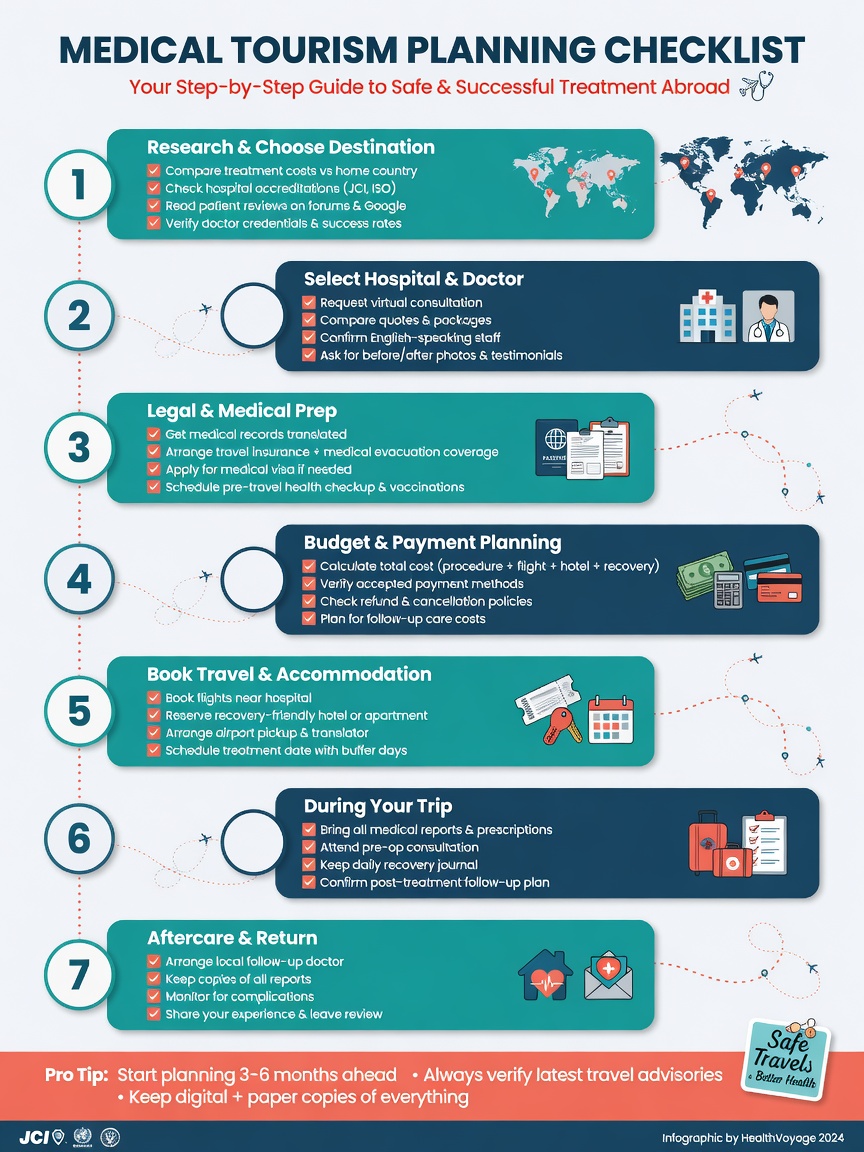
Complete Medical Tourism Planning Checklist
Before You Go (4–6 weeks before surgery):
- [ ] Obtain medical records and imaging (MRI, X‑rays) for the surgeon
- [ ] Get pre‑operative clearance from your primary care physician
- [ ] Arrange travel insurance that covers medical evacuation
- [ ] Book flights with flexible cancellation policies
- [ ] Reserve accommodation near the hospital
- [ ] Arrange for someone to accompany you (recommended)
- [ ] Fill prescriptions for post‑operative medications
- [ ] Pack compression stockings, loose‑fitting pants, slip‑on shoes
During Your Stay (Days 1–10):
- [ ] Attend all follow‑up appointments
- [ ] Complete initial physiotherapy sessions
- [ ] Confirm travel clearance with your surgeon
- [ ] Obtain a medical certificate for airport security (implants may trigger metal detectors)
- [ ] Arrange airport assistance (wheelchair service)
After Returning Home (Weeks 2–12):
- [ ] Transfer care to a local physical therapist
- [ ] Continue the rehab protocol provided by your Thai surgeon
- [ ] Schedule virtual follow‑ups with your Thai surgeon (most offer this)
- [ ] Monitor for signs of DVT (swelling, pain, redness in calf)
- [ ] Contact your surgeon immediately if you experience fever, increased pain, or wound drainage
Limitations and Alternatives
No surgical journey is without risks. Understanding the limitations of ACL reconstruction in Thailand — and when to choose alternatives — helps you make an informed decision.
Common Pitfalls That Can Lead to Graft Failure
- Returning to sport too early: The single biggest preventable cause of graft failure. Returning before 9 months increases failure risk three‑fold (NIH, 2024). Even if you feel ready, your graft isn’t.
- Skipping rehab phases: Patients who stop formal rehab after feeling “good enough” at 4–5 months have significantly higher retear rates. The final phase — neuromuscular control and sport‑specific training — is essential for preventing re‑injury.
- Choosing the wrong graft for your activity level: An allograft in a 22‑year‑old soccer player has a 2–3× higher failure rate than autograft. Graft choice must match your activity demands.
- Inadequate post‑operative monitoring: After returning home from Thailand, you need a local physical therapist who understands ACL rehab protocols. Without proper continuity of care, rehab quality can decline.
- Ignoring the 6‑week vulnerability window: Pushing through pain, attempting pivoting movements, or returning to heavy lifting during weeks 4–8 can rupture the graft before it has a chance to strengthen.
When to Choose Home‑Country Surgery Instead
Thailand is an excellent option for many patients, but it’s not right for everyone. Consider home‑country surgery if:
- You have complex medical needs: Multi‑ligament injuries, previous failed reconstructions, or comorbidities that require close monitoring
- You cannot commit to a 2‑week stay: If work or family obligations prevent you from staying in Thailand for the recommended period
- You have limited access to post‑operative rehab: If your local area lacks physical therapists experienced in ACL protocols
- You prefer the familiarity of your home healthcare system: Some patients value the ability to communicate directly with their surgeon without language or time‑zone barriers
- Your insurance covers home‑country surgery: If your insurance provides full coverage locally, the cost advantage of Thailand diminishes
When to Seek Professional Medical Advice
Consult your orthopedic surgeon before making decisions if:
- You have a history of blood clots or DVT
- You’re taking blood‑thinning medications
- You have diabetes, autoimmune conditions, or other chronic illnesses that affect healing
- You’ve had previous knee surgery on the same knee
- You’re unsure which graft type is right for your activity level
FAQs
How long does ACL reconstruction take to heal?
ACL reconstruction typically takes 9–12 months for full healing — defined as the graft reaching its maximum strength and the knee returning to pre‑injury function. The graft is weakest at 6–8 weeks due to cellular remodeling, reaches 50–60% strength by 12 weeks, and continues strengthening over the following months. Return to sport is generally safe at 9–12 months, but only after passing objective tests like the hop test and achieving 90% quadriceps strength symmetry.
Can you recover 100% after ACL surgery?
82–90% of patients return to some sport after ACL reconstruction, but only 55–65% return to their pre‑injury competitive level (AAOS, 2023). Full recovery depends on graft type, rehab compliance, and timing of return to sport. Patients who complete all four rehab phases and wait 9–12 months before returning to high‑demand activities have the best outcomes. The 6‑week vulnerability window is critical — protecting the graft during this period significantly improves long‑term results.
How much does ACL surgery cost in Thailand?
ACL reconstruction in Thailand averages $8,500, with a range of $4,500–$12,000 depending on graft type, hospital tier, and length of stay (Statista, 2024). This compares to $20,000–$50,000 in the United States and £10,000–£15,000 in the UK. Allograft adds $1,000–$3,000 to the cost. Most JCI‑accredited hospitals offer all‑inclusive packages covering surgeon fees, hospital stay, graft, anesthesia, and implants.
Is Thailand a good place for ACL surgery?
Yes — Thailand has 57 JCI‑accredited hospitals, more than any other Southeast Asian country (JCI, 2025). Top hospitals like Bumrungrad International, Bangkok Hospital, and Samitivej Hospital meet international patient safety standards and employ surgeons with international training. Infection rates are comparable to Western hospitals (below 1% for clean orthopedic procedures). However, always verify JCI accreditation and research your surgeon’s experience before booking.
How long should you wait to travel after ACL surgery?
Most surgeons recommend waiting at least 2 weeks before flying after ACL reconstruction to reduce DVT risk and allow initial healing. The CDC advises against long‑haul flights within 2 weeks of major orthopedic surgery. During the flight, wear compression stockings, perform ankle pumps every 30 minutes, and stay hydrated. Staying in Thailand for 7–10 days post‑surgery is recommended for follow‑up appointments and initial rehab.
Why is the ACL graft weakest at 6 weeks?
The graft is weakest at 6–8 weeks due to ischemic necrosis and collagen remodeling (NIH, 2024). After reconstruction, the graft loses its blood supply — cells die, and the tissue becomes a scaffold that must be gradually repopulated. At 6–8 weeks, the graft has only 30–40% of its final strength, making it highly vulnerable to rupture from sudden pivoting, jumping, or heavy resistance. This is why strict activity restrictions are essential during this period.
Conclusion
For active individuals seeking affordable, high‑quality ACL reconstruction, Thailand offers a compelling option — saving 50–70% compared to Western countries while maintaining international safety standards through JCI‑accredited hospitals. The key to success lies in understanding the 6‑Week Vulnerability Window: the graft is weakest at 6–8 weeks, and every decision — from graft choice to rehab intensity to travel timing — must account for this critical period. Autograft remains the standard for athletes with lower retear rates (3–12%), while hybrid grafts offer an emerging middle ground for patients over 40.
The framework is simple: choose the right graft for your activity level, commit to all four rehab phases, protect the graft during its vulnerable window, and plan your travel with at least 7–10 days in Thailand and a 2‑week wait before flying. Patients who follow this approach achieve 82–90% return‑to‑sport rates and significantly reduce graft failure risk.
Start by researching JCI‑accredited hospitals and consulting with an orthopedic surgeon about your graft options. Once you have a surgical plan, book your flights with flexible cancellation, arrange accessible accommodation near the hospital, and line up a local physical therapist for when you return home. The 6‑week vulnerability window is your guide — respect it, and your recovery will follow.