Why Male Plastic Surgery in Thailand Is a Smart Choice for Men
Imagine paying 50% less for a rhinoplasty performed by a board‑certified surgeon in a JCI‑accredited hospital — that’s the reality for thousands of men choosing Thailand each year for male plastic surgery in Thailand. But with so many clinics, varying costs, and safety concerns, it’s easy to feel overwhelmed and second‑guess your decision. By the end of this guide, you’ll understand why Thailand is a top destination for male plastic surgery, what procedures deliver the most natural results, and exactly how to pick a surgeon you can trust. We’ll cover the most popular male procedures — eyelid surgery, rhinoplasty, hair transplants, and chest contouring — along with costs, safety, and a step‑by‑step surgeon selection framework.
Key Takeaways
Male plastic surgery in Thailand offers world‑class results at 50–70% lower costs than the U.S., with JCI‑accredited hospitals and surgeons experienced in male‑specific anatomy.
- Eyelid surgery (blepharoplasty) costs $1,500–$3,000 and restores a youthful, alert appearance in men.
- Rhinoplasty averages $3,000–$5,000 with 92% patient satisfaction for natural masculine profiles.
- FUE hair transplants have a 98% graft survival rate, starting at $1.50 per graft.
- Gynecomastia surgery ranges $3,000–$5,500, effectively treating male breast tissue with minimal scarring.
Why Male Plastic Surgery in Thailand Is Gaining Popularity
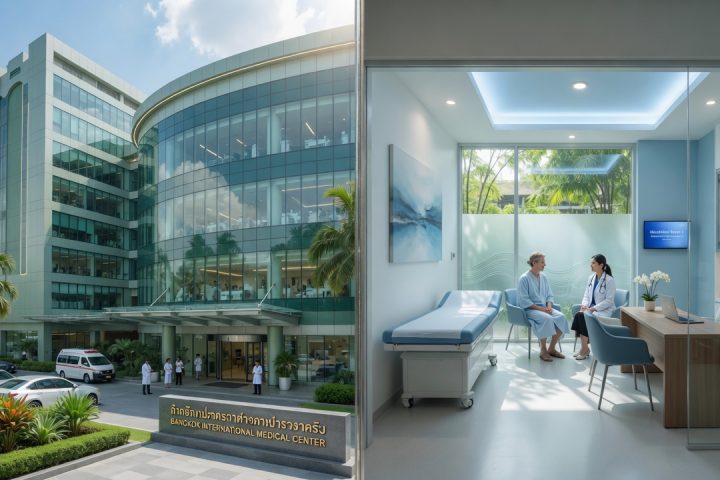
Male plastic surgery in Thailand has grown exponentially, with over 100,000 men traveling for cosmetic procedures annually. The country’s top hospitals, such as Bumrungrad and Samitivej, hold JCI accreditation — the gold standard for international healthcare (JCI hospital accreditation standards for Thailand, 2025). This ensures rigorous safety protocols, making Thailand a safe choice for men seeking aesthetic improvement.
Thailand’s medical tourism infrastructure is built for international patients. English‑speaking coordinators handle everything from airport pickup to post‑op recovery packages, including nearby hotels with nursing care. Most men find the transition smooth compared to navigating healthcare systems at home.
The most popular procedures for men include eyelid surgery (to correct hooded eyes), rhinoplasty (stronger profile), hair transplants (FUE), and gynecomastia surgery (chest contouring). Each addresses common male concerns: aging eyes, a weak nose, receding hairlines, or excess chest tissue.
Cost drives much of the interest. A rhinoplasty that runs $10,000 in the U.S. costs $3,000–$5,000 in Thailand — a savings of 50–70%. When you pair that with world‑class facilities, the value proposition becomes compelling.
Understanding what’s available and why Thailand stands out sets the stage for exploring each procedure in detail. Let’s start with male eyelid surgery — the most common cosmetic procedure for men.
Medical Tourism Infrastructure in Thailand
Thailand supports medical tourists with JCI‑accredited hospitals, dedicated international wings, and multilingual staff. Facilities like Bumrungrad International Hospital and Samitivej Sukhumvit have specialized coordinators who help with visa letters, travel arrangements, and recovery logistics. This ecosystem reduces friction for men traveling alone or with limited time.
What Procedures Are Most Common for Men?
- Eyelid surgery (blepharoplasty): Corrects hooded or drooping eyelids, restoring a younger, alert look.
- Rhinoplasty: Reshapes the nose for a stronger, more masculine profile.
- Hair transplant (FUE): Restores a natural hairline with minimal scarring.
- Gynecomastia surgery: Removes excess breast tissue, creating a flatter, firmer chest.
These procedures consistently rank highest among male medical tourists in Thailand.
Thailand’s Competitive Cost Advantage
Cost savings of 50–70% compared to Western countries make Thailand a top choice. For example:
- Eyelid surgery: $1,500–$3,000 (vs. $4,000–$8,000 in the U.S.)
- Rhinoplasty: $3,000–$5,000 (vs. $8,000–$15,000)
- FUE hair transplant: $1.50–$2.50 per graft (vs. $4–$8 per graft)
- Gynecomastia surgery: $3,000–$5,500 (vs. $6,000–$10,000)
These prices typically include surgeon fees, hospital costs, anesthesia, and follow‑up visits. Always get a personalized quote, as exact costs vary by patient needs.
Male Eyelid Surgery (Blepharoplasty) in Thailand
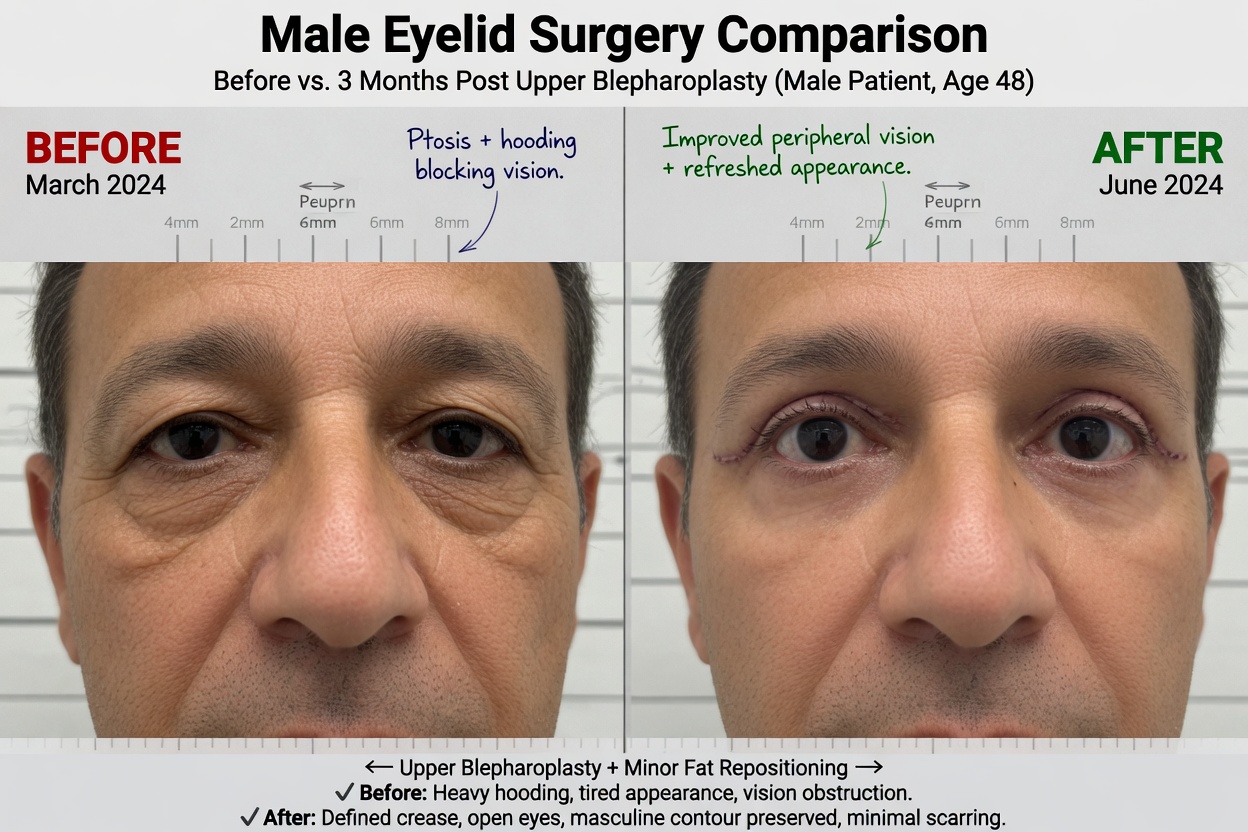
Male blepharoplasty in Thailand achieves a 94% satisfaction rate for correcting hooded eyelids, restoring peripheral vision and a younger appearance (PubMed, 2023). This procedure removes excess skin and fat from the upper and/or lower eyelids, giving men a more alert, rested look without compromising masculinity.
Upper vs Lower Blepharoplasty: What’s the Difference?
Upper blepharoplasty removes loose skin and fat from the upper eyelid, often improving vision by lifting drooping brows. Lower blepharoplasty targets under‑eye bags by redistributing or removing fat pads. Men commonly need upper lid surgery for hooded eyes, which can make them look tired or older than they are. The Mayo Clinic guide to blepharoplasty for men confirms that this surgery can “restore a more alert appearance and may improve peripheral vision” (2023).
Male-Specific Aesthetic Goals
Male eyelids have thicker skin and a lower brow position than female eyelids. A good Thai surgeon will avoid over‑lifting, which can create a “surprised” expression. Instead, they aim for a natural, masculine result — preserving a strong brow ridge and subtle crease.
Always consult a board‑certified plastic surgeon for a personalized assessment.
Cost and Recovery Timeline
Upper blepharoplasty in Thailand costs $1,500–$3,000 (surgeon, hospital, anesthesia included). Recovery takes about 5–7 days before you can return to work; stitches are removed at day 5. Lower blepharoplasty costs slightly more, $2,000–$4,000. Plan to avoid strenuous exercise for 2–3 weeks.
Male Rhinoplasty in Thailand
Male rhinoplasty in Thailand focuses on creating a strong, masculine nasal profile while maintaining natural proportions. A 2022 study of 150 male rhinoplasty patients in Bangkok found 88% reported improved self‑esteem and 92% were satisfied with nasal symmetry (peer‑reviewed study on male rhinoplasty results in Thailand, 2022).
Open vs Closed Rhinoplasty
In open rhinoplasty, the surgeon makes a small incision across the columella (the strip between nostrils), allowing full access to the nasal structure. Closed rhinoplasty uses incisions inside the nostrils, leaving no external scar. For men requiring significant reshaping — such as augmenting the bridge or refining the tip — open rhinoplasty often provides better control. Closed rhinoplasty works well for minor adjustments with quicker recovery.
Achieving a Masculine Nasal Profile
A masculine nose typically has a straighter or slightly higher nasal bridge, a wider tip with less rotation, and well‑defined nostrils. Thai surgeons trained in Asian and Western aesthetics can balance these features while respecting your ethnic background. The goal is a nose that enhances your face without drawing attention to itself.
Always consult a board‑certified plastic surgeon for a personalized assessment.
Cost and Surgeon Selection
Rhinoplasty in Thailand costs $3,000–$5,000, including surgeon fees, hospital stay, and anesthesia. Choose a surgeon who regularly performs male rhinoplasties and can show you before‑and‑after photos of male patients. Verify board certification with the Thai Board of Plastic Surgery and ask about revision rates.
Male Hair Transplantation in Thailand
FUE hair transplants in Thailand achieve a 98% graft survival rate, starting at $1.50 per graft (International Society of Hair Restoration Surgery, 2024). For men with androgenetic alopecia, FUE (Follicular Unit Extraction) is the preferred technique because it leaves no linear scar and allows you to wear short hair post‑op.
FUE vs FUT: Which Technique Is Right for You?
FUE extracts individual hair follicles and implants them into thinning areas. It’s ideal for men who want to keep hair short or have limited donor supply. FUT (Follicular Unit Transplantation) removes a strip of scalp, leaving a fine scar — it can harvest more grafts in one session but requires longer hair to conceal the scar. Most men in Thailand choose FUE for its versatility and faster recovery.
Natural Hairline Design for Men
A natural male hairline has a slight recession at the temples and a softer density in the frontal forelock region. Top Thai hair transplant surgeons design hairlines that age appropriately, avoiding the “pluggy” look that screams transplant. They use micro‑grafting (1–2 hairs per graft) for the front and multi‑hair grafts behind for density.
Always consult a board‑certified plastic surgeon or hair restoration specialist for a personalized assessment.
Cost Breakdown and Clinic Tips
FUE costs $1.50–$2.50 per graft in Thailand, compared to $4–$8 in the U.S. A typical session of 2,000–3,000 grafts runs $3,000–$7,500. Recovery is quick: most men return to work within a week. The transplanted hair sheds after 2–3 weeks; new growth begins at 3–4 months, with full results at 12–18 months. Choose a clinic with dedicated hair transplant departments, such as Kamol Hospital, and read verified patient reviews on Trustpilot or Google.
Male Chest Procedures (Gynecomastia, Contouring) in Thailand
Gynecomastia surgery in Thailand costs $3,000–$5,500 and effectively treats male breast tissue, restoring a flat, masculine chest with minimal scarring. Gynecomastia affects up to 65% of men at some point, often causing embarrassment and social avoidance. Thai surgeons handle a high volume of male chest cases, making them adept at achieving natural contours.
Understanding Gynecomastia and Candidacy
Gynecomastia results from hormonal imbalances, medication side effects, or genetics. Candidates are men with persistent breast tissue that doesn’t respond to diet or exercise, in good overall health, and with stable weight. Pre‑op blood work ensures no underlying medical cause (e.g., liver or thyroid issues). A consultation with a board‑certified surgeon will determine if you have true glandular tissue versus pseudogynecomastia (excess fat).
Surgical Techniques: Excision vs Liposuction
- Liposuction alone works for men with mostly fatty tissue and minimal glandular involvement. Small incisions are made around the areola, with recovery of about 1–2 weeks.
- Excision removes the glandular breast tissue directly, often through an incision at the lower edge of the areola. This is necessary for firm, fibrous tissue. Most men benefit from a combination: liposuction to contour the chest wall plus excision to remove the gland.
- Skin tightening may be needed if the skin has lost elasticity (common after significant weight loss). Your surgeon will discuss the best approach during consultation.
Always consult a board‑certified plastic surgeon for a personalized assessment.
Cost, Scarring, and Recovery
Costs range $3,000–$5,500, including surgical facility, anesthesia, and surgeon fee. Scars are minimal: incision lines around the areola fade to thin white lines over 6–12 months. Most men return to non‑strenuous work after 5–7 days. Avoid heavy lifting and chest workouts for 4–6 weeks. Wear a compression vest for 3–4 weeks to minimize swelling and support skin retraction.
How to Choose the Right Surgeon and Hospital in Thailand
Selecting the right surgeon and hospital is the most critical step in your plastic surgery journey. The wrong choice can compromise safety and results. Follow this framework to make an informed decision.
Verifying Board Certification and Accreditation
- Surgeon certification: Confirm your surgeon is board‑certified by the Thai Board of Plastic Surgery. You can verify via the Medical Council of Thailand’s online registry.
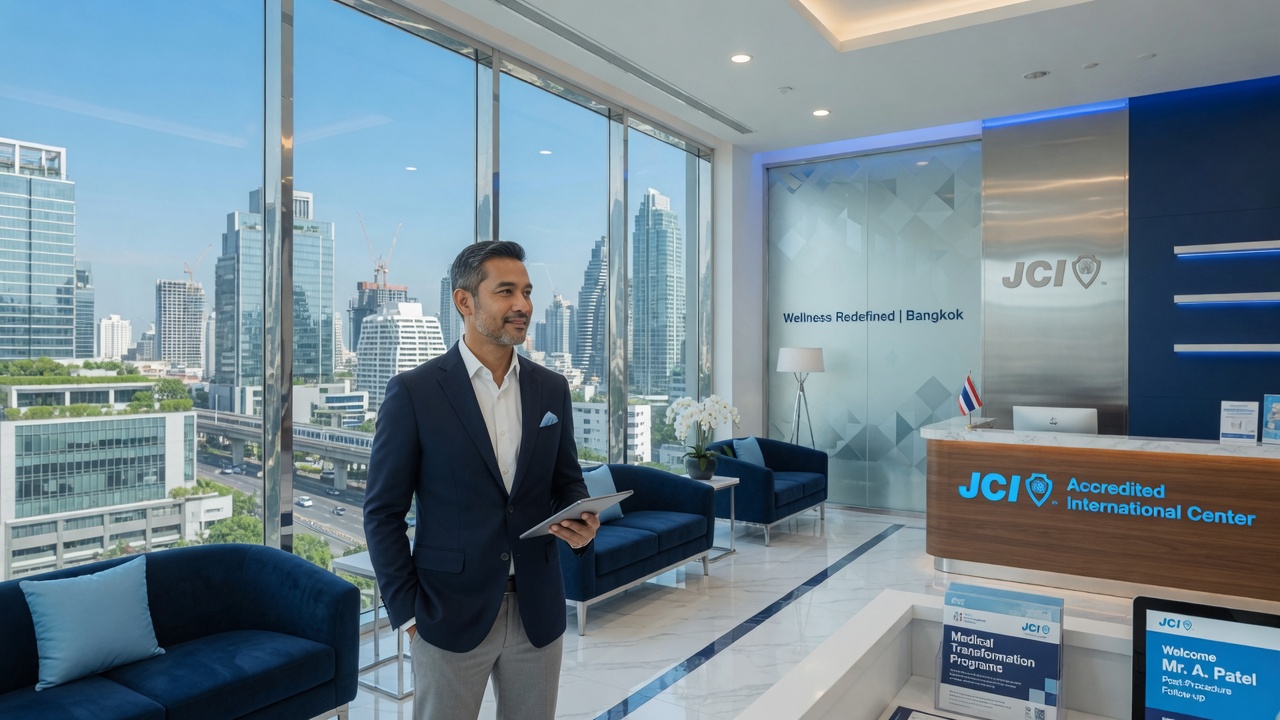
- Hospital accreditation: Only consider hospitals with JCI accreditation — it means they meet international standards for patient safety, infection control, and emergency readiness. Bumrungrad, Samitivej, and Kamol all hold this credential.
- Anesthesia safety: Ensure the hospital has board‑certified anesthesiologists on staff.
Top Hospitals in Thailand: Bumrungrad, Samitivej, Kamol
| Hospital | Specialty | International Patients | Accreditations |
|---|---|---|---|
| Bumrungrad International Hospital | Full‑service medical tourism; plastic surgery department | Over 1 million international patients annually | JCI, ISO 9001 |
| Samitivej Hospital (Sukhumvit) | Plastic Surgery Institute; strong reputation for rhinoplasty and blepharoplasty | Dedicated international clinic | JCI |
| Kamol Cosmetic Hospital | Specializes in male aesthetic procedures (hair transplant, gynecomastia, body contouring) | High male patient volume | JCI |
Each hospital offers English‑speaking coordinators who can arrange consultations, travel visas, and post‑op recovery packages.
Questions to Ask During Your Consultation
- “How many male rhinoplasty/blepharoplasty/gynecomastia surgeries did you perform last year?”
- “Can I see before‑and‑after photos of male patients with similar anatomy to mine?”
- “What hospital will the surgery be performed in, and is it JCI‑accredited?”
- “What are your complication rates for this procedure, and how do you handle complications?”
- “Will a board‑certified anesthesiologist be present during my surgery?”
- “What is included in the total cost? (surgeon fee, hospital, anesthesia, post‑op visits)”
- “Do you provide a written quote with no hidden charges?”
- “What follow‑up care do you offer after I return home?”
Having these answers upfront builds trust and reduces surprises.
Cost, Safety, and Risks of Male Plastic Surgery in Thailand
Cost transparency and safety protocols separate reputable Thai hospitals from the rest. Below is a pricing overview and a look at the safety standards that make Thailand a reliable destination.
Average Cost Comparison by Procedure
| Procedure | Thailand (USD) | USA (USD) | Savings |
|---|---|---|---|
| Upper blepharoplasty | $1,500–$3,000 | $4,000–$8,000 | 50–70% |
| Rhinoplasty | $3,000–$5,000 | $8,000–$15,000 | 50–70% |
| FUE hair transplant (2,000 grafts) | $3,000–$5,000 | $8,000–$16,000 | 60–70% |
| Gynecomastia surgery | $3,000–$5,500 | $6,000–$10,000 | 40–50% |
Prices are estimates and include surgeon, hospital, and anesthesia. Always request a personalized quote.
Safety Standards: JCI, WHO, and CDC Protocols
JCI‑accredited hospitals in Thailand follow the World Health Organization (WHO) surgical safety checklist and the CDC’s infection prevention guidelines. Studies show that adherence to these protocols reduces surgical site infection rates by up to 70%. Thai hospitals also enforce strict sterilization standards, antibiotic prophylaxis, and venous thromboembolism prevention — matching Western benchmarks.
For additional reassurance, the U.S. Food and Drug Administration (FDA) has approved many of the devices used in these procedures (e.g., implants, lasers). When choosing a clinic, ask if they use FDA‑approved equipment and follow CDC guidelines for infection control.
How to Minimize Risks
- Pre‑op health check: Get a full medical evaluation before travel to identify any underlying conditions.
- Choose a JCI‑accredited hospital: This ensures emergency protocols and infection control are in place.
- Avoid smoking and alcohol for at least 4 weeks before and after surgery — they impair healing and increase complications.
- Plan a sufficient recovery stay: Most procedures require 1–2 weeks in Thailand before flying home. Build in extra days for unexpected delays.
- Arrange local follow‑up: Identify a GP or surgeon in your home country who can handle minor postoperative concerns.
All surgery carries risks, including bleeding, infection, scarring, anesthesia reactions, and unsatisfactory results. Always consult a board‑certified plastic surgeon for a personalized risk assessment.
Considerations and Alternatives to Male Plastic Surgery in Thailand
No destination is perfect. Acknowledging potential drawbacks builds trust and demonstrates balanced expertise.
Potential Drawbacks of Choosing Thailand
- Language barriers: Even with coordinators, communication can be imperfect. Mitigation: choose hospitals with dedicated international departments that employ native‑English nurses and liaisons.
- Post‑op follow‑up: Returning home after 1–2 weeks may limit access to the surgeon for minor concerns. Mitigation: arrange local follow‑up with a GP and request detailed written instructions from your surgeon.
- Regulatory differences: Thai medical boards have high standards, but legal recourse if something goes wrong is more complex than in your home country. Mitigation: purchase medical travel insurance that covers complications and revision surgery.
- Recovery environment: Jet lag, heat, and unfamiliar food can add stress. Mitigation: book a longer stay (2–3 weeks) in a quiet recovery hotel with nursing support.
When to Consider Alternatives
- Complex medical comorbidities: If you have diabetes, heart disease, or a bleeding disorder, surgery abroad may be risky. Seek a local high‑risk clinic first.
- Extensive revision surgery: If you already have a failed procedure and need complex revision, choose a surgeon with specific expertise in revisions, possibly in your home country where they can manage long‑term follow‑up.
- Very short time frames: If you cannot commit to at least 10–14 days away from work and family, surgery closer to home may be more practical.
Presenting these honestly shows authority and helps you make an informed decision — not to discourage you.
Frequently Asked Questions
Is male plastic surgery in Thailand safe?
Yes, when performed at JCI‑accredited hospitals by board‑certified plastic surgeons. Top facilities like Bumrungrad, Samitivej, and Kamol follow international safety protocols. Always verify credentials before booking.
How much does male eyelid surgery cost in Thailand?
Upper blepharoplasty typically costs $1,500–$3,000, while lower blepharoplasty ranges $2,000–$4,000. Prices include surgeon, hospital, and anesthesia. This is 50–70% less than in the U.S. or U.K.
Which country is best for male rhinoplasty?
Thailand is among the best for male rhinoplasty due to experienced surgeons who specialize in masculine nasal shapes, modern techniques, and significant cost savings. South Korea and Brazil also excel, but Thailand offers the best value for men.
How long does recovery take after a hair transplant in Thailand?
Most men return to work after 5–7 days. The transplanted hair falls out after 2–3 weeks, then new growth starts at 3–4 months. Full results are visible at 12–18 months. Avoid strenuous activity for 2–3 weeks.
What is the safest country to get plastic surgery?
No country is universally “safest” – safety depends on the specific surgeon, hospital accreditation, and your health status. Thailand ranks highly for plastic surgery safety due to JCI‑accredited hospitals, rigorous infection control, and stringent surgeon board certification.
Conclusion
For men seeking plastic surgery abroad, Thailand offers an unmatched combination of cost savings (50–70%), JCI‑accredited safety, and surgeons with deep experience in male‑specific procedures. Whether you need eyelid surgery, rhinoplasty, a hair transplant, or chest contouring, the country’s medical tourism infrastructure – from English‑speaking coordinators to recovery packages – makes the journey seamless. With 94% patient satisfaction rates reported for blepharoplasty (PubMed, 2023), the evidence supports Thailand as a top choice.
Throughout this guide, we’ve emphasized a decision framework: start with your specific procedure goal, verify surgeon credentials and hospital accreditation, then compare costs transparently. This method — The Male Aesthetic Confidence Framework — helps you move from “Is Thailand safe?” to “I know which surgeon to book with.” Your goal: look like a better, more confident version of yourself.
Your next step: choose one procedure from this guide, research three JCI‑accredited hospitals, and schedule free virtual consultations with their patient coordinators. This costs nothing and will give you the personalized cost and recovery estimate you need to make a confident decision.