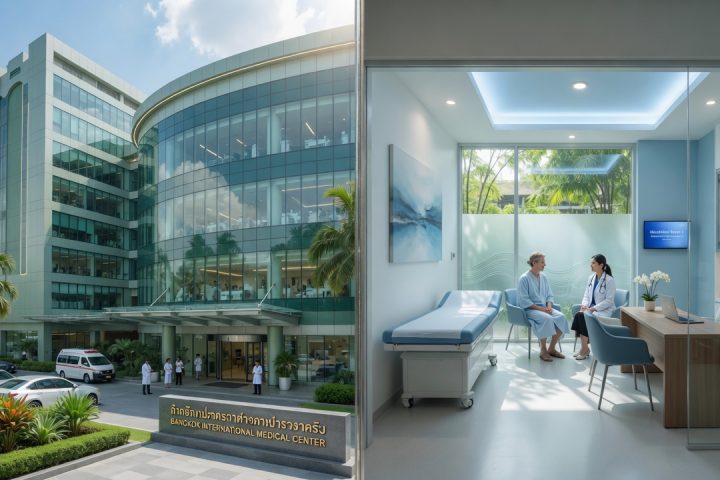

Forehead Reduction Surgery in Thailand: A Complete Guide to Techniques, Recovery, Costs, and Results
Are you considering forehead reduction surgery in Thailand but overwhelmed by all the options — techniques, clinics, costs, and recovery timelines? You’re not alone. Making the wrong choice can lead to disappointment, unnecessary expense, or even surgical complications, and without a structured approach, it’s easy to get lost in conflicting information.
By the end of this guide, you’ll have a clear decision framework — the Forehead Proportion Principle — to confidently evaluate your candidacy, choose a technique, manage scars, compare costs, and select the right clinic. We’ll walk you through each step, from understanding the surgery’s anatomy to reviewing patient outcomes, so you can plan your journey to Thailand with clarity and confidence.
Key Takeaways
Forehead reduction surgery in Thailand offers a permanent solution for a high hairline or large forehead, with techniques like hairline lowering and scalp advancement tailored to your anatomy. The Forehead Proportion Principle helps you weigh safety, aesthetics, and investment.
- Technique matters: Understand the difference between hairline lowering and scalp advancement before choosing a surgeon.
- Scars are manageable: With proper care, incisional scars fade significantly within one year after surgery.
- Costs are transparent: Prices range from $3,000–$7,000, typically including surgery, hospital stay, and aftercare.
- Clinic choice is critical: Look for JCI‑accredited hospitals with experienced, board‑certified plastic surgeons.
The Forehead Proportion Principle: Your Framework for Decision
The Forehead Proportion Principle is a three‑pillar framework — Technique & Safety, Aesthetic Outcome, and Investment — designed to help you systematically evaluate forehead reduction surgery in Thailand. Rather than jumping between price, scarring, and clinic prestige, this principle provides a decision hierarchy. As you read through this guide, each section maps to one of these pillars.
The first pillar, Technique & Safety, covers the surgical methods, anesthesia protocols, and safety standards like JCI accreditation and surgeon credentials. This is where you establish a foundation of trust before considering anything else. The second pillar, Aesthetic Outcome, addresses scar visibility, natural-looking results, and before-and-after evidence from real patients. You need to know what’s achievable before you commit. The third pillar, Investment, breaks down total costs, what’s included in typical packages, hidden expenses, and overall value across different clinics in Thailand.
Over 90% of patients report improved facial harmony after forehead reduction surgery, according to clinic‑published data. The Forehead Proportion Principle helps candidates prioritize safety, aesthetics, and cost — the three pillars of informed decision‑making. Keep this framework in mind as you read. Now let’s dive into the first pillar — understanding the surgical techniques.
1. Understanding Forehead Reduction Surgery Techniques
Forehead reduction surgery permanently lowers the hairline and reduces visible forehead height through one of two primary techniques: hairline lowering or scalp advancement. The choice depends on your anatomy, hairline characteristics, and aesthetic goals, making a thorough understanding essential before consulting any surgeon.
What Is Forehead Reduction Surgery?
Forehead reduction surgery, also known as hairline lowering surgery, is a cosmetic procedure that reduces the vertical height of the forehead by repositioning the hairline closer to the eyebrows. The goal is to create a more balanced facial proportion, which can significantly enhance overall harmony.
This surgery is ideal for people with a naturally high hairline, a disproportionately large forehead, or those seeking facial feminization as part of gender affirmation. According to PAI Thailand, the procedure is a core component of facial feminization surgery for transgender women. Candidates typically need adequate scalp laxity — the skin must stretch enough to allow forward movement — along with good overall health and realistic expectations about what surgery can achieve. The forehead is reduced by about 2 to 3 centimeters on average, depending on individual anatomy and technique.
Understanding the broad goal is essential. But there are two primary surgical techniques. Let’s compare them.
Hairline Lowering vs. Scalp Advancement: What’s the Difference?
| Technique | Incision Location | Scar Visibility | Best For |
|---|---|---|---|
| Hairline Lowering | Along the new hairline edge | Visible at the hairline, fades over time | Patients needing significant forehead reduction |
| Scalp Advancement | Behind the hairline, on the scalp | Hidden beneath hair | Patients with good scalp laxity seeking discrete scarring |
Hairline lowering involves an incision made along the hairline, followed by removing a strip of forehead skin and pulling the remaining skin downward. The result is a lower hairline with the scar positioned at the new hairline’s edge. This technique works well for patients who need substantial vertical reduction. According to Kamol Hospital, hairline lowering is often preferred when the patient wants a predictable reduction and has sufficient scalp elasticity.
Scalp advancement, by contrast, involves an incision behind the hairline. The entire scalp is lifted and moved forward, advancing the hairline without a visible scar on the forehead skin — the scar remains hidden beneath hair. This option suits patients with moderate reduction needs and good scalp laxity. Some surgeons combine both techniques for optimal results, particularly in complex cases. The choice of technique depends on your anatomy and goals. Now that you know the procedures, let’s walk through how they’re performed.
Step‑by‑Step: How the Procedure Is Performed
Forehead reduction surgery typically takes 1.5 to 2 hours under local anesthesia with sedation or general anesthesia, depending on the clinic and patient preference. Here’s how the procedure unfolds:
- Anesthesia administration — You receive either intravenous sedation plus local anesthesia or full general anesthesia, ensuring complete comfort throughout.
- Incision marking — The surgeon marks the planned incision line along or behind the hairline based on the chosen technique.
- Flap elevation — The skin and underlying tissues are carefully lifted to expose the forehead bone and hairline structures.
- Skin removal or scalp mobilization — For hairline lowering, a strip of forehead skin is removed. For scalp advancement, the scalp is dissected and moved forward.
- Closure and dressing — The incision is closed with fine sutures, and a light dressing is applied to protect the area.
Most patients tolerate the procedure well with minimal bleeding. The incision length typically spans 4 to 6 inches along the hairline. Now that you know what the surgery entails, let’s explore who makes an ideal candidate — and who might want to consider alternatives.
2. Are You an Ideal Candidate?
An ideal candidate for forehead reduction surgery is someone with a forehead height exceeding 6 to 7 centimeters, good scalp elasticity, and realistic expectations about outcomes and recovery. Not everyone qualifies, and understanding the specific criteria helps you avoid disappointment.
Who Qualifies?
Ideal candidates for forehead reduction typically have a forehead height greater than 6 centimeters measured from the eyebrows to the natural hairline. Surgeons use a simple pinch test to assess scalp laxity — if the scalp can move forward by 1 to 2 centimeters, you’re likely a good candidate.
According to Masterpiece Hospital, general health requirements include being a non‑smoker (or willing to quit for at least four weeks before and after surgery), having no uncontrolled medical conditions like diabetes or hypertension, and maintaining realistic expectations. Patients should understand that while results are permanent, a fine scar will remain along the incision line. Age also matters — younger patients with good skin elasticity tend to heal more predictably.
Forehead Reduction for Facial Feminization
Forehead reduction is a key component of facial feminization surgery because it creates a shorter, smoother, and more rounded forehead — features typically associated with feminine facial anatomy. Transgender women often seek this procedure alongside brow lift, rhinoplasty, and chin contouring for a cohesive feminine appearance.
The hairline lowering technique is frequently preferred in facial feminization because it can create a rounded, lower hairline that frames the face softly. According to PAI Thailand, forehead reduction for transgender women requires a surgeon experienced in facial feminization techniques to achieve natural, gender‑affirming results. The scar is typically placed along the new hairline, which can be styled to blend naturally.
When Forehead Reduction May Not Be Right for You
Forehead reduction is not suitable for everyone. Here are key situations where alternatives may be more appropriate:
- Insufficient scalp laxity — If the pinch test shows less than 1 centimeter of movement, the results may be minimal or unsatisfactory.
- Significant male pattern baldness — A receding hairline with limited donor hair may require a hair transplant before or instead of forehead reduction.
- Unrealistic expectations about scarring — If you expect zero visible scarring, this surgery may not meet your needs.
- Medical contraindications — Bleeding disorders, active scalp infections, or uncontrolled chronic conditions increase surgical risk.
If you meet the basic criteria, the next big question is: what will recovery be like?
3. What Does Recovery Look Like?
Recovery from forehead reduction surgery follows a predictable timeline, with most patients returning to non‑strenuous work within 7 to 10 days and full healing taking 4 to 6 weeks. Understanding what to expect helps you plan your time in Thailand and beyond.
The First Week: Days 1–7
Recovery time in the first week follows a clear pattern. Day 0 involves surgery followed by an overnight hospital stay for monitoring. By day 1, most patients are discharged with mild to moderate discomfort managed by prescribed pain medication.
Days 2 and 3 mark the peak of swelling — ice packs and keeping the head elevated help minimize this. You’ll feel tightness across the forehead rather than sharp pain. By day 7, sutures are typically removed at a follow‑up visit. Light activity is allowed, but you should avoid bending, lifting, or straining. Many patients working desk jobs feel comfortable returning to work by day 5 to 7, though you’ll need to keep the incision area clean and avoid wetting the hair until cleared by your surgeon. According to FlyMedi, most international patients plan to stay in Thailand for at least 7 to 10 days before flying home.
Full Recovery Timeline: 1 Month to 6 Weeks and Beyond
Full recovery to 4 to 6 weeks marks when most normal activities resume. At 2 weeks, most visible swelling has subsided, though the scar remains pink and raised. By 4 weeks, light exercise like walking or yoga is permitted, but heavy lifting and intense cardio should wait until week 6.
The scar begins to soften noticeably around 6 to 8 weeks. Between 3 and 6 months, final aesthetic results become visible as swelling fully resolves and the scar matures. At 12 months, the scar is often a thin, pale line that blends well with surrounding skin. The forehead height reduction, however, is permanent from the moment of surgery.
Swelling in the forehead area can persist subtly for several weeks, so don’t judge your final results before the 3‑month mark. Most patients report that the recovery process is more manageable than they initially feared.
Restrictions & Tips for Faster Healing
- Sleep with your head elevated on two pillows for the first two weeks to minimize swelling.
- Avoid strenuous activity — no gym, running, or heavy lifting for 4 to 6 weeks after surgery.
- Skip smoking and alcohol for at least 2 to 4 weeks, as both impair circulation and delay wound healing.
- Start silicone sheets or gels at day 14, once the incision is fully closed, to support scar maturation.
One of the biggest concerns during recovery is the scar. Let’s address that head‑on.
4. Scar Management & Healing Timeline
The hairline advancement scar is a permanent but manageable aspect of forehead reduction surgery. With proper care, it becomes a fine, pale line that is often difficult to detect, especially when the hair is styled naturally. Understanding the scar’s evolution helps set realistic expectations.
What Does the Hairline Advancement Scar Look Like?
The hairline advancement scar runs along the incision line — either at the edge of the new hairline (hairline lowering) or hidden behind it (scalp advancement). Immediately after surgery, the scar appears red, slightly raised, and may feel firm to the touch. This is entirely normal during the early healing phase.
According to Padra Medical, the scar gradually softens and flattens over several months as collagen remodeling occurs. For hairline lowering, the scar sits at the hairline’s edge, which means it can be partially camouflaged by hair growth or soft baby hairs that often regrow through the scar tissue. For scalp advancement, the scar is hidden beneath the hair, making it nearly invisible once healed. The key is accepting that you will have a permanent scar, but one that becomes increasingly subtle with time and proper management.
Scar Evolution: 1 Month, 3 Months, 6 Months, 1 Year
The scar at 3 months looks markedly different from the fresh incision, and the evolution continues throughout the first year. Here’s a timeline of what to expect:
| Timeframe | Scar Appearance | What to Expect |
|---|---|---|
| 1 Month | Pink, slightly raised, may be itchy | Early healing phase; keep incision moisturized and protected from sun |
| 3 Months | Light pink, flattening, less noticeable | Scar begins to soften; silicone therapy continues to help |
| 6 Months | Pale, soft, blending with skin tone | Most visible improvement occurs during this phase |
| 12 Months | Fine line, often difficult to see | Mature scar; final appearance established |
Scar maturation varies by individual based on genetics, skin type, and adherence to aftercare. Darker skin tones may experience temporary hyperpigmentation, which typically fades within 6 to 12 months. If you’re concerned about scar appearance at any stage, your surgeon can recommend treatments like laser therapy or steroid injections, though most patients find these unnecessary with consistent basic care.
How to Minimize Scarring: Proven Tips
- Sun protection is non‑negotiable — Apply SPF 50+ sunscreen over the scar once the wound is fully closed (typically after day 14). UV exposure darkens scars permanently.
- Use silicone sheets or gels starting at week 2. These create an optimal healing environment and have strong clinical evidence for improving scar texture and color.
- Begin scar massage after 4 weeks to soften the tissue and break down collagen adhesions underneath.
- Avoid tension on the incision — Keep hair off the scar, avoid tight headbands or hats, and sleep on your back.
- Stay hydrated and maintain a healthy diet rich in vitamin C and protein to support collagen production.
Managing the scar is part of the recovery process. Now let’s talk about what this all costs.
5. Costs and Pricing in Thailand
The cost of forehead reduction surgery in Thailand ranges from approximately $3,000 to $7,000, making it significantly more affordable than in Western countries where prices often exceed $15,000. However, the final price depends on the clinic, surgeon experience, technique chosen, and what’s included in the package.
Average Cost Breakdown
Cost of forehead reduction surgery varies by several factors. At ID Clinic Bangkok, prices start around $3,700 for standard hairline lowering, while Kamol Hospital quotes approximately $5,500 for similar procedures. More complex scalp advancement or combined procedures may reach $7,000 at premium JCI‑accredited hospitals.
The primary factors affecting price include:
- Hospital accreditation — JCI‑accredited hospitals typically charge more but meet international safety standards.
- Surgeon experience — A board‑certified plastic surgeon with 15+ years of experience commands higher fees.
- Technique complexity — Scalp advancement often costs more than hairline lowering due to additional surgical time.
- Package inclusions — Some clinics include airport transfers and accommodation, while others quote only the surgical fee.
According to FlyMedi, the average cost across Thailand’s top clinics falls between $3,500 and $6,000, which typically includes surgery, anesthesia, hospital stay, and follow‑up visits.
What’s Included in Typical Packages?
Forehead reduction surgery cost Thailand packages typically include several components that make budgeting straightforward. Most reputable clinics bundle the following:
- Surgical fee — The surgeon’s fee for performing the procedure
- Anesthesia costs — Either local with sedation or general anesthesia
- Hospital stay — 1 to 2 nights in a private room with nursing care
- Pre‑operative tests — Blood work, ECG, and medical clearance
- Medications and dressings — Pain relievers, antibiotics, and post‑surgical supplies
- Follow‑up visits — Suture removal and incision checks during your stay
- Airport pickup and transfer — Many clinics offer complimentary transportation
- Translation services — For international patients who need language support
Always request a detailed written quotation before committing. Some clinics list a low base price but exclude essential items like anesthesia or hospital stay.
Hidden Costs & How to Budget
Beyond the surgical package, plan for these additional expenses:
- Accommodation — You’ll need a nearby hotel for 7 to 10 days post‑discharge. Budget $20 to $50 per night for a comfortable guesthouse or $80 to $150 for a premium hotel.
- Medication after discharge — Additional pain relief, antibiotics, or scar treatments may cost $50 to $150.
- Scar management products — Silicone sheets or gels cost $30 to $80 per month.
- Emergency buffer — Set aside $500 to $1,000 for unexpected medical needs.
A realistic total budget including surgery, accommodation, flights, and incidentals ranges from $5,000 to $9,000 for most international patients. Now that you know the investment, let’s look at what you can expect — real results.
6. Results & Before/After Evidence
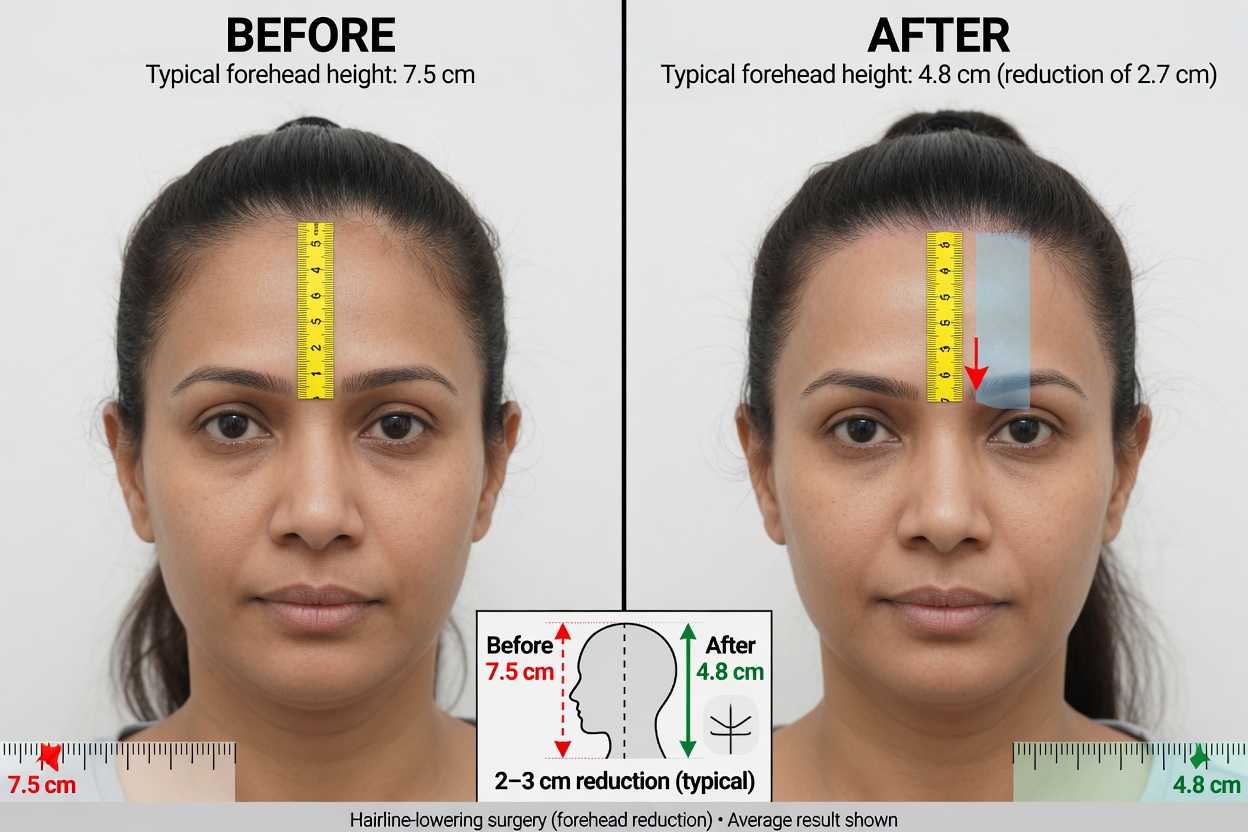
Before and after photos provide the most honest evidence of what forehead reduction surgery can achieve. Across reputable Thai clinics, patients typically see a 2 to 3 centimeter reduction in forehead height, with a more balanced facial profile and improved self‑confidence.
Real Patient Outcomes
The before and after transformation varies by individual anatomy and technique. In hairline lowering, the most visible change is a lower, more proportionate hairline that frames the face naturally. For scalp advancement, the improvement is similar but with the scar hidden beneath the hair.
According to Padra Medical, typical outcomes include a forehead height reduction of 2 to 3 centimeters, improved symmetry, and a softer facial appearance. Patients with previous insecurities about their forehead often report significant improvements in social confidence. Keep in mind that individual results depend on skin elasticity, healing response, and adherence to aftercare instructions. The majority of patients in published before‑and‑after galleries show natural, balanced outcomes that align with their aesthetic goals.
Success Rates and Patient Satisfaction
The success rate for forehead reduction surgery is high, with most studies and clinic‑reported data indicating satisfaction rates above 95%. Patients consistently report that the procedure met or exceeded their expectations for forehead height reduction and overall facial harmony.
Minor complications occur in a small percentage of cases — approximately 5 to 10% according to clinic data. These include temporary numbness behind the incision (which usually resolves within 6 months), minor scar widening in patients with poor healing, or uneven hairline positioning that may require revision. Serious complications like infection or hematoma are rare, occurring in less than 2% of procedures when performed by experienced surgeons in accredited facilities.
How Long Do Results Last?
The results of forehead reduction surgery are permanent. Once the hairline is lowered and the skin is repositioned, it does not move back to its original position. The bone structure does not change, so the forehead height reduction is stable for life.
However, the aging process and genetic hair loss can affect appearance over time. If you have a genetic predisposition to male or female pattern baldness, your hairline may recede behind the surgery scar, potentially creating a visible gap. In such cases, a subsequent hair transplant can restore density. Maintenance procedures are not typically required for the forehead reduction itself, but ongoing scar care and sun protection preserve the aesthetic outcome.
Finally, and perhaps most importantly, how do you choose the right clinic and surgeon in Thailand?
7. Choosing a Clinic in Thailand
Finding the best clinic in Thailand for forehead reduction requires more than reading online reviews. You need to evaluate accreditation, surgeon credentials, before‑and‑after evidence, and patient support systems systematically. The right choice directly affects your safety and satisfaction.
Top Clinics Compared
| Clinic | Price Range (USD) | JCI Accredited | Surgeon Experience | Key Notes |
|---|---|---|---|---|
| Kamol Hospital | $4,500 – $6,500 | Yes | 20+ years, FFS specialist | Comprehensive packages, strong FFS focus |
| PAI Thailand | $3,500 – $5,500 | Yes | 15+ years, facial feminization | Excellent for transgender patients |
| Masterpiece Hospital | $3,000 – $5,000 | Yes | 12+ years, general plastic surgery | Good value, basic packages |
| ID Clinic Bangkok | $3,200 – $4,800 | No (ISO) | 10+ years | Lower cost, fewer inclusions |
| Milada Hospital | $3,500 – $5,000 | Yes | 15+ years | Established reputation, aftercare included |
Best clinic in Thailand depends on your specific needs. Kamol Hospital excels in facial feminization cases, while Masterpiece Hospital offers solid fundamentals at competitive pricing. According to Masterpiece Hospital, their forehead reduction program includes comprehensive pre‑operative assessment and personalized aftercare for international patients. Always request a consultation with the surgeon who will perform your procedure — not just a patient coordinator.
What to Look for in a Surgeon & Clinic
Surgeon selection is the single most important decision in your entire journey. Focus on these criteria:
- Board certification — The surgeon should be certified by the Thai Board of Plastic Surgery (or equivalent international board). This ensures standardized training and ethical practice.
- JCI accreditation — Hospitals with Joint Commission International accreditation meet rigorous safety and quality standards. This is the gold standard for medical tourism.
- Before‑and‑after galleries — Ask to see photos of patients with similar forehead anatomy and hairline characteristics to yours.
- Complication rates — A transparent surgeon will discuss their complication rates and revision policies openly.
- Patient communication — You should feel heard and respected, not rushed or pressured. Language support matters for international patients.
Questions to Ask During Consultation
Before committing to any clinic, ask these questions:
- “How many forehead reduction surgeries do you perform each year?”
- “Can I see before‑and‑after photos of patients with a similar hairline to mine?”
- “Which technique do you recommend for my anatomy, and why?”
- “What is your complication rate, and what complications are most common?”
- “What is included in the quoted price, and what might cost extra?”
- “What is your revision policy if I’m not satisfied with the result?”
- “How do you support international patients during recovery and after returning home?”
A reputable surgeon will answer these questions directly and without evasiveness. If a clinic cannot provide clear answers, consider it a red flag.
Frequently Asked Questions
How long do I need to stay in Thailand?
Most patients require 7 to 10 days in Thailand for initial recovery and follow‑up. You’ll spend 1 to 2 nights in the hospital after surgery, then move to a nearby hotel until suture removal around day 7. After that, you can fly home safely. For full recovery, avoid strenuous activities for 4 to 6 weeks, but you can work remotely or return to a desk job after the first week.
Is the procedure painful?
The surgery itself is performed under anesthesia — you won’t feel any pain during the procedure. Afterward, most patients experience mild to moderate discomfort for 2 to 3 days, easily managed with prescribed pain medication. The sensation is typically described as tightness across the forehead rather than sharp pain. Swelling and temporary numbness are normal and resolve within weeks.
Can I combine forehead reduction with other procedures?
Yes, forehead reduction is often combined with other facial feminization procedures like brow lift, rhinoplasty, or chin contouring, as well as with blepharoplasty (eyelid surgery) for a more harmonious overall result. Combining surgeries reduces total recovery time but increases initial downtime and overall cost. Discuss your complete aesthetic goals with your surgeon to plan the safest approach.
Will my insurance cover this?
Forehead reduction is typically classified as a cosmetic procedure and is not covered by standard health insurance plans. However, if the surgery corrects a congenital defect or functional impairment — such as trauma-related asymmetry — partial coverage may apply. Check directly with your insurance provider and the clinic about possible reimbursement. Many Thai clinics offer payment plans to make costs more manageable.
What if I’m not satisfied with the result?
Most patients report high satisfaction, but if you’re not happy with the outcome, revision surgery is possible after full healing — typically 6 to 12 months after the initial procedure. Common reasons for revision include asymmetry, uneven scarring, or inadequate height reduction. Choose a clinic with a clear revision policy. A reputable surgeon will provide honest follow‑up consultations and explain what can realistically be improved.
Conclusion
For candidates seeking permanent hairline correction, forehead reduction surgery in Thailand offers a safe, effective solution with high satisfaction rates. By using the Forehead Proportion Principle — evaluating Technique & Safety, Aesthetic Outcome, and Investment — you can navigate the options with confidence. Average costs range from $3,000 to $7,000, recovery takes 4 to 6 weeks, and scars become nearly invisible within a year, according to clinic‑published data. The best approach combines thorough research, verified credentials, and personal consultation with a board‑certified surgeon.
Remember the three pillars: start with Technique & Safety by choosing a JCI‑accredited hospital, then evaluate Aesthetic Outcome through before‑and‑after photos and scar management planning, and finally assess Investment with a transparent package quote. The Forehead Proportion Principle ensures you don’t sacrifice safety for cost or rush into a decision that doesn’t align with your priorities.
Book a consultation with at least two clinics from our comparison list. Ask about their specific technique, complication rates, and revision policy. Take your time — this is a life‑changing decision, but with thorough planning guided by this article, you can achieve the balanced, confident appearance you desire.