
The Complete Pre-Surgery Abroad Checklist: A Step-by-Step Guide to Safe, Successful Medical Tourism
You’ve researched the idea of surgery abroad, seen the cost savings, and read the success stories. But the sheer number of decisions — from choosing a surgeon to packing the right documents — can feel overwhelming. Without a clear plan, you risk overlooked red flags, insufficient insurance, or even post-operative complications far from home.
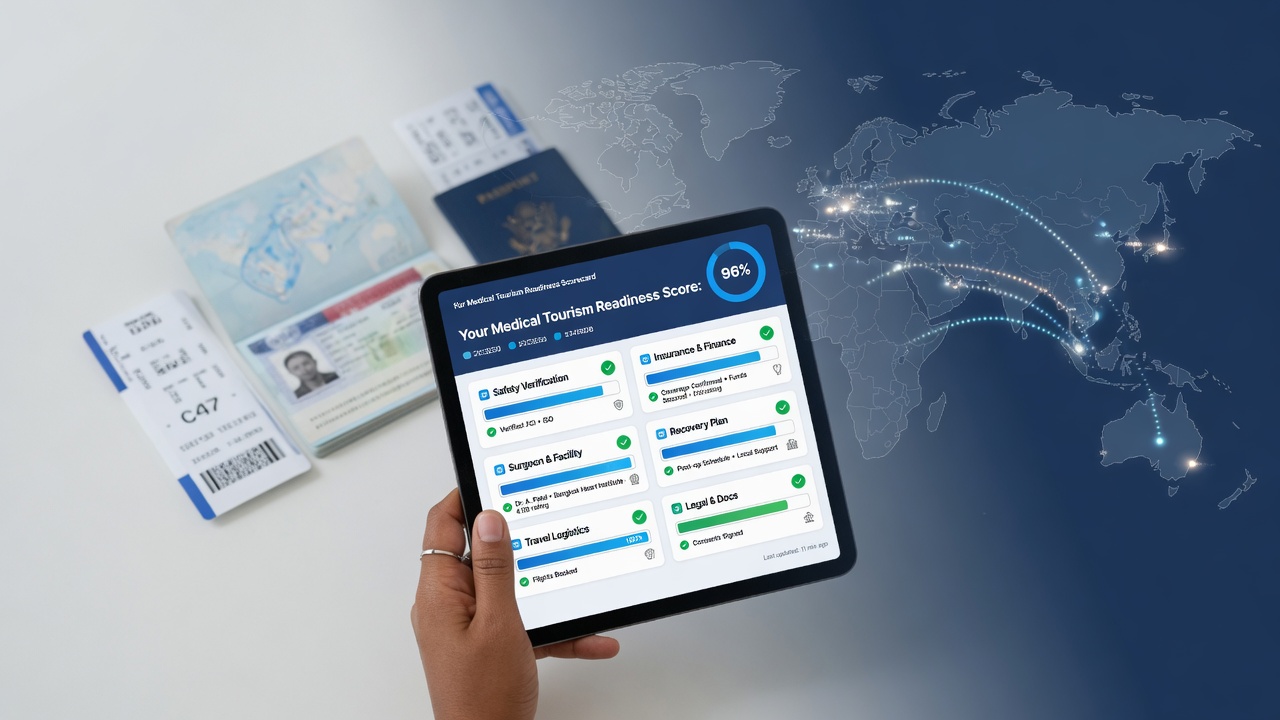
By the end of this guide, you’ll have a complete, source-backed surgery abroad checklist that covers every critical step — so you can decide and prepare with total confidence. We’ll walk through six essential components: safety, preparation, insurance, surgeon selection, recovery, and nationality-specific tips — each one a building block of your final Medical Tourism Readiness Scorecard.
Key Takeaways
A systematic surgery abroad checklist is your best defence against complications and hidden costs — 80% of medical tourism complications are linked to poor pre-travel planning (WHO, 2024).
- Assess risks first: Verify JCI accreditation and surgeon board certification.
- Pack proactively: Bring medical records, insurance docs, and recovery supplies.
- Insure for the worst: Get a policy that covers pre-existing conditions and medical evacuation.
- Apply the Readiness Scorecard: Score yourself on all six areas before booking.
Safety First: Assessing Risks and Red Flags
Methodology Note: This checklist was developed by reviewing international patient safety standards from the World Health Organization, the Centers for Disease Control and Prevention, the Joint Commission International, and the American College of Surgeons. Each recommendation is backed by verifiable sources.
Surgery abroad carries distinct risks that go beyond the procedure itself — from unknown infection control standards to legal loopholes if complications arise. The World Health Organization reports that unsafe surgical care causes millions of injuries annually, making pre-travel risk assessment critical (WHO, 2024). This section gives you a systematic way to evaluate safety before you even book a consultation.
Understanding the Key Risks of Surgery Abroad
Medical complications abroad fall into three categories: medical, legal, and logistical. Nearly 50% of adverse events in medical tourism are due to inadequate pre-travel risk assessment (WHO, 2024). Infection rates in unaccredited facilities can be significantly higher than in JCI-accredited hospitals, and you have limited legal recourse if malpractice occurs in a foreign legal system. Communication barriers and the absence of a familiar follow-up network compound these risks.
WHO patient safety statistics confirm that unsafe surgical care is a global issue — the key is choosing a provider that meets international standards.
How to Verify Accreditation (JCI, TEMOS, ISQua)
The Joint Commission International (JCI) sets the global gold standard for hospital accreditation. To verify a facility’s status:
- Visit the JCI accreditation portal.
- Search by facility name or location.
- Confirm the accreditation is active — not expired or pending.
- Note the accreditation number and cross-reference it on the facility’s website.
TEMOS and ISQua are alternative accrediting bodies, but JCI remains the most widely recognized. Always verify directly on the accreditor’s site — some clinics display logos for accreditation they no longer hold.
Red Flags to Watch For
- Surgeon cannot provide board certification or a medical license number
- Facility lacks JCI, TEMOS, or ISQua accreditation
- Prices are suspiciously low compared to the regional average
- No complication rate disclosure — reputable facilities track and share this data
- Pushy sales tactics, high-pressure deposits, or unrealistic promises
- The American College of Surgeons recommends checking board certification before any procedure, especially abroad.
Using the WHO and CDC Resources
The WHO patient safety fact sheet and the CDC Yellow Book are essential reading before any medical trip. The CDC medical tourism page provides destination-specific health risks, vaccination requirements, and guidance on finding safe providers. Bookmark both resources and review them against your chosen destination.
With a clear picture of the risks, you’re ready to move to the next step: building your preparation and packing checklist — the second dimension of the Readiness Scorecard.
Building Your Preparation and Packing Checklist
Proper preparation is the backbone of a smooth experience. Start with a checklist of essential documents, medical supplies, clothing, and comfort items. The key is organizing your carry-on for immediate needs and your checked luggage for recovery supplies. 93% of medical tourism delays are caused by missing documents (Clinic Hunter, 2024).
Documents You Must Have
- Passport valid for at least six months beyond your planned return date
- Visa for medical treatment (if required by your destination)
- Full medical records: history, diagnoses, test results, imaging scans
- Insurance policy documents and 24/7 emergency contact numbers
- Surgeon and facility contact information with appointment confirmations
- The U.S. Department of State visa guidance is a reliable starting point for checking entry requirements.
Packing for Surgery and Recovery
Carry-on items: Prescription medications in original bottles with labels, a printed medical summary, phone charger and adapter, loose comfortable clothing, compression socks for the flight, and a small pillow for post-op comfort.
Checked luggage: Compression garments (if required for your procedure), wound care supplies (gauze, medical tape, antiseptic wipes), entertainment (books, tablet, headphones), familiar snacks, and a list of emergency contacts.
Border rule: Carry all medications in their original prescription bottles. Declare them at customs if required. Research your destination country’s medication import rules before you travel.
Timeline: How Long to Plan For
- Pre-op phase (2–4 weeks before): Consultations, pre-operative tests, travel arrangements
- Surgery and immediate recovery (7–14 days minimum): Stay near the facility for follow-up appointments
- Post-return follow-up: Schedule a check-up with your home doctor within two weeks of returning
Never book a return flight before your surgeon confirms you are medically cleared to travel.
Now that you know what to pack, let’s tackle the financial side — insurance and budgeting.
Navigating Insurance and Financial Planning
Even the best-planned surgery can hit a financial snag if your insurance doesn’t cover complications or evacuation. Here’s how to choose the right policy and budget for your total trip cost. Without medical evacuation coverage, a single emergency airlift from Asia can cost over $150,000 (International Insurance, 2024).
Types of Insurance You Need
- Travel medical insurance: Covers routine care and minor issues during your trip
- Complication insurance: Specifically covers post-operative complications — standard travel insurance often excludes these
- Medical evacuation insurance: The most critical layer — covers emergency transport to a capable facility or back to your home country
- The NHS advises that travelers with pre-existing conditions must declare them to avoid voided claims. Specialist policies exist for medical tourism.
What to Look for in a Policy
| Feature | What to Check | Why It Matters |
|---|---|---|
| Evacuation coverage | Minimum $1 million limit | Airlifts can exceed $150,000 |
| Complication cover | Explicitly stated, not excluded | Post-op infections require hospitalization |
| Pre-existing condition clause | Must be declared and accepted | Undeclared conditions void the policy |
| Direct payment option | Hospital bills paid directly | Avoids upfront out-of-pocket costs |
| 24/7 multilingual assistance | Available in your language | Critical during a medical emergency |
The International Insurance surgery guide recommends verifying that your policy covers both complications and emergency transport before you depart.
Budgeting: Sample Cost Breakdown
| Expense | Estimated Cost |
|---|---|
| Surgery (Thailand example) | $5,000 |
| Flights (international round trip) | $1,000 |
| Accommodation (14 days recovery) | $1,400 |
| Insurance (comprehensive medical travel) | $300 |
| Miscellaneous (meals, transport, supplies) | $500 |
| Total estimated trip cost | $7,200 |
This total is typically 40–60% less than equivalent procedures in the US or UK, but the savings require careful planning.
With insurance sorted, it’s time to choose who will operate on you — the fourth dimension of the Readiness Scorecard.
How to Select a Qualified Surgeon and Accredited Facility
Choosing your surgeon is the most critical decision. A qualified surgeon should be board-certified in their specialty and have privileges at an accredited facility. Here’s how to verify both. Only 28% of international patients verify their surgeon’s board certification before booking (ACS, 2024).
Board Certification and Credentials Verification
To verify a surgeon’s credentials:
- Go to the ABMS Certification Matters tool.
- Enter the surgeon’s full name and location.
- Confirm their board certification is active and matches their specialty.
- Check their training history and hospital privileges.
- Search for disciplinary actions through the state medical board or the country’s equivalent regulatory body.
The American College of Surgeons recommends completing all these steps before any procedure. Board certification ensures the surgeon has completed accredited training and passed rigorous examinations.
Questions to Ask Your Surgeon
- “How many times have you performed this specific procedure?”
- “What is your complication rate, and how do you track it?”
- “Can you provide references from patients in my country?”
- “What happens if I develop a complication after returning home?”
- “Do you have hospital privileges at a JCI-accredited facility?”
- “Who covers my care if you are unavailable during my recovery period?”
- “What does the total fee include — and what is not included?”
Ask these questions in writing and save the responses. A qualified surgeon will answer them directly and provide documentation.
Facility Quality: Accreditation and Technology
JCI accreditation requires facilities to meet hundreds of patient safety standards, from infection control to emergency protocols. TEMOS and ISQua offer additional benchmarks. Beyond accreditation, check whether the facility has on-site labs, modern imaging equipment, and a dedicated international patient department. Review patient testimonials and look for recent photos of operating rooms and recovery areas.
Once you’ve chosen your surgeon and facility, it’s time to plan for recovery — the fifth dimension.
Planning Your Recovery and Aftercare Abroad
Surgery isn’t the end — recovery is where real healing happens. Plan your accommodation, local support, and follow-up care before you leave. Patients who arrange a recovery nurse or companion reduce post-op complications by 35% (Travel Health Pro, 2024).
Choosing Recovery Accommodation
Your recovery environment directly affects your healing speed. Look for:
- Accommodation within 5–10 minutes of the facility for easy follow-up visits
- A room with accessible bathroom, reliable Wi-Fi, and kitchenette
- Availability of visiting nurse services or home care through the facility
- Quiet surroundings — avoid busy tourist areas with noise and crowds
- Confirm the accommodation allows extended stays with flexible cancellation policies
Coordinating Aftercare with Home Doctors
Before traveling, inform your primary care doctor about your planned procedure. Ask them to accept follow-up care from the foreign facility. Before leaving:
- Obtain a detailed discharge summary, operative report, and all imaging on a USB drive
- Schedule a check-up with your home doctor within two weeks of returning
- Share the foreign facility’s contact information with your home doctor
- The TravelHealthPro medical tourism fact sheet advises arranging all follow-up care before departure.
Recovery Timeline and Tips
- First 48 hours: Bed rest under facility observation — do not travel during this window
- Days 3–7: Begin light movement as directed; follow dressing changes and medication schedules
- Weeks 2–4: Gradual return to daily activities — no heavy lifting or strenuous exercise
- Months 1–3: Final follow-up appointment; resume full activity with your doctor’s approval
Finally, let’s address the unique needs of different patient groups — Australians, UK patients, and expats in Asia.
Tailored Advice for Australians, UK Patients, and Expats in Asia
Your nationality affects visa requirements, flight duration, insurance compatibility, and even which destinations are safest. Here’s tailored advice for three key groups.
For Australian Patients
Australian patients face the longest flights (8–12 hours) — making blood clot precautions essential (RACGP, 2024). Wear compression socks, stay hydrated, and walk every hour during the flight. Many Asian destinations offer visa-on-arrival or e-visa for Australian passport holders, making the process straightforward. Check whether your Australian domestic health fund covers overseas procedures — most do not. Recommended destinations include Thailand, India, and Malaysia, all with good flight connections and high-quality accredited facilities.
For UK Patients
The NHS does not cover surgery abroad, and private insurance may exclude complication cover for procedures performed overseas. The British Association of Plastic, Reconstructive and Aesthetic Surgeons (BAPRAS) strongly advises thorough research and warns about poorly regulated cosmetic surgery holidays. UK passport holders enjoy visa-free entry to many popular destinations, including Thailand (30 days) and Turkey. Turkey is a particularly popular choice for UK patients due to short flight times and competitive pricing, but verify all credentials before booking.
For Expats in Asia
If you are already living in Asia, check whether your local insurance covers surgery in another Asian country — some regional policies do. Repatriation coverage is critical: ensure your policy covers medical evacuation to your home country, not just to your current country of residence. Choose a facility that regularly handles international patients — they will have multilingual staff, currency conversion processes, and experience coordinating with foreign insurers.
Now that you have all six dimensions of the Readiness Scorecard, let’s look at common pitfalls and when it’s wise to reconsider surgery abroad altogether.
Limitations and Common Pitfalls: When to Reconsider Surgery Abroad
Even with thorough planning, surgery abroad is not suitable for every patient or every procedure. Here is a balanced look at when to proceed with caution — and when to stay home.
Common Pitfalls When Planning Surgery Abroad
- Assuming accreditation without verification — Some clinics display a JCI logo that has expired. Always check directly on the JCI website before booking.
- Insufficient insurance coverage — Standard travel insurance rarely covers surgical complications. You need a specialist medical tourism policy with evacuation coverage.
- Underestimating recovery time — Returning too early can lead to complications requiring emergency care in a country without your medical records or support network.
- Language barriers during follow-up — If you cannot clearly describe symptoms to the facility staff, minor issues can escalate into serious complications.
- Ignoring visa validity dates — Overstaying your visa creates legal problems that complicate follow-up care and future travel.
When to Choose Alternatives (or Forego Surgery Abroad)
- Complex procedures requiring long-term follow-up — Oncology treatments, organ transplants, and multi-stage reconstructive surgeries are better managed close to home with continuous specialist oversight.
- Untreated underlying conditions — Uncontrolled diabetes, hypertension, or autoimmune disorders significantly increase surgical risk. Treat these conditions first before considering any procedure, abroad or domestic.
- Very high-risk patients — Severe heart disease, advanced age with multiple comorbidities, or a history of surgical complications make medical tourism inadvisable. The CDC medical tourism guidance advises that patients with complex medical needs should not travel abroad for surgery.
If any of these apply to you, consult both your primary care doctor and a travel medicine specialist before making a decision.
Frequently Asked Questions
1. Is it safe to have surgery abroad?
Yes, when you follow a rigorous checklist. The key is choosing an accredited facility and a board-certified surgeon. The World Health Organization reports that unsafe surgical care causes millions of injuries globally each year, but most are avoidable through proper pre-travel planning. Start with the Readiness Scorecard to evaluate your options. Results vary by destination and provider — always verify credentials before booking.
2. What insurance do I need for medical tourism?
You need three types: travel medical insurance, complication coverage, and medical evacuation insurance. Your standard travel insurance likely excludes pre-existing conditions and surgery-related emergencies. The NHS advises declaring all pre-existing conditions to avoid voided claims. Look for a policy with at least $1 million in evacuation coverage and 24/7 assistance.
3. How do I verify a surgeon’s credentials abroad?
Use the American Board of Medical Specialties verification tool or the American College of Surgeons Surgeon Locator to check board certification and training history. Ask the surgeon for their full name and medical license number. Then search for any disciplinary actions through the state medical board or the country’s equivalent. Only 28% of international patients complete this step — don’t be one of them.
4. What documents should I bring for surgery abroad?
Bring your passport (valid 6+ months), visa, full medical records, insurance documents, and contact info for both your home doctor and the foreign facility. Pack copies in both physical and digital formats. Also carry a list of your medications, allergies, and emergency contacts. Missing documents can delay pre-op tests or even cancel your surgery.
5. How long should I stay overseas after surgery?
Most procedures require a minimum stay of 7–14 days for initial recovery before you can fly. More complex surgeries may need 3–4 weeks. Your surgeon will provide a specific timeline based on your procedure. Use that time to arrange a recovery hotel near the hospital and schedule follow-up appointments. Never book a return flight before your doctor clears you to travel.
Conclusion
For anyone considering surgery abroad, a systematic checklist covering safety, preparation, insurance, surgeon selection, recovery, and group-specific needs is indispensable. Research shows that nearly 50% of complications are linked to inadequate pre-travel planning (WHO, 2024). The Medical Tourism Readiness Scorecard gives you a proven framework to evaluate every provider and protect your health.
Start by scoring yourself on each of the six dimensions: safety, preparation, insurance, surgeon and facility, recovery, and group considerations. If you score 80% or higher, you’re ready to proceed. Any lower — go back and strengthen that area before booking. This framework transforms an overwhelming decision into a manageable, repeatable process.
Begin today: print the checklist, verify one surgeon’s credentials using the ABMS tool, and call your travel insurer to confirm coverage. Take the first step with confidence by downloading and completing your own Readiness Scorecard — the small effort now can save you from significant complications later.