How to Choose Breast Implant Brands in Thailand: Key Questions to Ask
Medical Disclaimer: This content is for educational purposes only and is not a substitute for professional medical advice. Always consult a qualified plastic surgeon for personalized recommendations.
Choosing the right breast implant brand in Thailand is a decision that goes beyond picking a name. Between Motiva, Mentor, and Sebbin, each has unique safety profiles, textures, and warranty policies — and your surgeon’s recommendation should align with your body and goals. Making this choice without understanding what to ask your surgeon can lead to confusion, regret, or even costly revisions. Many patients feel overwhelmed by technical specs and conflicting online advice.
This guide provides a structured framework — The Informed Choice Framework — to help you ask the right questions at each step: choosing a clinic, understanding implant options, deciding on size and placement, budgeting, and planning recovery. We’ll cover five key decision areas, each with specific questions to take to your consultation, so you can walk into your appointment confident and prepared.
Key Takeaways
Choosing between breast implant brands in Thailand requires asking the right questions — not just about brand, but about your surgeon’s experience, implant size and placement, and recovery expectations.
- Start with the surgeon: JCI-accredited hospitals and board-certified surgeons are non-negotiable for safety.
- Compare implant brands: Motiva has lower capsular contracture rates (1.2%) vs. Mentor (3.5%) based on a 2023 NIH study.
- Understand sizing: Use the 45/55 rule and cc-to-cup guide to match aesthetic goals with realistic outcomes.
- Plan for recovery: Full settling takes 3-6 months; proper aftercare reduces complications.
Choosing the Right Implant Brand: Why It Matters
Choosing a breast implant brand in Thailand involves more than comparing prices — it’s about matching FDA-approved or CE-marked implants with your anatomy, aesthetic goals, and the surgeon who will place them. A 2023 NIH study found that different brands have significantly different safety outcomes, such as capsular contracture rates. Understanding these differences before your consultation helps you ask the right questions and make an informed choice. Motiva’s capsular contracture rate of 1.2% is significantly lower than Mentor’s 3.5% (NIH 2023) — a direct factor in reducing revision risk.
Why Thailand for Breast Augmentation?
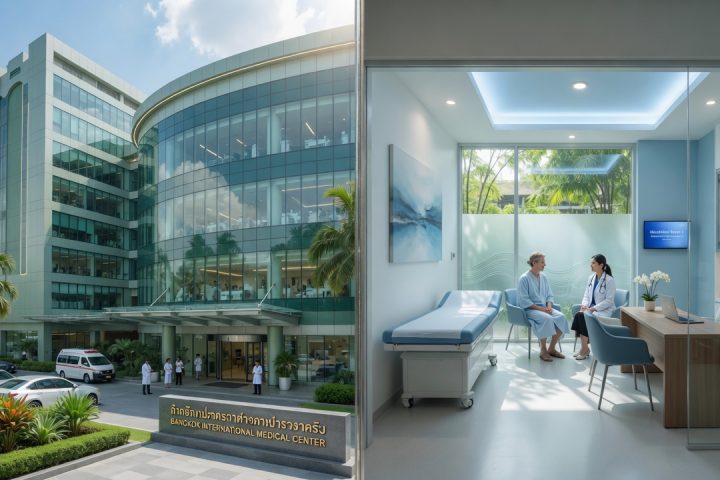
Thailand has become a top destination for breast augmentation for good reason. The country hosts several JCI-accredited hospitals like Bumrungrad International, Bangkok Hospital, and Samitivej — facilities that meet rigorous international standards for patient safety and care quality. Patients typically save 40-70% compared to Western countries: a Motiva implant package in Thailand costs $4,000-$6,000 compared to $8,000-$12,000 in the US, according to Medical Departures cost comparisons. Beyond cost, Thai surgeons have extensive experience with diverse patient populations and use the same high-quality implant brands available globally.
The Informed Choice Framework
The Informed Choice Framework — a structured approach to making breast augmentation decisions by asking the right questions at five decision points: clinic/surgeon, implant brand, size and placement, cost, and recovery. Most patients focus on brand first, but the surgeon’s experience with that specific brand matters more. This framework prevents you from missing important factors by turning each decision area into a set of specific questions to ask during your consultation. The UC San Diego Health breast augmentation consultation checklist provides a similar structured approach, and our framework adapts it specifically for the Thailand market. Let’s dive into the first decision: choosing your surgeon and clinic.
1. Choosing a Clinic and Surgeon in Thailand
Your surgeon’s experience is the most critical factor for safety and results. Look for board-certified plastic surgeons with extensive experience in breast augmentation — ideally those who perform the procedure regularly and can show before/after photos of patients with similar body types to yours. JCI accreditation matters: Bumrungrad, Bangkok Hospital, and Samitivej all maintain this certification, which signals international-standard quality protocols. Verify credentials through the Thai Medical Council and ask about revision rates. Red flags include surgeons who cannot clearly explain their approach, clinics that pressure you into quick decisions, or prices that seem too good to be true. Motiva’s capsular contracture rate of 1.2% is significantly lower than Mentor’s 3.5% (NIH 2023) — a key factor when evaluating implant options.
These criteria can feel overwhelming — our full guide on choosing a clinic and surgeon in Thailand covers each step in detail.
2. Implant Brands & Specs Overview
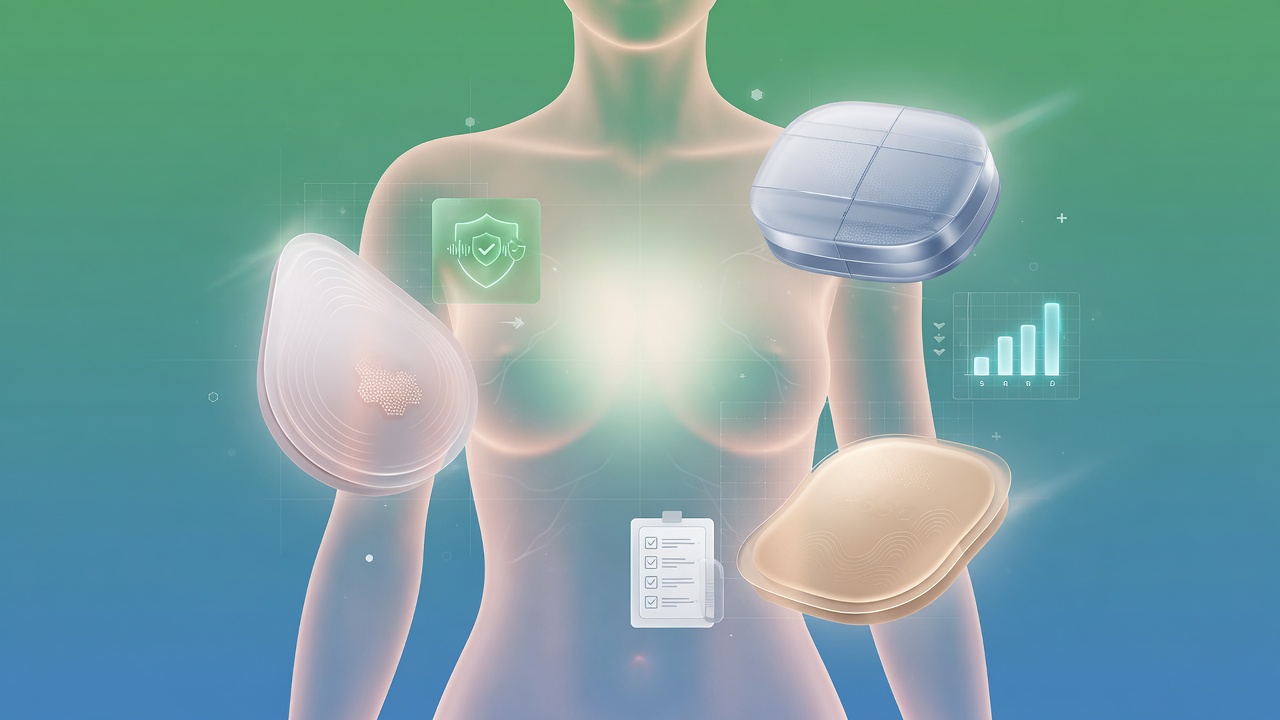
Three brands dominate the Thailand market: Motiva, Mentor, and Sebbin. Each has different features that affect safety and outcomes. Motiva implants, using Ergonomix gel technology, have shown a 1.2% capsular contracture rate in a 2023 NIH study — the lowest among major brands. Mentor, an FDA-approved brand with MemoryGel and MemoryShape options, has a longer track record and a 3.5% capsular contracture rate. Sebbin, a European brand with CE marking, offers a more affordable entry point at $3,500-$5,000. Motiva’s 1.2% capsular contracture rate is the lowest among major implant brands, making it a top choice for safety-conscious patients. The FDA’s breast implant approval database confirms that Mentor is FDA-approved while Motiva and Sebbin are not — though both carry CE marking for the European market. Round vs. anatomical shapes and low/moderate/high profiles further customize the result. The right choice depends on your anatomy and surgeon’s experience — explore each brand in depth in our dedicated comparison guide on breast implant brands in Thailand.
3. Key Questions for Implant Selection
Asking the right questions during your consultation ensures you and your surgeon are aligned on size, shape, and placement. The 45/55 rule describes the ideal aesthetic proportion: 45% of breast volume above the nipple and 55% below, creating a natural slope. A 2022 quantitative analysis of 500 women using 3D imaging (NCBI) validated this ratio. The 45/55 rule, validated by a 2022 NCBI study, ensures a natural breast slope when selecting implant size and placement. For sizing, a general guideline is 150-200 cc per cup size increase, but your chest width and natural tissue affect the final result significantly. Submuscular placement (under the chest muscle) reduces capsular contracture risk compared to subglandular placement (over the muscle). Key questions include: “What implant size do you recommend based on my measurements?” and “What incision type will you use?” Our dedicated guide on implant selection criteria covers 10+ questions with surgeon insights.
4. Cost and Procedure Expectations in Thailand
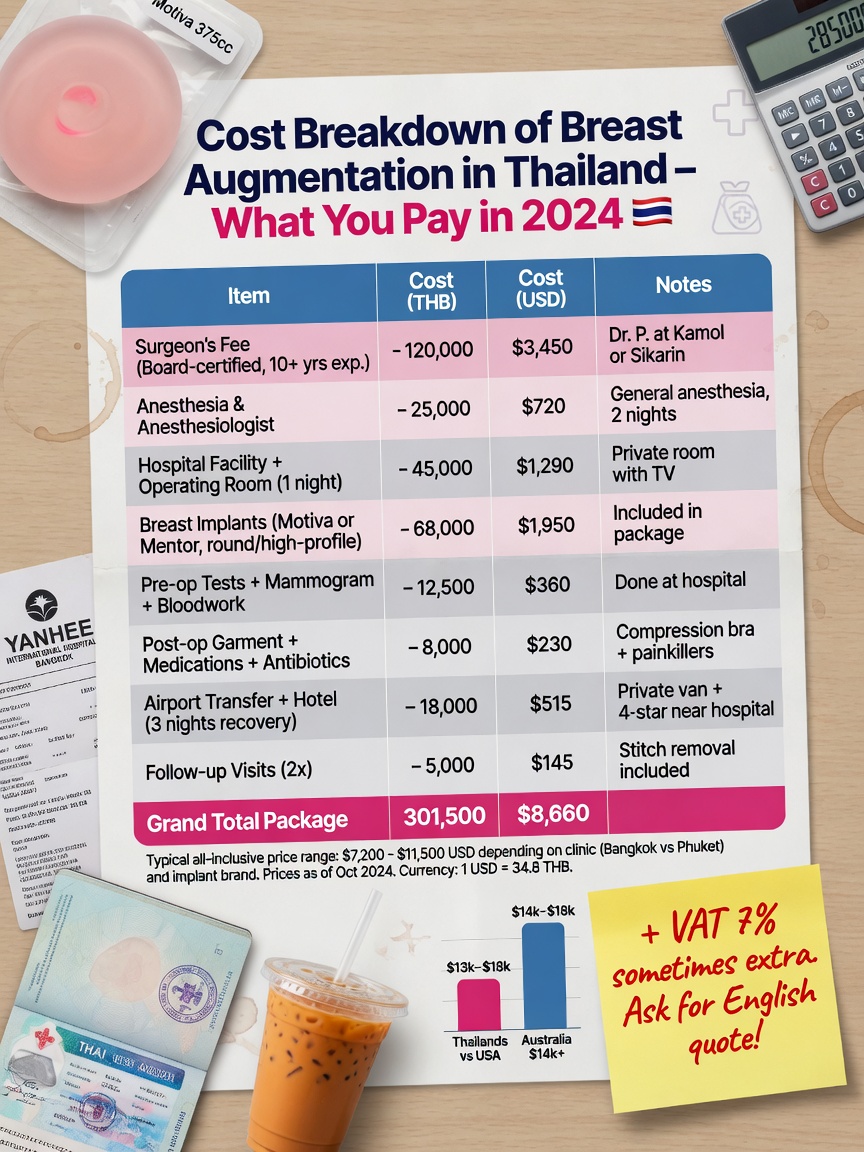
Breast augmentation in Thailand offers significant savings, but prices vary widely based on implant brand, hospital, and surgeon fee. Typical packages range from $4,000-$8,000 total. A standard package usually includes: surgeon fee, hospital stay (typically 1-2 nights), anesthesia, the implants themselves, and post-op medications. Breast augmentation in Thailand offers savings of 40-70% compared to the US, while maintaining equivalent quality standards. Motiva packages run $4,000-$6,000, Mentor $4,500-$7,000, and Sebbin $3,500-$5,000. Hidden costs to anticipate include blood tests ($100-$200), compression garments ($50-$100), flights, and accommodation for your recovery stay. Is Thailand a good place to get breast implants? Yes — the cost-value is excellent, but always verify surgeon credentials and hospital accreditation before booking. For a full cost breakdown by clinic and implant brand, see our complete guide on breast augmentation cost in Thailand.
5. Recovery, Results, and Long-Term Care
Recovery sets the stage for your final results. Knowing what to expect reduces anxiety and helps you plan effectively. The typical timeline: 24-48 hours of rest in hospital, 1-2 weeks off work, 6 weeks before returning to strenuous exercise, and 3-6 months for full “drop and fluff” settling. Capsular contracture occurs in 1.2–3.5% of cases depending on the implant brand (NIH 2023). Most surgeons advise wearing a supportive surgical bra for the first 4-6 weeks to reduce swelling and support proper positioning. Going braless too early may cause uneven settling. Scar management includes silicone sheets starting after incision healing, gentle massage after 2-3 weeks, and strict sun protection for at least 12 months. Long-term, monitor for capsular contracture — hardening of the tissue around the implant — and consider implant replacement at 10-15 years. The University of Michigan breast augmentation recovery guide provides detailed week-by-week guidance. For our complete day-by-day recovery plan, see your complete breast augmentation recovery guide.
How to Apply the Informed Choice Framework
The most powerful part of The Informed Choice Framework is putting it into action. Below is a consolidated checklist of questions to take to your consultation, grouped by each decision area.
Your Consultation Checklist
Surgeon & Clinic Questions:
- Is the surgeon board-certified in plastic surgery?
- Is the hospital JCI-accredited?
- Can I see before/after photos of similar cases?
Implant Brand Questions:
- Which brand do you recommend and why?
- What are the capsular contracture rates for this implant?
- Is the implant FDA-approved or CE-marked?
Size & Placement Questions:
- What cc volume do you recommend to achieve my desired cup size?
- Will you use submuscular or subglandular placement? Why?
- How does the 45/55 rule apply to my body?
Cost & Logistics:
- What is included in the package price?
- Are there hidden costs (tests, garments, medications)?
- What is the payment schedule?
Recovery & Aftercare:
- What is the typical recovery timeline for this procedure?
- When can I return to work? Exercise?
- What scar management do you recommend?
With your checklist ready, let’s address some common questions patients ask.
Frequently Asked Questions
FAQ 1: Best Surgeon in Thailand
The best breast augmentation surgeon in Thailand is a board-certified plastic surgeon with extensive experience in the specific implant brand and technique you’re considering. Look for surgeons affiliated with JCI-accredited hospitals like Bumrungrad, Bangkok Hospital, or Samitivej. Review their before/after galleries for consistent, natural-looking results that align with your aesthetic goals. Schedule consultations with at least two surgeons to compare approaches and comfort levels. Credentials from the Thai Medical Council and international boards (American Board of Plastic Surgery, Royal College of Surgeons) add confidence.
FAQ 2: Which Implant Brand to Choose?
The best brand depends on your anatomy, aesthetic goals, and surgeon’s recommendation. Motiva implants have the lowest capsular contracture rate (1.2% per 2023 NIH study) and use advanced Ergonomix gel for natural movement. Mentor implants are FDA-approved and have a long track record (3.5% capsular contracture rate). Sebbin implants are a cost-effective CE-marked option ranging from $3,500-$5,000. Your surgeon should explain why they recommend one brand over another based on your tissue characteristics and desired outcome. Motiva’s Ergonomix gel allows for natural movement and may reduce the risk of rippling.
FAQ 3: Most Realistic Implants?
Anatomical (teardrop) implants often look more realistic because they mimic the natural slope of the breast — fuller at the bottom, narrower at the top. Round implants can also appear natural, especially when placed under the muscle and chosen with the right profile. Highly cohesive “gummy bear” silicone gel retains its shape better and feels more natural over time. Surgeons often recommend teardrop shapes for patients with minimal natural breast tissue to create a tapered look.
FAQ 4: What Is the 45/55 Rule?
The 45/55 rule describes the ideal aesthetic proportion of a breast: 45% of the breast volume above the nipple and 55% below, creating a natural slope from the collarbone. A 2022 quantitative analysis of 500 women using 3D imaging (NCBI) validated this ratio as the most aesthetically pleasing proportion across diverse body types. Your surgeon can use this guideline to choose implant size, profile, and placement to create a balanced, natural-looking result proportional to your frame.
FAQ 5: How Many cc for a C Cup?
There is no exact cc-to-cup conversion because cup size depends on your chest width, breast base diameter, and natural tissue volume. As a general guideline, 150-200 cc typically adds about one cup size. A full C cup might require 300-400 cc, but this varies significantly — one person’s C cup is another’s D cup depending on band size. Your surgeon will take precise measurements and use implant sizers during surgery to determine the optimal volume for your specific anatomy.
FAQ 6: Does Going Braless Help?
Most surgeons recommend wearing a supportive surgical bra for the first 4-6 weeks to reduce swelling and support the implants as they settle into position. Going braless too early — within the first month — may cause uneven positioning as the implants haven’t stabilized. After 6 weeks, some surgeons advise going braless occasionally to allow gravity to assist with the natural “drop and fluff” process, but always follow your surgeon’s specific post-op protocol for the best results.
FAQ 7: Is Thailand a Good Option?
Yes, Thailand is a leading destination for breast augmentation due to its JCI-accredited hospitals, experienced board-certified surgeons, and competitive pricing (typically $4,000-$8,000 vs. $8,000-$12,000 in Western countries). Popular hospitals like Bumrungrad and Bangkok Hospital have world-class facilities and serve international patients regularly. Many clinics offer dedicated international patient coordinators to help with logistics and language barriers. However, quality varies — thoroughly research your surgeon’s credentials, hospital accreditation, and read patient reviews before committing. Combine your surgery with a 2-week recovery stay to maximize value and allow proper healing time before traveling home.
Final Thoughts and Next Steps
Choosing breast implant brands in Thailand requires a systematic approach. The Informed Choice Framework — covering clinic selection, brand comparison, sizing decisions, cost analysis, and recovery planning — ensures you’re prepared for every consultation. Start by verifying your surgeon’s credentials with JCI accreditation, then use our checklist to compare Motiva, Mentor, and Sebbin implants based on safety data and your goals.
The Informed Choice Framework works because it moves you from feeling overwhelmed to feeling empowered. Each of the five decision areas gives you specific questions to ask, turning a medical consultation into a confident conversation about your body and expectations.
Book consultations with at least two board-certified surgeons in Thailand. Take this guide and the checklist with you. Use the questions to compare their recommendations on implant brand, size, placement, and cost. Your perfect result starts with the right questions — start asking them today.
Medical Disclaimer: This content is for educational purposes only and is not a substitute for professional medical advice. Always consult a qualified plastic surgeon for personalized recommendations regarding your specific medical situation.