
Scar Revision in Thailand: Complete Surgical & Non-Surgical Guide
Are you self‑conscious about a scar from surgery, injury, or burn? Scar revision can significantly improve its appearance, but the range of options — from simple silicone gel to complex Z‑plasty — can feel overwhelming. Choosing the wrong treatment wastes money and may leave you disappointed. Many people end up with expensive laser sessions when a simple surgical revision would have worked better, or vice versa. In this guide, you’ll learn The Scar Assessment Framework — a practical method to match your scar type, age, and budget with the most effective surgical or non‑surgical option available in Thailand. We’ll compare techniques, costs, recovery times, and help you make an informed decision — whether you’re just exploring or ready to book.
Key Takeaways
Scar revision in Thailand combines world‑class medical care with costs 50–70% lower than the US.
- The Scar Assessment Framework helps match your scar type to the right treatment.
- Surgical techniques (excision, Z‑plasty) work best for raised scars; non‑surgical options (laser, injections) excel for flat or discolored scars.
- Average costs range from $200–$600 for non‑surgical to $1,500–$5,000 for surgery.
Why Medical Tourism for Scar Revision?
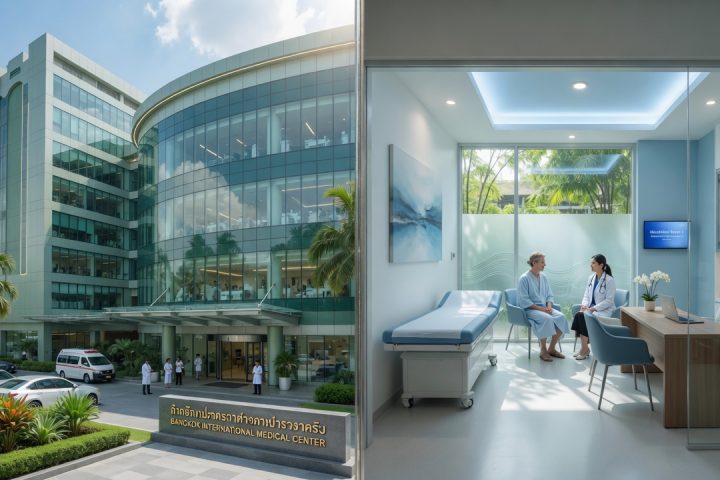
Thailand has become a leading destination for scar revision, offering high‑quality medical care at 50–70% less than US prices. Hospitals like Bangkok Hospital and Kamol Hospital hold international accreditations (JCI) and employ board‑certified plastic surgeons experienced in both surgical and non‑surgical revision. The country’s medical tourism infrastructure — dedicated international coordinators, English‑speaking staff, and streamlined visa processes — makes it accessible for patients from North America, Europe, and Australia.
Thailand’s Advantages in Plastic Surgery
Medical tourism for scar revision in Thailand rests on three pillars: cost savings, accreditation, and surgeon expertise. A surgical scar revision that costs $5,000–$8,000 in the US typically runs $1,500–$3,000 in Thailand, including hospital fees and follow‑up. JCI accreditation — the global gold standard for healthcare quality — is held by over 60 Thai hospitals, ensuring safety protocols match Western benchmarks. Board‑certified Thai plastic surgeons complete rigorous training, often including international fellowships. Bangkok Hospital scar revision services highlight the facility’s accreditation and surgeon qualifications for both surgical and non‑surgical procedures.
Accredited Hospitals and Surgeon Credentials
Bangkok Hospital, a JCI‑accredited medical center in Thailand, offers a dedicated cosmetic surgery department with scar revision specialists. Kamol Hospital is widely recognized for cosmetic surgery, including complex scar revisions. For patients seeking specialized scar care, PAI Clinic scar revision page details both surgical and non‑surgical options. When evaluating any hospital, verify JCI accreditation, check the surgeon’s board certification, and request before‑and‑after photos of similar scar cases. Now let’s understand what scar revision actually involves and the two main categories of treatment.
Understanding Scar Revision: What Actually Works
Scar revision is any medical procedure that improves the appearance or function of a scar. It does not erase a scar entirely, but can reduce its size, color, and texture. The two main approaches — surgical and non‑surgical — work best on different scar types.
What Is Scar Revision?
Scar revision refers to procedures that alter a scar’s appearance, making it less noticeable or improving restricted movement. The key expectation: no scar can be fully removed, but improvement of 50–80% is common across most techniques. Scar types fall into three categories: hypertrophic (raised, staying within the original wound boundary), keloid (raised, extending beyond the wound), and atrophic (sunken depressions, common with acne). A retrospective study of 120 patients found 78% satisfaction after single scar revision surgery (PubMed, 2017). Understanding your scar type is the first step in choosing the right treatment.
Surgical vs Non-Surgical: Key Differences at a Glance
| Factor | Surgical | Non-Surgical |
|---|---|---|
| Mechanism | Excision, tissue rearrangement | Collagen remodeling, inflammation reduction |
| Typical Scar Types | Hypertrophic, keloid, contracture | Atrophic, flat, pigmented |
| Recovery Time | 1–2 weeks downtime | Minimal to none |
| Cost Range (USD) | $1,500–$5,000 | $200–$600 per session |
| Number of Sessions | 1 procedure | 3–6 sessions typically |
The ASPS comparison of scar revision treatments provides an in‑depth overview of current methods. Surgical revision suits broad, raised, or contracture scars, while non‑surgical options work better for smaller, flat, or pigmented scars. Let’s dive deeper into the surgical options available in Thailand.
Surgical Techniques for Scar Revision
Surgical scar revision achieves 78% patient satisfaction after one procedure, but keloid recurrence reaches 25% after multiple revisions (PubMed, 2017). The goal is to transform a conspicuous scar into a more discreet, fine line that blends with surrounding skin.
Excision, Z-Plasty, and More
Excision involves cutting out the scar and suturing the wound closed — best for linear scars that healed poorly. Z‑plasty, a geometric technique that reorients scar tension, uses triangular flaps rearranged to reduce contracture and improve flexibility — ideal for scars across joints. Skin grafts and flap surgery address large surface loss from burns or trauma. UCSF Health scar revision techniques describe wound closure methods including Z‑plasty for functional and cosmetic improvement. For keloid‑prone patients, combination therapy with post‑surgical steroid injections or low‑dose radiation significantly lowers recurrence.
Risks and Recurrence Considerations
Recurrence rates vary by scar type and technique. For first‑time surgical revision, recurrence within two years is approximately 12%, rising to 25% after multiple procedures — recurrence after scar revision surgery data confirms this pattern (PubMed, 2017). Keloid scars carry the highest recurrence risk, which is why many surgeons recommend combining excision with adjuvant treatments like intralesional steroids or brachytherapy. Additional risks include infection, poor wound healing in certain skin types, and the formation of a new scar that may be cosmetically similar. If you prefer to avoid surgery, there are many effective non‑surgical alternatives.
Non-Surgical Options: Lasers, Injections, and More
Non‑surgical scar revision treats a wide range of scar types with minimal downtime. Results accumulate over multiple sessions, and combination approaches often outperform single treatments.
Laser Therapy: Fractional CO2 and More
Fractional CO2 laser stimulates collagen remodeling in the deep dermis. A 40‑patient RCT on fractional laser for hypertrophic scars showed 53% mean improvement in scar thickness after three sessions (PubMed, 2015). Pulsed dye laser targets red, vascular scars and works well for pigmentation. A 60‑patient study on combined steroid and laser for keloids found 85% satisfaction and 70% scar volume reduction with combination therapy (PubMed, 2018). Most patients need 3–6 sessions spaced 4–6 weeks apart, with progressive improvement visible after each treatment.
Steroid Injections, Silicone, Microneedling
Intralesional corticosteroid injections flatten keloid and hypertrophic scars by reducing inflammation and collagen production — often combined with laser for synergistic effect. A silicone gel systematic review of 20 studies found significant reduction in scar height and thickness (pooled effect 0.45, PubMed, 2014). Microneedling (collagen induction therapy) creates micro‑injuries that stimulate new collagen, making it particularly effective for atrophic acne scars. These non‑surgical options fit well within The Scar Assessment Framework’s “low risk, moderate improvement” path for appropriate scar types.
How Much Does Scar Revision Cost in Thailand?
Cost is often the deciding factor. Thailand offers transparent pricing with 50–70% savings compared to Western countries, without compromising on quality when choosing accredited facilities.
Average Cost Ranges by Technique
| Technique | Cost Range (USD) | Cost Range (THB) | Notes |
|---|---|---|---|
| Surgical revision | $1,500–$5,000 | 55,000–185,000 | Complex cases may cost more |
| Laser therapy (per session) | $200–$600 | 7,400–22,000 | 3–6 sessions typically needed |
| Steroid injections (per session) | $100–$300 | 3,700–11,000 | Often combined with laser |
| Microneedling (per session) | $150–$400 | 5,500–14,800 | 3–5 sessions recommended |
Bookimed cost data for Thailand scar revision aggregates pricing from multiple Thai hospitals, showing surgical scar revision starting from $1,500.
Is It Worth the Expense?
The value equation favors Thailand: a surgical scar revision costing $2,000 in Bangkok would exceed $6,000 in the US — a 67% saving. Quality is maintained through JCI accreditation, experienced surgeons, and modern equipment. Clinical trials on scar revision in Thailand listed on ClinicalTrials.gov indicate active medical infrastructure and ongoing research. Factor in travel ($500–$1,500 round trip), accommodation ($30–$80 per night), and at least one week in-country for follow‑up. The total package still typically comes in 40–60% below domestic treatment.
Recovery, Results, and Realistic Expectations
Understanding recovery timelines helps set realistic expectations and plan your trip accordingly.
Recovery Timelines by Treatment
| Phase | Surgical Revision | Non-Surgical (Laser) |
|---|---|---|
| First week | Stitches, swelling, limited activity | Redness, mild swelling (1–2 days) |
| First month | Scar begins to flatten; avoid sun | Gradual change; multiple sessions |
| Full results | 6–12 months for scar maturation | 3–6 months after final session |
Bangkok Hospital scar revision recovery notes expected wound care and follow‑up protocols. Surgical patients should plan for 1–2 weeks of downtime before returning to normal activities.
Factors That Affect Your Results
Older scars — even those over 20 years — can still improve, though results may require more sessions or combination approaches. Sun protection is non‑negotiable: UV exposure darkens scars and undermines results. Daily silicone gel application, gentle massage, and strict adherence to aftercare protocols directly influence final outcomes. The same factors affecting scar revision outcomes study found that patient satisfaction correlated strongly with scar type and the number of prior revisions. With proper aftercare, most patients achieve meaningful, long‑lasting improvement.
How to Choose the Right Scar Revision Option
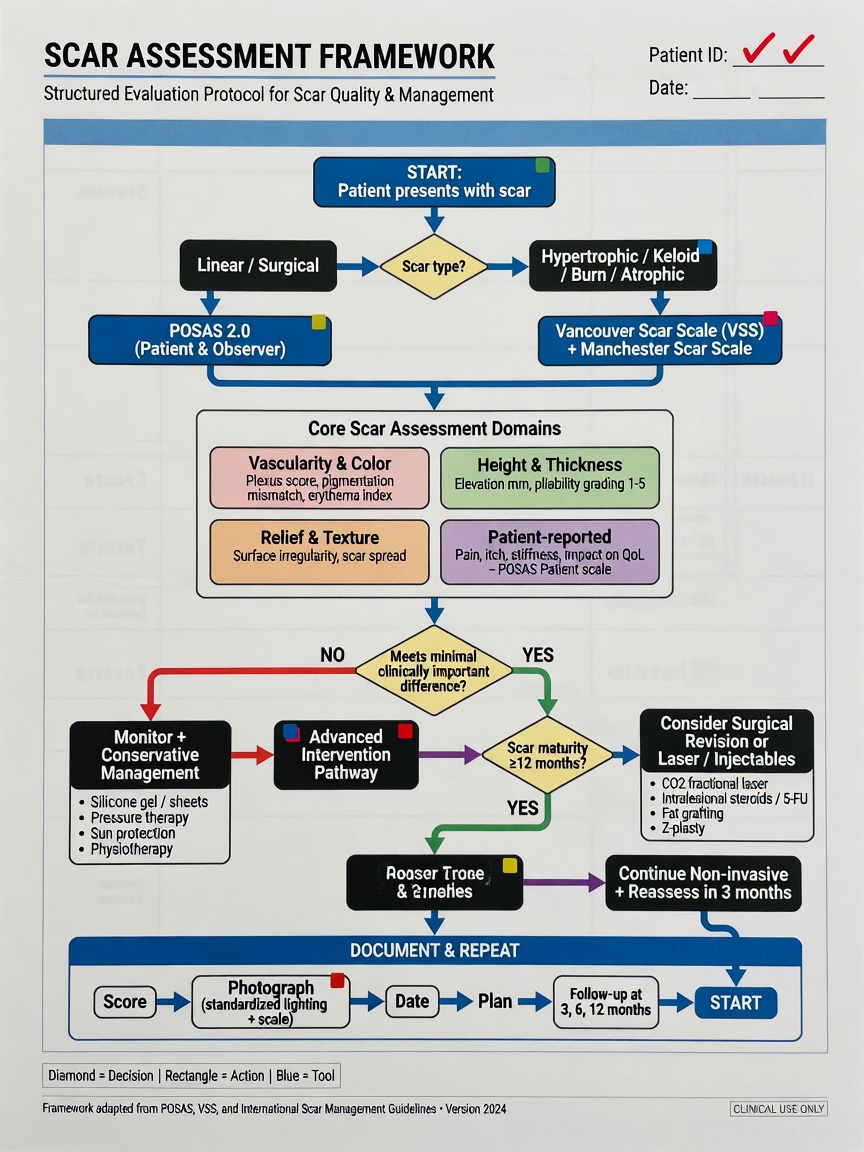
With all this information, you need a structured way to decide. The Scar Assessment Framework — a structured method to match your scar characteristics with the optimal treatment — provides that structure.
Decision Framework: The Scar Assessment Framework
Step 1 — Identify scar type: Raised scars (hypertrophic or keloid) respond best to surgical excision or steroid + laser combinations. Depressed or atrophic scars benefit from microneedling, fillers, or surgical excision with layered closure.
Step 2 — Assess age and location: Scars older than one year still improve, but may need more sessions. Scars over joints or mobile areas often require surgical techniques that reduce tension.
Step 3 — Match with budget and downtime: With $500–$1,000, focus on non‑surgical options. With $2,000+, surgical revision becomes viable, especially for raised scars. The ASPS decision framework for scar revision discusses factors influencing the choice between methods, reinforcing this structured approach.
When to Choose Surgical vs Non-Surgical
Choose surgical revision when you have a large, raised, or contracture scar; when permanent improvement is your goal; and when you can accommodate 1–2 weeks of downtime. Choose non‑surgical options when your scar is small, flat, or pigmented; when you prefer minimal downtime; or when budget constraints limit you to $1,000 or less. Many patients achieve the best outcomes through combination therapy — for example, surgical excision followed by laser resurfacing and steroid injections. Clinical trials on scar revision listed on ClinicalTrials.gov confirm that combined approaches frequently outperform single modalities.
Limitations & Considerations for Scar Revision
No treatment is perfect. Being aware of limitations helps you make an informed decision and avoid disappointment.
Common Pitfalls When Choosing Scar Revision
Expecting complete removal — Improvement of 50–80% is realistic, not 100%. Any clinic promising “complete scar removal” is overpromising. Choosing wrong modality — Treating a large raised scar with laser alone wastes money and delays effective surgical treatment. Skipping aftercare — Sun exposure, missed silicone applications, and ignoring wound care instructions significantly reduce final results.
When to Choose Alternatives
For very small, flat scars that are not raised or pigmented, camouflage makeup may provide sufficient cosmetic improvement at minimal cost. Widespread acne scarring may respond better to full‑face laser resurfacing or microneedling rather than focal revision. If your budget is extremely tight, consistent use of silicone gel combined with rigorous sun protection can improve many scars over 6–12 months without any procedure.
When to Seek Expert Help
If your scar is a keloid that has recurred after prior treatment, consult a board‑certified dermatologist or plastic surgeon — recurrence risk is high and requires experienced management. Contracture scars that limit movement or cause pain need surgical release, not topical treatments. When considering medical tourism, always schedule a virtual consultation with a Thai board‑certified plastic surgeon before booking travel to confirm your scar is suitable for the planned treatment.
Frequently Asked Questions
Can a 20‑year old scar be removed?
An old scar can be significantly improved, but never fully removed. Scar revision techniques — both surgical and non‑surgical — can reduce size, color, and texture. Results may be less dramatic than for a newer scar, but many patients see 50–70% improvement. For example, laser therapy can fade pigmentation even on decades‑old scars. Consult a specialist to evaluate the scar’s specific characteristics.
Is scar revision surgery permanent?
Surgical scar revision can provide long‑lasting improvement, but the new scar will still be present. The goal is to make the scar less noticeable, not to eliminate it. Results are considered permanent for most patients, though keloids may recur. Aftercare (silicone, sun protection) greatly influences long‑term outcome. Your surgeon will explain realistic permanency during the consultation.
What is the new technology for scar removal in 2026?
The latest advances include fractional radiofrequency, low‑dose brachytherapy, and microneedling combined with PRP. Fractional radiofrequency targets deeper scar tissue without damaging the surface. Low‑dose brachytherapy is used after keloid surgery to prevent recurrence. Microneedling with PRP (platelet‑rich plasma) boosts collagen for atrophic scars. These technologies are available at leading Thai hospitals.
Are scar revisions worth it?
For most patients, scar revision is worth the investment when it significantly improves appearance and confidence. 78% of patients report satisfaction after a single surgical revision (PubMed, 2017). Non‑surgical options offer good results with lower cost and downtime. The key is choosing the right treatment for your scar type using a framework like The Scar Assessment Framework. If you set realistic expectations and choose an accredited provider, the benefits often outweigh the expense.
What are the disadvantages of scar revision?
Disadvantages include cost, downtime, and the risk of recurrence or new scarring. Surgical revision requires recovery time (1–2 weeks) and can be expensive. Non‑surgical treatments require multiple sessions and may not be effective for all scar types. Keloid scars have a recurrence rate of 12–25% even after successful surgery. Always discuss risks with your surgeon before proceeding.
Conclusion
Scar revision in Thailand offers a realistic path to improving scar appearance, with cost savings of 50–70% compared to the US. Using The Scar Assessment Framework, you can match your scar type, age, and budget to the optimal treatment — whether surgical (excision, Z‑plasty) or non‑surgical (laser, injections). Results are not a full removal but can achieve 50–80% improvement with high patient satisfaction.
The Scar Assessment Framework gives you a structured way to navigate the overwhelming number of choices. By first identifying your scar as hypertrophic, keloid, or atrophic, then factoring in age and budget, you eliminate guesswork and focus on the techniques most likely to succeed.
Start by looking at your scar in the mirror. Use the framework to note its type, age, and your available budget. Then book a consultation with a JCI‑accredited hospital in Thailand — most offer free virtual consultations. Take the first step toward a more confident you.
This article is for informational purposes only and does not constitute medical advice. Consult a board‑certified plastic surgeon for personalized recommendations.