
360 Liposuction in Thailand: Your Complete Guide to Understanding, Comparing, and Choosing
You’ve heard about liposuction, but what does “360” actually mean? More importantly, is it the right choice for your body goals? With conflicting information online, confusing cost ranges, and the stress of choosing a clinic in a foreign country, it’s easy to feel overwhelmed. By the end of this guide, you’ll have a clear, step‑by‑step framework to evaluate 360 liposuction Thailand — from definition to real patient feedback — so you can make a confident, informed decision. We’ll start by defining what 360 liposuction is, then compare it to traditional lipo, break down costs, set realistic expectations, guide you through clinic selection, and finally share real patient experiences. Follow our Full‑Circle Decision Framework to ensure you don’t miss anything.
Key Takeaways
360 liposuction Thailand treats the entire midsection in one session, but it’s body contouring, not weight loss.
- Full‑Circle Decision Framework: Evaluate definition, comparison, cost, results, clinic, and reviews — in that order.
- 360 vs. Traditional: 360 treats front, sides, and back; traditional treats smaller areas.
- Cost range: $2,500–$5,000 depending on clinic and package (Bookimed, 2024).
- Realistic results: Expect 1‑3 dress sizes lost, but long‑term success requires lifestyle maintenance.
What Is 360 Liposuction? Definition and Key Concepts
360 liposuction, also called circumferential liposuction, treats the entire torso — abdomen, waist, hips, lower back, and sometimes flanks — in a single procedure. It is a body contouring technique, not a weight loss method, and works best for people who are near their ideal weight but have stubborn fat deposits that resist diet and exercise. The procedure uses small incisions around the midsection to insert a thin cannula that breaks up and suctions fat cells, creating a smooth, unified silhouette rather than isolated spot reductions. Ideal candidates are within 10–15 pounds of their goal weight, have good skin elasticity, and maintain a stable weight. Surgeons often combine 360 lipo with high‑definition liposuction to enhance muscle definition for those seeking a more athletic look.
For a complete explanation of 360 liposuction — including what areas it treats and who is a good candidate — see our dedicated article on What is 360 Liposuction?.
360 Liposuction vs. Traditional: Key Differences
The core difference between 360 and traditional liposuction comes down to scope. Traditional liposuction treats one or two small areas — like the lower abdomen or inner thighs — using a few small incisions. 360 liposuction treats the entire midsection in a single session, addressing the front, sides, and back.
This circumferential approach offers a more dramatic, unified contour. Patients who choose 360 lipo often want a complete transformation of their midsection rather than spot‑fixing a single problem area. Recovery time is similar for both procedures, though 360 lipo may require more compression garments to manage swelling across the full torso.
Your choice depends on your problem areas and aesthetic goals. If you carry fat only in your lower belly, traditional lipo might suffice. If you have stubborn fat wrapping around your entire midsection, 360 lipo delivers better results.
| Aspect | Traditional Liposuction | 360 Liposuction |
|---|---|---|
| Treatment areas | 1‑2 small zones | Full torso circumference |
| Incisions | 2‑4 small incisions | 4‑6 incisions around torso |
| Results | Isolated improvement | Unified midsection contour |
| Recovery time | 1‑2 weeks | 1‑2 weeks |
| Compression garments | Single garment | Full torso garment |
For a feature‑by‑feature comparison including costs and results, see 360 Liposuction vs. Traditional.
Cost of 360 Liposuction in Thailand
One of the biggest draws of 360 liposuction in Thailand is the price advantage. According to sources like Bookimed and Flymedi, the typical cost ranges from $2,500 to $5,000, which is 40‑60% lower than comparable procedures in the United States or Europe. This price differential is what makes medical tourism to Thailand so popular for body contouring.
Package inclusions vary significantly between clinics. Some cover hospital stay, compression garments, medications, and airport transfers. Others quote only the surgical fee, leaving you to pay separately for accommodation and aftercare. Always ask for a detailed breakdown before committing.
Several factors influence the final price: the clinic’s reputation and accreditation status, the surgeon’s years of experience, the technology used (VASER or laser‑assisted lipo costs more than traditional tumescent), and the complexity of your case. A higher price doesn’t guarantee better results, but the cheapest option often lacks important safety measures.
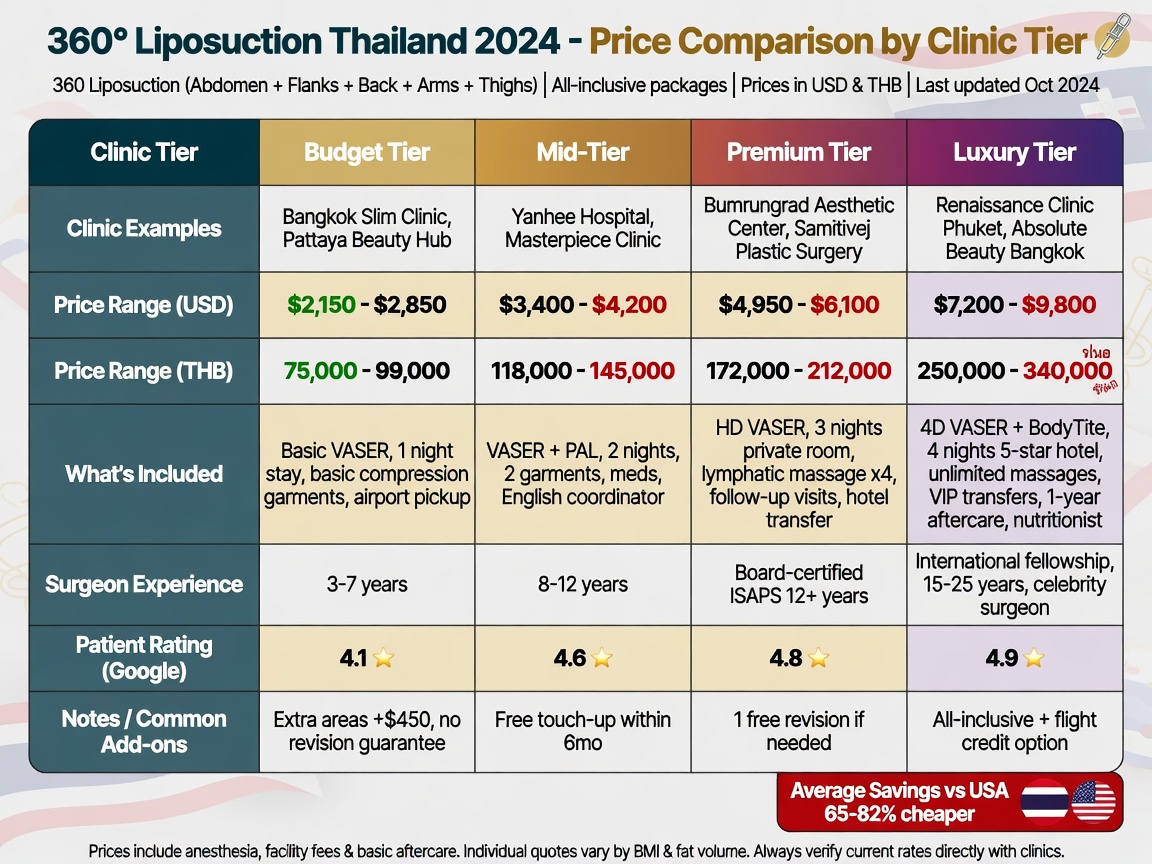
For a full breakdown of packages, hidden costs, and how to compare quotes, see Cost of 360 Liposuction in Thailand.
Results and Expectations: What 360 Lipo Can and Cannot Do
360 lipo permanently removes fat cells from the treated areas, with surgeons safely extracting up to 5‑6 liters during a single session. Most patients lose 1‑3 dress sizes once swelling fully subsides, typically within 3‑6 months after surgery.
Final results depend heavily on your skin elasticity and lifestyle habits. Younger patients with firm skin see better contouring because the skin tightens around the reduced fat layer. Those who maintain a stable weight after surgery enjoy permanent results — the removed fat cells don’t grow back. However, if you gain significant weight, remaining fat cells in untreated areas can enlarge, potentially distorting your silhouette.
360 lipo cannot tighten loose skin or eliminate cellulite. Patients with significant skin laxity — often after major weight loss or pregnancy — may need a tummy tuck instead of or in addition to liposuction. The procedure is also not a treatment for obesity; it’s a contouring tool for body sculpting.
For a detailed recovery timeline and what happens 10 years after surgery, see 360 Lipo Results and Expectations.
Choosing a Clinic and Surgeon for 360 Liposuction in Thailand
Selecting the right clinic is arguably the most important decision you’ll make. The key criteria start with credentials: your surgeon should be board‑certified by the Thai Medical Council, and the hospital should hold JCI accreditation — the gold standard for international healthcare facilities.
Experience with 360 liposuction specifically matters more than general liposuction experience. Ask how many circumferential procedures the surgeon performs annually and request before/after photos of previous patients with similar body types to yours. Pay attention to the technology being used — tumescent technique is standard and safe, while VASER or laser‑assisted lipo may offer benefits for skin tightening.
How Do I Choose a Safe Clinic for 360 Liposuction in Thailand?
Start by verifying board certification and JCI accreditation, then read patient reviews on platforms like Cosmeditour and Reddit. Ask the surgeon how many 360 lipo procedures they perform per year and request before/after photos of patients with a similar body type. Avoid clinics that are significantly cheaper than the market average — safety should never be compromised for price. For a deeper dive, check the FAQ section below.
During consultation, ask direct questions: What is the total cost including all fees? How many follow‑up appointments are included? What happens if complications arise after you return home? A transparent clinic will answer these clearly without pressure.
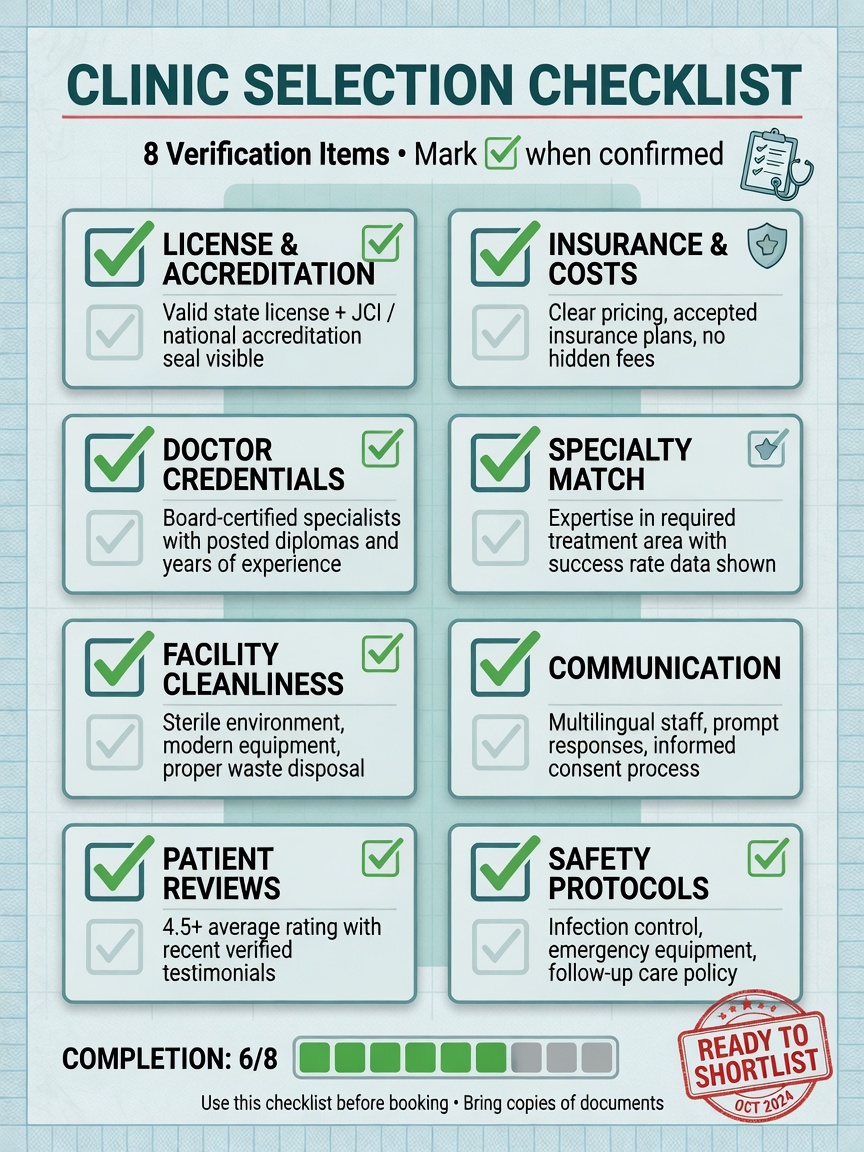
For a complete checklist of credentials and recommended clinics, see Choosing a Clinic for 360 Lipo in Thailand.
Patient Experiences and Reviews of 360 Liposuction in Thailand
Reading real patient stories provides invaluable perspective that clinical descriptions can’t match. Across forums like Reddit and review platforms like Cosmeditour, common themes emerge. Patients consistently report dramatic contour improvements and satisfaction with the professional care they received. Many describe their decision to travel to Thailand as life‑changing, citing the combination of quality care and affordable pricing.
However, the experience isn’t without challenges. Recovery pain is real — most patients describe the first week as uncomfortable, with swelling peaking around day three. The need for multiple follow‑ups can be logistically difficult for international patients who can only stay in Thailand for 1‑2 weeks.
A Reddit thread titled “I flew to Bangkok for liposuction 360 – here’s my experience” highlights the before/after journey honestly: the author details the research process, the nervousness before surgery, the painful but manageable recovery, and the eventual satisfaction with results. One patient wrote, “I dropped from a size 10 to a size 6 in four months — the recovery was tough, but I’d do it again in a heartbeat.” These authentic accounts reassure readers that thorough research and realistic expectations lead to positive outcomes. In our view, reading 3‑5 detailed reviews before committing is the minimum due diligence.
For detailed patient stories with before/after details and cost breakdowns, see Patient Experiences of 360 Lipo in Thailand.
Important Considerations Before Your Decision
In our view, the most critical factor is choosing a board‑certified surgeon — no discount is worth compromising on this. Beyond that, understanding what 360 lipo can and cannot do will prevent disappointment.
Common Pitfalls When Considering 360 Liposuction
The biggest mistake patients make is expecting 360 lipo to remove large amounts of weight. It’s body contouring, not weight loss — you’ll lose inches, not pounds on the scale. Choosing purely on price is another trap; the cheapest clinic may lack proper accreditation or an experienced surgeon. Recovery downtime is often underestimated — compression garments, swelling, and temporary bruising are real and require at least a week off from normal activities. Finally, results aren’t permanent if you don’t maintain your weight. Significant weight gain after surgery will redistribute fat to untreated areas.
When to Choose Alternatives
Consider traditional liposuction if you only need one or two small areas treated. Non‑surgical options like CoolSculpting or radiofrequency body contouring work well for small fat pockets with good skin elasticity. If you have loose skin after major weight loss, a tummy tuck (abdominoplasty) may deliver better results than liposuction alone.
When to Seek Expert Help
Schedule a consultation with a board‑certified plastic surgeon to assess your candidacy before making any decisions. Many Thai clinics offer free virtual consultations, allowing you to discuss your goals and get professional guidance without travel commitment. If you have underlying health conditions like diabetes or heart disease, a full medical clearance is essential before considering any surgical procedure. We strongly recommend getting at least two consultations from different clinics to compare approaches and build confidence in your choice.
Frequently Asked Questions
What is 360 liposuction?
360 liposuction is a body contouring procedure that treats the entire midsection — abdomen, waist, hips, and lower back — in a single session. Unlike traditional liposuction, it addresses fat from all angles, creating a smooth, unified silhouette. It is not a weight loss method; ideal candidates are within 10‑15 lbs of their goal weight.
Is lipo 360 better than traditional liposuction?
It depends on your goals. 360 liposuction is better if you want comprehensive contouring of the whole torso. Traditional liposuction is better for small, isolated fat pockets. 360 lipo offers more dramatic results but requires more recovery attention. Choose based on your problem areas.
How much does 360 liposuction cost in Thailand?
In Thailand, 360 liposuction typically costs $2,500‑$5,000 (Bookimed, 2024), depending on the clinic’s reputation, surgeon’s experience, and package inclusions. Prices are 40‑60% lower than in the US or Europe. Many packages include hospital stay, compression garment, and airport transfers.
How many dress sizes can you lose with lipo 360?
Most patients lose 1‑3 dress sizes after 360 liposuction, once swelling subsides (3‑6 months). The fat removed is permanent, but final results depend on your starting shape and skin elasticity. It’s a contouring tool — not a dramatic weight loss method.
How do I choose a safe clinic for 360 liposuction in Thailand?
Look for board‑certified surgeons (Thai Medical Council), JCI‑accredited hospitals, and positive patient reviews on platforms like Cosmeditour or Reddit. Ask about the surgeon’s experience with 360 lipo specifically. Request before/after photos of previous patients. Avoid clinics that are significantly cheaper than the market average.
Conclusion
Choosing 360 liposuction in Thailand is a significant decision, but by using the Full‑Circle Decision Framework — evaluating definition, comparison, cost, results, clinic, and real patient feedback — you can move forward with confidence. Prices range $2,500‑$5,000, expect 1‑3 dress sizes lost, and results are permanent with a healthy lifestyle.
This framework ensures you don’t overlook any critical factor. Start with understanding what 360 lipo is, compare it to traditional, check costs realistically, manage expectations, vet your clinic, and validate through patient stories. Each step builds your informed decision.
Ready to dive deeper? Begin by reading our dedicated article on What is 360 Liposuction? — it lays the foundation. Then explore the cost guide and clinic selection checklist. A confident decision starts with solid knowledge.