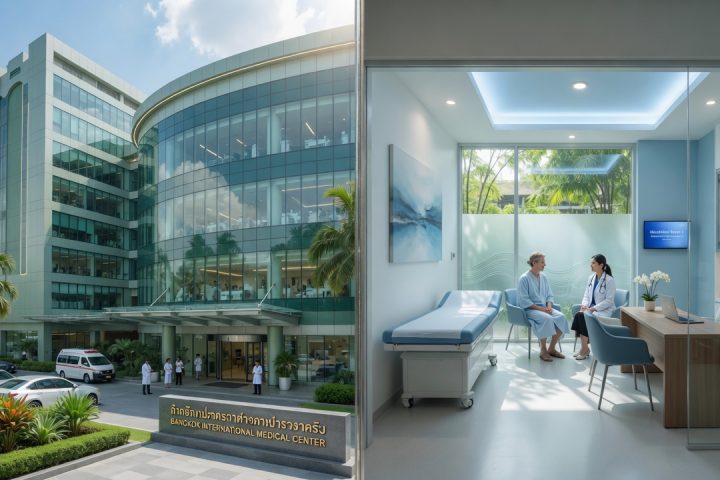

LASIK vs. Lens Surgery in Thailand: A Complete Guide for Clear Vision
You know you need vision correction, but the sea of acronyms — LASIK, PRK, ICL, RLE — makes choosing a solution feel like a gamble. Pick the wrong procedure, and you risk complications, disappointing results, or unnecessary costs. The decision paralyzes you into inaction.
By the end of this guide, you’ll use our “Vision Fit Matrix” to confidently pick the exact procedure for your age, prescription, and budget — so you can book your surgery in Thailand with total clarity. We’ll break down each procedure, compare them side-by-side, show you the costs, and explain how to choose a safe clinic.
Key Takeaways
Choosing between LASIK and lens surgery in Thailand depends on your age, prescription strength, and lifestyle — use the “Vision Fit Matrix” to find your match.
- LASIK: Best for patients under 40 with mild to moderate myopia.
- ICL: Ideal for high myopia when LASIK is not an option.
- RLE: The go-to solution for patients over 40 with presbyopia.
Understanding Your Vision Correction Options: A Quick Primer
Vision correction falls into three categories: corneal procedures that reshape the eye’s surface, lens-based surgeries that implant or replace the natural lens, and non-surgical alternatives. Bangkok clinics offer all of these options, which is why the choice can feel overwhelming without a structured approach.
The fundamental difference comes down to what you’re willing to change. Corneal procedures like LASIK and PRK permanently reshape the front surface of your eye. Lens-based procedures like ICL and RLE work inside the eye by adding or replacing the natural lens. Your unique eye anatomy — corneal thickness, prescription strength, and age — determines which category is right for you.
This distinction is the foundation of the “Vision Fit Matrix,” a framework we’ll use throughout this guide to match you with the right procedure. Understanding these two categories first makes the rest of the decision process far simpler.
What is LASIK?
LASIK, or Laser-Assisted In Situ Keratomileusis, is the most widely performed vision correction procedure worldwide. The surgeon creates a thin flap in the cornea using either a microkeratome blade or a femtosecond laser, then reshapes the underlying corneal tissue with an excimer laser to correct myopia, hyperopia, and astigmatism.
The procedure takes about 10 to 15 minutes per eye, and most patients notice improved vision within 24 hours. According to The Eye Institute, the satisfaction rate exceeds 96% for appropriate candidates. LASIK works best for patients with mild to moderate prescriptions — typically up to -6.00 diopters of myopia — and sufficient corneal thickness.
For a 30-year-old with a -3.00 diopter prescription and healthy corneas, LASIK is often the first-line recommendation at Bangkok clinics. Recovery is fast, discomfort is minimal, and most patients achieve 20/20 vision or better.
For patients who cannot have LASIK, lens-based surgeries like ICL and RLE offer alternative paths to clear vision.
What are Lens-Based Surgeries (ICL, RLE)?
ICL, or Implantable Collamer Lens surgery, places a lens between your iris and natural lens without removing any tissue. The key advantage is reversibility — the lens can be removed or replaced if your eyes change over time. ICL is ideal for patients with high myopia (above -6.00 diopters) or thin corneas that make LASIK too risky.
RLE, or Refractive Lens Exchange, removes your natural lens and replaces it with an artificial intraocular lens. This procedure is essentially identical to cataract surgery, but performed before cataracts develop. RLE is irreversible, but it offers a permanent solution for presbyopia — the age-related loss of near vision that begins around 40.
Consider this contrast: a 28-year-old with -8.00 diopter myopia and thin corneas is an excellent ICL candidate, while a 50-year-old with presbyopia who wants freedom from reading glasses is better suited for RLE. Each procedure has a specific niche based on your eye’s needs.
Now that you know the options, let’s plug your personal data into the Vision Fit Matrix to see which one fits you best.
Using the ‘Vision Fit Matrix’ to Choose the Right Procedure
Most articles simply list the features of each surgery. The Vision Fit Matrix goes further by giving you a structured, three-step decision framework that considers your age, prescription strength, and lifestyle. This eliminates the guesswork and leads you to a clear recommendation.
Research across ophthalmology communities confirms that matching patients to the right procedure based on these three factors significantly improves satisfaction outcomes. Here’s how the matrix works.
The 3-Step Vision Fit Matrix
Step 1: Assess Your Age
Your age is the single most important factor in determining which procedure is appropriate. The eye changes dramatically over time, and each procedure aligns with a specific life stage.
- Under 40: Your natural lens is still flexible. LASIK or ICL are the top contenders because they preserve your eye’s natural accommodation — the ability to focus at different distances.
- Over 40: Presbyopia has begun. Your lens is losing flexibility, so standard LASIK that only corrects distance vision will leave you needing reading glasses. RLE or Laser Blended Vision (LBV) are better options at this stage.
- Over 50: Cataract development becomes a consideration. RLE is often the preferred choice because it addresses both presbyopia and future cataracts in one procedure.
Step 2: Evaluate Your Prescription Strength
The amount of correction needed determines which procedures are technically feasible and safe.
- Mild to Moderate (up to -6.00D): LASIK or PRK work well. The amount of corneal tissue removal is within safe limits.
- High (-6.00D to -10.00D): ICL is often superior because it avoids excessive corneal tissue removal, reducing the risk of ectasia — a bulging of the cornea that can occur after aggressive LASIK.
- Very High (-10.00D and above): ICL or RLE are the primary options. Corneal procedures are typically contraindicated at these prescription levels.
Step 3: Consider Your Lifestyle
Your daily activities matter more than most patients realize when choosing a vision correction procedure.
- High-impact sports (boxing, MMA, martial arts): ICL is safer because there is no corneal flap that could be dislodged by trauma. LASIK flaps, though rare, can shift with direct eye impact.
- Night driving: Discuss halos and glare with your surgeon. These side effects are more common with LASIK in high prescriptions and with certain multifocal RLE lenses.
- Desk job: The fast recovery of LASIK — often 24 to 48 hours — is a practical advantage for professionals who cannot afford extended downtime.
- Outdoor or dry environments: PRK may be preferable for patients who already have dry eyes, as it does not involve cutting corneal nerves, which can temporarily worsen dryness.
Applying the Matrix: Example Scenarios
Let’s see how the Vision Fit Matrix works with real-world patients.
Example 1: “The Young Professional” — Age 28, -5.00D myopia, desk job, active lifestyle but no contact sports. The matrix points to LASIK. Low prescription and young age make LASIK the ideal fit, and the fast recovery minimizes disruption to work.
Example 2: “The Weekend Warrior” — Age 35, -8.00D myopia, plays basketball weekly, concerned about flap safety. The matrix recommends ICL. The high prescription makes LASIK risky due to corneal tissue removal, and ICL eliminates flap concerns entirely.
Example 3: “The Active Retiree” — Age 55, presbyopia, enjoys reading and hiking, wants to eliminate glasses for all activities. The matrix leads to RLE. Age-related presbyopia and the desire for full-range vision make lens replacement the most complete solution.
Now that we have our framework, let’s put the two main contenders side-by-side to see the hard data.
LASIK vs. Lens Surgery: A Side-by-Side Comparison Table
This comparison table integrates candidacy criteria and cost data in one place, unlike most competitors who separate them into different sections. Use it as your quick-reference guide when discussing options with a surgeon.
Detailed Comparison Table
| Criteria | LASIK | ICL | RLE | PRK |
|---|---|---|---|---|
| Best For | Mild-mod myopia, under 40 | High myopia, thin corneas | Presbyopia, over 40 | Thin corneas, active lifestyle |
| Invasiveness | Flap created (moderate) | Lens implant (moderate) | Lens replacement (high) | No flap (low) |
| Recovery | 1-2 days | Few days | 1-2 weeks | 3-5 days (longer) |
| Reversibility | Not reversible | Reversible | Not reversible | Not reversible |
| Cost (Bangkok) | $500-$1,500 / eye | $1,500-$3,000 / eye | $1,500-$3,500 / eye | $400-$1,200 / eye |
| High Prescription | Not ideal | Ideal | Ideal | Less effective |
The table reveals a clear pattern: LASIK wins on speed and affordability, while lens-based procedures dominate for challenging prescriptions and older patients. PRK serves as a reliable fallback for patients with thin corneas or those who cannot have a flap created. According to SoCal Eye, understanding these comparison criteria is essential for matching patients to the right procedure based on their individual eye characteristics.
Now let’s deep-dive into two of the most common comparisons: RLE vs. LASIK for older patients, and ICL vs. LASIK for highly myopic ones.
RLE vs LASIK: Which Is Better for Patients Over 40?
The answer depends on whether you value distance-only correction or full-range vision without glasses. For patients over 40, RLE is generally the better option because it addresses presbyopia — something LASIK cannot fully solve.
Most articles simply say “LASIK is for young people.” This section explains why, and frames RLE as the superior solution for the 40-plus demographic rather than a compromise.
LASIK After 40: Limitations and Presbyopia
At age 40 and beyond, your eye’s natural lens begins to lose flexibility — a condition called presbyopia. This is why you may notice you need to hold menus or phone screens farther away to read them clearly.
Standard LASIK corrects only distance vision by reshaping the cornea. It does nothing for presbyopia. A 48-year-old accountant who gets standard LASIK will still need reading glasses to see spreadsheets and client documents clearly — which defeats the purpose for many patients seeking complete freedom from glasses.
Laser Blended Vision (LBV), also called PresbyLASIK, is a modification that corrects one eye for distance and the other for near vision. While this can reduce dependence on reading glasses, it is not as effective as RLE for full-range vision. According to Bangkok Hospital, patients over 40 considering LASIK should understand these limitations before deciding.
So, if LASIK isn’t perfect for the over-40s, what is? RLE offers a compelling alternative.
RLE: The Lens-Based Solution for Presbyopia
RLE replaces your hardened natural lens with a modern artificial intraocular lens — often a multifocal lens designed to provide clear vision at all distances. This effectively gives you a permanent “reset” for your vision.
A multifocal RLE lens has concentric rings that focus light from near, intermediate, and far distances simultaneously. This means the same 48-year-old accountant mentioned earlier could see whiteboards, computer screens, and spreadsheets without any glasses at all. The result is life-changing for patients who have spent decades depending on corrective lenses.
The procedure is irreversible, which is why candidacy screening is thorough. However, for appropriate candidates — typically patients over 45 with presbyopia — RLE offers the most complete vision correction available. The recovery period is longer than LASIK, taking one to two weeks for full visual stabilization, but the outcome is permanent and comprehensive.
While age is a key factor, prescription strength is another critical variable. For patients with very poor distance vision, ICL offers a powerful alternative to LASIK.
ICL vs LASIK: Which Is Best for High Prescriptions?
For patients with high myopia — typically -6.00 diopters and above — ICL is often the superior choice over LASIK. Many guides underplay this option, but ICL deserves consideration as a first-line treatment for high prescriptions rather than a fallback.
LASIK for High Myopia: When It’s Not the Best Fit
High myopia requires removing more corneal tissue to achieve the desired correction. This increases the risk of ectasia — a progressive bulging of the cornea that can permanently distort vision. The risk is particularly elevated in patients with thin or irregular corneas.
Additionally, LASIK for high prescriptions can lead to more pronounced halos and glare around lights, especially during night driving. The aggressive corneal reshaping creates optical aberrations that some patients find disturbing.
A 30-year-old with a -7.00D prescription and thin corneas below the safe threshold for LASIK would be advised against the procedure by any responsible surgeon. In this case, LASIK is not the best fit — it carries genuine risks that outweigh the benefits.
In these cases, ICL provides a safer and often better optical outcome.
ICL: The Reversible Alternative for High Prescriptions
ICL works with your eye’s natural optics rather than against them. The lens is placed behind the iris but in front of the natural lens, preserving the cornea’s original shape and structural integrity. This means no corneal tissue is removed, and the risk of ectasia is effectively eliminated.
The key differentiator is reversibility. If your prescription changes significantly over time — which can happen with hormonal shifts, certain medical conditions, or natural aging — the ICL can be removed or replaced. This is a major trust signal for patients who worry about committing to a permanent change.
The same 30-year-old with -7.00D myopia can safely achieve 20/20 vision with ICL, with the peace of mind that the procedure is reversible. The visual quality is often sharper than LASIK for high prescriptions because the lens works with the eye’s natural optical system rather than altering it.
The trade-off is cost. ICL is significantly more expensive due to the price of the lens itself and the more complex surgical technique. For appropriate candidates, however, the investment is well worth the safety and quality benefits.
Now, with all this clinical information, let’s talk about the bottom line: costs in Thailand.
How Much Does LASIK and Lens Surgery Cost in Thailand?
Cost is a major factor in the decision, and Thailand offers significant savings compared to Western countries. However, the price varies widely based on technology, surgeon experience, and what’s included in the package.
LASIK Thailand Cost
The price range for LASIK in Bangkok is $500 to $1,500 per eye, depending on the technology used and the clinic’s reputation.
What accounts for the price differences:
- Bladeless (femto) LASIK uses a femtosecond laser to create the corneal flap, which is more precise and safer than a microkeratome blade. This typically costs $900 to $1,500 per eye.
- Standard LASIK uses a microkeratome blade for flap creation. This costs $500 to $900 per eye but carries a slightly higher risk of flap complications.
- Top-tier JCI-accredited hospitals charge premium prices for experienced surgeons and comprehensive aftercare packages.
A standard LASIK at a mid-range clinic runs approximately $800 per eye. A bladeless LASIK at a JCI-accredited hospital like Bangkok Hospital runs approximately $1,300 per eye. According to Bookimed, cost data for iLASIK in Bangkok reflects this range, with additional variations based on the specific technology platform used.
What is typically included in the price: Pre-operative consultation, the procedure itself, post-operative medications, and follow-up visits for three to six months. Always confirm what’s included before booking.
Lens Replacement Surgery Cost in Thailand
Lens-based procedures are more expensive than LASIK due to the cost of the implant itself.
ICL cost: $1,500 to $3,000 per eye. The lens itself costs $800 to $1,200, which explains the higher base price. You are paying for precision-manufactured medical-grade material that will remain in your eye for decades. The surgical technique is also more involved than LASIK.
RLE cost: $1,500 to $3,500 per eye. The price varies significantly based on the type of intraocular lens (IOL) used. Standard monofocal lenses are at the lower end ($1,500 to $2,000 per eye), while premium multifocal or toric lenses that correct both presbyopia and astigmatism cost $2,500 to $3,500 per eye.
ICL is a premium product due to the cost of the lens itself, whereas RLE’s cost hinges on the type of intraocular lens used and whether astigmatism correction is included.
Factors That Affect the Price of Eye Surgery in Thailand
Several factors beyond the procedure type influence the final cost. Understanding these helps you evaluate whether a quote is fair or hiding something.
1. Technology: Bladeless LASIK with femtosecond laser costs $300 to $500 more per eye than standard LASIK. Wavefront-guided or topography-guided custom treatments add another $200 to $400 per eye.
2. Surgeon Experience: Top-tier refractive surgeons with 10,000+ procedures under their belt command higher fees. A clinic’s price list often reflects the surgeon’s reputation and track record.
3. Accreditation: JCI-accredited hospitals charge more because their facilities meet rigorous international safety standards. The premium is $200 to $500 per eye, but the peace of mind is often worth it for medical tourists.
4. Aftercare Package: Some clinics include all follow-up visits for six months. Others charge per visit. A low initial price may hide $100 to $300 in additional aftercare costs.
5. Red Flags: Beware of prices drastically below the market average — they often leave out critical aftercare or use older technology like microkeratome blades instead of femtosecond lasers. A price below $400 per eye for LASIK in Bangkok should raise concerns about quality and safety.
Once you know the cost, the next logical question is: Is it safe? Let’s address that head-on.
Is LASIK in Thailand Safe? Safety, Risks, and Candidacy
Safety is the primary concern for anyone considering medical tourism for eye surgery. The answer is reassuring when you choose an accredited clinic with an experienced surgeon.
Is LASIK in Thailand Safe?
Yes, LASIK and other refractive procedures are extremely safe when performed by a qualified surgeon at an accredited facility. A 2022 review in the Journal of Cataract & Refractive Surgery found a 99% patient satisfaction rate for LASIK overall, with serious complications occurring in less than 1% of cases.
Thailand’s regulatory environment supports high standards. The Ministry of Public Health oversees medical facilities, and international bodies like the Joint Commission International (JCI) accredit hospitals that meet global benchmarks. Many Bangkok hospitals serving international patients hold JCI accreditation, which requires adherence to the same standards found in top Western medical centers.
For example, Bangkok Eye Hospital is recognized for maintaining advanced laser technology and rigorous safety protocols. A 35-year-old patient receiving bladeless LASIK at a JCI-accredited hospital has a very low risk profile — comparable to safe, routine surgeries in the United States or Europe.
The key is due diligence. Choose a clinic that is transparent about its accreditation, surgeon qualifications, and complication rates.
LASIK Risks and Long-Term Outcomes
Transparency about risks builds trust. Here are the most common short-term side effects and long-term considerations.
Short-term risks:
- Dry eyes — The most common side effect, affecting up to 50% of patients temporarily. Corneal nerves are cut during flap creation, which temporarily reduces tear production. This typically resolves within three to six months.
- Glare and halos — More common in patients with high prescriptions and large pupils. Most patients adjust within six months as the brain adapts.
- Under or over correction — Occurs in 2-3% of cases. Enhancements are possible once the eye stabilizes, typically after three months.
What happens 10 years after LASIK?
Most changes in vision years after LASIK are due to natural aging rather than the surgery itself. A 28-year-old who gets LASIK will likely need reading glasses by their 40s due to presbyopia — not because the LASIK failed. Cataracts may develop in their 60s or 70s, requiring RLE — but this is expected regardless of whether they had LASIK.
Critical requirement: Your prescription must be stable for at least one year before surgery. Fluctuating vision indicates your eye is still changing, and surgery performed during this period may need early enhancement.
You Might Not Be a Candidate: A Quick Checklist
Not everyone qualifies for LASIK. Here is a candidacy checklist to help you self-screen before booking a consultation.
Quick Candidacy Checklist (LASIK):
- [ ] Are you over 21 years old?
- [ ] Has your prescription been stable for at least one year?
- [ ] Do you have healthy tears and no chronic dry eye?
- [ ] Is your corneal thickness sufficient? (This requires measurement at a clinic.)
- [ ] Are you in good general health with no autoimmune diseases?
- [ ] Are you not pregnant or nursing?
- [ ] Do you have no history of eye diseases like keratoconus or glaucoma?
If you answered “no” to any of these, discuss alternatives like ICL, RLE, or PRK with a surgeon. The candidacy checklist for these procedures differs — ICL, for example, requires sufficient anterior chamber depth rather than corneal thickness.
Now that you know you’re a candidate and understand the risks, the final step is choosing a clinic. Here’s how.
Choosing the Best LASIK Clinic and Surgeon in Thailand
Selecting the right clinic and surgeon is as important as choosing the right procedure. Thailand has many excellent options, but the decision requires careful evaluation.
Where is the Best Place for LASIK in Bangkok?
The best clinic depends on your specific needs. Rather than naming a single “best” option, here are the criteria to evaluate, along with examples of clinics that meet these standards.
Key evaluation criteria:
- Surgeon experience — Look for a surgeon who specializes in refractive surgery and has performed thousands of procedures.
- Laser technology — Femtosecond laser for flap creation is the modern standard. Avoid clinics still using microkeratome blades unless budget is a primary concern.
- Accreditation — JCI accreditation signals that the hospital meets rigorous international safety standards.
- Aftercare package — Comprehensive aftercare for at least three months reduces the risk of complications going unnoticed.
- Patient reviews — Look for reviews from international patients who had similar prescriptions and conditions.
| Clinic | Key Technology | Surgeon Reputation | Accreditation | Starting Price (per eye) |
|---|---|---|---|---|
| Bangkok Eye Hospital | Advanced femtosecond laser | High – dedicated refractive surgeons | JCI | ~$1,200 |
| Bangkok Hospital | Bladeless LASIK platform | High – multidisciplinary team | JCI | ~$1,300 |
| TRSC International LASIK Center | Multiple laser platforms | Very high – specialized center | International standards | ~$1,100 |
According to Bangkok Eye Hospital, the best centers combine advanced technology with experienced surgeons and transparent pricing.
How to Choose the Right LASIK Surgeon in Thailand
The surgeon matters more than the clinic building. Here is what to look for.
Credentials to verify:
- Board certification in ophthalmology with a subspecialty in refractive surgery.
- Minimum 10 years of experience in refractive surgery specifically.
- 5,000 to 10,000+ procedures performed with documented outcomes.
- Membership in international societies like ISRS (International Society of Refractive Surgery).
Red flags to avoid:
- No mention of surgeon credentials on the clinic website.
- Prices significantly below market average with no explanation.
- Pressure to book quickly without a thorough pre-operative exam.
- Vague answers about complication rates or enhancement policies.
A surgeon who has performed 10,000+ LASIK procedures offers exponentially more experience than a general ophthalmologist who performs 100 per year. The difference in judgment — for example, recognizing subtle corneal irregularities that disqualify a patient — can prevent a poor outcome.
Questions to ask during consultation:
- How many LASIK procedures have you personally performed?
- What is your enhancement rate and complication rate?
- What technology do you use for flap creation?
- What is included in the quoted price, and what costs extra?
- Can I speak with a past patient who had a similar prescription?
You now have the complete picture. Let’s wrap up with a realistic look at the decision and a final recommendation.
Frequently Asked Questions
What is the best vision correction option for someone over 40?
For patients over 40, Refractive Lens Exchange (RLE) is often the best option. This is because it corrects presbyopia — age-related long-sightedness — by replacing the natural lens with a multifocal artificial one. While LASIK can correct distance vision, it will not prevent the need for reading glasses. RLE provides a more complete solution for full-range vision, eliminating the need for both distance and reading glasses. A consultation will confirm whether you are a candidate for multifocal lenses, which cost $2,500 to $3,500 per eye in Bangkok.
Is LASIK permanent?
Yes, LASIK permanently reshapes your cornea, meaning the correction for your initial prescription is permanent. However, your eyes can still change due to natural aging. It is common for patients to eventually develop presbyopia around age 40 to 45, or cataracts later in life. The LASIK effect is permanent — but your eyes are not. This distinction is important when planning long-term vision expectations. Patients under 40 typically enjoy 15 to 20 years of excellent uncorrected vision before age-related changes begin.
How much does ICL surgery cost in Thailand compared to LASIK?
ICL surgery is significantly more expensive than LASIK in Thailand. You can expect to pay $500 to $1,500 per eye for LASIK, whereas ICL ranges from $1,500 to $3,000 per eye. The higher price reflects the cost of the high-quality lens implant itself ($800 to $1,200) and the more complex procedure. However, for high myopia above -6.00 diopters, ICL offers a safer and often sharper outcome than LASIK. The difference in price is an investment in safety and long-term visual quality.
Who is not a good candidate for LASIK?
You are not a good candidate for LASIK if you have unstable vision — a prescription that changed in the last year — thin or irregular corneas, severe dry eye syndrome, or certain autoimmune diseases. Pregnant or nursing women should also wait until hormones stabilize after delivery. Other factors include being under 21 years old or having a very high prescription like -8.00 diopters. A thorough consultation is vital to confirm candidacy — many patients who assume they are not candidates discover they qualify for ICL or RLE instead.
What is the recovery time for RLE surgery?
The full visual recovery for RLE takes one to two weeks. You will notice improved vision within a day or two of the procedure. Most patients can return to work within two to three days, but your vision may fluctuate during the first week. It is common to need a few weeks for your eyes to fully adjust to the new artificial lens, especially if it is a multifocal lens. Patients should avoid heavy lifting and strenuous exercise for two weeks after surgery to allow the eye to heal properly.
Is LASIK painful?
LASIK is not painful during the procedure. The surgeon uses numbing eye drops, so you will feel no pain. Most patients report a feeling of pressure on the eye during flap creation and a brief moment of blurriness as the flap is lifted. After the procedure, you may experience some mild irritation, scratchiness, or light sensitivity — similar to having an eyelash in your eye. Significant pain is uncommon and temporary. Most patients describe the experience as mildly uncomfortable rather than painful, with relief within 24 hours after the numbing drops and medicated eye drops take effect.
Conclusion
For patients in Thailand considering vision correction, the choice between LASIK and lens surgery comes down to personal factors. The “Vision Fit Matrix” — a simple assessment of your age, prescription, and lifestyle — is the best tool to find your ideal path. LASIK is faster and cheaper for mild prescriptions in younger patients, while lens surgery (ICL or RLE) is safer for high prescriptions and presbyopia. Our comparison table gives you the hard data to finalize your decision with confidence.
Remember the “Vision Fit Matrix”: don’t just pick a procedure — pick a procedure that fits you. This framework eliminates the confusion by giving you a clear, structured decision path based on your specific biology and life goals. Whether you are 28 and considering LASIK or 55 and looking at RLE, the matrix guides you to the right answer.
Your next step is an in-person consultation. Contact a JCI-accredited clinic in Bangkok for a full pre-operative exam. They will confirm your candidacy, measure your corneal thickness and prescription accurately, and provide a personalized recommendation based on your unique eye anatomy. Start your journey to clear vision today.