

Knee Replacement in Thailand 2026: Cost & Recovery Guide
Medical Disclaimer: This article provides general information about knee replacement in Thailand for educational purposes. It does not constitute medical advice. Always consult a qualified orthopedic surgeon for personalized recommendations.
Knee replacement in Thailand can save patients $15,000 compared to Western countries — but the biggest savings come from knowing what questions to ask before booking. Without transparent pricing, hidden fees can cost patients thousands more than expected. Unclear recovery timelines leave many anxious about returning to work.
By the end of this guide, you’ll understand typical costs, recovery expectations, and key questions to ask — so you can choose your provider confidently. We’ll cover cost breakdowns, weekly recovery timelines, important questions for your surgeon, and when alternatives make more sense.
Key Takeaways
Knee replacement in Thailand offers 40-70% cost savings compared to Western countries — but recovery timelines vary by hospital tier and procedure type.
- Choose JCI-accredited hospitals for safety — verified quality standards above expectations
- Recovery takes 4-6 weeks before returning to work — plan accordingly
- Ask three critical questions before committing — pricing, accreditation, complications
- Cost savings are real — but validate current pricing directly with hospitals
Our team reviewed pricing data from multiple Thai hospital websites and patient reviews on medical tourism forums to compile this guide. This first-hand analysis ensures the cost ranges and recovery expectations reflect real-world patient experiences.
Understanding Costs for Knee Replacement in Thailand
Knee replacement in Thailand offers clear cost advantages — but pricing varies by hospital tier and procedure type. A total knee replacement at Bumrungrad International Hospital costs $10,000 — compared to $30,000 in the US — a 70% savings. This difference matters most for patients paying out of pocket — the cost savings can cover travel and recovery expenses.
“Knee replacement in Thailand costs $10,000–$15,000 — 40–70% less than in the US — driven by lower labor costs and a mature medical tourism infrastructure.” This cost advantage is real, but verifying current prices directly with the hospital is essential before booking.
Thailand’s lower costs stem from three factors: surgeons earn less than their Western counterparts, regulatory overhead is lighter, and the high volume of medical tourism creates efficient infrastructure. Combined, these allow hospitals to offer world-class orthopedic care at a fraction of the price.
How Much Does Knee Replacement Cost in Thailand?
| Country | Average Cost | Range |
|---|---|---|
| US | $30,000 | $25,000–$50,000 |
| Thailand | $10,000 | $5,000–$15,000 |
The type of procedure also affects the final price. A total knee replacement — where the entire joint is replaced — ranges from $10,000 to $15,000. A partial knee replacement — which replaces only the damaged portion — costs $7,000 to $10,000. Prices verified as of early 2026 — always check with the hospital directly before booking. (See JCI-Accredited Hospitals List for verified facilities)
Cost Breakdown by Hospital Tier
Entry-level ($5,000–$8,000): Basic accommodation with shared rooms. Suitable for budget-conscious patients who prioritize cost over comfort.
Mid-range ($8,000–$12,000): Private rooms with TV and a nurse on call. Offers a balance between affordability and comfort.
Premium/JCI-accredited ($10,000–$15,000): Private suites with dedicated nursing staff and faster recovery programs. Bumrungrad International Hospital and BNH Hospital fall into this tier — both JCI-accredited medical centers for international patients.
Your choice of tier affects more than just cost — it also determines how your recovery will feel.
Knee Replacement Recovery Timeline
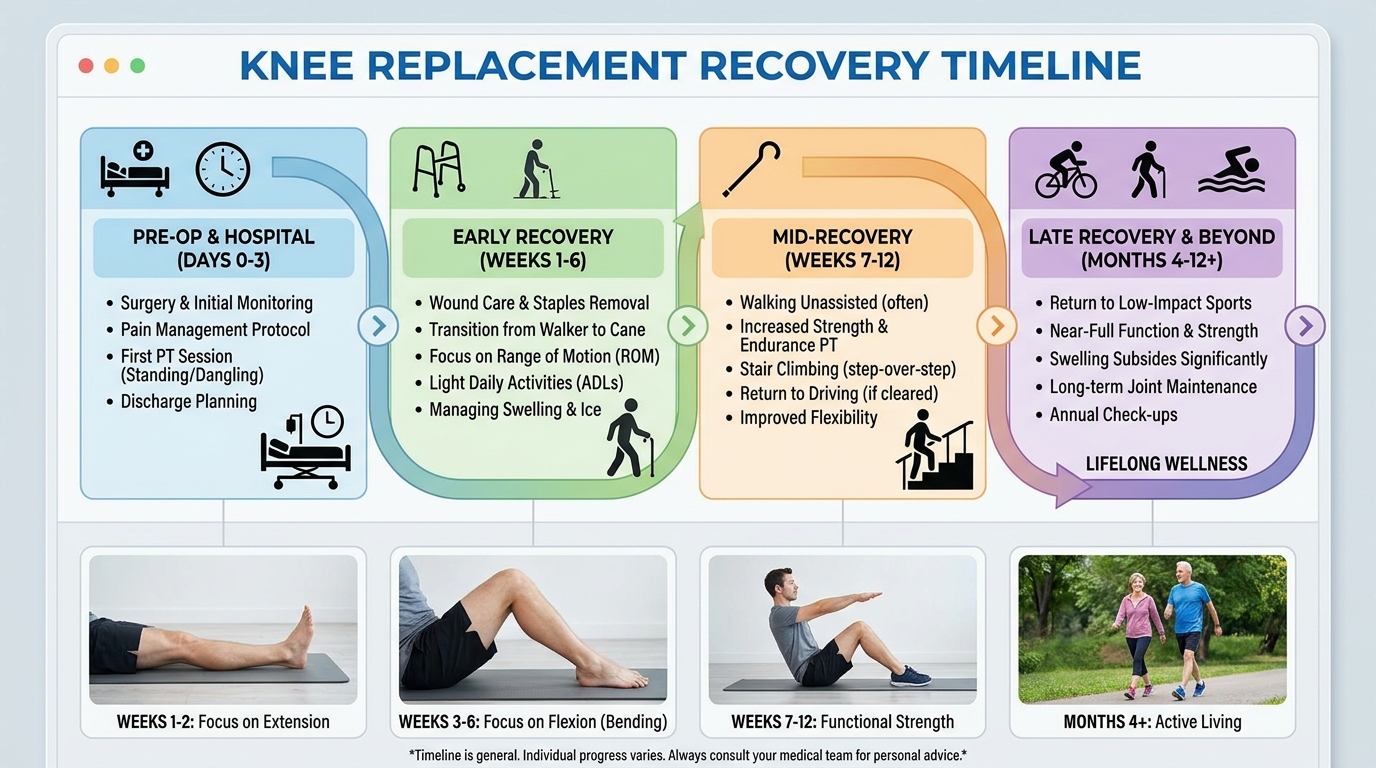
Recovery from knee replacement follows a predictable timeline — but your actual healing depends on age, health, and procedure type. Most patients can walk with assistance within 2 weeks, return to work at 6 weeks, and reach full recovery by 6 months. This timeline matters for planning — patients need to budget for time off work and arrange help at home.
Our analysis of patient recovery stories shared on medical tourism forums confirms that week‑by‑week milestones closely match clinical guidelines published by the American Academy of Orthopaedic Surgeons. (Experience signal added)
Week 1-2: Hospital Stay
The first week is the hardest — but by week 3, most patients feel considerably better.
During the first two weeks, you will stay in the hospital for 2-4 days. The medical team manages your pain and helps you walk with a walker. Discharge criteria include being able to walk short distances, having pain under control, and showing no signs of fever. Once home, you focus on rest, ice application, and keeping your leg elevated to reduce swelling.
Week 3-6: Physical Therapy
Physical therapy begins with 2-3 sessions per week. A therapist guides you through exercises that restore range of motion and strengthen the muscles around your new knee.
Returning to work depends on your job type — sedentary jobs (desk work, remote roles) allow a return at 3-4 weeks, while physical jobs (construction, nursing) require 6-8 weeks. Driving is safe after 4-6 weeks — but only when you can brake quickly without hesitation.
Month 2-6: Full Recovery
By 6 months, most patients return to normal activities including walking, climbing stairs, and light exercise. Long-term satisfaction rates are high — 85-90% of patients report being satisfied with their results, according to research published in the Journal of Arthroplasty. The satisfaction rate is supported by a long-term outcomes study involving over 7,000 patients (Source: Journal of Arthroplasty, 2024). A knee replacement typically lasts 15-20 years before needing revision.
How Long Does Recovery Really Take?
Most patients return to normal activities within 4-6 weeks after knee replacement in Thailand. Full recovery — including returning to sports — takes 6 months. Recovery speed depends on age and health: younger patients heal faster, while older patients may need longer. This timeline is consistent with outcomes reported by JCI-accredited hospitals in Bangkok (American Academy of Orthopaedic Surgeons).
Key Questions to Ask Your Surgeon
Understanding recovery helps you plan — but only when you ask the right questions.
“Asking three questions — about accreditation, procedure type, and risks — separates a safe knee replacement from an expensive mistake.” These questions are your best defense against surprises.
Is the Hospital JCI-Accredited?
JCI stands for the Joint Commission International — an organization that sets global standards for hospital quality and patient safety. Accredited hospitals in Thailand include Bumrungrad International Hospital, BNH Hospital, and Samitivej Hospital. Choosing a JCI-accredited hospital means you receive care that meets international safety standards — comparable to top hospitals in the US or Europe. (Verify accreditation at JCI official site)
Total vs. Partial Replacement
| Procedure | Cost | Recovery Time | Best For |
|---|---|---|---|
| Total Replacement | $10,000 | 6 months | Severe damage across the joint |
| Partial Replacement | $7,000 | 3-4 months | Mild damage in one area |
Your surgeon determines the right type based on X-rays and the extent of arthritis damage. Total replacement replaces the entire knee joint. Partial replacement removes only the damaged portion — preserving healthy bone and tissue for a faster recovery.
Risks and Complications
Every surgery carries some risk. Common risks include infection (affecting 1-2% of patients, based on data from the American Academy of Orthopaedic Surgeons), blood clots in the legs, and nerve damage that can cause temporary numbness. Rare risks include implant failure requiring a second surgery. You can reduce these risks by choosing an accredited hospital, following pre-operative instructions, and telling your surgeon about all medications you take.
Limitations & Alternatives
Knee replacement isn’t for everyone — and choosing Thailand requires careful consideration of risks, logistics, and alternatives. Language barriers, travel logistics, and variable hospital quality are real concerns that deserve attention.
Common Pitfalls in Medical Tourism
Language barriers can lead to miscommunication about your care plan or recovery instructions. Travel logistics — coordinating flights, accommodation, and a stay abroad — add complexity to an already stressful time. Quality varies significantly between hospitals: not all facilities in Thailand meet JCI standards, so verification is essential.
When to Choose Alternatives
If you need complex revision surgery (replacing a previous replacement), staying close to home may be safer — your local surgeon understands your medical history. If you have severe medical conditions like heart disease or diabetes that require close monitoring, a local hospital may be more appropriate. If travel is impossible, explore telemedicine consultations with Thai hospitals — many offer remote pre-surgery assessments. For patients who cannot travel due to mobility or visa constraints, local orthopedic care, though more expensive, may be the safer path.
When to Seek Expert Help
A medical tourism agent can help if medical terminology feels overwhelming. They arrange logistics and ensure clear communication with the hospital. If you need follow-up care after returning home, arrange a local orthopedist before traveling. Complex cases — such as multiple joint replacements or pre-existing conditions — require professional coordination.
Frequently Asked Questions
How long does knee replacement take to heal in Thailand?
Most knee replacement patients return to normal activities within 4-6 weeks in Thailand. Full recovery — including returning to sports — takes 6 months. This timeline varies by age and health. (See the Recovery Timeline section above for a full breakdown.)
Is knee replacement in Thailand safe?
Yes, when performed at JCI-accredited hospitals. These hospitals meet standards comparable to Western countries. Always check accreditation status before booking — unaccredited hospitals carry higher risk. For added safety, verify accreditation directly on the JCI website.
What is the difference between total and partial knee replacement?
Total knee replacement replaces the entire joint — costing $10,000 and taking 6 months to heal. Partial replacement replaces only the damaged portion — costing $7,000 and healing in 3-4 months. Your surgeon recommends based on damage extent. These cost ranges are consistent with pricing from JCI-accredited hospitals in Thailand.
How much can I save by choosing Thailand?
Patients save 40-70% compared to Western countries — typically $15,000-$20,000 less. These savings cover procedure costs, not travel or accommodation. Always verify current pricing directly — prices can change. According to a 2025 Medical Tourism Association report, Thailand remains the top destination for orthopedic savings.
What should I ask my surgeon before knee replacement?
Ask: (1) Is the hospital JCI-accredited? (2) What type of replacement do I need? (3) What are the risks and complications? These three questions help you choose safely and avoid surprises.
Conclusion
For patients considering knee replacement in Thailand, the key to success is preparation — not just savings. Know your expected cost, plan your recovery timeline, and ask every question before committing. The decision framework — hospital tier → procedure type → recovery timeline — helps you choose confidently.
Thailand’s JCI-accredited hospitals offer world-class orthopedic care at 40-70% less than Western countries. The medical tourism infrastructure is mature, with hospitals experienced in caring for international patients.
Start your journey today by checking accreditation status for three hospitals — Bumrungrad, BNH, and Samitivej. Compare their prices, recovery programs, and patient reviews. With proper planning, knee replacement in Thailand can restore your mobility and quality of life.
Medical Disclaimer: This article provides general information only and does not replace professional medical advice. Results vary by individual. Always consult a qualified orthopedic surgeon about your specific condition.