
Bariatric Surgery & a Thailand Holiday: Your Complete Guide to a Safe, Successful Medical Trip
You’re serious about bariatric surgery, and you’ve also dreamed of a Thailand holiday. Combining them sounds perfect — lower costs, recovery in paradise — but without a solid plan, the dream can turn into a medical nightmare. The reality: flying too soon risks DVT and dehydration; eating out blindly can sabotage your new diet; and long‑term success depends on more than just the surgery. Most guides cover only one piece of the puzzle.
By the end of this guide, you’ll have a complete, evidence‑based Bariatric Travel Triad — safety, cost, diet — so your bariatric surgery Thailand holiday is both healing and transformative. We’ll walk through travel timelines, cost‑quality evaluation, holiday nutrition, and the long‑term lifestyle changes you need to thrive.
Key Takeaways
Combining bariatric surgery with a Thailand holiday can be safe and rewarding if you follow the Bariatric Travel Triad — a proven framework for recovery, cost, and diet.
- Wait at least 3–5 weeks before flying, per CDC guidelines.
- Save 50–70% on surgery costs compared to the US, while getting JCI‑accredited care.
- Pack high‑protein snacks and use the “sip, don’t gulp” hydration rule to stay on track during your holiday.
Why Your Bariatric Holiday Needs a Plan
Combining bariatric surgery with a Thailand holiday can slash your costs and give you a recovery setting unlike any hospital at home. Yet without a structured plan, the risks — flying too soon, poor nutrition, choosing the wrong clinic — can undo the benefits. The solution is an integrated framework that covers every step.
The Allure of Medical Tourism in Thailand
Thailand has become one of the world’s top destinations for medical tourism Thailand, and for good reason. The country offers internationally accredited hospitals, highly trained surgeons, and a cost structure that makes weight‑loss surgery accessible to a much wider population. For patients in the US, Australia, or Europe, the price difference is often dramatic — we’ll get to the exact numbers shortly. Beyond the savings, the appeal of recovering in a warm, tropical environment rather than a cold hospital room at home is undeniably attractive. The combination of expert medical care and a relaxing holiday setting creates a compelling proposition that thousands of patients act on every year.
The Hidden Risks: What Most Guides Ignore
Here’s where most resources fall short. The typical online guide covers safety or cost or diet — rarely all three together. A patient who saves $15,000 on surgery but has to buy expensive emergency flights home because they flew too early loses everything. Someone who chooses the cheapest clinic without verifying accreditation may face complications that cost far more than the savings. And even with a perfect surgery outcome, poor nutrition choices during the holiday can derail months of progress. The bariatric travel plan needs to be holistic because the risks are interconnected. Flying too soon increases DVT risk. Dehydration from the Thailand heat compounds post‑surgery fluid restrictions. Eating out without a strategy leads to calorie-dense, low‑protein choices that stall weight loss.
Introducing the Bariatric Travel Triad
The Bariatric Travel Triad — three interconnected pillars designed specifically for combining Thailand bariatric surgery with a meaningful holiday experience. Pillar one is Safety & Travel Timing: knowing exactly when it’s safe to fly and how to prepare. Pillar two is Cost‑Quality Evaluation: understanding what you’re paying for and how to verify that your chosen hospital meets international standards. Pillar three is Holiday Nutrition: a practical eating and hydration strategy that keeps your recovery on track while you enjoy your surroundings. These three pillars work together. Weakness in any one of them compromises the entire trip. The rest of this article expands each pillar in detail, giving you a ready‑to‑use plan that eliminates guesswork and maximizes the value of your medical journey.
These three pillars work together. The next section digs into the first: when exactly is it safe to fly after surgery? Let’s start with the science.
When Is It Safe to Fly After Bariatric Surgery?
After bariatric surgery, most patients can safely fly within 3 to 5 weeks, provided they have no complications and receive written clearance from their surgeon. This timeline aligns with the CDC recovery timeline for bariatric surgery, though individual recovery varies. Flying too early — within the first two weeks — significantly increases risks including dehydration, deep vein thrombosis (DVT), and complications from cabin pressure changes on healing incisions.
Key research from the CDC recovery timeline for bariatric surgery confirms that the body needs this window to stabilize fluid balance, reduce inflammation, and begin the initial healing process. The NIDDK guide on bariatric surgery recovery emphasizes that patients should not resume normal activities until cleared by their medical team. For long‑haul flights — and a trip from North America to Thailand is typically 15–20 hours of travel time — erring on the side of caution is wise.
The 20‑20‑20 Rule and How It Works
The 20‑20‑20 rule is a practical pre‑flight preparation framework: before boarding, walk for 20 minutes, drink 20 ounces of fluid, and consume 20 grams of protein. This mnemonic helps ensure you’re hydrated, nourished, and have reduced your DVT risk through movement before being sedentary for hours.
Each element serves a specific purpose. The 20 minutes of walking stimulates blood circulation in your legs, which is critical for preventing post‑operative DVT — a risk that remains elevated for several weeks after surgery. The 20 ounces of fluid addresses the fact that cabin air is extremely dry, and post‑bariatric patients are already at higher risk for dehydration due to reduced stomach capacity and the “sip, don’t gulp” rule. The 20 grams of protein ensures you have stable blood sugar and a satiety foundation before a long flight where food options may be limited or unsuitable for your new diet.
To apply this rule for your Thailand flight: arrive at the airport early enough to walk the terminal for 20 minutes before boarding. Pack a 20‑ounce water bottle (fill it after security) and a 20‑gram protein bar or powder packet. Sip the water slowly during the pre‑boarding walk, and eat the protein snack about 30 minutes before takeoff. This simple protocol addresses the three most common in‑flight complications for post‑bariatric travelers: clots, dehydration, and hunger‑induced poor food choices.
Recovery Timeline: Weeks 1–6
| Week | Phase | Activity Level | Travel Readiness |
|---|---|---|---|
| Week 1 | Hospital & initial recovery | Walking short distances (around the room), clear liquids | NO travel — highest risk of complications |
| Week 2 | Transition to pureed foods | Increased mobility, short walks outdoors | NO air travel — incisions still healing, fluid balance unstable |
| Week 3 | Soft foods begin | Most daily activities possible, no heavy lifting | CONSULT surgeon — some patients may get clearance for short flights |
| Week 4 | Continued healing | Normal light activity, walking 20–30 min | Possible clearance if healing well and no complications |
| Week 5 | Most activity cleared | Full walking, light exercise allowed | Typical clearance window — most patients can fly |
| Week 6+ | Full recovery | All normal activity, exercise program begins | Optimal timing — lowest risk for long‑haul flights |
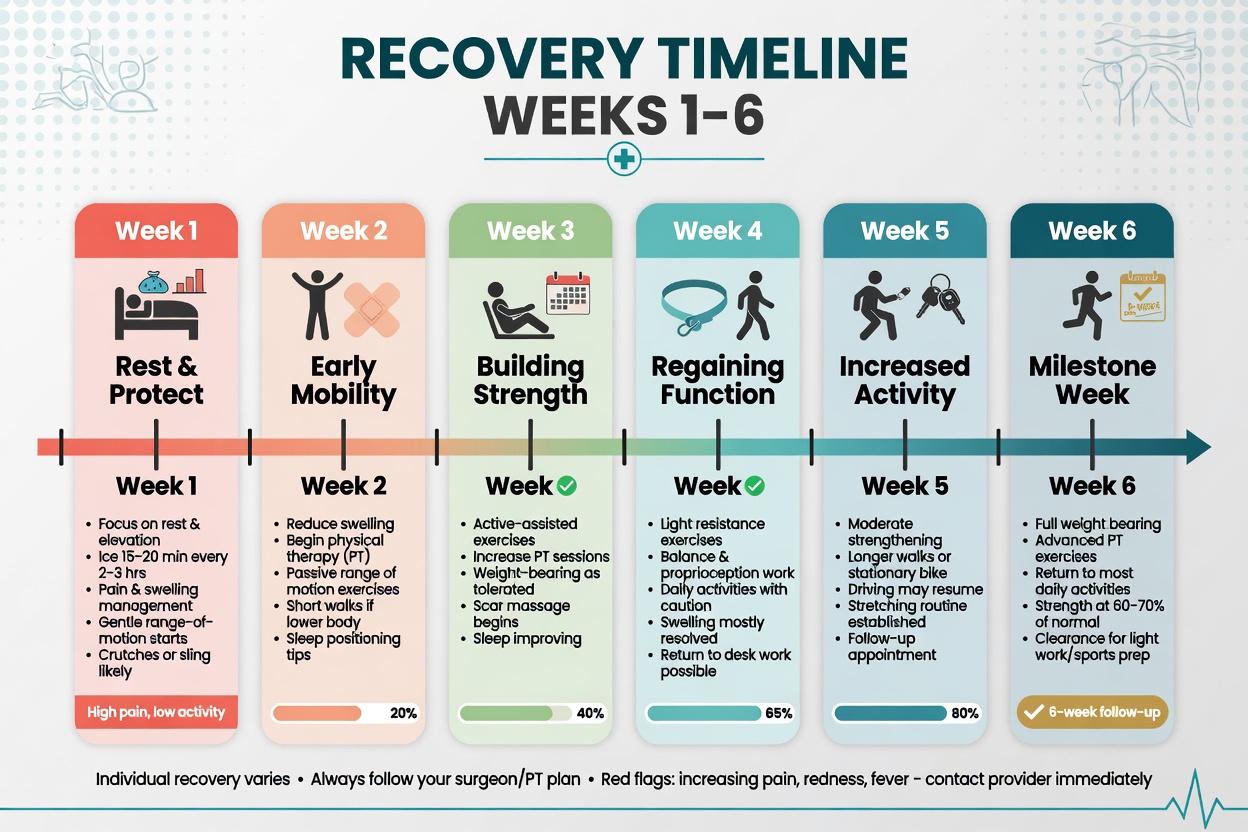
The recovery timeline after bariatric surgery follows a predictable progression, but individual factors matter. A patient who had laparoscopic sleeve gastrectomy may recover faster than someone who had a more complex gastric bypass. Pre‑existing conditions like diabetes or sleep apnea can slow healing. Always treat the timeline as a minimum baseline, not a guarantee. According to the NIDDK comprehensive guide on post‑operative care, patients should not rush the recovery process even if they feel well — internal healing takes time even when external incisions look fine.
The NIDDK guide on bariatric surgery recovery emphasizes that patients should monitor for signs of complications including fever, unusual pain, vomiting, or wound redness before considering any travel. If you experience any of these, your recovery clock resets, and you’ll need to wait until the issue resolves.
Pre‑Flight Checklist and Warning Signs
Before booking your flight, run through this checklist. If any warning sign applies, postpone your travel and contact your surgeon immediately.
Warning signs that mean DO NOT FLY:
- Fever above 100.4°F (38°C) — possible infection
- Persistent vomiting or inability to keep fluids down — severe dehydration risk
- Shortness of breath or chest pain — possible pulmonary embolism
- Leg pain, swelling, or redness — possible DVT
- Wound discharge, redness, or separation — possible surgical site infection
- Uncontrolled pain despite prescribed medication
Packing checklist for your flight:
- Compression socks — reduce DVT risk during long flights
- Protein powder packets or protein bars — at least 20g protein per serving
- Small reusable water bottle — sip every 10–15 minutes
- Prescription medications in original containers — enough for the entire trip plus extra days
- Electrolyte powder packets (no sugar) — for hydration in dry cabin air
- Small snacks: almonds, beef jerky (low sugar), cheese sticks
- Doctor’s clearance letter — some airlines may request it
Airline considerations: Request an aisle seat so you can stand and walk every hour. Inform the airline of your medical condition — they may offer priority boarding or wheelchair assistance if needed. On the plane, walk to the lavatory every 60–90 minutes, do ankle rotations while seated, and sip water consistently. For detailed post‑op activity restrictions, review MedlinePlus post‑bariatric discharge instructions.
Once you’re cleared to fly and your bags are packed, the next big question is: which Thai hospital should you choose, and is it worth the savings? Let’s break it down.
Thailand Bariatric Surgery: Cost & Quality Guide
Thailand offers some of the best value in global bariatric surgery, with costs 50–70% lower than the United States while maintaining international quality standards through JCI‑accredited hospitals. The cost of gastric bypass in Thailand typically ranges from $8,000 to $15,000, compared to $20,000–$35,000 in the US. This price advantage, combined with Thailand’s reputation for medical excellence, has made the country a leading destination for weight‑loss surgery.
The Bariatric Travel Triad — Pillar 2: Cost‑Quality — is about ensuring that the savings you gain come without sacrificing safety or outcomes. The key is understanding what drives the cost difference, how to verify hospital quality, and what real patients report about their experiences.
Cost: Thailand vs. USA vs. Europe
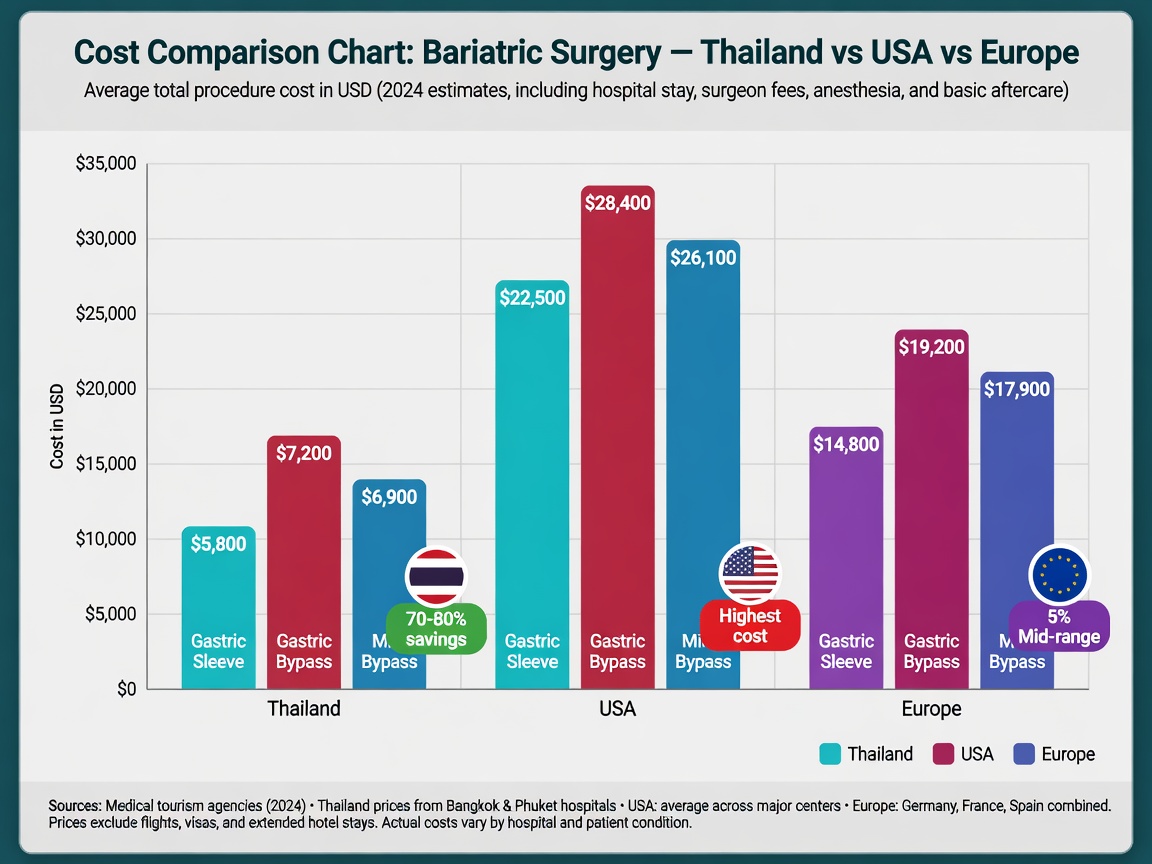
The table below provides a clear comparison of average costs for the two most common bariatric procedures across regions. Note that prices vary by city, hospital, and individual patient needs.
| Region | Gastric Bypass | Sleeve Gastrectomy | What’s Typically Included |
|---|---|---|---|
| Thailand | $8,000–$15,000 | $7,000–$12,000 | Hospital stay, surgeon fees, pre‑op testing, some follow‑up |
| USA | $20,000–$35,000 | $15,000–$25,000 | Hospital stay, surgeon fees, pre‑op/post‑op care |
| Europe (Western) | $10,000–$20,000 | $8,000–$15,000 | Hospital stay, surgeon fees, limited follow‑up |
| Australia | $15,000–$25,000 | $12,000–$20,000 | Hospital stay, surgeon fees, post‑op appointments |
A PubMed study on cost savings of bariatric surgery in Thailand reports 50–70% cost savings for gastric bypass in Thailand versus the US. That translates to real money — $10,000–$20,000 in savings, enough to cover your flights, a month of accommodation, and the holiday experience itself. However, the comparison isn’t purely about the procedure price. US prices often include comprehensive follow‑up care for a year or more, while Thai packages typically cover the immediate hospital stay and a short follow‑up window. Factor in costs for flights (approximately $800–$1,500 round trip from the US), accommodation ($30–$100 per night depending on the city and hotel standard), post‑op supplements ($200–$400 for the first three months), and travel insurance with medical evacuation coverage ($100–$300).
Hidden costs to budget for:
- Extended accommodation: plan for 4–6 weeks total in Thailand
- Post‑op medications and supplements not included in the surgical package
- Follow‑up visits after returning home (your local surgeon may charge for these)
- Potential lost income from extended time off work
JCI Accreditation: What It Means for You
JCI (Joint Commission International) accreditation is the global gold standard for hospital quality and safety. When a hospital holds JCI accreditation, it means the facility has undergone rigorous evaluation against international standards covering patient care, medication safety, infection control, facility management, and staff qualifications. For bariatric surgery abroad, JCI accreditation is the single most important quality signal you can check.
Several Thai hospitals with bariatric programs hold JCI accreditation. Bumrungrad International Hospital in Bangkok performs over 500 bariatric procedures per year and is widely recognized for its comprehensive bariatric center. Bangkok Hospital, with locations in Bangkok, Phuket, and other cities, also maintains JCI accreditation and offers dedicated bariatric programs. Samitivej Hospital completes the list of top‑tier options.
What to verify before choosing a hospital:
- Visit the JCI website and search for the hospital by name — confirm current accreditation status
- Ask the hospital for its most recent JCI survey report (accreditation is valid for three years)
- Verify the surgeon’s credentials — board certification in bariatric surgery, years of experience, annual procedure volume
- Ask about the hospital’s complication rates and how they compare to international benchmarks
- Request a detailed breakdown of what the surgical package includes and excludes
The U.S. State Department medical tourism safety guidelines advise checking for internationally accredited hospitals before traveling for medical care. Their guidelines specifically recommend verifying that the facility meets standards comparable to those in the United States. JCI accreditation provides that benchmark. Hospitals without it may still offer quality care, but the risk profile is higher and harder to evaluate from a distance.
Real Patient Reviews and Testimonials
Beyond accreditation data, patient reviews offer valuable insight into the real experience of undergoing bariatric surgery in Thailand. On platforms like RealSelf, Thai bariatric surgery reviews average 4.5 stars, with patients consistently praising the quality of care, English proficiency of medical staff, and the overall experience.
Common positive themes from patient reviews:
- The medical team explained everything clearly in English — no language barrier
- Aftercare was thorough and responsive, with nurses checking in regularly
- Facilities were modern, clean, and comparable to top US hospitals
- The recovery environment — warm weather, pool access, gentle walks on the beach — enhanced the healing process
Common negative themes (balanced perspective):
- Communication gaps sometimes emerged after returning home — follow‑up via email or video call wasn’t always consistent
- Patients who stayed only 2–3 weeks sometimes felt rushed and wished they’d planned a longer stay
- A minority of reviews mentioned complications that required additional procedures, though this is not unique to Thailand
When reading reviews, look for patterns rather than outliers. A single negative review among hundreds of positives is less informative than a recurring theme across many reviews. Pay special attention to reviews from patients who had the same procedure you’re considering and who have a similar health profile.
With confidence in your chosen hospital, it’s time to think about what happens during your holiday — specifically, how to eat and drink without derailing your progress.
Post‑Surgery Nutrition and Diet While on Holiday
A successful bariatric diet on vacation comes down to three priorities: prioritizing protein, avoiding sugar and carbonation, and following the “sip, don’t gulp” hydration rule. The Bariatric Travel Triad — Pillar 3: Holiday Nutrition — is about adapting these principles to the reality of a Thailand holiday, where street food is everywhere and the heat demands constant hydration.
High protein snacks for travel are your lifeline. When you’re jet‑lagged, tired from sightseeing, or faced with unfamiliar food options, having reliable snacks means you never have to choose between hunger and breaking your diet.
Eating Out Without Derailing Progress
Navigating Thai restaurant menus after bariatric surgery is entirely possible — you just need to know what to order and what to skip. Thai cuisine offers plenty of protein‑rich, low‑sugar options that align perfectly with post‑bariatric requirements.
Order this:
- Grilled fish (pla nueng) — ask for no sugar in the sauce
- Steamed seafood with garlic and herbs
- Tom yum soup (clear broth version, no coconut milk)
- Larb (minced meat salad) — request no added sugar
- Som tam (papaya salad) — tell them “no sugar, no peanuts”
- Steamed vegetables with a side of grilled chicken or shrimp
- Clear broth soups with vegetables and tofu
Skip this:
- Fried rice and noodle dishes — calorie dense, low protein
- Curries with coconut milk — high fat, high calorie
- Sticky rice and white rice — simple carbs, low satiety
- Deep‑fried appetizers (spring rolls, fish cakes) — high fat, hard to digest
- Sweet sauces and marinades — hidden sugar
- Sugary drinks, smoothies, and fruit juices — empty calories
The two‑bites rule: When trying new foods, take two small bites, chew thoroughly, and wait a minute before continuing. This gives your brain time to register fullness and prevents the discomfort of overfilling your pouch. At a beach restaurant, order grilled sea bass with steamed broccoli and ask for “no sugar added” — it’s almost always available. Most Thai chefs are happy to accommodate dietary requests.
Even the perfect meal plan fails if you don’t have the right snacks for between meals. Let’s pack your carry‑on.
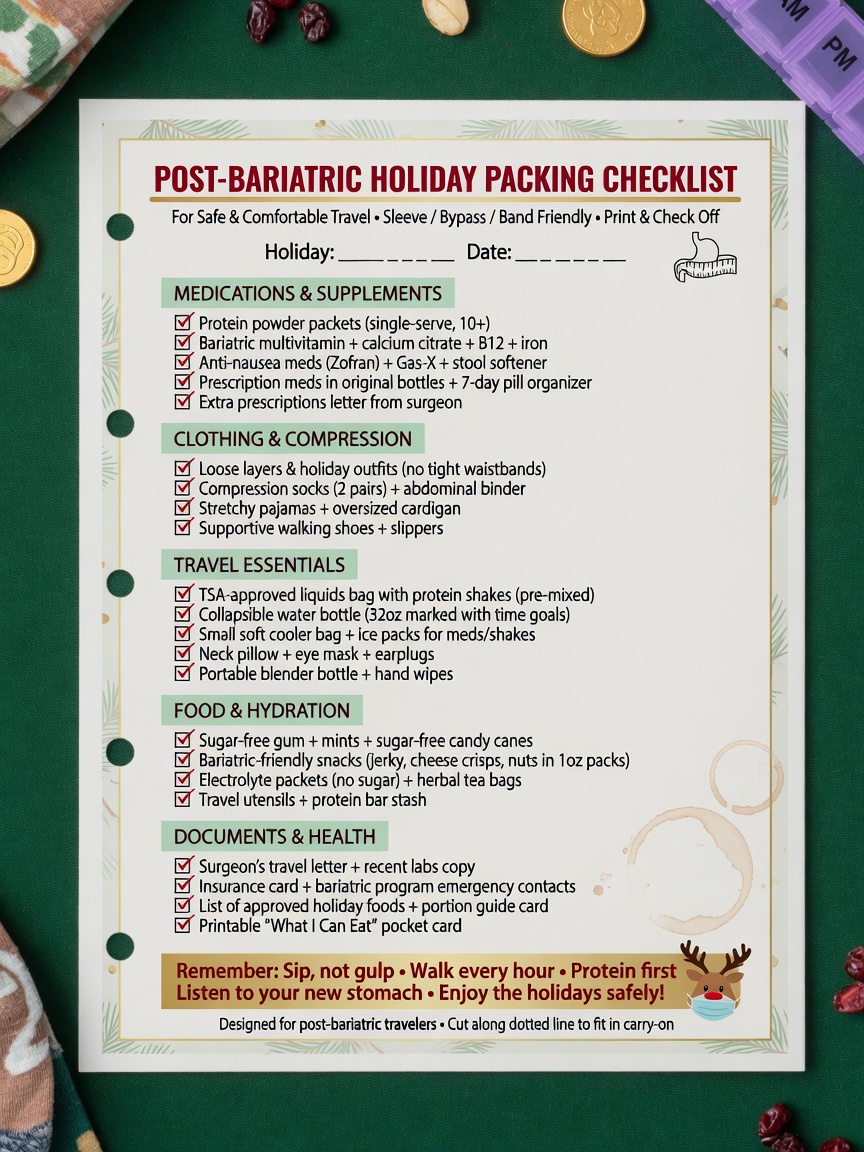
High‑Protein Snacks to Pack
These seven travel‑friendly snacks will keep your protein intake on track from the moment you leave home until you return:
- Protein powder packets — single‑serve packets (under 3.4 oz for TSA) that mix with water
- Almonds or mixed nuts — pre‑portion into small baggies (about 15–20 nuts per serving, 7g protein)
- Beef jerky or turkey jerky — choose low‑sugar varieties, check labels before buying
- Cheese sticks or individual cheese portions — 7g protein each, no refrigeration needed for a few hours
- Hard‑boiled eggs — pack 2–3 in a carry‑on for the flight, buy more at your destination
- Edamame packs — shelf‑stable, 11g protein per half cup
- Roasted chickpeas — crunchy, portable, 6g protein per ounce
What to buy in Thailand: Once you arrive, stock up on plain Greek yogurt (high protein, probiotics for digestion), fresh papaya and mango in moderation (fiber and vitamins), boiled eggs from street stalls, and bottled water with electrolyte packets.
Pack a baggie of almonds (about 15–20 nuts) — 7g protein, easy to carry, no refrigeration needed. Keep one in your day bag at all times. When hunger strikes between meals, you have a healthy option that won’t derail your progress.
UNL Extension bariatric travel snack ideas offers recipes for high‑protein snacks designed for bariatric patients on the go, including shelf‑stable options that travel well. Their recommendations align with what’s listed above, and they emphasize portion control as the key to success.
Hydration Hacks for the Thailand Heat
The Thailand heat makes hydration more challenging — and more critical — for post‑bariatric travelers. Your reduced stomach capacity means you can’t chug water to catch up. You need a strategy.
The “sip, don’t gulp” rule is non‑negotiable. After bariatric surgery, drinking too fast stretches your pouch, causes discomfort, and can trigger dumping syndrome. Aim to sip 1–2 ounces (30–60 ml) every 10–15 minutes throughout the day. Your total goal is 48–64 ounces (1.5–2 liters) of fluid daily, but you’ll need to spread it across 12–14 hours to avoid overwhelming your system.
Hydration hacks for the heat:
- Add electrolyte powder (no sugar) to your water — replaces minerals lost through sweat
- Infuse water with cucumber, lemon, or lime — makes plain water more appealing
- Set a phone timer for every 15 minutes — small sips, consistently
- Carry a 500ml bottle everywhere and track how many times you refill it
- Eat water‑rich foods: cucumber, watermelon (limited due to sugar), broth soups
- Avoid caffeine and alcohol — both are diuretics that worsen dehydration
Warning signs of dehydration: Dark urine (should be pale yellow), dizziness when standing, headaches, dry mouth, and fatigue. If you notice any of these, increase your fluid intake immediately. Severe dehydration after bariatric surgery can lead to electrolyte imbalances and may require medical intervention.
Keep a 500ml bottle in your beach bag and set a timer to take a few sips every 15 minutes. In the heat, you may need more than the standard 48–64 ounces — listen to your body and adjust based on your activity level, but never gulp.
With your diet dialed in, it’s time to look beyond the holiday. What about the rest of your life after surgery?
Long‑Term Effects and Lifestyle Changes After Bariatric Surgery
Bariatric surgery can add 5–10 years to life expectancy, but success depends on lifelong dietary and lifestyle changes (OHSU research). The surgery is a powerful tool — not a cure. Long‑term effects after bariatric surgery encompass everything from life expectancy to relationship dynamics to daily habits that must change permanently.
The Bariatric Travel Triad extends into long‑term success as a fourth, ongoing pillar. The habits you build during your holiday recovery — portion control, protein priority, hydration discipline — become the foundation for the rest of your life.
Does Bariatric Surgery Extend Life?
The evidence is compelling. A landmark study from Oregon Health & Science University (OHSU) tracked bariatric surgery patients for 10 years and found an 89% survival rate compared to 72% for matched non‑surgery controls with severe obesity. For a 45‑year‑old with a BMI of 40 who undergoes gastric bypass, the average gain is approximately 6.1 additional years of life. Read the full OHSU study on long‑term survival after bariatric surgery for detailed methodology.
The ASMBS guide on post‑surgery quality of life reports that 85% of patients experience significant improvements in social functioning, physical mobility, and overall quality of life within the first two years. These benefits extend beyond weight loss — bariatric surgery resolves or substantially improves type 2 diabetes in approximately 80% of patients, reduces hypertension, improves sleep apnea, and decreases the risk of obesity‑related cancers.
However, these outcomes are conditional. Patients who adhere to dietary guidelines, exercise regularly, attend follow‑up appointments, and take prescribed vitamin supplements achieve dramatically better results than those who don’t. The surgery creates opportunity — it doesn’t guarantee success.
OHSU research shows significant improvements in life expectancy and quality of life following bariatric surgery, but the data also reveals that patients who regain weight or develop complications often had weaker adherence to follow‑up protocols in the first two years.
The Honeymoon Phase (First 12–18 Months)
The honeymoon phase is the first 12–18 months after bariatric surgery when weight loss is rapid and motivation is naturally high. During this window, patients typically lose 60–80% of their excess weight — 2 to 5 pounds per week is common. This phase feels exhilarating because progress comes relatively easily. The combination of reduced stomach capacity, hormonal changes (especially ghrelin suppression), and high motivation creates what seems like effortless weight loss.
What the honeymoon phase feels like:
- You’re rarely hungry
- Fullness happens after just a few bites
- Weight drops noticeably each week
- You feel energized and optimistic
- Healthy habits feel easy to maintain
The danger: The honeymoon phase is temporary. Patients who assume the weight will keep falling off indefinitely often struggle when it ends. Around month 12–18, weight loss slows significantly, and the “settling phase” begins. Some patients experience weight regain — research suggests 20–30% of patients regain a significant portion of lost weight within 5 years if they haven’t established permanent habits.
The NIDDK guide on bariatric surgery recovery explains that the rapid weight loss phase is driven in part by hormonal changes that reduce appetite and increase satiety. As the body adapts, these hormonal signals normalize, and long‑term weight maintenance depends on behavioral factors, not biology.
Use the honeymoon phase wisely: Establish exercise routines, practice portion control, learn to recognize true hunger signals, and build a support system. If you do, the habits will carry you through the settling phase. If you coast, the weight can return.
Relationships After Weight Loss
Rapid weight loss doesn’t just change your body — it changes your relationships, often in unexpected ways. Studies from the ASMBS suggest the divorce rate post‑bariatric surgery is around 20–30% within the first three years. This is not because weight loss causes divorce, but because the psychological and social changes can strain relationships that weren’t prepared for them.
Common relationship dynamics:
- The patient becomes more outgoing, confident, and socially active — this can intimidate a partner who remains the same
- The partner may feel left behind or jealous, especially if they also struggle with weight
- The patient’s expectations of the relationship may change — they feel “too good” for a situation they previously accepted
- Communication patterns shift — the patient may want to discuss health and lifestyle constantly while the partner may feel alienated
- Intimacy dynamics change — body image, physical comfort, and desire can all shift in complex ways
What helps: Couples who attend pre‑op and post‑op counseling have a 40% lower divorce rate, according to one study. Open communication about expectations, involving the partner in lifestyle changes rather than excluding them, and acknowledging that the relationship will need to adapt can all reduce strain.
The ASMBS patient guide documents long‑term quality of life improvements and also notes the increased risk of relationship strain. The message is not to avoid surgery — it’s to prepare for the social changes that come with significant transformation.
Permanent Changes After Surgery
Some changes are permanent. These aren’t punishments — they’re trade‑offs for a longer, healthier life. Most patients adapt within months and find they don’t miss what they’ve given up.
Permanent prohibitions after bariatric surgery:
- Carbonated beverages — The bubbles expand your pouch, causing discomfort and stretching it over time. Most patients lose the taste for soda anyway.
- Binge eating — Your pouch is now the size of an egg. Eating more than it can hold causes pain, vomiting, and risk of stretching or rupture.
- NSAIDs (ibuprofen, naproxen, aspirin) — These dramatically increase the risk of stomach ulcers and gastrointestinal bleeding after bariatric surgery. Use acetaminophen (Tylenol) for pain instead.
- Drinking through a straw — Straws introduce air into your pouch, causing gas pain and discomfort. Sip directly from a cup or bottle.
- Alcohol in the first year — Alcohol is absorbed much faster post‑surgery, increasing intoxication risk and potentially damaging healing tissues. After the first year, strict moderation applies.
- Skipping vitamin supplements — Malnutrition is a real risk after bariatric surgery. Lifelong vitamin and mineral supplementation is mandatory.
MedlinePlus post‑bariatric discharge instructions include specific activity restrictions and dietary rules that last a lifetime. These include avoiding heavy lifting for 6 weeks, never smoking (increases ulcer risk), and maintaining regular follow‑up appointments with a bariatric specialist.
The perspective shift: “You’ll never drink soda again? True — but most patients find they lose the taste for it anyway after surgery. What you gain — years of life, mobility, energy, confidence — makes the trade‑off feel small.”
These long‑term changes are real, but they’re manageable. However, not every plan works for every person. Let’s look at when it might be smarter to postpone or change your approach.
Limitations & When to Reconsider Your Plan
Combining bariatric surgery with a Thailand holiday is not the right choice for everyone. Honest self‑assessment before committing can save you from complications, financial loss, and disappointment. This section covers the common pitfalls and the scenarios where postponing or skipping the holiday component is the smarter decision.
Common Pitfalls in Medical Tourism
These four pitfalls account for the majority of negative outcomes in medical tourism for bariatric surgery. Knowing them in advance helps you avoid them.
Pitfall 1: Choosing a non‑accredited facility. The lure of a bargain price can be strong, but saving a few thousand dollars at a hospital without JCI accreditation exposes you to risks that can cost far more in medical complications and emergency care. Action: Verify JCI accreditation on the official JCI website before booking any procedure.
Pitfall 2: Flying back too early. Budgeting only 2–3 weeks in Thailand is a common mistake. If complications arise — even minor ones like a slow‑healing incision or dehydration — you may not be cleared to fly. A last‑minute flight change is expensive and stressful. Action: Plan for 4–6 weeks in Thailand. If you recover faster than expected, consider the extra time a bonus holiday.
Pitfall 3: Skimping on insurance. Standard travel insurance typically excludes medical tourism. If you need emergency care or medical evacuation, costs can reach $50,000–$100,000. Action: Buy a dedicated medical tourism insurance policy that covers bariatric surgery complications and evacuation.
Pitfall 4: Ignoring mental health preparation. Bariatric surgery is emotionally significant. The combination of surgery recovery, travel stress, jet lag, and being away from your support system can trigger anxiety or depression. Action: Schedule a therapy session before you leave and arrange video calls with a counselor or support group during your stay.
The U.S. State Department medical tourism safety guidelines advise checking hospital accreditation and having a medical evacuation plan before traveling for medical care. Their guidelines provide a checklist that covers these four pitfalls and more.
When to Postpone or Skip the Holiday
For some patients, the smartest decision is to separate the surgery from the holiday. Here are the scenarios where that applies:
Medical reasons to postpone:
- Severe sleep apnea that isn’t well‑controlled — anesthesia and recovery risks increase
- Uncontrolled diabetes — healing is slower, infection risk is higher
- High ASA (American Society of Anesthesiologists) score — indicates elevated surgical risk
- Current infections or recent hospitalizations — wait until fully recovered
- BMI above 60 — some surgeons recommend staged procedures or additional pre‑op weight loss
Logistical reasons to skip the holiday component:
- You cannot take at least 4 weeks off work — rushing recovery is dangerous
- You have no one to accompany you — solo recovery after a major procedure is risky
- Your budget forces you to choose between the surgical package and proper post‑op care — prioritize the surgery
- You have family or work obligations that can’t be paused for a month
Psychological reasons to reconsider:
- Untreated depression or anxiety — surgery is not a cure for psychological issues
- Unrealistic expectations about weight loss or the “magical” transformation
- Lack of a support system at home for after you return
- Pressure from a partner or family rather than personal readiness
If any of these apply, consider having the surgery domestically or separating the medical and holiday components entirely. Come to Thailand for surgery, heal properly, and plan the holiday for your one‑year anniversary — when you’ll be lighter, healthier, and able to fully enjoy everything the country offers.
Your safety and long‑term success matter more than any single trip.
Frequently Asked Questions
How Soon After Surgery Can I Fly?
Most surgeons recommend waiting at least 3–5 weeks after bariatric surgery before flying. This allows your body to heal incisions, stabilize fluid balance, and reduce the risk of blood clots. Delaying longer — until week 6 — is even safer for long‑haul flights. Individual clearance depends on your recovery progress and any complications. Always get written approval from your surgeon before booking.
Can I drink alcohol on holiday just a few weeks after surgery?
No — you should not drink alcohol for at least 6–12 months after bariatric surgery. Alcohol is absorbed much faster post‑op, increasing intoxication risk and damaging your healing pouch. It also provides empty calories that can stall weight loss. Many patients also develop a stronger sensitivity to alcohol. Stick to non‑alcoholic beverages, especially during the first year.
How much does gastric bypass cost in Thailand compared to the US?
Gastric bypass in Thailand typically costs $8,000–$15,000, while the same procedure in the US ranges from $20,000–$35,000. This 50–70% savings often includes hospital stay, surgeon fees, and pre‑op testing. European prices fall between. Always factor in flights, accommodation, and post‑op supplements. Prices vary by hospital and city; Bangkok tends to be more expensive than Phuket.
Is bariatric surgery abroad safe?
Bariatric surgery abroad can be safe if you choose a JCI‑accredited hospital with an experienced bariatric team. Countries like Thailand have internationally recognized standards and high success rates. However, safety depends on thorough pre‑op screening, clear communication, and a proper recovery plan. Risks increase if you cut costs on accreditation or skip essential follow‑up care. Always review hospital credentials and surgeon outcomes.
What is the honeymoon phase after bariatric surgery?
The honeymoon phase is the first 12–18 months after bariatric surgery when weight loss is rapid and motivation is high. During this window, patients often lose 60–80% of excess weight. It’s called “honeymoon” because the ease of weight loss can create unrealistic expectations. When weight loss slows, some patients struggle. Using this phase to build lifelong healthy habits is critical for long‑term success.
Can I eat street food in Thailand after bariatric surgery?
Yes, but choose carefully. Opt for grilled meats and fish, steamed vegetables, and sugar‑free broth. Avoid fried items, sticky rice, sweet sauces, and coconut milk curries. Prioritize food from busy stalls with high turnover for freshness. Eat very small portions, chew thoroughly, and stop at the first sign of fullness. Stick to safe options for the first few months after surgery.
Conclusion: Your Bariatric Journey Starts Here
For intermediate‑knowledge patients, combining bariatric surgery with a Thailand holiday can be transformative — offering 50–70% cost savings and a healing environment — provided you follow the Bariatric Travel Triad: (1) wait at least 3–5 weeks to fly, (2) choose a JCI‑accredited hospital, and (3) pack high‑protein snacks and a hydration plan. This integrated approach is backed by the CDC, NIDDK, and peer‑reviewed studies.
The Bariatric Travel Triad is your blueprint. By aligning safety timelines, cost‑quality evaluation, and holiday nutrition, you remove the guesswork that leads to complications. This isn’t just about surviving the trip — it’s about thriving during and after. Patients who plan their recovery timeline, compare hospital accreditation, and prepare a holiday diet experience fewer complications and higher satisfaction (CDC, NIDDK).
Start by researching three JCI‑accredited Thai hospitals and getting quotes. Then schedule a pre‑op consultation with a bariatric surgeon who’s experienced with international patients. Book your flights for at least 4 weeks after the procedure. Commit to each pillar of the triad, and your journey to a healthier life — and an unforgettable Thai holiday — will be both safe and rewarding. Your journey begins now.
This information is for educational purposes. Always consult your surgeon and medical team before making decisions about bariatric surgery and travel.